6
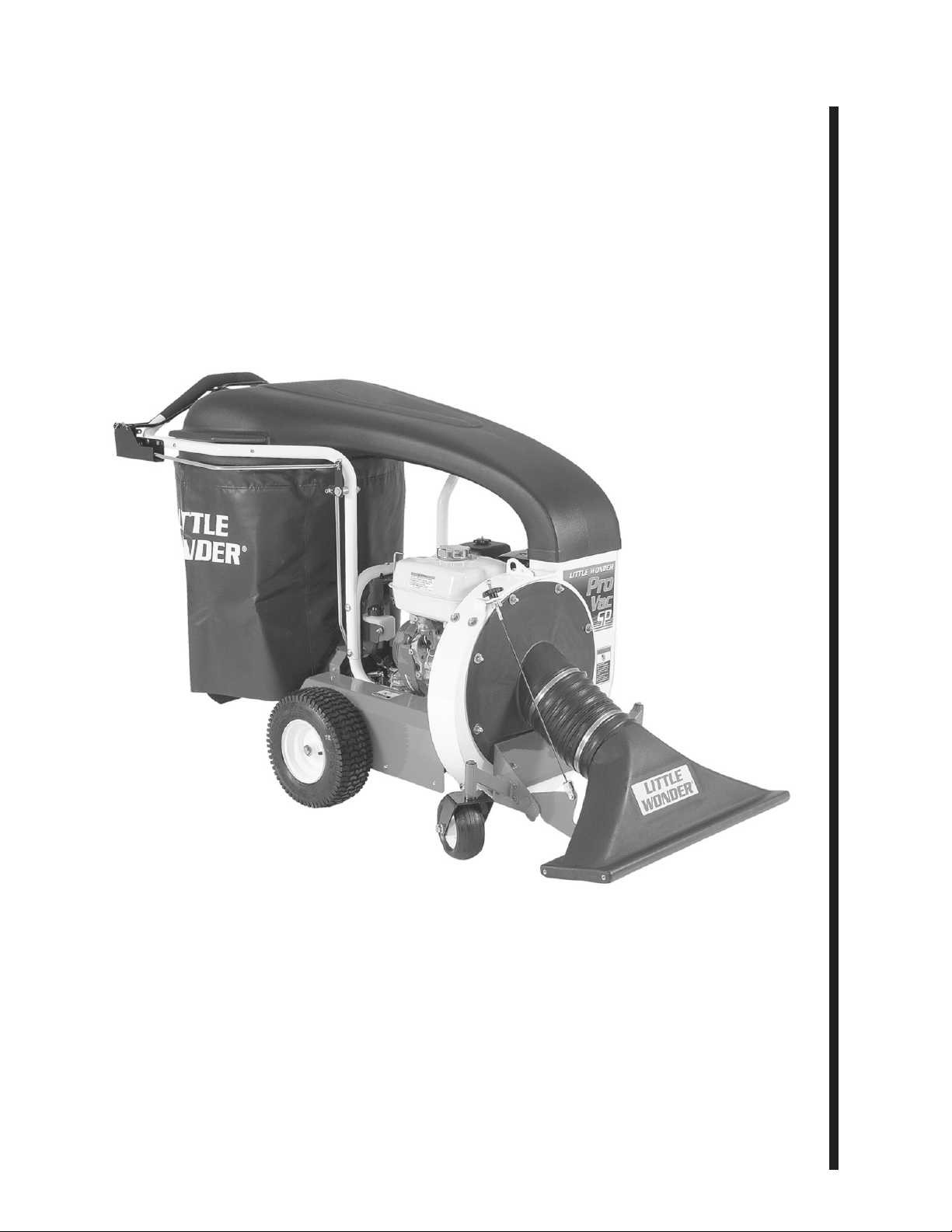
PRO VAC SP
SAFETY
MAINTENANCE SAFETY
In general
• Maintain machine according to manufacturer's
schedule and instructions for maximum safety and
best results.
• Park machine on level ground.
• Never allow untrained personnel to service machine.
• Guards should only be removed by a qualied
technician for maintenance or service. Replace
when work is completed.
• Adjust or repair only after the engine has been
stopped and the blade has stopped moving.
• Disconnect spark plug wire(s) before doing any
maintenance.
• Replace parts if worn, damaged or faulty. For best
results, always replace with parts recommended by
the manufacturer.
• Do not dismantle the machine without releasing or
restraining forces which may cause parts to move
suddenly.
• Provide adequate support, e.g. jack stands for lifted
machine or parts if working beneath.
• Do not put hands or feet near or under rotating parts.
• Clean up spilled oil or fuel thoroughly.
• Replace faulty mufers.
• To reduce re hazards, keep the engine, mufer,
and fuel storage area free of grass, leaves, debris
buildup or grease.
• Never attempt to make adjustments while the engine
is running except for repairs or adjustments as
specically noted, such as for carburetor adjustment,
where the engine must be running. Keep hands and
feet clear of moving parts in these circumstances.
STORAGE SAFETY
• Stop the engine and allow to cool before storing.
• Drain the fuel tank outdoors only.
• Store fuel in an approved container in a cool, dry place.
• Keep the machine and fuel containers in a locked stor-
age place to prevent tampering and to keep children from
playing with them.
• Donotstorethefuelcontainerorequipmentwithgasoline
in the tank inside a building where fumes may reach an
open ame or spark.
• Appliances such as furnaces and water heaters with a
pilot light have an open ame.
• Keep petrol (gasoline) storage area free of grass, leaves
and excessive grease to reduce re hazard.
• Clean grass and debris from cutting units, drives, muf-
ers and engine to help prevent res.
• Clean up any spilled gasoline or oil in the storage area.
Fuel
• Petrol (gasoline) is ammable; petrol
(gasoline) vapors are explosive. Use
extra care when handling.
• Store only in containers specically
designed for fuel.
• When refueling or checking fuel level:
- Stop the engine and allow to cool;
- Do not smoke;
- Refuel outdoors only;
- Use a funnel;
- Do not overll;
- If fuel is spilled, do not attempt to start the engine until
the spill is cleaned up and vapors have cleared.
- Replace caps on fuel containers and tanks securely.
Sparks from static electricity can start res or cause
explosions. Flowing fuel can generate static electricity. To
prevent static electricity sparks:
• Keep containers electrically grounded. Do not ll
containers in a vehicle or on a truck or trailer bed with
a plastic liner. Fill containers on the ground away from
the vehicle.
• When practical, remove petrol (gasoline) powered
equipment from the truck or trailer and refuel it on the
ground. If equipment must be refueled on the truck or
trailer, refuel from a portable container rather than a
dispenser nozzle.
• Keep the dispenser nozzle in contact with the rim of the
fuel tank or container opening until fueling is complete.
Do not use a nozzle lock-open device.
• If fuel is spilled on clothing change it immediately.
WARNING
WARNING
Fans
Do not straighten or weld fans.
Replace damaged or failed fans.