5. Safety Guidelines and Proper Usage
1. No scheduled maintenance necessary to keep the product in compliance.
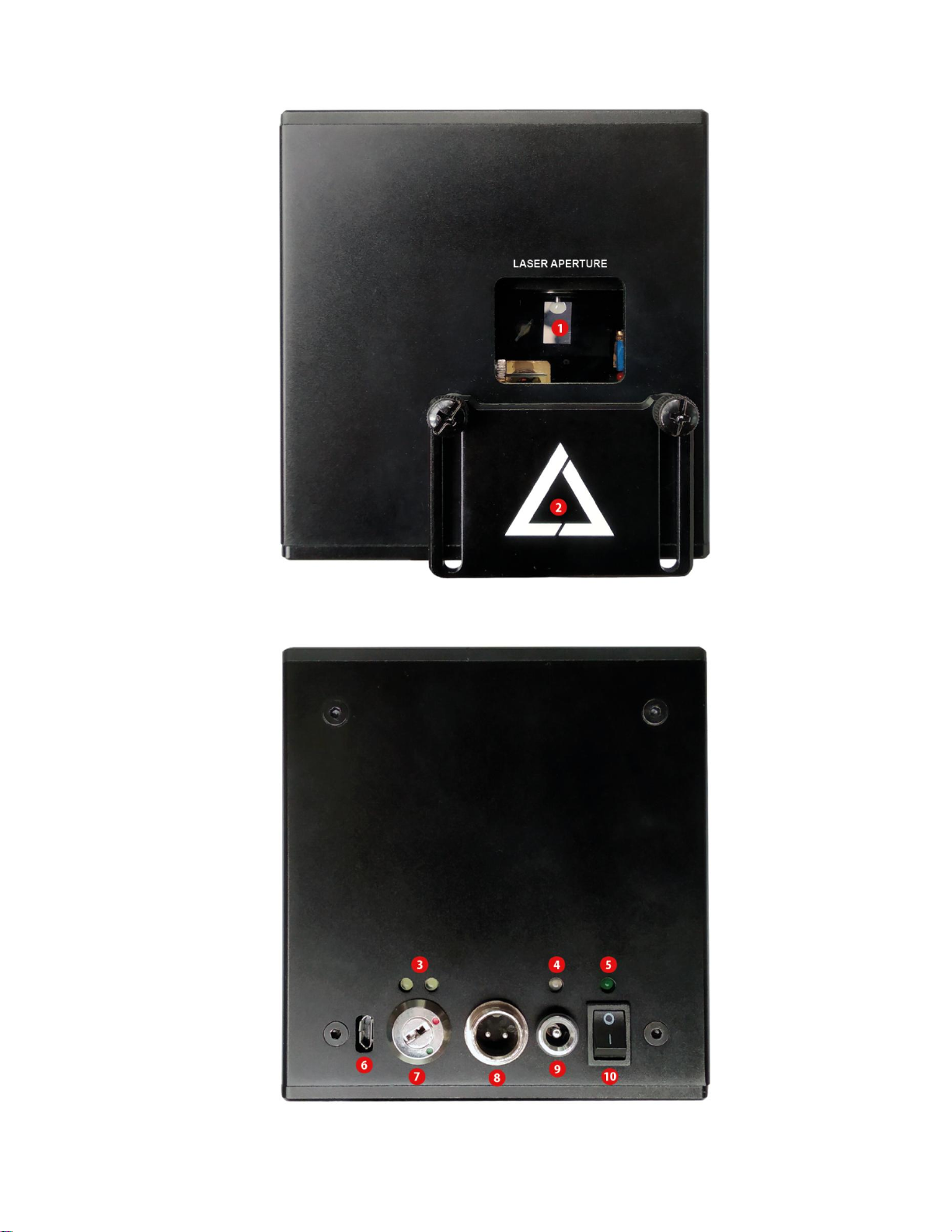
Simply keep the laser free from dust or other contaminates that could cloud or
dirty the laser aperture. Cleaning the aperture window is the ONLY maintenance
allowed and must be performed with the unit powered down and locked off.
Servicing by the user is not allowed. Any attempt to open or modify the unit
is prohibited. Instant permanent blindness may result in case of an
accidental eye exposure to the beam.
2. Do not expose the human eye directly or indirectly to focused or scattered
laser radiation as loss of vision, complete blindness, and/or other serious injuries
may result. Lasers are capable of starting fires at great distances. Do not use
around flammable materials.*
3. Do not take apart, modify or dismantle the laser or operate it under abnormal
current load (doing so will void the warranty). Strictly no service is allowed.
Servicing should only be handled by authorized factory trained technicians.
4. Always treat your laser with great care as some components are very fragile
and must not be subjected to shock.
5. Avoid turning the laser on and off frequently as it will reduce the diode life. This
device does not have a set duty cycle but we do not recommend using it for more
than four hours continuously.
6. From time to time, clean the laser aperture with a dry tissue that does not pill.
You may also use an alcohol prep wipe and compressed air to blow dust from
the vents. BE SURE the alcohol has dried fully before activating the laser. This
is the only user maintenance allowed and can ONLY be performed with the
unit powered down and locked off.
7. Always keep all factory supplied labels on the unit and visible. These are
required for legal compliance.
8. During use, be sure to leave an open space around all sides of the laser to
facilitate airflow through the heatsink beneath the device.
9. Operate your laser only within the specified temperature range of 10°C (50°F)
to 40°C (104°F). Failure to do so may result in weak output, overly strong output
which will diminish the life of the unit and/or large output power swings. The LC-
1000 is thermostatically monitored so we can determine if a failure was