3
Step 1 Hot Water
Operating Steps
Step 4 Starting the
Dishwasher
Step 5 Adding a
Forgotten Item
Use a detergent designed specifically for use in an automatic
dishwasher. Other types (laundry, hand soap, etc,) will cause
oversudsing. Be sure to use fresh detergent and store it in a
cool, dry place (not under the sink).
The amount of detergent to use depends on the water hard-
ness measured in grains per gallon * (gpg) and the amount of
soil on the dishes. Generally detergent amounts should be
increased for harder water and heavier soil. Refer to the fol-
lowing chart for detergent usage recommendations.
Do not use detergent with Rinse Only. Leave the detergent
lid open when running Rinse Only.
If the water hardness is 13 gpg or harder, it is difficult to
achieve good results with any dishwasher. The solution is a
mechanical water softener to improve water quality, deter-
gent effectiveness, and to protect the dishwasher parts from
the damage that hard water deposits may cause.
A liquid rinse aid dispenser (select models) automatically
releases a measured amount of rinse aid into the final rinse
portion of each cycle.
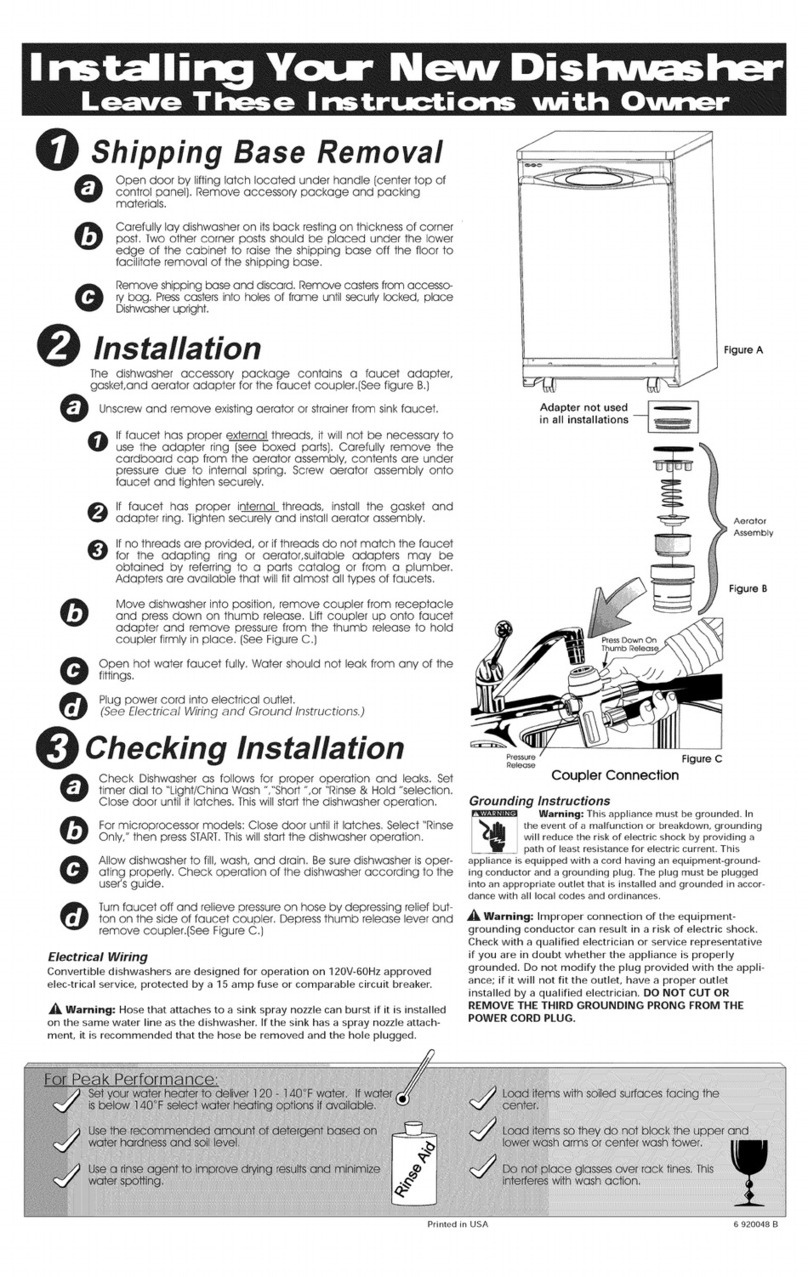
For best results, the incoming water temperature should be
120°-140°F. Check the water temperature by turning on the
hot water faucet nearest the dishwasher and letting it run
into a glass in the sink. Place a candy thermometer in the
glass and check the temperature once it has stopped rising. If
it is below 120°F have a qualified person raise the water
heater setting.
If the outside temperature is unusually low, or if your water
travels a long distance from the water heater to the dish-
washer, you may want to turn on the hot water faucet at the
sink and allow it to run until the water is hot. This assures
that the inital fill of water is hot.
To fill the dispenser, turn the cap counterclockwise to open.
Pour the rinse aid into the reservoir. Replace the cap and be
sure it is securely in place before closing the dishwasher
door. Check the dispenser monthly and refill as needed.
Rinse aid is available in solid form for models without a liq-
uid dispenser. When using a solid rinse aid, fasten it to the
back right corner of the lower rack. Purchase more rinse aid
when the material dissolves and the container is empty.
• After loading the dishwasher and adding detergent, close
the dishwasher by pressing the door until the latch clicks.
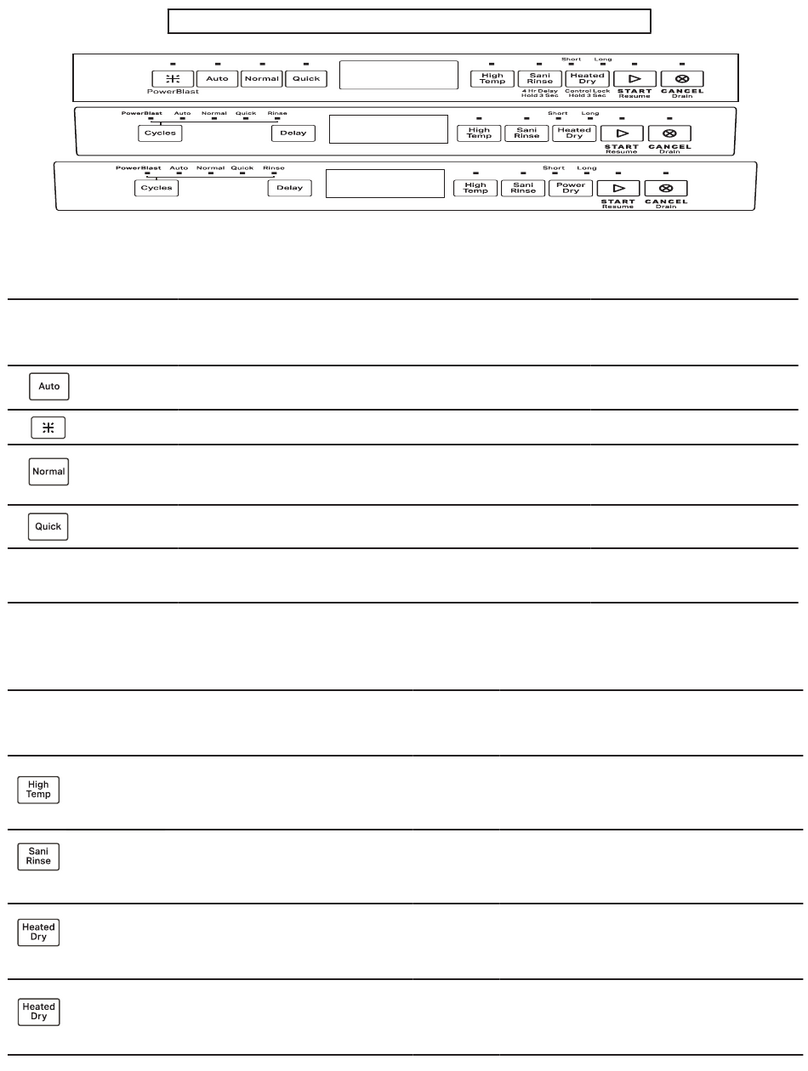
• To start the dishwasher, firmly press the desired cycle and
options pads. After a pause, the fill will begin. To prevent
an unplanned cycle or AccuTemp™option change, these
selections are “locked in” after 1 minute.
• The indicator lights for the selected cycle and options will
glow.
• To cancel the Heated Dry option, press the pad again. To
cancel a cycle, press the Drain/Off pad.
For best cleaning, the forgotten item should be added early
in the cycle.
1. Press the Delay/Resume pad or unlatch the door.
2. Wait for the water circulation to stop.
3. Open the door and add the item.
4. Close and latch the door.
5. If Delay/Resume was pushed, push it again to restart the
dishwasher.
6. After five seconds, the cycle resumes automatically at the
point of interruption.
Step 3 Rinse Aid
Step 2 Detergent
Water Hardness* Soil Level Detergent Amount**
(per cup dosage)
Soft (0-4 gpg) Light Soil 5 teaspoons
Normal Soil 6 teaspoons
Heavy Soil 8 teaspoons
Medium (5-9 gpg) Light Soil 7 teaspoons
Normal Soil 8 teaspoons
Heavy Soil 10 teaspoons
Hard (10-12 gpg) Light Soil 9 teaspoons
Normal Soil 10 teaspoons
Heavy Soil 12 teaspoons
*Your local water utility or state univer-
sity extension service can tell you the
degree of water hardness in your area.
** Add recommended amount of deter-
gent to both compartments for Heavy
or Normal wash cycles, and to the main
cup only for the Light wash cycle.