S-5000THX & S-150THX satellitespeakers page 10
The foam that is located inside the speaker grille is very important. Therefore, any time the S-5000 is used
without its speaker grille, it is very important that that foam be replaced. If your S-5000s are being installed
behindotherclothgrillesinorder to conceal them (or behind a THX front projection screen), the regular speaker
grilles should be removed.
In these cases, please contact the M&K factory at (310) 204-2854, and we will send, at no charge,
replacement self-adhesive foam pieces that can be easily applied to the cabinet's front baffle. This will replace
the foam normally held in place by the speaker grille and will insure that you get maximum performance from
your S-5000s. If any of the other foam pieces become damaged, please contact us and we will send
replacements.
9. SATELLITE/SUBWOOFER PHASING TEST
In any system using a subwoofer separate from Satellite speakers, a phasing test must be performed to
insure good bass blending. This test insures optimum sound in the critical bass frequencies where your
Subwoofer and Satellite speakers overlap.
HOME THX AUDIO SYSTEM
For a Home THX Audio system, follow the system instructions provided with the THX controller, as you will
need to have correct phase among all the speakers in the system. These instructions will take you through the
front channels, surround channels, and subwoofer.
SATELLITE/SUBWOOFER SYSTEM
IfyouownanM&KTHXPoweredSubwoofer,seeitsowner'smanualforthecorrectprocedureformatching
phasebetween the Satellitesand Subwoofer. Its "SUBWOOFERPHASE"switch makesthisimportant test very
easy. If your subwoofer does not have a "SUBWOOFER PHASE" switch, follow this procedure:
Play a familiar CD, LP, or tape with steady, consistent bass content through your system. Listen carefully
tothe"mid-bass"regionof75-125Hz. Thisisthepartofthespectrumwhereelectricorstringbassesanddrums
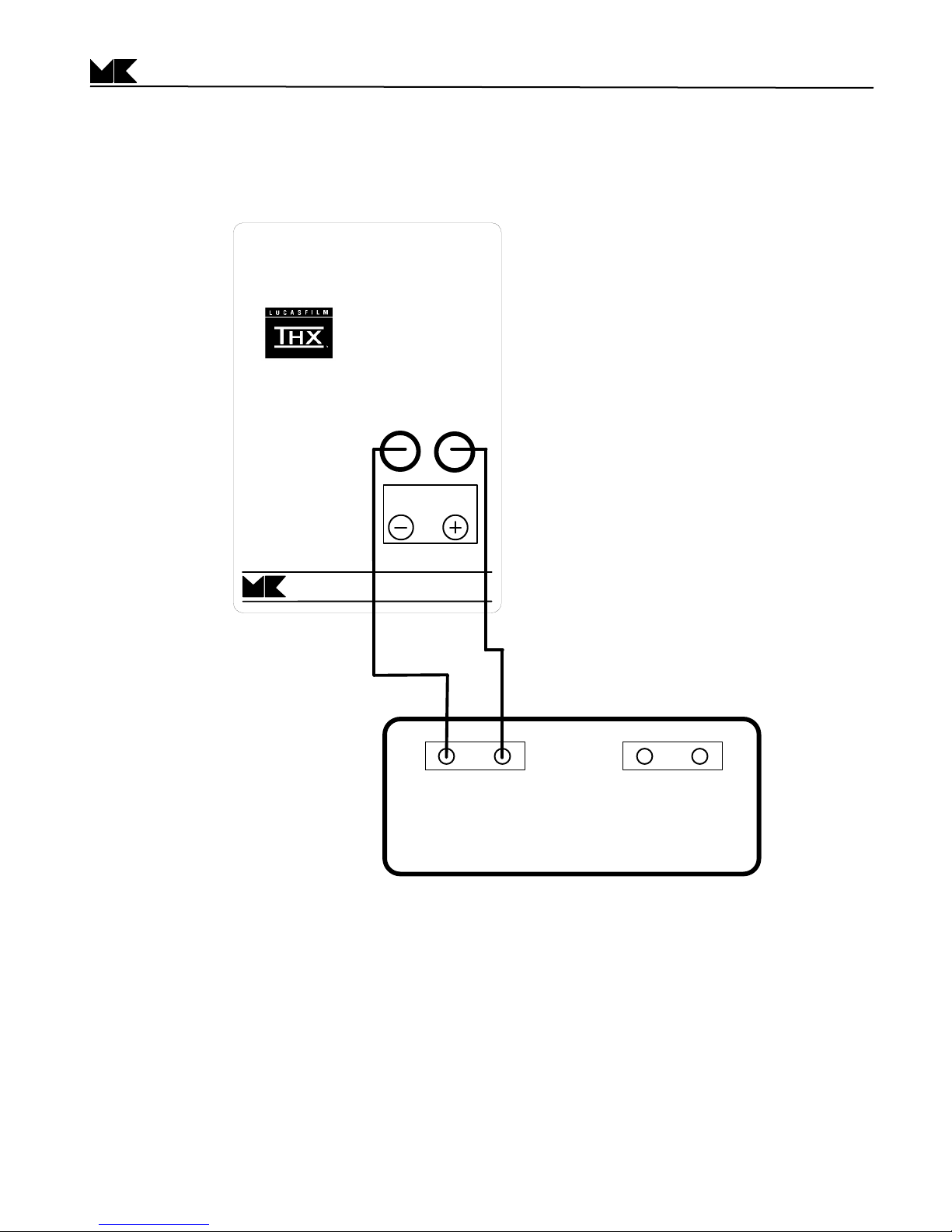
predominate. Then, reverse the Positive and Negative speaker inputs on the back of BOTH Satellite speakers.
You can do this at the back of both Satellite speakers, or at the Subwoofer's "TO SPEAKERS" terminals,
but never at both locations. The lead that was on the Positive (+) terminal should be switched to the Negative
(—) terminal, and vice versa.
Now listen to the same musical passage as you did earlier, concentrating on the mid-bass region. If you
hear less bass, the original connections were correct. If you hear more bass, the new connections are correct.
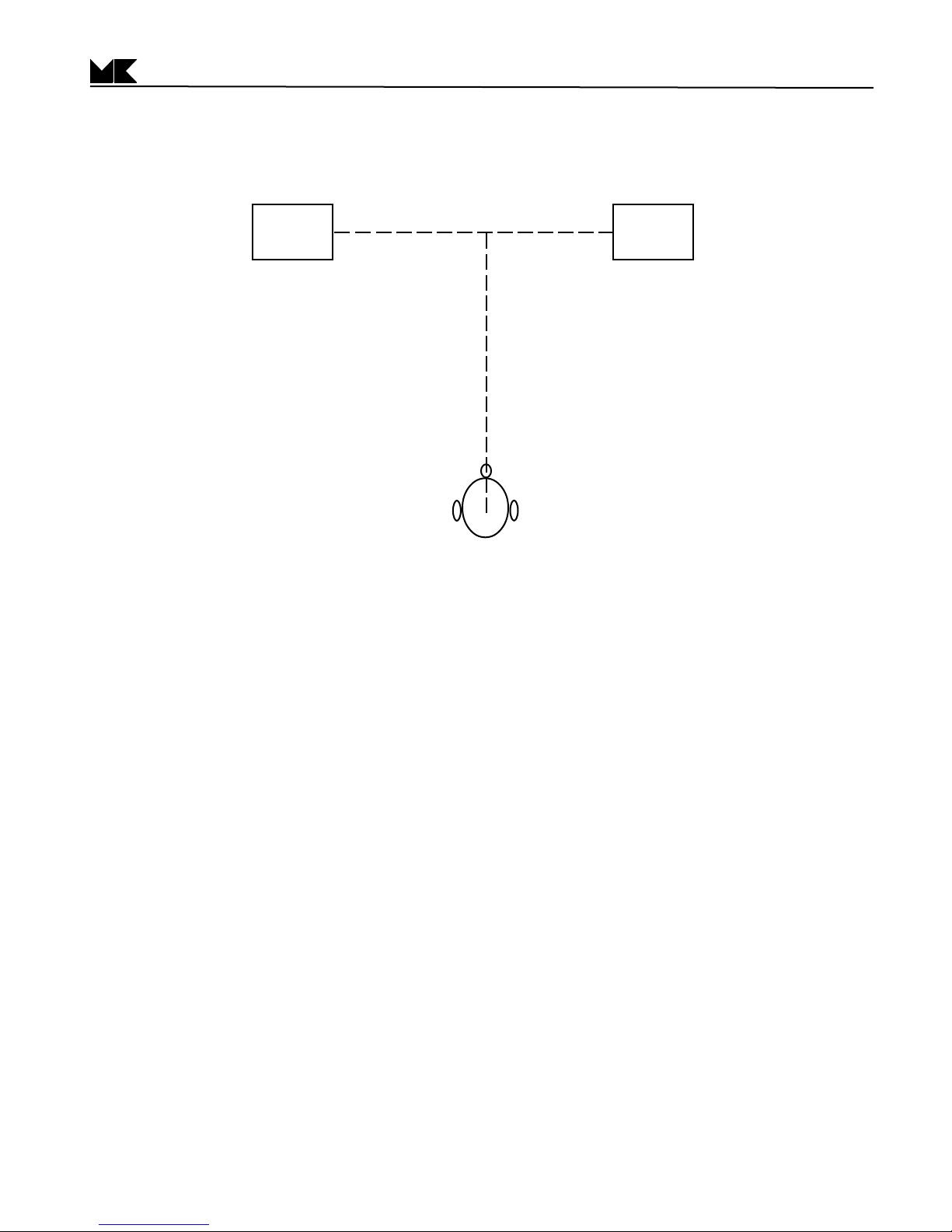
You need to perform this test because when Satellite speakers are located separate from a Subwoofer,
each speaker is at a different distance from your ear. In some cases, the difference will be just enough so that
the output from the Subwoofer arrives out of phase with the output of the Satellites. When this happens, that
critical mid-bass is actually cancelled. You should re-do this test any time you move your speakers.
If you want to experiment further, you can move the Satellite speakers either towards or away from your
listening position, making changes in small increments. This will "focus" the system's sound to its optimum.
When you hear the best balance between stereo image localization and maximum impact and output in the mid-
bass, you have the ideal location.
10. SPEAKER DAMAGE & HOW TO AVOID IT
An important factor to consider with any loudspeaker system is the potential for speaker damage. Even
though your speakers have extremely high power handling ability, they still can be damaged by relatively low
powered amplifiers.
While very few M&K Satellites are actually returned for service, the vast majority of those returned are not
for manufacturing defects. Instead, they are returned because they have been overdriven, almost always
becausetheamplifierorreceiverusedwasdrivenintoclippingdistortion. Thisdamageisconsideredabuse,and
is not necessarily covered under warranty.
This clipping distortion occurs when the demands of the music are greater than the amplifier's available
power. It can occur at 20 watts with a small amplifier, or at 400 watts with a large amplifier. Regardless, when
this happens, the amplifier's output waveform (which usually looks like a smooth arc) is "clipped" off, exhibiting
a flat top instead of the arc.