manuals.online logo
Brands
  1. Home
  2. •
  3. Brands
  4. •
  5. Nakamichi
  6. •
  7. CD Player
  8. •
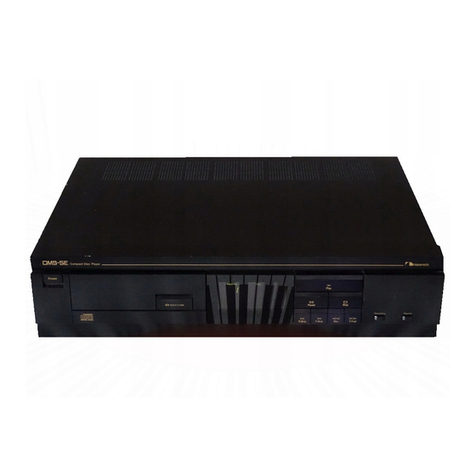
  9. Nakamichi OMS-7 User manual

Nakamichi OMS-7 User manual

This manual suits for next models

2

Other Nakamichi CD Player manuals

Nakamichi CD Player 4 User manual

Nakamichi

Nakamichi CD Player 4 User manual

Nakamichi MB-4s User manual

Nakamichi

Nakamichi MB-4s User manual

Nakamichi DRAGON-CD Limited User manual

Nakamichi

Nakamichi DRAGON-CD Limited User manual

Nakamichi OMS-5 User manual

Nakamichi

Nakamichi OMS-5 User manual

Nakamichi MB-1s User manual

Nakamichi

Nakamichi MB-1s User manual

Nakamichi CD-700II User manual

Nakamichi

Nakamichi CD-700II User manual

Nakamichi DVD-15 User manual

Nakamichi

Nakamichi DVD-15 User manual

Popular CD Player manuals by other brands

Arcam CD23 Handbook

Arcam

Arcam CD23 Handbook

Sanyo MCD-Z1F Service manual

Sanyo

Sanyo MCD-Z1F Service manual

JVC RC-ST3SL instructions

JVC

JVC RC-ST3SL instructions

Technics SL-P9066 operating instructions

Technics

Technics SL-P9066 operating instructions

Marantz HD-CD1 quick start guide

Marantz

Marantz HD-CD1 quick start guide

Sony DVP-FX850 Service manual

Sony

Sony DVP-FX850 Service manual

Philips AZ1140 Instrukcja obs?ugi

Philips

Philips AZ1140 Instrukcja obs?ugi

Alpine 7909 owner's manual

Alpine

Alpine 7909 owner's manual

JVC CH-X350 instructions

JVC

JVC CH-X350 instructions

RCA RP-7923 instruction manual

RCA

RCA RP-7923 instruction manual

Pioneer DEH-P3550MP XM Operation manual

Pioneer

Pioneer DEH-P3550MP XM Operation manual

Philips Shockproof AX2102 brochure

Philips

Philips Shockproof AX2102 brochure

Philips CD582 user manual

Philips

Philips CD582 user manual

Philips AZ 6821 operating manual

Philips

Philips AZ 6821 operating manual

Lasonic MSU-2020 user manual

Lasonic

Lasonic MSU-2020 user manual

Denon DCD-1420 Service manual

Denon

Denon DCD-1420 Service manual

Panasonic SJ-MR100 operating instructions

Panasonic

Panasonic SJ-MR100 operating instructions

Onkyo DX-7210 instruction manual

Onkyo

Onkyo DX-7210 instruction manual

manuals.online logo
manuals.online logoBrands
  • About & Mission
  • Contact us
  • Privacy Policy
  • Terms and Conditions

Copyright 2025 Manuals.Online. All Rights Reserved.

Service
Manual
Nakamichi
Nakamichi
CONTENTS
Ne
10.
11.
12.
ONO
ees
bs
Rata
ince
HERA
NS
ay
arctan
neta
Cte
das
og
oat
Laer
te
cute
dy
1h
hati
2
Pickup.
Replecetnent
Procedures
3
cciss
0:54
a
Gis
nioin’e
oa
eM
veuld
rede
yun
ed
bc
aa
Gna
ee
2
2,
1
Notice
in
Handling
Pickup...
06.
esc
e
cence
cedenenseuvteeenvetucvenee
lll,
2
2.
2:
Pickup
Replacement
Procedures
...........
0.0...
ceeeeeceee
cece
eee!
2
2.
8.
Adjustment
After
Replacement
of
Pickup
....................00.00..000000000002
3
Measurement
Instruments
and
Test
Discs
.....
2.0.0.0...
cece
ee
eee ccs
eee
eee!
4
Parts
Location
for
Adjustment
..
1...
6.
e
cece
ence
eee
e
et
ctneneec
cee
cll
4
4,
1,
Pacts
On
PO
By
NEY
seks
wale
Woe
ias
ngs
wind
alae
4
holes
rad
da
Cook
eee.
ween
4
4,
2,
Parts
On
PICUMD
sicece
wiactlin
tne
e a
Ckipials
io
dace
Bias
pei
wife
aie
|
Banlieue
cal
4
POMERRCNE,
sai
ba
cre
Nin
pean
ala
Fwenide
wakes
yiSine
yaa
Ret
Lem
eae
iLL
vrs
ue
5
5.
1.
NGI
it
ert
o
MOMs
Vache
ole
epee
Nene
eae
Huma
wuubed
bnahadiiews,
oo.
5
5.
2.
Adjustment
Instructions
..
0.6...
0...
cece
cent
eee
e
ence
eee
L
5
Mechanism
Ass’y
and
Parts
List...
2.0.0.0...
ec
cece
nent nent
cee
cee
lel
10
6.
1.
Oy
VDGHIB
fede
sais
ata
ieritndy
ie
gear
mien
aired
Ghee
kod.
a
ane
Na
dna
arom
de
hand
Sooo
eae
10
6.
2.
Prone
Panel:
Bag
y
(AOL):
os
i.5
4
squat
oy
<a
es
a
avece-soidh’y
aed
baw
saranda
d
ahn
un
Be
Base
es
ee
11
6.
3.
Canals
Asa'y
(AQZ)
ooo
st
acs
oihene
a/v
Sb
Pace
a
ead
dood
Ak
Blah
Wa
Woe
ae
dete
12
6.
4.
Disc
Mechanism
Ass’y
(B01)...
1...
eee
eee
eee
eee
e
eee
ell.
13
6.
5.
Rear
Panel
Ass’y
(B02)
.....
0.0...
0c
c
eee
eect
eee
cece.
Si
4S
ce
gh
eed
atten
ete
wetahs
15
6.
6.
Disc
Mechanism
Sub
Ass’y
(C01)...
cece
ence
eben
eee.
15
6.
7.
Analog
Processor
Unit
(D01)
2.0.6...
.
eee
ec
cece
eet
nee
n
cence,
16
Mounting
Diagrams
and
Parts
List...
0.6.0...
eee
cece
ete
ete
eee
ence
c
eel
17
Te.
A
Photo
Transistor
P.C.B.
Assy
60...
0...
eee
cece
ec
ence
ences
eeseveneen
cee.
17
Te
2%
Photo:
Diode
PCB.
Ags
ye
5
i
5:5
cao
sa
than
arden
¥
OV
oan
6/d
bod
GR
Bev
Siow
own
Cee
nn
4
kes
17
7.
8.
Open'End
Switch
PCB.
Ags
you
iic's.
ws)
w
died
alecg
ver
ha.
Fd
he
Weeder
ava
goa
17
7.
4,
Close
End
Switch
P.C.B.
Ass’y
2.0...
eee
eee
ene
e
ene
ee
eel,
17
7.
5.
Eject/Load
Switch
P.C.B.
Ag
Yi.
cees
bi
bee
be
Lvae
sect
etetevivenceuccnr
en,
17
7.
6.
Power
Switch
P.C.B.
Assy
2...
eee
cee
cee
cece
enc
eeeateeteenvecnn
cee.
17
7.
7.
MOMS
PCBs
ABS
Ya
sea
ose
SoA
545
sare
wy
diy
GE
wh
a
SS
5
wsh-w
Se
leads
|
teri
dole
Oo
17
7.
8.
Remote
Control:
P.C.B
Assy
i
..0
63g
6
agen
dois
een
ig
bod
web
ab
odd
dav eae
Cdk
oun,
17
7.
9.
Pindack
BC
Bi
Aga
ye
ty
cssnia
a
acho
baa
olec
arg
Beach
aM
WN
@
Siac
sg
RE
ae,
Lt
De
18
7.
10
BL
Indicator
CB
Aggy.
3
e042
cas
ni
edie
wander
&
Sacaty
s
aS
GaN
GY
Pas
ack
diteadet
e
18
7.11
Headphone
Amp.
P.C.B.
Ass’'y
.
1...
cet
cee
cece
tence
nee
ce
en.
19
7.
12.
Auto
Power
Control
P.C.B,
Ass’y.
2...
2.
ke
eee
eee
e
beeen cece.
19
7.
18.
RE
ErecAm
po
ECB
AS:
22.2
s)atein:
aula
beet
mahigha
salsa
qe
iden
wal
ore
aloe
24
ake
d
SUL
Aki
20
7.
14,
Powersupply
PCB.
Aggy
2
ono
as
hel
a
ten
WA
a
ak
ounain
dl
PE
ouch
wb
Oe
Rie
Ecos
21
7.
15.
Control
Switch
P.C.B.
Ass’'y
6...
0
ec
cce
ete
eect
tet
nveusenenceee.
22
7.
16,
Analog
Processor
P.C.B.
Ass’Y
6...
ct
cece
eee
nent
ne ee
been
cele,
22
Teli:
Dif
Converter
PCB
Aas
9
5
gn
is
wikia
acu
id
Mioe
deg
ig
Ban
bs
Redd
esa
W
dhaeweie
dj
ok
ola
ee
23
7.
18.
Matin
BC
BcARe
ys
ecectthne
aera
Geaie%
Gee
ote
Raat
eed
t
eutpcla'y
wart
Goes
seen
bbweg
he
eer
«
26
Schematic
Diagrana
soo.
2.4.5
d-osec0:
4%
alee
84a)
held’
s
Woe
Lode
64-9
SG
0
4
wb
4nd
Ea
wee
LA
dw,
27
8.
1.
IC
Block
Diagrams
and
Descriptions
........0...0.00
000.
cc
cece
cence
nee
eeececeeeue
27
8.
2.
Waveforms
at
Major
Points
.....
0...
0...
c
cece
ee
ence
tence
eee
ence
eee.
37
8.
3.
Dchemaue
Diagram
4
je
\heek
2d
se
okie
eae
wed
ZEAE
bw
whose
Ce
ede
ha
oe
ll
ee
wate
heey
38
Wiring
Diagram
2...
.
kee
eee
ee
tee
ee
eae
BS
eign
area
ean
ote
emt
ethernet
39
Block
DAA
Q
PAU
ayn:
5-25.10)
4.0
5
Sip
ee
8S
"s,m
ae
Bed
Ae
dealer
ged
edi
nM
Salas
Come
ah
ds
eng
1S
soa
de
eed
39
Remote
Control
Transmitter
Unit
RM-7
..
0.6...
o
cc
ce
eee
een eee
eee
ee
eeneeee
40
11.
2.
Mechanism
Ass’y
and
Parts
List...
2.0...
ke
cee
ten
cece
cece
eee
40
11.
2.
Mounting
Diagram
and
Parts
List...
2.2...
.
cee
ce
teen
ee
eneeeeee
41
11.
38.
mchematic-
Diagram.
3442024904
940d
«
Sd
de
Bai
aScd
eha
eee
eke
b>
Fhe
ws
Wee
AEG
oe
ees,
be
Al
MDSCICAHIONE
e's
ges
Gord
sp
Weed
h
te
Soe,
Sse
VG
ED
ae ew AP
ALOE
Lwin
'y
at
Praha
ade
donee
handle,
woken
bh
ng
42

1,
GENERAL
1.1,
Voltage
Selector
Voltage
selector
is
installed
on
the
rear
panel
for
Other
version
of
the
Nakamichi
OMS-7,
This
voltage
selector
can
select
either
120
V
or
220-240
V
at
customer’s
disposal,
1.2.
Packing
Materials
and
Owner's
Manual
Part
No.
Description
Q'ty
0C81046A
Outer
Carton
OMS-7
1
0C81081A
Outer
Carton
OMS-7E
1
0C81082A
Outer
Carton
OMS-70
(Japan)
1
0C81047A
Inner
Carton
OMS-7
1)
0C81085A
Inner
Carton
OMS-7E
1
0C81086A
Inner
Carton
OMS-70
(Japan)
1
0C81051A
_
Side
Packing
L
1
0C81050A
_
Side
Packing
R
1
0C81052A
Mirror
Mat
Bag
1
0D04491A
Owner’s
Manual
OMS-7
&
OMS-5
(English)
1
0D04493A
Owner's
Manual
OMS-7/7E
&
OMS-5/5E
1
(English
/German/French)
0D04492A
‘Owner’s
Manual
OMS-70/50
(Japanese)
1
WARNING:
To
protect
eyes
from
laser
beam
during
servicing,
DO
NOT
LOOK
AT
THE
LASER
BEAM.
Note:
Laser
Diode
Properties
Material:
GaAlAs
Wavelength:
790
nm
—
820
nm
Emission
Duration:
continuous
Laser
Output:
0.7
mW
max,
Classification:
Class
III
b
2.
PICKUP
REPLACEMENT
PROCEDURES
2.1.
Notice
in
Handling
Pickup
In
case
of
repair
or
replacement
of
the
Pickup,
pay
attention
to
the
following
handling
instructions
since
the
laser
diode
in
the
Pickup
is
not
resistant
to
static
electricity.
(1)
Repair
or
replace
on
a
work
stand
on
which
the
conducting
rubber
is
spread.
(2)
Use
ceramic
soldering
iron
with
GND.
(8)
Since
Pickup
is
supplied
as
a
spare
part
in
a
conductive
bag,
take
it
out
of
the
bag
only
when
you
need
it,
(4)
Remove
the
shorting
pin
and
conductive
sponge
that
short
the
connector
pins
of
the
Pickup
after
entire
work
is
completed.
(5)
Do
not
turn
the
adjustment
screws
(Focus
Screw,
RF
Signal
Phase
Screw
and
Tracking
Screw)
of
the
Pickup.
If
they
are
turned
widely,
it
may
take
much
time
to
readjust
them.
2.2,
Pickup
Replacement
Procedures
(1)
Place
the
Compact
Disc
Player upside
down
on
the
work
stand
and
remove
the
Bottom
Cover
by
unfastening
10
screws,
(2)
Rotate
the
pulley
of
the
Disc
Mechanism
Ass’y
to
move
the
Fig,
2.2
Pickup
in
the
direction
of
the
arrow.
See
Fig.
2.1.
(3)
Remove
FO1,
F02
and
FO3,
and
pull
out
F04.
See
Fig.
2.2,
(4)
Remove
F05,
FO6
and
FO7,
and
pull
out
FO8.
See
Fig.
2.3.
Fig.
2.1
Fig.
2.3
(5)
Remove
two
connectors,
unsolder
the
two-core
shield
cable,
and
unsolder
F09
to
separate
FO9
from
the
Pickup.
See
Fig.
2,4,
(6)
Loosen
F10
and
remove
F11
(Pickup).
See
Fig.
2.5.
(7)
Mount
a
new
Pickup
and
temporarily
fasten
it
with
F10.
See
Fig,
2.5.
(8)
Remove
the
conductive
sponge
of
the
new
Pickup,
(9)
Mount
F09
on
the
new
Pickup
by
soldering,
Plug
in
the
two
connectors
and
solder
the
two-core
shield
cable
to
the
Original
place.
Soldering
of
the
shield
cable
must
be
made
in
the
order
of
GND
wire
with
black
tube
and
then
signal
wires,
(10)
Mount
the
new
Pickup
by
reversing
the
disassembly
Procedures,
(11)
Pull
F12
(shorting
pin)
out
of
the
Pickup.
See
Fig.
2.6.
Fig.
2.4
Fig.
2.6
2.3.
Adjustment
After
Replacement
of
Pickup
Upon
completion
of
replacement
of
the
Pickup,
perform
rough
adjustments
following
the
flow
chart
shown
in
Fig,
2,7.
Then
proceed
to
the
final
stage
adjustment,
ie.,
‘Adjustment
Instructions”’
in
item
5.2
except
step
1
‘“‘Laser
Power
Adjustment”
(step
1
is
already
done
in
the
rough
adjustment),
START
Laser
Power
Adjustment
as
per
Step
1
Offset
Adjustment
of
Focus
Servo
(TP7,
RV105)
as
per
Steps
2-1
&
2-2
Tracking
Servo
Adjustment
(TP6,
RV102,
RV103)
as
per
Steps
3-1
to
8-5
Focus
Screw
Adjustment
(TP7,
Focus
Screw)
as
per
Steps
4-4
&
4-5
RF
Signal
Phase
Alignment
(TP1,
RF
Signal
Phase
Screw)
as
per
Steps
5-4
&
5-5
Tracking
Screw
Adjustment
(TP1,
Tracking
Screw)
as
per
Steps
6-3
&
6-4
DL
Signal
Adjustment
(Emitter
of
Q103,
RV101)
as
per
Steps
3-6
&3-7
EFM
Signal
Adjustment
(TP1,
RV104)
as
per
Step
3-8
Are
EFM
signal
at
TP1
&
playback
sound
clear
2
Adjustment
for
Scratch
and
Dot
on
Disc
as
per
Step
10
Fig.
2.7
3.
MEASUREMENT
INSTRUMENTS
AND
TEST
DISCS
(1)
Synchroscope
(15
MHz
or
more)
(7)
LPF
(Low
Pass
Filter):
(2)
VTVM
Pass
Band
—
4
Hz
to
20
kHz,
Attenuation
—
60
dB
or
more
(3)
DC
Voltmeter
for
24.1
kHz
or
higher
frequency
(4)
Optical
Power
Meter
Recommended
LPF:
Philips
Type
7122
780
29020
(5)
Philips
Test
Sample
Disc
5A
(8)
Distortion
Meter
(6)
Sony
Test
C.D.
YEDS-7
4.
PARTS
LOCATION
FOR
ADJUSTMENT
4.1,
Parts
on
P.C.B.
Ass’y
8
[b3000005}
|
Main
P.C.B.
CN201
D/A
Converter
PC.B.
RVSO1
Audio
Signa!
Belonce
RMOS
180n
—--
onsfifone
Laser
Power
RVMOI
Auto
Power
Control
P-C.B,
RVIOS
RVIO4
@
TPG
Te7
®
©
RvIWS
RVIIO
Pickup
Movement
Fig.
4.1
4.2,
Parts
on
Pickup
RF
Signal
Phase
Adjustment
Screw
Focus
Screw
Tracking
Adjustment
Screw
Lock
Screws
for
Focus
&
RF
Signal
Phase
Adjustment
Lock
Screws
for
Tracking
Adjustment
Fig.
4.2
5.
ADJUSTMENTS
5.1.
Note
Pay
attention
to
the
following
before
adjustment.
(1)
Keep
the
Compact
Disc
Player
horizontal
during
adjustment,
(2)
Before
starting
adjustment,
allow
three
minutes
after
the
power
is
turned
ON.
Offset
voltate
will
be
stabilized
in
this
Period
of
time.
(3)
When
a
Philips
5A
test
disc
is
used,
perform
the
adjustment
while
listening
to
the
playback
sound.
(4)
Connect
a
low
pass
filter
(pass
band:
4
Hz
to
20
kHz)
in
series
to
the
distortion
meter
to
be
used.
(5)
When
the
Main
P.C.B,
Ass’y
is
replaced
with
new
one,
set
each
of
the
potentiometers
as
follows:
RV106,RV107:
1
o’clock
direction
(marked
on
the
P.C.B.)
RV108:
10
o’clock
direction
(marked
on
the
P.C.B.)
Others:
Mechanical
center
positions
5.2,
Adjustment
Instructions
Auto
Power
Control
P.C.B.
RVMO1
Optical
Power
Meter
to
Pickup
Lens
or
DC
Voltmeter
across
RMO9
on
Auto
Power
Control
P.C.B.
Adjustment
(6)
Potentiometers
that
are
not
stated
in
the
adjustment
instructions
must
be
set
to
the
preset
positions
stated
in
(5),
(7)
When
the
Auto
Power
Control
P.C.B.
Ass’y
or
Pickup
is
replaced
with
new
one,
turn
the
potentiometer
RVMO1
full
counterclockwise
to
prevent
damage
to
the
Pickup,
(8)
Keep
the
Pickup
Lens
clean,
Carefully
clean
it
with
lens
cleaner
or
similar
tools,
Danger:
Invisible
laser
radiation
when
opened
and
interlock
failed
or
defeated.
Avoid
direct
exposure
to
beam.
1.
Using
Optical
Power
Meter
a.
Unsolder
one
of
the
leads
of
diode
D135
on
the
Main
P.C.B.
Ass'y.
b.
See
Fig.
5.1.
Remove
the
Feed
Motor
Belt
and,
with
rotating
the
Pulley,
position
the
Pickup
so
that
an
optical
power
meter
can
be
put
onto
the
lens
of
the
Pickup.
Position
the
optical
power
meter
at
such
a
position
and
angle
that
provide
maximum
power
meter
reading.
c.
Check
that
RVMOl
is
at
full
counterclockwise
position,
and
then
turn
ON
the
power.
Rotate
RVMO1
slowly
clockwise
until
the
power
meter
reads
0.27
mW.
Caution:
Use
care
not
to
exceed
0.3
mW
at
any
moment,
otherwise
Pickup
will
be
damaged.
e.
Turn
OFF
the
power
and
then
solder
the
lead
of
D135
and
put
the
belt
on
the
feed
motor.
Qa
.
.
Without
using
Optical
Power Meter
a.
Unsolder
one
of
the
leads
of
diode
D135
on
the
Main
P.C.B.
Ass'y.
b.
Connect
a
DC
voltmeter
across
RMO9
(180-ohm
1
W)
on
the
Auto
Power
Control
P.C.B.
Ass'y.
ce.
Check
that
RVMO1
is
at
full
counterclockwise
position,
and
then
turn
ON
the
power.
d.
Rotate
RVMO1
slowly
clockwise
until
the
reading
on
the
DC
voltmeter
reaches
90%
of
the
operating
current
Iop.
lop
is
marked
on
the
Pickup
(however,
it
is
actually
marked
as
Io).
Example:
If
Iop
is
37
mA,
the
voltmeter
reading
which
corresponds
to
90%
of
Iop
is
0.037
(A)
x
0.9
x
180
(ohms)
=
5.99
(Vv).
Caution:
Use
care
not
to
exceed
Iop
at
any
moment,
otherwise
the
Pickup
will
be
damaged.
In
this
example
(Iop
=
37
mA),
the
limit
is
6.66
V.
e.
Turn
OFF
the
power
and
then
solder
the
lead
of
D135.
ITEM
SIGNAL
OUTPUT
SOURCE
CONNECTION
2
|Focus
Servo}Test
Disc|Synchroscope|
Main
P.C.B.
Adjustment
|
Philips
|to
TP1,TP7
RV104
,RV105
|
4
1.
Set
a
synchroscope
to
DC
input
and
50
mv/div.,
and
connect
it
to
TP7.
2.
Adjust
RV1O5
to
obtain
0+50
mV
on
the
synchroscope,
3.
Connect
the
synchroscope
to
TP1
and
play
back
the
test
disc.
4.
While
listening
to
the
playback
sound,
adjust
RV104
so
that
the
horizontal
waving
of
the
EFM
(Eight-to-Fourteen
Modulation)
signal
at
TP1
is
minimized
and
the
EFM
signal
waveform
becomes
clear.
See
Pig.
5.2.
5A
on
Main
P.C.B.
Test
Disc
Philips
5A
Tracking
Servo
Adjustment
Synchroscope|
Main
P.C.B.
to
TP1,TP6,
RV101,RV102
emitter
of
RV103
,RV104
Q103
on
Main
P.C.B.
+
Set
a
synchroscope
to
DC
input
and
50
mV/div.,
and
connect
it
to
TP6.
2.
Adjust
RV103
to
obtain
0-100
mV
on
the
synchro-
scope.
3.
Short
between
pins
4
(A+C
signal)
and
5
(GND)
of
CN201
and
between
pins
6
(GND)
and
7
(B+D
signal)
of
CN201
on
the
Main
P.C.B.
Ass'y,
Short
between
the
emitter
and
the
base
of
Q113
on
the
Main
P.C.B.
Ass'y.
4.
Adjust
VR102
to
obtain
0-50
mV
on
the
synchro-
scope,
5.
Remove
the
short
of
CN201
and
Ql13.
6.
Connect
the
synchroscope
to
the
emitter
of
Q103
and
play
back
the
test
disc,
7.
Adjust
RV101
to
obtain
minimum
DL
signal
(RF
error
signal)
on
the
synchroscope,
8.
Connect
the
synchroscope
to
TP1
and,
while
listening
to
the
playback
sound, adjust
RV104
so
that
EFM
signal
is
maximized
and
becomes
clear,
Focus
Screw|/Test
Disc
|Synchroscope|Main
P.C.B.
Adjustment
i
Loosen
the
two
Lock
Screws
used
for
focus
adjustment
by
referring
to
Fig.
4.2.
2.
Set
a
synchroscope
to
DC
input
and
50
m/div.,
and
connect
it
to
TP7.
3.
Adjust
RV105
to
obtain
0+50
mv
on
the
syncro-
scope,
i
4.
Play
back
the
7th
or
8th
music
on
the
test
disc,
5.
While
listening
to
the
playback
sound,
adjust
the
Focus
Screw
of
the
Pickup
to
obtain
exactly
or
approximately
0
V
on
the
synchroscope.
6.
After
completion
of
adjustment,
securely
tighten
the
Lock
Screws
alternately,
Focus
Screw
Optical
Power
Meter
se
Sees
2
AWE
AN
ie
XK?
ORR
RRR
Ce
SSN
SSS
Fig.
5.2
EFM
Signal
at
TP1
SIGNAL
OUTPUT
SOURCE
CONNECTION
Test
Disc|Synchroscope|Main
P.C.B.
Philips
RV104
5A
Loosen
the
two
Lock
Screws
used
for
RF
signal
phase
alignment
by
referring
to
Fig.
4.2.
2.
Connect
a
synchroscope
to
TPl
and
play
back
the
test
disc.
3.
While
listening
to
the
playback
sound,
adjust
RV104
so
that
the
horizontal
waving
of
the
EFM
signal
at
TPl
is
minimized
and
the
EFM
signal
becomes
clear,
4.
Play
back
the
7th
or
8th
music
on
the
test
disc.
5.
Adjust
the
RF
Signal
Phase
Screw
of
the
Pickup
so
that
the
EFM
signal
waveform
at
TPl
becomes
clear
and
maximized
and
that
its
horizontal
waving
is
minimized.
6.
Repeat
2.
to
5.
above
two
or
three
times,
7.
Securely
tighen
the
Lock
Screws
alternately,
RF
Signal
Phase
Adjustment
RF
Signal
Phase
Screw
Loosen
the
two
Lock
Screws
used
for
tracking
adjustment
by
referring
to
Fig.
4.2.
2.
Conduct
step
3
"Tracking
Servo
Adjustment",
3.
Connect
a
synchroscope
to
TPl
and
play
back
the
7th
or
8th
music
on
the
test
disc.
4.
While
listening
to
the
playback
sound,
adjust
the
Tracking
Screw
of
the
Pickup
so
that
the
EFM
signal
at
TPl
becomes
clear
and
maximized.
5.
Connect
the
synchroscope
to
the
emitter
of
Q103
and
adjust
RV101
to
obtain
minimum
DL
signal
on
the
synchroscope.
6.
While
listening
to
the
playback
sound,
adjust
RV104
so
that
the
EFM
signal
at
TP]
is
maximized
and
becomes
clear,
Securely
tighten
the
Lock
Screws
alternately.
Tracking
Screw
Adjustment
Test
Disc|
Synchroscope|
Tracking
Philips
to
TP1,TP6,
emitter
of
Q103
on
Main|Main
P.C.B.
P.C.B.
RV101,RVi02
RV103
,RV104
Connect
a
synchroscope
to
the
test
point
CT1
and
play
back
the
18th
music,
Finger
Print,
on
the
test
disc.
2.
While
listening
to
the
playback
sound
and
observing
the
VCO
signal
level
on
the
synchro-
scope,
turn
the
core
of
L501
counterclockwise
and
clockwise
to
find
out
the
upper
and
the
lower
limits
of
VCO
voltage,
i.e.,
the
limits
at
which
the
playback
sound
is
about
to
cut
off,
3.
Adjust
the
core
of
L501
so
that
the
VCO
level
is
the
midpoint
between
the
upper
and
lower
limit
voltages.
(This
VCO
level
will
be
approx.
a
little
under
5.0
Vv).
Test
Disc
Philips
5A
yvco
Adjustment
Synchroscope|D/A
Converter
to
test
point
CT1
on
D/A
Converter
P.C.B.
Test
Disc
Philips
5A
Synchroscope|Main
P.C.B.
to
anode
of
RV109,RV110
D138
(or
pin
3
of
U115),
anode
of
D139
(or
pin
11
of
U115)
on
Main
P.C.B.
Connect
a
synchroscope
to
the
anode
of
the
diode
D138.
2.
Play
back
the
test
disc
and
then
press
the
F.
Fwd
button
to
set
the
Compact
Disc
Player
in
Cue
mode,
3.
Adjust
RV109
to
obtain
a
180
psec
pulse
width.
See
Fig.
5.3.1.
4.
Press
the
F,
Fwd
button
further
several
times,
and
check
whether
the
time
indication
on
the
Time
Indicator
regularly
increases.
If
not,
repeat
3,
5.
Connect
the
synchroscope
to
the
anode
of
diode
D139.
6.
Play
back
the
test
dise
and
then
press
the
Rev
button
to
set
the
Compact
Disc
Player
in
Cue
mode,
(to
be
continued)
Pickup
Movement
Adjustment
Adjust
RV110
to
obtain
a
160
psec
pulse
width,
See
Fig.
5.3.2.
Press
the
Rev
button
further
several
times,
and
check
whether
the
Time
Indicator
regularly
changes
its
time
indication,
If
not,
repeat
7.
Audio
Test
Disc]
VIVM
to
Play
back
the
first
music
on
the
test
disc
to
Signal
Output
Pin
play
back
1
kHz
0
dB
level
signals.
Balance
Jacks
Measure
both
L
and
R
channel
output
levels
and
Adjustment
adjust
RV501
so
that
the
difference
between
them
is
less
than
0.1
V.
Adjustment
|Test
Disc|Synchroscope|Main
P.C.B.
1.
Scratch
900
»m
for
Scratch|
Philips
Play
back
the
9th
music
with
a
900
wm
scratch
on
and Dot
on
the
test
disc
and
listen
to
the
playback
sound,
Disc
If
playback
is
not
made
properly,
conduct
step
6
"Tracking
Screw
Adjustment",
Turn
the
Tracking
Screw
counterclockwise
when
tracking
stops,
but
turn
it
clockwise
when
track
is
skipped,
If
still
proper
playback
is
not
made
yet,
conduct
step
7
"VCO
Adjustment".
2.
Black
Dot
800
zm
Play
back
the
17th
music
with
a
800
ym
black
dot
on
the
test
disc,
If
playback
is
not
made
properly,
that
is,
if
tracking
stops,
make
the
following
adjustment:
1.
Set
a
synchroscope
to
1
msec/div.
and
connect
it
to
TPl.
2.
Adjust
RV104
so
that
the
waveform
at
TP]
is
as
shown
in
Fig.
5.4.2
when
passing
through
a
black
dot,
satire
180
y
Sec
A
\
\
}
/
~~”
F.
Fwd.
Fest
Fig.
5.4.1
Before
Adjustment
ie
/
\
160
Sec
‘
/
No?
Rev.
Fig.
5.3.2
Fig.
5.4.2
After
Adjustment
Perform
this
adjustment
only
if
a
disc
with
eccentricity
is
not
played
back
properly.
Tracking
Adjustment
with
Eccentric
Disc
Precisely
re-adjust
Step
3
"Tracking
Servo
Disc
Adjustment"
and
Step
6
"Tracking
Screw
Adjustment",
and
check
whether
playback
is
made
properly.
tif
not,
perform
the
following
adjustment
to
insure
correct
tracking
for
a
0.1
mm
eccentric
disc,
1.
Preparation
for
0.1
mm
Eccentric
Disc
Find
a
disc
with
approx.
0.1
mm
eccentricity
in
the
following
manner:
a.
Set
a
synchroscope
to
DC
input
and
connect
it
to
the
positive
side
of
C173
on
the
Main
P.C.B.
Ass'y,
b.
Play
back
the
first
music
on
eccentric
discs
and
press
the
Pause
button
to
set
the
Com-
pact
Disc
Player
in
Pause
mode.
Then
observe
the
peak-to-peak
level
(Vpp)
on
the
Synchroscope.
The
amount
of
eccentricity,
X
(mm),
is
given
in
the
following
formula:
X
=
1/2
x
(1.3
x
(Vpp/(5.8
+
4.7))
sensitivity
of
Tracking
Servo
5.8
ohms:
DC
resistance
value
of
Traking
Coil
4.7
ohms:
value
of
resistor
R197
where,
1.3
mm/A:
If
amount
of
eccentricity
(x)
is
assumed
to
be
0.1
m,
Vpp
=
2
x
(5.8
+
4.7)/1.3
x
0.1
=
1.6
(Vv)
That
is,
the
disc
which
shows
approx.
1.6
V
on
the
synchroscope
should
be
selected,
2.
Load
the
disc
found
in
1
above
and
play
back
the
first
music
of
the
disc.
Check
whether
it
takes
much
time
to
enter
Standby
mode
or
whether
the
time
indication
of
the
Time
Indicator
begins
with
00:00.
If
not,
re-adjust
Step
3
"Tracking
Servo
Adjustment"
and
then
turn
RV108
approx.
10
degrees
in
the
counterclockwise
direction.
3.
During
playback,
press
the
F.
Fwd
button
several
times
and
check
that
the
time
indication
of
the
Time
Indicator
regularly
increases,
If
not,
turn
RV109
to
correct
it,
4.
Next,
during
playback,
press
the
Rev
button
several
times
to
see
whether
the
time
indication
of
the
Time
Indicator
regularly
decreases,
If
not,
turn
RV110
to
correct
it.