5
english
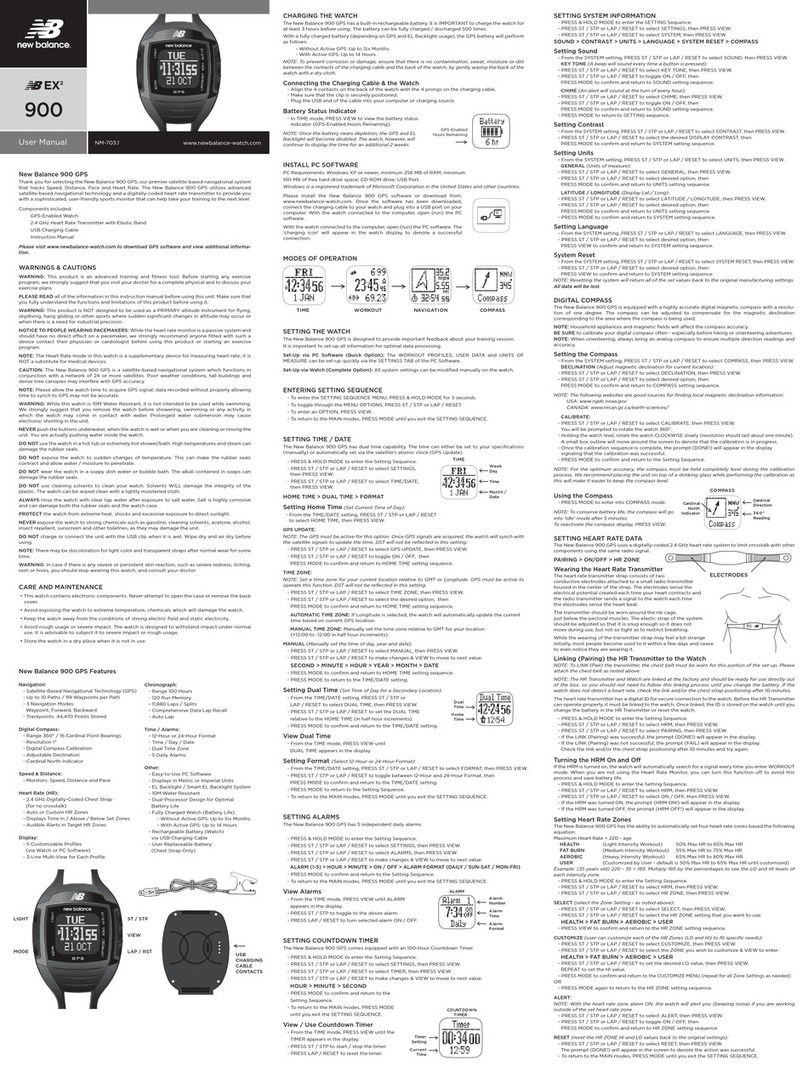
WEARING THE HEART RATE TRANSMITTER STRAP
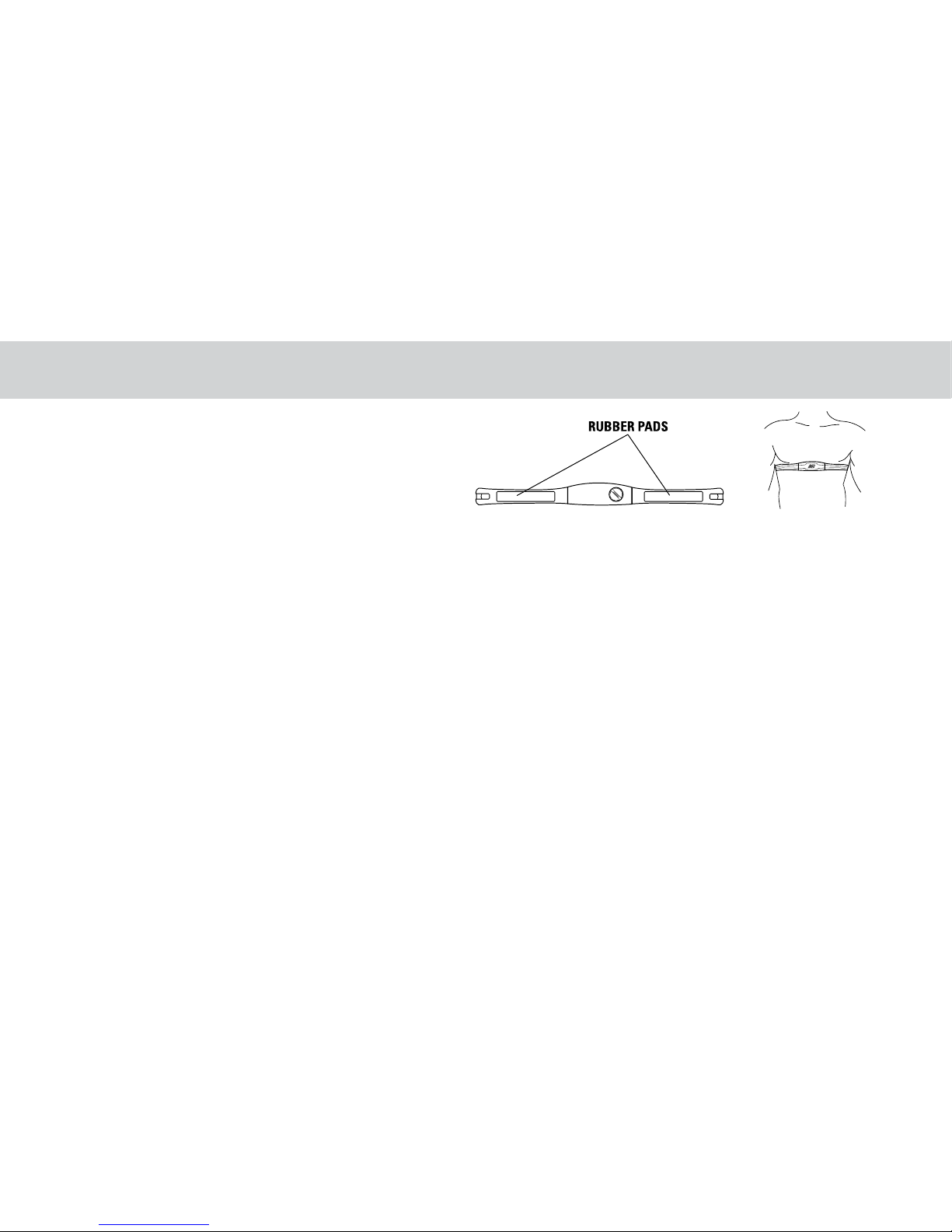
The heart rate transmitter strap consists of two conductive
electrodes attached to a small radio transmitter housed in the
center of the strap. The electrodes sense the electrical potential
created each time your heart contracts and the radio transmitter
sends a signal to the watch each time the electrodes sense the
heart beat. For the best performance, a layer of sweat should be
built up between your skin and the electrodes of the transmitter.
This makes it easier for the electrodes to “see” the electrical
signal. On cool days or at the beginning of your workout it
may be necessary to moisten the electrodes on the back of the
transmitter using saliva or one of the commercially available
electro conductive creams. DO NOT use tap water to moisten
the electrodes as tap water will act as an insulator rather than
a conductor and may actually reduce the performance of the
system.
The transmitter should be worn around the rib cage, just below
the pectoral muscles. The elastic strap of the system should be
adjusted so that it is snug enough so it does not move during
use, but not so tight as to restrict breathing. While the wearing of
the transmitter strap may feel a bit strange initially, most people
become used to it within a few days and cease to even notice
they are wearing it.
INTERFERENCE
For reasons of size, cost and battery life, heart rate monitors
function using a very low transmission frequency. Because of
this they are susceptible to interference from a variety of electro-
magnetic and microwave sources. High-tension power line,
traffic light controls, home and automotive electronics, powered
exercise equipment; home security and wireless LAN systems
and other things may interfere with the ability of the system to
register a heart rate. Intermittent readings of zero or of very high
heart rates (exceeding 210 beats) are an indication of some
type of interference. In general, the interference caused by these
sources is localized. After a few seconds or at most minutes, you
should pass from the area of interference and the operation of the
watch should return to normal. Additionally, other heart monitors
close by may also interfere with the function of your unit. It is
recommended that you separate yourself from other heart rate
users by a minimum of 3 feet (1 meter) in all directions.