6 7
3. Operation
Barometric pressure readings require no external power.
Note: “High pressure” and “low pressure” are relative terms.
There is no distinct point on the scale that clearly defines where
low pressure and high pressure begins, and vice versa.
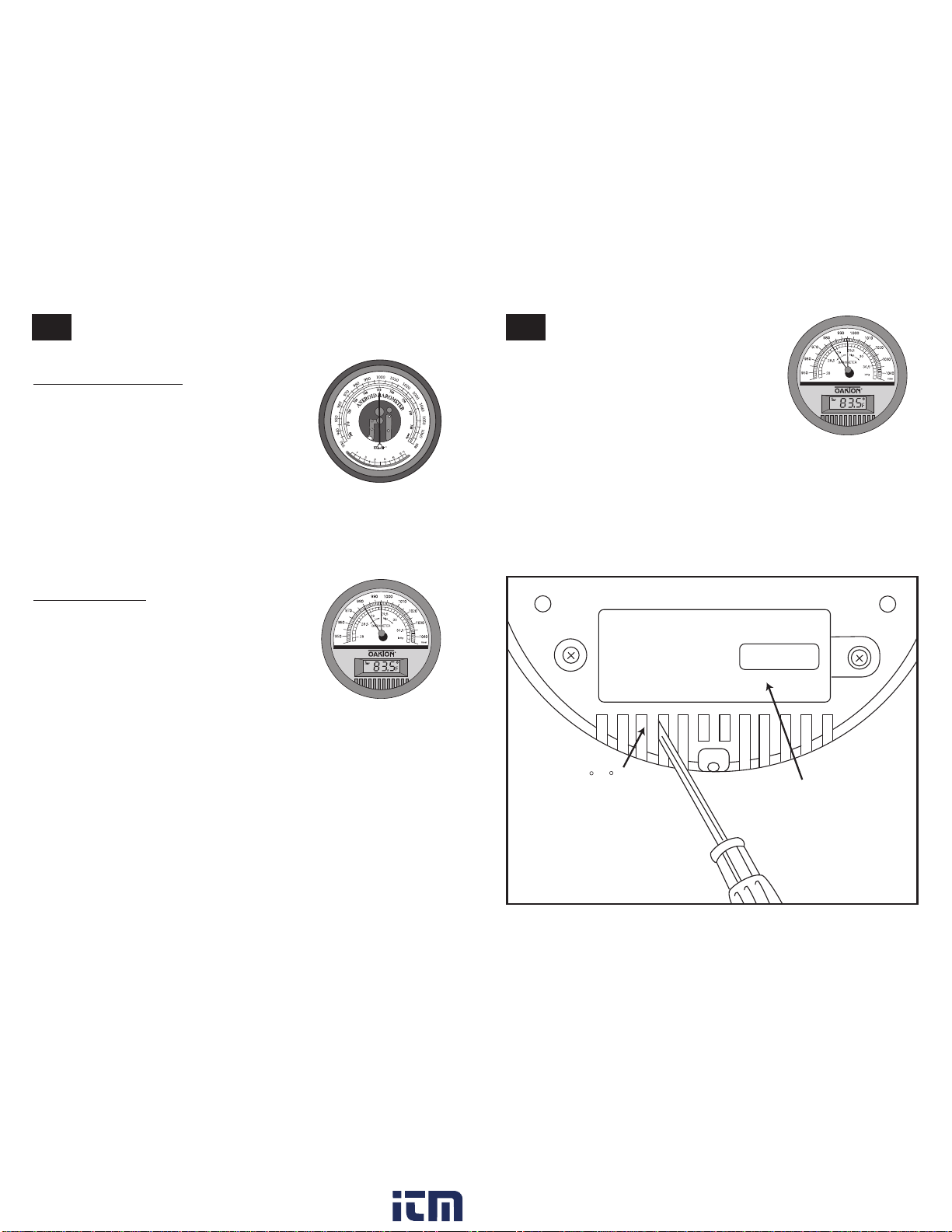
Setting the reference needle
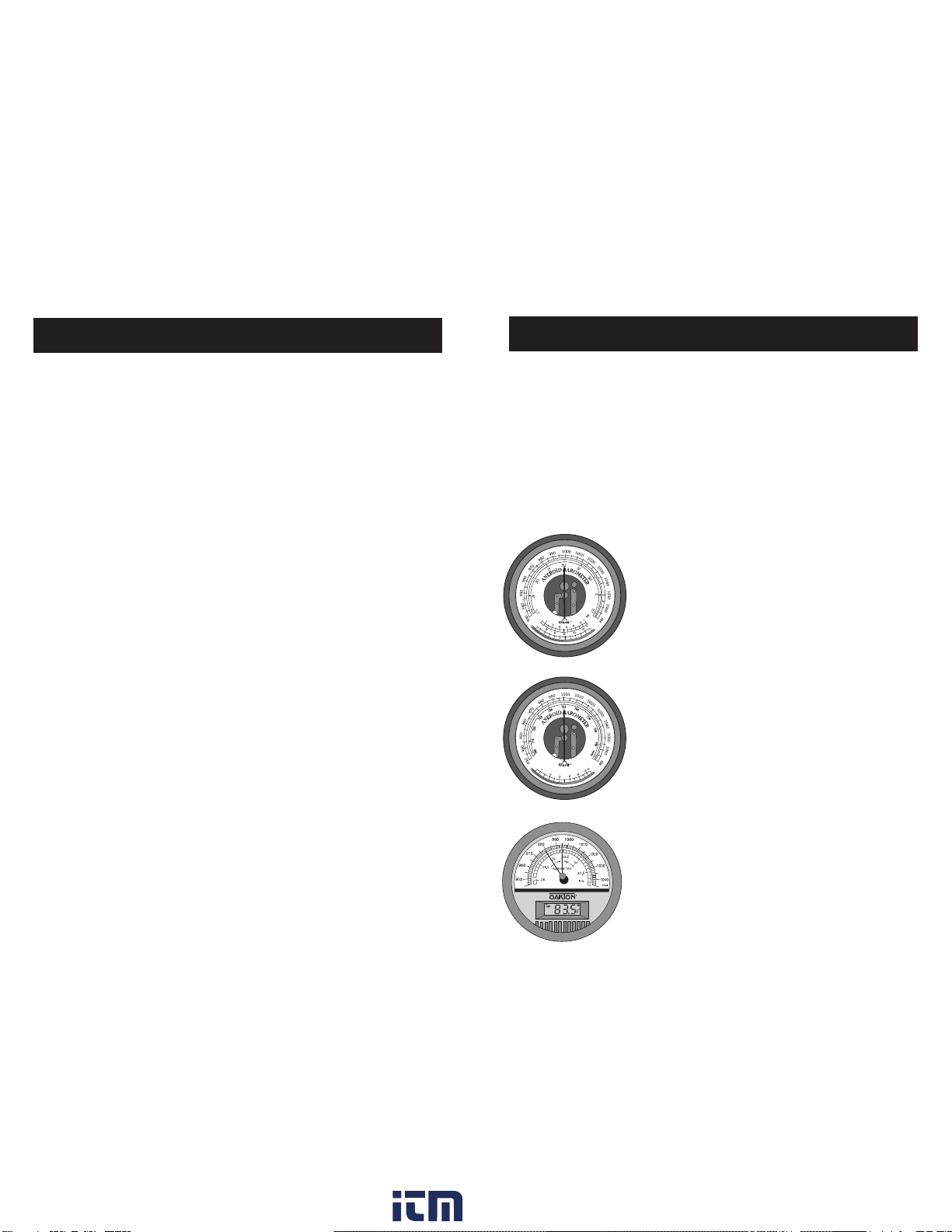
Your barometer features a reference needle (gold) and an
indicator needle.
• The reference needle shows where the barometric pressure
started.
• The indicator needle shows the current barometric pressure.
Sea level corrections
Since air pressure changes with altitude, you must compensate
your barometer accordingly. The higher you are above sea level,
the lower (to the left) the indicator needle will move on the
barometer.
Example: At at an altitude of 100 meters (330 feet), the barometer
will drop about 12 millibar (mb). To compensate for that altitude,
simply add back the 12 mb. Therefore, a reading of 1000 mb at
sea level becomes 1012 mb at 100 meters altitude (see the sea
level conversion chart below).
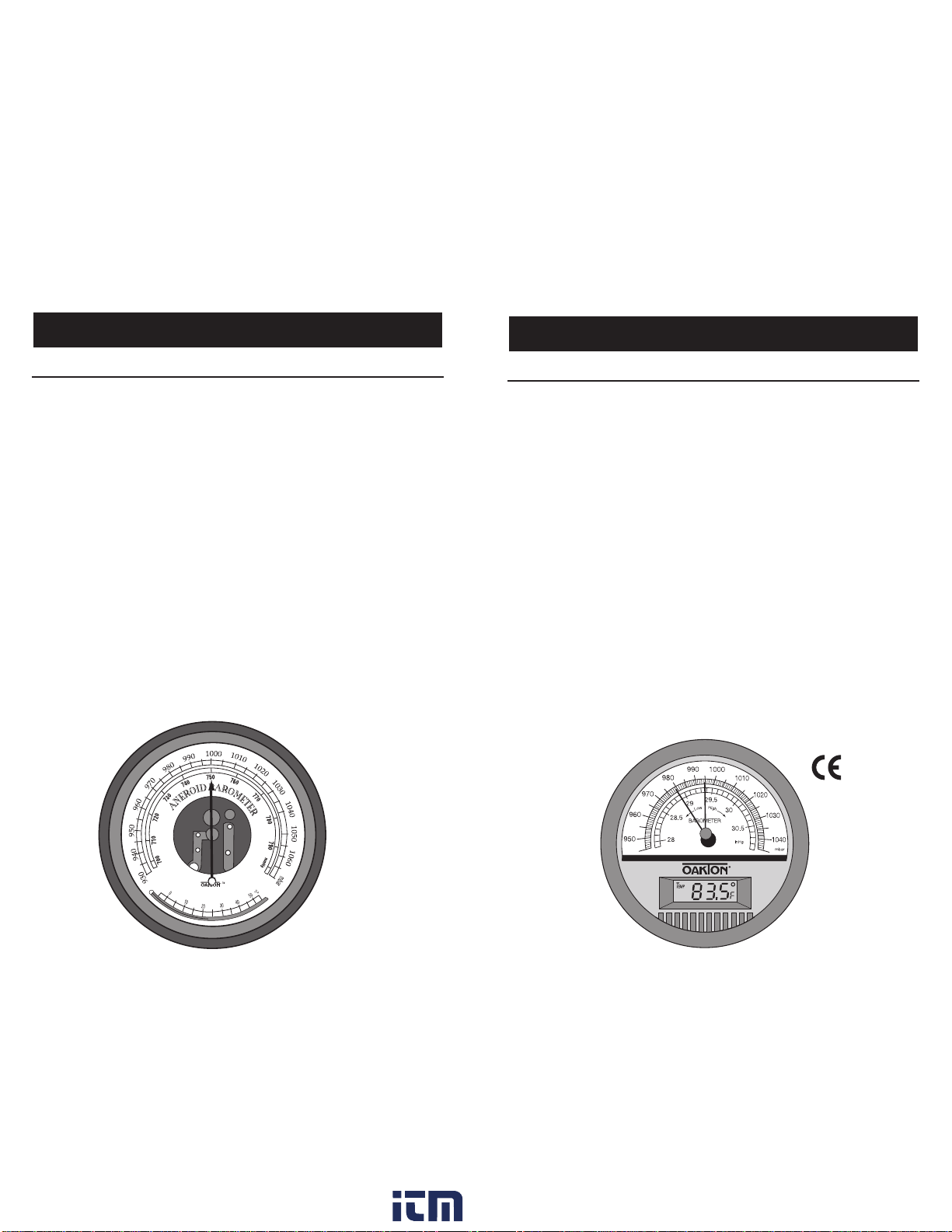
To adjust the barometer to your altitude, turn the adjusting
screw on the back center of the instrument to adjust the indicator
needle.
We recommend that you adjust your barometer after unpacking,
and again about once a year.
3.2
3.1
Reference needle (gold) Indicator needle
Adjusting knob
Lower pressure Higher pressure
Use the adjusting knob on
the front center of the unit
to align the gold reference
needle on top of the indica-
tor needle. After several
hours, the indicator needle
will move upward move
downward, or remain still.
• Upward movement
means improved
weather
• Downward movement
means deteriorating
weather (rain or snow).
• No movement means no
weather change
0
100200300400500
600
70 60 50 40 30 20 10 0
m =
meters above
sea level
mb =
sea level
correction
sea level conversion chart
www. .com information@itm.com1.800.561.8187