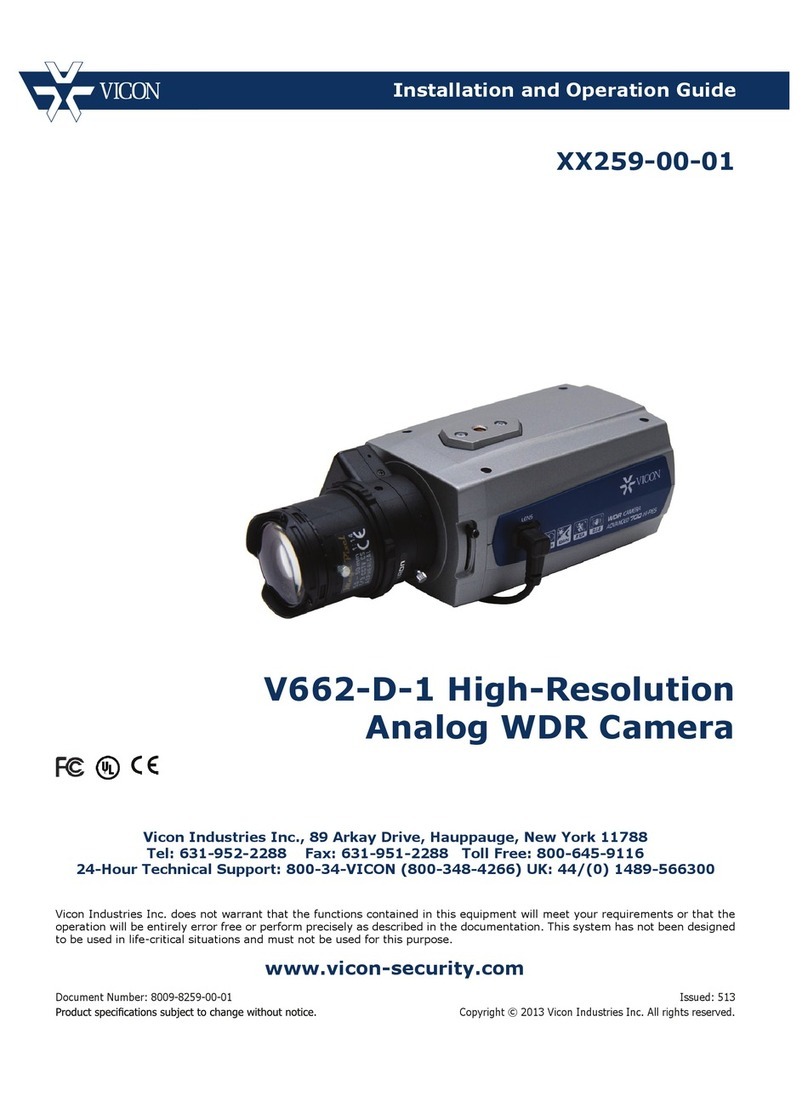
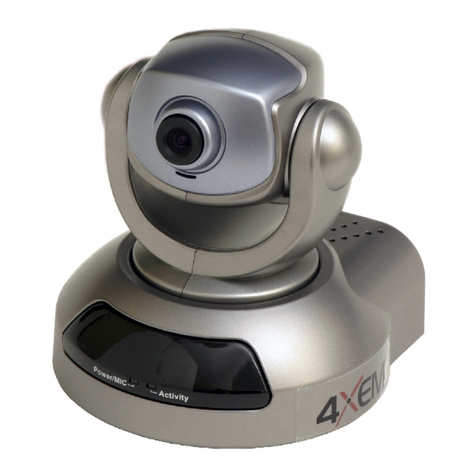
Orantek IP226 User manual

1
User's Manual
V1.00B
This manual applies for below models:
IP226 series IP227 series IP229 series IP326 series
IP226
IP226P
IP226W
IP227
IP227R
IP227P
IP227W
IP227RP
IP227RW
IP227
IP227R
IP227P
IP227W
IP227RP
IP227RW
IP326
IP326P
IP326W
IP326PW
MD226 series MD227 series MD229 series MD326 series
MD226
MD226P
MD226W
MD227
MD 227R
MD 227P
MD 227W
MD 227RP
MD 227RW
MD 227
MD 227R
MD 227P
MD 227W
MD 227RP
MD 227RW
MD 326
MD 326P
MD 326W
MD 326PW
Please read this manual carefully before attempting to install or operate this product.
Please retain this manual for your future reference.
English
short version

2
Physical Description
Indoor camera
RJ45 slot power adapter slot light sensor infrared LED
Power LED
Camera lens
Microphone
Camera lens
Microphone
Power LED

3
Outdoor camera

4
Reset
The Reset button is used to restore the factory default
settings. Sometimes resetting the system can return the
camera to normal operation.
Restore - Press and release the reset button with a paper clip
or thin object. The LED light will be out, after few seconds it
will relight again. (Note: that all settings will be restored to
factory default)
Status LED
The LED indicates the status of the Network Camera.
1) Green LED - Power is being supplied to the Network
Camera.
2) Blinking Orange LED – IP camera has been connected and
data is present.
Adapter Box
See General I/O Terminal Block click from this page
See DI/DO Diagram click from this page

5
Camera Connecting Guide
For initial setup, you need to connect the IP Camera directly to your router, switch or computer via a network cable. You
cannot connect wirelessly to the camera without first setting it up via a network cable.
You should connect the Camera into your internet router (normally supplied by your broadband provider), a switch box
or hub (that is connected to your computers network) or directly to your computer (gives limited viewing options, so this
is not recommended).
Connection via a Router/Switch
1. Using the standard Ethernet network cable, plug this in to the network connection socket on the IP Camera at one end,
and plug the other end in to a spare port on your router/switch.
2. Using the Power Adaptor (supplied), plug one end in to the Power Connection socket on the IP Camera. Plug the other
end in to an electrical socket and turn the power on.
3. The Connectivity Status indicator on the front of the camera will light up. Your router/switch will then begin to
communicate with the camera.
Connection directly to a computer
Choose this connection for testing the IP Camera to avoid any interference from other equipment, please refer to
Chapter Connected Directly to a Computer for details.

6
Camera setup software installation & Usage
The camera Setup utility can easily and quickly detect cameras connected to your local network and list them on the
Camera Setup window, also you can use the camera Setup utility to assign an IP address to each camera.
1. Insert the Installation CD into your CD -ROM drive and the installation screen should appear automatically (See
image below). If it does not, click “Start” then “Run”. In the text field enter “D:\autorun.exe” (if “D:” is the letter of
your CD -ROM Drive)
2. Click on “Install Camera Setup” and the following screen will be displayed.
3. If you want to change the default folder click “Change” to replace otherwise click “Next”
4. Click Install to install Camera Setup.
5. Click Finish to end the installation. You should now find a icon on the desktop.
6. Double -click the Camera Setup icon on the Desktop to launch the program. The Camera Setup utility should
automatically find your camera if is correctly connected (See image below).

7
Refresh - Click Refresh to search for cameras on the local network.
Setup - Select the required camera and click Setup to configure the network settings for the camera.
Open - Select the required camera and click Open to access the camera via a web browser.
Exit - Click Exit to exit the Camera Setup window.
Note: Select and double click one of the cameras from the Device list, to open the camera view via the web browser.

8
Camera Homepage & Live View
1. Using camera setup software to open your camera, or type the address in the web browser address
bar http://192.168.168.100 (this is default internal IP address), then you will see the home page.
2. Clicking either “Enter” or “Settings” will bring up a Login panel. The default username and password is:
Username: admin
Password: admin

9
Using Internet Explorer
Click Enter, you will see the Live View image.
Audio Upload -
Press and release
to start sending audio from your
computer’s microphone to the camera speakers.
Press and release to stop sending audio.
Volume -
1. Click the Mute button to mute the audio.
2. Slide the Slide block horizontally to adjust volume.
Snapshot -
1. Press the Snapshot button to capture a still image of the
camera view.
2. Press this button To change default Snapshot path,
The file is automatically assigned the data & time of the snapshot.

10
Record -
1. Press the Record button to record video and audio.
2. Recording Config. Click this button to set the
recording parameters, you can set record path, video file size and
select whether to start recording automatically when motion is
detected and the length of the recording in seconds.
Tools -
1. For Full Screen mode click this button , Press Esc to exit.
It could also achieve same function by double click the Image Field.
2. For Fill up the Image field click this button .
3. This button for Stream Type, Video Codec Settings.
This manual suits for next models
25
Table of contents