General installation guidelines
1. The boiler must only be installed by qualified engineers. Installer product training is available at
Robus Energy Ltd.
2. All local building regulations must be observed (downloads available from the Robus Energy
website).
3. The boiler must not be installed on combustible surfaces.
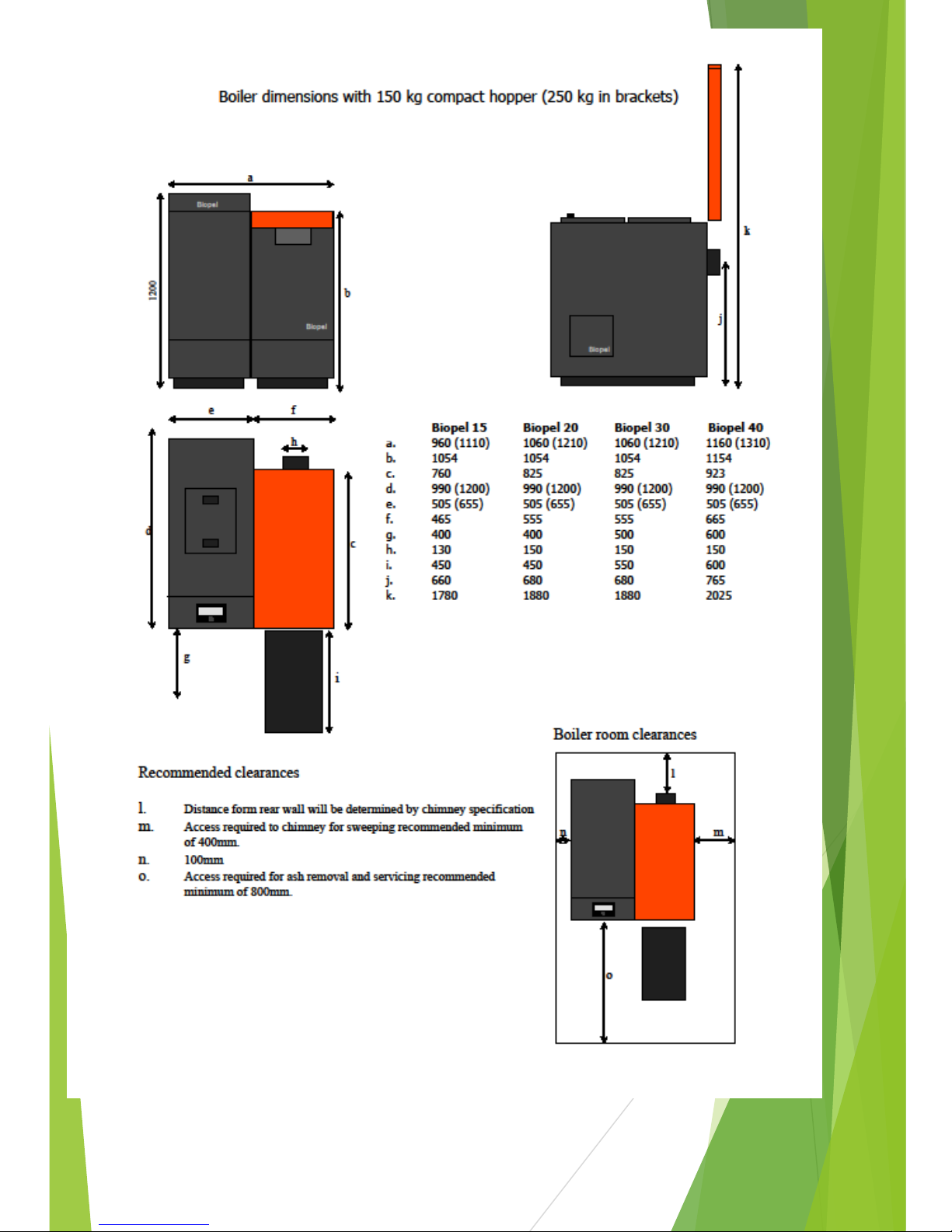
4. The chimney and ventilation system must be fit for purpose and installed in accordance with
Approved Document J (Combustion appliances and fuel storage systems).
5. Chimney draft should be between a minimum of 5PA and a maximum of 23PA and be stable.
Overpressure must not occur as this will cause inefficient boiler operation and a lack of control of
the boiler temperature. It may be necessary to install a draft stabilizer.
Installation of the burner
Installing the burner on the boiler:
1. Check that the burner is not damaged during transport.
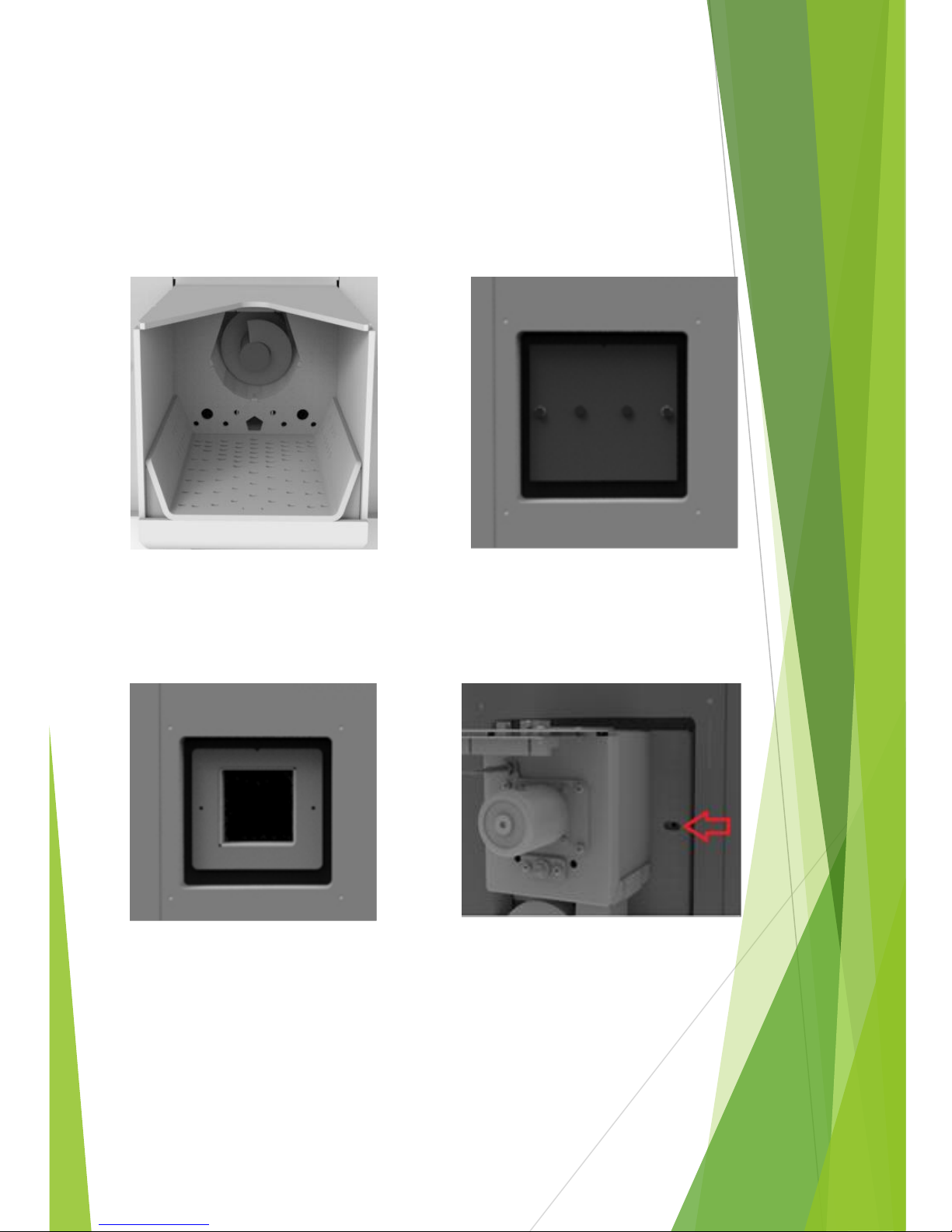
2. Check that the burning grate is inserted correctly in the burner (see image below).
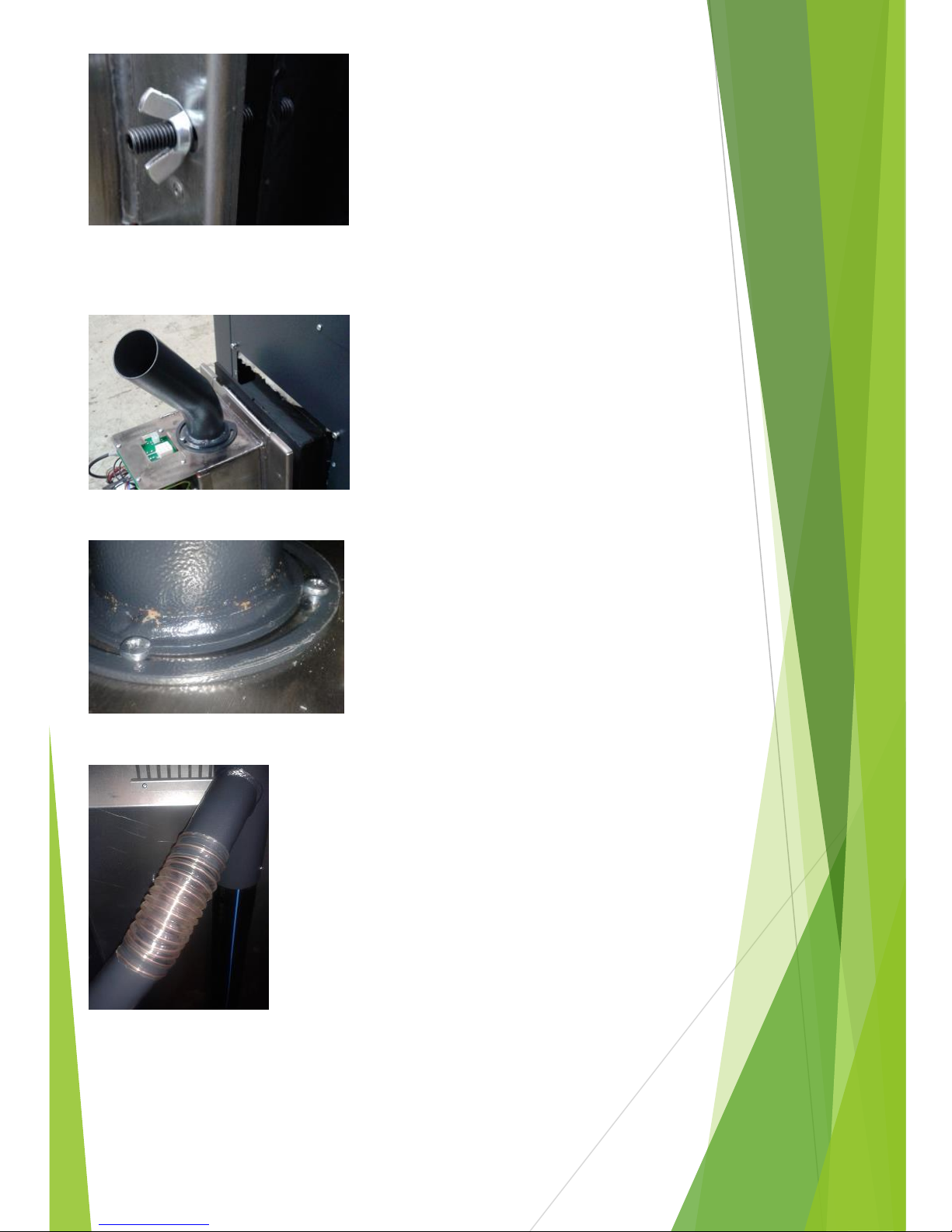
3. Mount the burner and tighten the burner with the two wing nuts supplied. Never use locknuts, as
the seal between the boiler and the burner can leak over time.
4. Make sure that the burner is horizontal and that all connections are tight.
Burner description:
The main parts of the burner are the fan, internal auger/auger motor, burner grate, fire sensor and igniter.
The external auger (in the hopper) drops pellets down the drop shaft where they are moved on to the
burner grate by the internal auger. The fan ensures a supply of air to the grate for clean combustion. The
igniter provides the heat for the automatic ignition of pellets. The grate is removable for easy cleaning.
Fire sensor detects the light of flame. When the fire sensor detects the light during ignition process, the
control unit switch off the igniter and the boiler starts normal operation mode (PID work). There are
different sizes of Biopel pellet burner (10 –200 kW) but main function is always the same.
Drop shaft: new pellets are fed in to the burner.
Internal auger: moves pellets on to the grate
Mounting holes: these holes are for connecting burner onto the boiler
flange.
Ignition outlet: hot air comes from this hole during ignition phase.
Grate: there are several types of burner grate depending on
burner size/output. Combustion air comes from to these holes.