INSTRUCTIONS
Page 4
General care of the grill
The body of the grill is stainless steel. Cleaning with a mixture of warm water and washing-up liquid will remove fat
and grease. Great care must be taken to ensure water or fat does not enter any of the switches. The
warranty is void if this warning is not strictly adhered to. Performed daily this is good hygiene practice and
makes cleaning far less of a chore. Use of a stainless steel cleaner brightens up the appearance of the grill and aids
cleaning maintenance. Do not use caustic cleaners.
Carbon build-up
Fat and grease left on hot cooking surfaces quickly turn to carbon. This bakes onto the surfaces and can only be
removed with much effort by chipping away with a strong blunt implement (a blunt chisel for example). Some carbon
removing cleaners can be effective, but care must be exercised when using such chemicals and the manufacturer
instructions followed in detail. Do not use cleaners, which are unsuitable for aluminium. In severe cases of
carbon build up the cooking surface appears to be cracked and black particles flake off and can appear on the food.
When surfaces become coated in this way cooking times are extended, heating elements are put under increased
strain, cleaning becomes extremely difficult and flakes of carbon impair the appearance of the food. None of these
problems will arise if the cleaning advice given in this leaflet is followed.
Remember - Cook, Wipe, Scrape. At the end of the day - Scrape thoroughly and Wipe.
ABOUT CONTACT COOKING
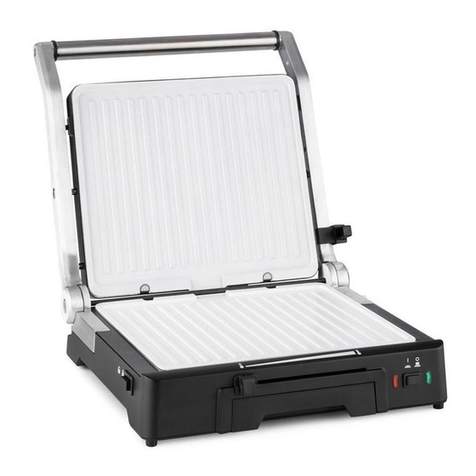
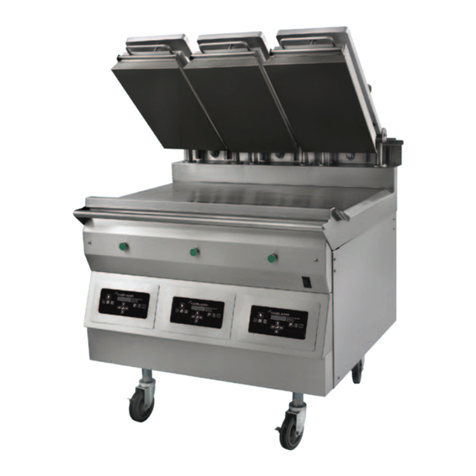
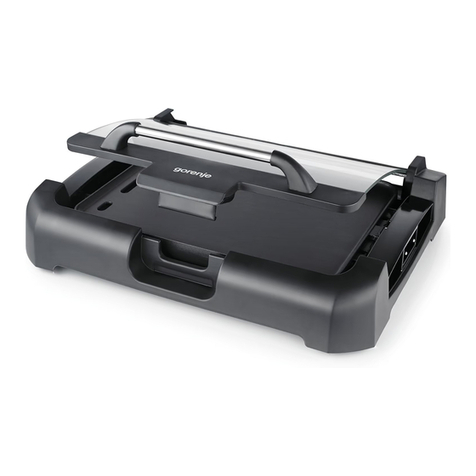
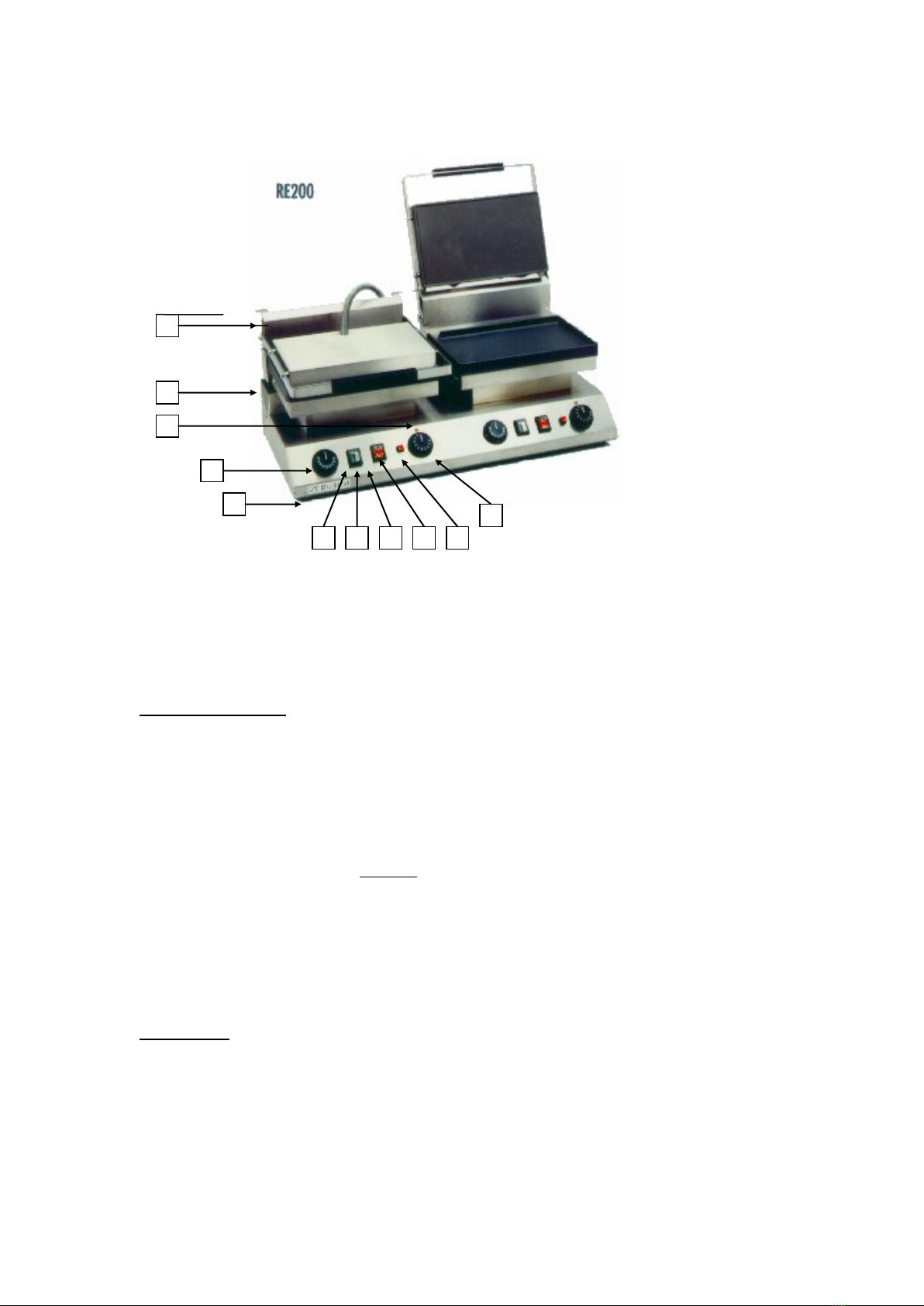
Contact grills (also known as ‘Clamshell’ grills) achieve their results by cooking food between two heated surfaces.
This method has many benefits over the conventional griddle; it cooks much more quickly, seals the food more
effectively and locks in more of the juices thus improving the flavour and reducing shrinkage. The speed of the
cooking means that a relatively small cooking area can triple the output of a griddle of the same size. Generally,
cooking times range from 30 seconds to around three minutes depending on the food type and thickness. For
guidance a time chart is included with these instructions.
COOKING WITH YOUR CONTACT GRILL
Starting up
From cold switch on the grill on full power and set the required temperature on the thermostat control - we
recommend 180c - 200c. The grill should reach the required temperature and be ready to cook within 6/7 minutes.
When the grill is up to temperature (indicated by the control light going out) cooking can commence. Providing the
thermostat remains set at the original setting the grill will hold the operating temperature and continuous cooking can
be maintained for as long as required.
For flat plates only
The cooking cycle
Contact cooking makes cooking easy, there are five simple steps in the process.
1) If necessary, lightly grease the food or cooking surfaces. Place food on to the bottom plate.
2) Lower the top plate onto the food
3) Set the timer for desired time
4) When the cooking time has elapsed open the top plate.
5) Remove the food and wipe or scrape the plates to remove food residue, sticky deposits and
grease/oil.
Tips
Meat can be seasoned before cooking, but wipe the plate surfaces immediately after cooking to avoid
cross flavour onto the next food item to be cooked.
Great emphasis is placed upon using only the minimum amount of grease/oil, but never let the plates
become completely dry as this could cause food to stick to them. If sticking occurs lightly grease the
plates. The food item should also be greased if possible.
Particular attention should be paid to cleaning whilst cooking salty foods i.e. bacon, gammon. The plate
must be given a good scrape to remove the sticky zest. Note that the salt in this type of food dries out the
plates causing food to stick and subsequently burn. It is suggested that when cooking salty foods, the
plates are cleaned with a Scotchbrite and a cleaner similar to 'Cif cream'. Remove all residue of cleaner,
then turn the temperature up to 60°C and oil.
Rutland Express