6
2.2 IndoorUnits
2.2.1 Placementconsiderations
Placementofindoorunitsshouldtakeaccountofthefollowingconsiderations:
Sufficientspacefordrainpipingandforaccessduringservicingandmaintenanceshouldbeallowed.
Toensureagoodcooling/heatingeffect,short‐circuitventilation(whereoutletairreturnsquicklytoaunit’sairinlet)
shouldbeavoided.
Topreventexcessivenoiseorvibrationduringoperation,suspensionrodsorotherweight‐bearingfixingsshould
typicallybeabletobeartwicetheunit’sweight.
3 OutdoorUnitDuctingandShielding
3.1 DuctingRequirements
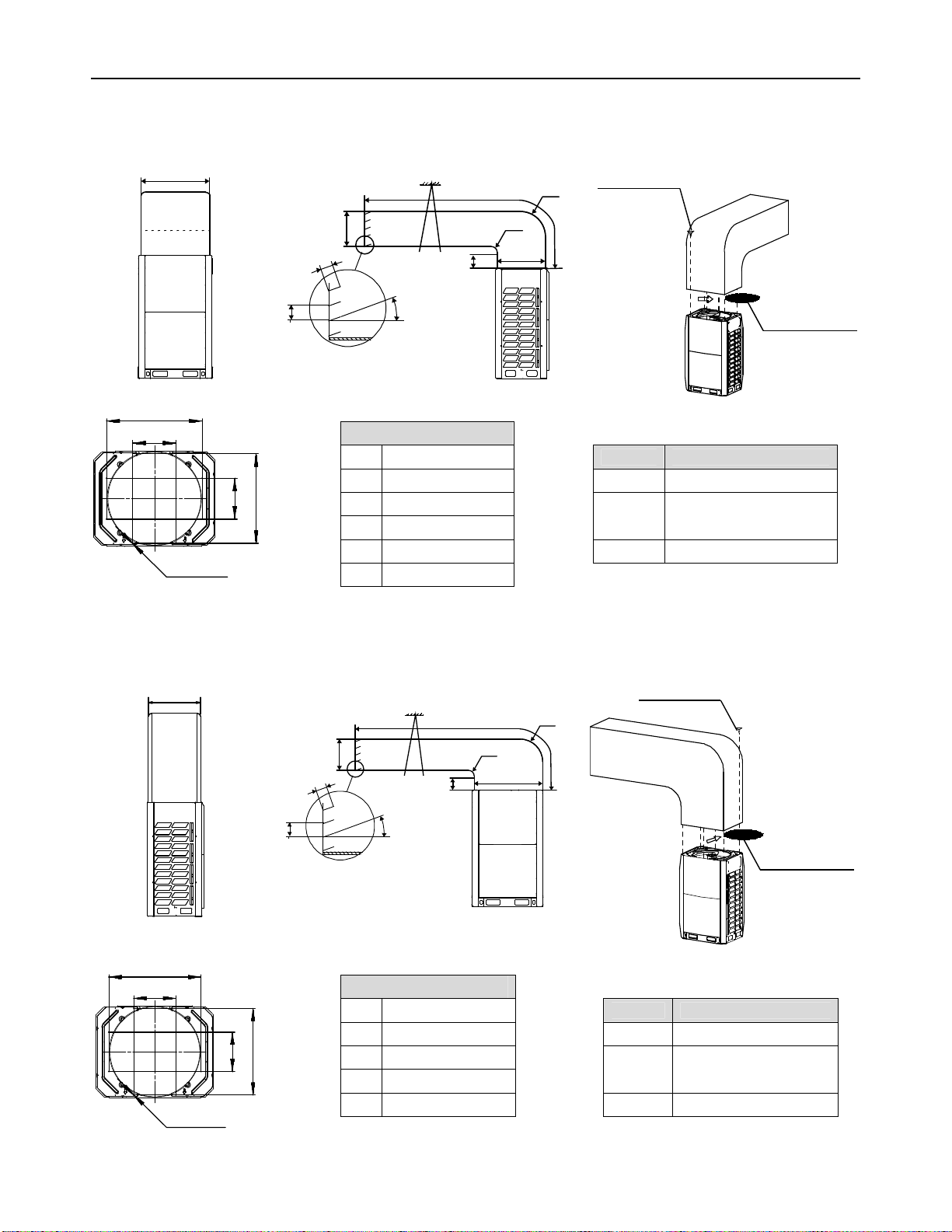
Dependingontheheightofadjacentwallsrelativetotheheightoftheunits,ductingmayberequiredtoensureproperair
discharge.InthesituationdepictedinFigure3‐3.1,theverticalsectionofductingshouldbeatleastH‐hhigh.
Figure3‐3.1:Top ofunitbelowtopofadjacentwall
3.2 DesignConsiderations
Outdoorunitductingdesignshouldtakeaccountofthefollowing:
Eachductshouldcontainnomorethanonebend.
Vibrationisolationshouldbeaddedtotheconnectionbetweentheunitandtheductingtoavoidvibration/noise.
Installinglouversisnotrecommendedasdoingsodecreasesairflow,impactinguponcooling/heatingperformance
andenergyefficiency.Iftheinstallationsituationnecessitateslouvers,theyshouldbeinstalledatananglenogreater
than15°tothehorizontal,tominimizetheimpactonairflow.
hh-H
H
Beforeinstallinganindoorunit,checkthatthemodeltobeinstalledisasspecifiedintheconstructiondrawings
andconfirmthecorrectorientationoftheunit.
Ensurethatunitsareinstalledatthecorrectheight.
Toallowsmoothcondensatedrainageandtoensureunitstability(topreventexcessivenoiseorvibration),
ensurethatunitsareleveltowithin1°ofthehorizontal.Ifaunitisnotleveltowithin1°ofthehorizontal,water
leakageorabnormalvibration/noisemayoccur.
Notesforinstallers