manuals.online logo
Brands
  1. Home
  2. •
  3. Brands
  4. •
  5. Whirlpool
  6. •
  7. Microwave Oven
  8. •
  9. Whirlpool AKW 301 IX Firmware update

Whirlpool AKW 301 IX Firmware update

This manual suits for next models

3

Other Whirlpool Microwave Oven manuals

Whirlpool MW8600XS User manual

Whirlpool

Whirlpool MW8600XS User manual

Whirlpool AMW 479 User manual

Whirlpool

Whirlpool AMW 479 User manual

Whirlpool MICROWAVE HOOD COMBINATION User manual

Whirlpool

Whirlpool MICROWAVE HOOD COMBINATION User manual

Whirlpool MW82OOXL User manual

Whirlpool

Whirlpool MW82OOXL User manual

Whirlpool YWMH76719 User manual

Whirlpool

Whirlpool YWMH76719 User manual

Whirlpool WML55011HW User manual

Whirlpool

Whirlpool WML55011HW User manual

Whirlpool YGH8155XMQ2 User manual

Whirlpool

Whirlpool YGH8155XMQ2 User manual

Whirlpool JT 366 SL User manual

Whirlpool

Whirlpool JT 366 SL User manual

Whirlpool Velos GH7208XR User manual

Whirlpool

Whirlpool Velos GH7208XR User manual

Whirlpool YWMC30516 User manual

Whirlpool

Whirlpool YWMC30516 User manual

Whirlpool WOC95EC0AS User manual

Whirlpool

Whirlpool WOC95EC0AS User manual

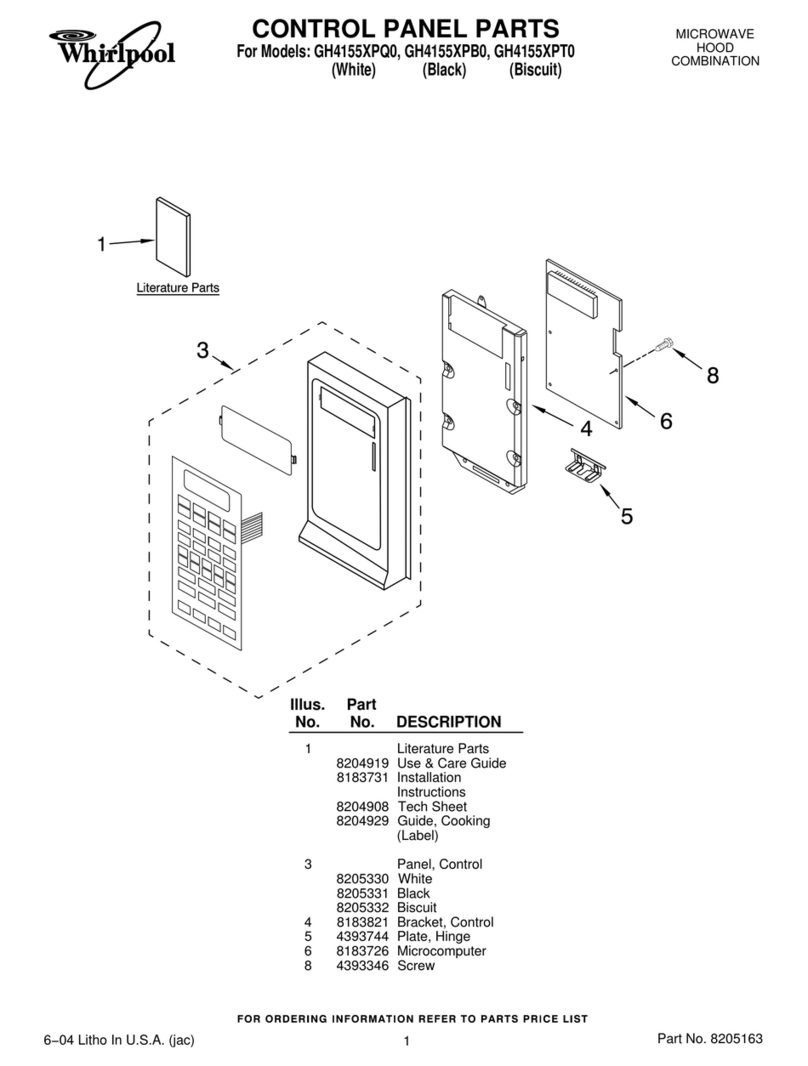
Whirlpool GH4155XP Manual

Whirlpool

Whirlpool GH4155XP Manual

Whirlpool YGH8155XJQ0 User manual

Whirlpool

Whirlpool YGH8155XJQ0 User manual

Whirlpool WMC11009AS User manual

Whirlpool

Whirlpool WMC11009AS User manual

Whirlpool UDT518SAHP User manual

Whirlpool

Whirlpool UDT518SAHP User manual

Whirlpool AVM562 User manual

Whirlpool

Whirlpool AVM562 User manual

Whirlpool MWD 307 User manual

Whirlpool

Whirlpool MWD 307 User manual

Whirlpool MH3184XPB User manual

Whirlpool

Whirlpool MH3184XPB User manual

Whirlpool MT7070XD User manual

Whirlpool

Whirlpool MT7070XD User manual

Whirlpool AMW 820 WH User manual

Whirlpool

Whirlpool AMW 820 WH User manual

Whirlpool WOC54EC0HW01 User manual

Whirlpool

Whirlpool WOC54EC0HW01 User manual

Whirlpool MWO 611 User manual

Whirlpool

Whirlpool MWO 611 User manual

Whirlpool MHE10RW User manual

Whirlpool

Whirlpool MHE10RW User manual

Whirlpool GH8155XM User manual

Whirlpool

Whirlpool GH8155XM User manual

Popular Microwave Oven manuals by other brands

Sharp R-390D manual

Sharp

Sharp R-390D manual

PROFILO MD1000 instruction manual

PROFILO

PROFILO MD1000 instruction manual

Candy MIC 201 EX User instructions

Candy

Candy MIC 201 EX User instructions

PITSOS GMW3101B user manual

PITSOS

PITSOS GMW3101B user manual

Sears 5648744780 Use & care manual

Sears

Sears 5648744780 Use & care manual

BOMANN CB 1272 Instruction manual & guarantee

BOMANN

BOMANN CB 1272 Instruction manual & guarantee

Conrad Electronic 2372935 operating instructions

Conrad Electronic

Conrad Electronic 2372935 operating instructions

GE Spacemaker JVM1440BH datasheet

GE

GE Spacemaker JVM1440BH datasheet

DAEWOO ELECTRONICS KOR-6L8K5S83 Operating instructions & cook book

DAEWOO ELECTRONICS

DAEWOO ELECTRONICS KOR-6L8K5S83 Operating instructions & cook book

DAEWOO ELECTRONICS KOR-1N5A9S Operating instructions & cook book

DAEWOO ELECTRONICS

DAEWOO ELECTRONICS KOR-1N5A9S Operating instructions & cook book

Daewoo KQG-6617G Operating instructions & cook book

Daewoo

Daewoo KQG-6617G Operating instructions & cook book

Samsung M1779 Owner's instructions

Samsung

Samsung M1779 Owner's instructions

GE JES1143 Use and care & cooking guide

GE

GE JES1143 Use and care & cooking guide

Miele H6200BM(TB) Operating and installation instructions

Miele

Miele H6200BM(TB) Operating and installation instructions

Jocel JMO011480 instruction manual

Jocel

Jocel JMO011480 instruction manual

Sharp R-752M Operation manual with cookbook

Sharp

Sharp R-752M Operation manual with cookbook

Electrolux EVL8E00X user manual

Electrolux

Electrolux EVL8E00X user manual

STOVES Q900GRF DO User, installation & servicing instructions

STOVES

STOVES Q900GRF DO User, installation & servicing instructions

manuals.online logo
manuals.online logoBrands
  • About & Mission
  • Contact us
  • Privacy Policy
  • Terms and Conditions

Copyright 2025 Manuals.Online. All Rights Reserved.

AKW 301 IX - AKW 401 IX - AKW 501 IX
AKW 601 IX
Users Guide & Installation
Handbook
CONTENTS & INTRODUCTION
CONTENTS
• SAFETY
• USING THE PRODUCT
• CLEANING
• INSTALLATION INSTRUCTIONS
• TECHNICAL DATA
• CUSTOMER CARE
INTRODUCTION
Thank you for buying this British-
built appliance from us.
This guide book is designed to help you
through each step of owning your new
cooker, from installation to use. Please
read it carefully before you start using
your product, as we have endeavored to
answer as many questions as possible,
and provide you with as much support
as we can.
European Directives
As a producer and a supplier of cooking
appliances we are committed to the pro-
tection of the environment and are in the
compliance with the WEEE directive. All
our electric products are labelled accord-
ingly with the crossed out wheeled bin
symbol. This indicates, for disposal pur-
poses at end of life, that these products
must be taken to a recognised collection
points, such as local authority sites/local
recycling centres
This appliance Complies with European
Community Directives (CE) for household
and similar electrical appliances and Gas
appliances where applicable.
This appliance conforms to European Di-
rective 2009/125/EC regarding Eco design
requirements for energy-related products
SAFETY
5.101
BEFORE USING THE PRODUCT
Make sure that you have removed all
packaging and wrapping. Some of the
items inside this appliance may have
additional wrapping.
It is advised that you turn the ovens and/
or grill on for a short while. This will burn
off any residues left from manufacturing.
There may be a smell which accompanies
this process - but this is nothing to worry
about and is harmless.
It is recommended that you wash the
oven shelves, baking tray, grill pan and
grillpantrivetbeforetheirrstuseinhot
soapy water. This will remove the protec-
tive oil coating.
GENERAL
WARNING! - The appliance
and its accessible parts become
hot during use. Care should
be taken to avoid touching
heating elements. Children less
than 8 years of age shall be
kept away unless continously
supervised.This appliance
can be used by children aged
from 8 years and above and
persons with reduced physical
sensory or mental capabilities
or lack of experience and
knowledge if they have been
given supervision or instruction
concerning the use of the
appliance in a safe way and
understand the hazards
involved. Children shall not play
with the appliance. Cleaning
and user maintenance shall not
be made by children without
supervision.
WARNING: During use the
appliance becomes hot. Care
should be taken to avoid
touching heating elements.
WARNING: Do not use harsh
abrasive cleaners or sharp
metal scrapers to clean the
oven door glass since they can
scratch the surface, which may
result in shattering of the glass.
WARNING: Do not use a
steam cleaner on any cooking
range, hob or oven appliance.
WARNING: Never put items
directly on the base of the
oven or cover the oven with
foil, as this can cause the base
element to overheat.
WARNING: To avoid electric
shock, ensure that the
appliance is switched off before
replacing the lamp.
CAUTION: This appliance
must not be installed behind
a decorative door in order to
avoid overheating.
Fire Safety Advice
Mostkitchenresoccurwhenpeopleare
distracted or leave things unattended, so
remember:
If you’re called away from the cooker - by
the phone or someone at the door, either
SAFETY
5.101
take pans off the heat, or switch off your
hob.
Don’t let yourself be distracted while
cooking.
Ifyoudohaveareinthekitchen,don’t
take any risks - get everyone out of your
home and call the Fire Brigade
If a pan catches re:
• Do not move it - it is likely to be
extremely hot.
• Turn off the heat if it’s safe to do so
- but never lean over a pan to reach
the controls.
• Ifyouhaveareblanket,putitover
the pan.
• Ifyouhaveputthereout,leavethe
pan to cool completely.
Deep-fat frying presents more
dangers in your kitchen.
• Neverllachippan(orotherdeep-
fat fryer) more than one-third full of
oil
• Donotuseareextinguisher
on a pan of oil - the force of the
extinguishercanspreadthereand
createareball.
If you have an electrical re in the
kitchen:
• Pull the plug out, or switch off the
power at the fuse box - this may be
enoughtostopthereimmediately
• Smothertherewithareblanket,
or use a dry powder or carbon
dioxide extinguisher
• Remember: never use water on an
electricalorcookingoilre.
USING THE GRILL - ELECTRIC
Caution: Accessible parts may be
hot when the grill is used - young
children should be kept away.
A grill pan handle can be purchased as an
optional extra from our spares department
quoting the part numbers below:
Handle - 082283705
Handle grip - 082469100
Complete grill pan pack - 012635666
Contact details can be found on the
customer care page.
If cleaning the grill pan when it is hot, use
oven gloves to move it.
Food for grilling should be positioned
centrally on the trivet.
Using the grill
Important: The grill door must be fully
open when the grill is used.
Open the grill door. Turn the control knob
to the required setting. For best cooking
results, we recommend that you preheat
the dual grill for 3 minutes and the single
grill for 5 minutes.
For grilling small quantities of food, the
centre (economy) grill can be used with
the grill trivet inverted. For large quanti-
ties of food, the full grill can be used.
Push the grill pan towards the back of the
shelf, to position it under the grill.
The speed of grilling can be controlled by
adjusting the grill setting or by selecting a
higher or lower shelf position. For toast-
ing, and for grilling foods such as bacon,
sausages or steaks, use a higher shelf
position. For thicker foods such as chops
or chicken joint pieces, use a middle to
low shelf position.
The grill trivet, inside the grill pan, can be
inverted to give a high or low position, or
it may be removed.
To switch off, turn the control knob to the
off position.
Using aluminium foil
Using aluminium foil to cover the grill pan,
or putting items wrapped in foil under the
grillcreatesarehazard.
The cooling fan
When the grill is switched on, the cool-
ing fan comes on to keep the fascia and
control knobs cool during grilling. The fan
may continue to operate for a period after
the grill has been switched off.
During use the fan may cycle on and off,
this is normal.
Alternatively, you may have grill symbols
similar to these below.
or Full grill at 1/4
power
Centre grill at full
power
Full grill area at
full power
Types of grill
Variable rate grill:
has adjustable heat settings
1 (low) to 8 (high) or 5 (high) - de-
pending on the model.
Single grill: has one grill element. The
grill pan trivet MUST be inverted when
using the single grill function.
Dual grill: has two grill elements which
can be used together, or as a single
grill.
7.101
USING THE TOP OVEN - ELECTRIC
When you are cooking keep children
away from the vicinity of the oven.
Caution: The top element gets
extremely hot when in use, so
take extra care to avoid touch-
ing it.
The top oven is a conventional oven.
Note: The top oven is not controlled by
theprogrammer(iftted).
To turn on the top oven
Turn the temperature control knob until
the required temperature is selected.
The red thermostat indicator will come on
until the selected temperature is reached,
and then go off; it will turn on and off
periodically as the thermostat operates to
maintain the selected temperature.
To switch off, return the top oven control
knob to the off position.
Important: Never put items directly on
the base of the oven, or cover the oven
base with foil, as this may cause the ele-
ment to overheat. Always position items
on the shelf.
The cooling fan
When the top oven is switched on, you
will hear the cooling fan come on - this
keeps the fascia and control knobs of the
appliance cool during cooking. The fan
may continue to operate for a period after
the oven control has been switched off.
Preheating
The oven must be preheated when cook-
ing frozen or chilled foods, and we rec-
ommend preheating for yeast mixtures,
batters,soufés,andwhiskedsponges.
Preheat the oven until the indicator light
switchesoffforthersttime,thiswill
take up to 15 minutes depending on the
temperature selected.
If you are not preheating the oven, the
cooking times in the following guide may
need to be extended, as they are based
on a preheated oven.
Shelf positions
There are 4 shelf positions which are
counted from the bottom of the oven up-
wards, so shelf position 1 is the lowest.
When cooking frozen or chilled food, use
the highest possible shelf position, while
allowing some clearance between the
food and the top element.
The oven shelf must be positioned with
the up-stand at the rear of the oven and
facing up. Position baking trays and roast-
ing tins on the middle of the shelves, and
leave one clear shelf position between
shelves, to allow for circulation of heat.
When using the top oven
As part of the cooking process, hot air is
expelled through a vent at the top of the
oven(s). When opening the oven door,
care should be taken to avoid any possible
contact with potentially hot air, since this
may cause discomfort to people with sen-
sitive skin. We recommend that you hold
the underneath of the oven door handle.
USING THE TOP OVEN - ELECTRIC
TOP OVEN BAKING GUIDE
Cooking times
These times are based on cooking in a
preheated oven.
These cooking times are approximate,
because the size and type of cooking dish
willinuencetimeaspersonalprefer-
ences.
Shelf positions
As a general guide, when cooking frozen
or chilled food, use the highest pos-
sible shelf position, while allowing some
clearance between the food and the top
element. Follow the instructions given on
packaging.
Item Temperature
(°C)
Shelf
Position
Approximate cooking time
Small cakes
Victoria sandwich
(2 x 180mm / 7”)
Swiss roll
Semi rich fruit cake
(180mm x 7”)
Scones
Meringues
180
160
200
140
215
90 - 100
1
1
1
1
1
1
15 - 20 mins
20 - 25 mins
8 - 12 mins
2¼ - 2¾ hours
10 - 15 mins
2 - 3 hours
Shortcrust pastry
Puff/akypastry
Choux pasrty
200 - 210
200 - 210
200 - 210
1
1
1
Depends on size & type of cook-
ingdish&alsothelling
Biscuits
Sponge pudding
Milk pudding
160 - 200
150
140
2
1
1
10 - 20 mins
30 - 45 mins
2 - 2½ hours
Cooking temperatures
The temperature settings and time given
in the Baking Guides are based on dishes
made with block margarine. If soft tub
margarine is used, it may be necessary
to reduce the temperature setting. If a
recipe gives a different temperature set-
ting to that shown in the guide, the recipe
instruction should be followed.
Because the top oven is more compact,
it may be necessary to reduce cooking
temperaturesspeciedinrecipesbyupto
20°C.
Use the baking guide as a reference for
determining which temperatures to use.
9.100
USING THE MAIN OVEN - ELECTRIC
Accessible parts may be
hot when the oven is used.
Young children should be
kept away.
To switch on the oven
Turn the oven control knob(s) to the
required setting.
Theredthermostatneon(iftted)will
come on until the selected temperature
is reached and then go off; it will turn
on and off periodically as the thermostat
operates to maintain the selected tem-
perature.
To switch off, return the control knob to
the off position.
When using the oven
As part of the cooking process, hot air
is expelled through a vent in the oven.
When opening the oven door, care should
be taken to avoid any possible contact
with potentially hot air, since this may
cause discomfort to people with sensitive
skin. We recommend that you hold the
underneath of the oven door handle.
PREHEATING
Fanned oven
When cooking sensitive items such as
soufeandYorkshirepuddingsor,when
cooking bread, we recommend that the
oven is preheated until the neon switches
offforthersttime.Foranyothertypes
of cooking, a preheat may not be re-
quired.
Conventional oven
Preheating is always required
Manual Operation (fanned only)
The programmer must be set to manual
operation before the main oven can be
used. If A (Auto) is on the programmer
display, return the oven to manual by
pressing the up and down buttons simul-
taneously Any programme which has been
set is cancelled.
The cooling fan
The cooling fan may operate when the
main oven is on and may continue to op-
erate for a period after the oven has been
switched off.
OVEN FURNITURE
Oven shelves
The oven shelf must be positioned with
the upstand at the rear of the oven and
facing upwards.
Position baking trays and roasting tins on
the middle of the shelves.
Baking tray and roasting tins
For best cooked results and even brown-
ing, the recommended size baking trays
and roasting tins that should be used are
as follows;
Baking tray 350mm x 250mm
This size of baking tray will hold up to 12
small cakes.
Roasting tin 370mm x 320mm
We recommend that you use good quality
cookware. Poor quality trays and tins may
warp when heated, leading to uneven
baking results.
9.100
USING THE MAIN OVEN - ELECTRIC
Slow cooking ( Setting or 100°C)
• Make sure that frozen foods are thor-
oughly thawed before cooking.
• Do not slow cook joints of meat
or poultry weighing more than
2¼kg/4½lb.
• Preheat the oven to 170°C and cook
for 30 minutes, then adjust the oven
control to or 100°C (slow cook
setting) for the remainder of the
cooking time.
• Slow cooking times will be about 3
times as long as conventional cooking
times.
• Do not open the oven door unneces-
sarily during slow cooking, as this will
result in heat loss at low tempera-
tures.
• Alwaysusedisheswithtightlytting
lids.Torectifybadlyttinglids,place
foil over the dish underneath the lid.
Aluminium foil
Use foil only to cover food or cooking
dishes, using foil to cover the shelves or
ovenbasecreatesarehazard.
Cooking with a fanned oven
As this is a high efciency oven,
you may notice the emission of
steam from the oven when the door
is opened. Please take care when
opening the door.
If you are used to cooking with a conven-
tionalovenyouwillndanumberofdif-
ferences to cooking with a fan oven which
will require a different approach:
There are no zones of heat in a fan oven
as the convection fan at the back of
the oven ensures an even temperature
throughout the oven.
This makes it ideal for batch baking - eg;
when planning a party as all the items will
be cooked within the same length of time.
Foods are cooked at a lower temperature
than a conventional oven, so conven-
tional recipe temperature may have to be
reduced. Please refer to the conversion
chart.
Preheating is generally not necessary as a
fan oven warms up quickly.
Thereisnoavourtransferenceinafan
oven, which means you can cook strong
smellingfoodssuchasshatthesame
time as mild foods - eg; milk puddings.
When batch baking foods that will rise
during cooking - eg; bread - always
ensure that enough space has been left
between the shelves to allow for the rise.
Notes:
When 2 or more shelves are being used, it
may be necessary to increase the cooking
time slightly.
Because the 2 oven shelves are wider
than in many ovens, it is possible to cook
2 items per shelf - eg; 2 victoria sand-
wiches or 2 casseroles.
Although you need to keep in mind the
points ‘To help the air circulate freely’
with careful choice of dishes and tins, it
is possible to cook a complete meal, and
perhaps something else for the freezer, in
the oven at the same time.
When roasting meats, you will notice that
fat splashing is reduced, which is due in
part to the lower oven temperatures, and
will help keep cleaning of the oven to a
minimum.
Because a fan oven has an even tem-
perature throughout the oven, there is no
need to follow the shelf positions given in
the baking guide.

9.100
USING THE MAIN OVEN - ELECTRIC
There is no need to interchange dishes
onto different shelves part way through
cooking, as with a conventional oven.
To help the air circulate freely
Position the shelves evenly within the
oven and maintain a clearance from the
oven roof and base.
If more than one cooking dish or bak-
ing tray is to be used on a shelf, leave a
gap of at least 25mm between the items
themselves and the oven interior.
Defrosting and cooling in the
main oven
To defrost frozen foods, turn the main
oven control to the defrost position, place
the food in the centre of the oven and
close the door.
To cool foods after cooking prior to refrig-
erating or freezing, turn the main oven
control to the defrost position and open
the door.
Defrosting times
Smallorthinpiecesoffrozenshormeat
-eg;shlets,prawns&mincewilltake
approximately 1 - 2 hours.
Placing the food in a single layer will
reduce the thawing time.
A medium sized casserole or stew will
take approximately 3 - 4 hours.
A 1½kg/3lb oven ready chicken will take
approximately 5 hours, remove the giblets
as soon as possible.
Be safe
Do not defrost stuffed poultry using this
method.
Do not defrost larger joints of meat and
poultry over 2kg/4lb using this method.
Never place uncooked food for defrosting
next to cooked food which is to be cooled,
as this can lead to cross contamination.
Defrostingmeat,poultry,andshcanbe
accelerated using this method but make
sure they are completely thawed before
cooking thoroughly. Place meat and poul-
try on a trivet in a meat tin.
MAIN OVEN BAKING GUIDE
Cooking times & temperatures
The temperature settings and times given
in the baking guide are based on dishes
made with block margarine. If soft tub
margarine is used it may be necessary to
reduce the temperature setting.
Allow enough space between shelves for
food that will rise during cooking.
Do not place items on the oven base as
this will prevent air circulating freely.