manuals.online logo
Brands
  1. Home
  2. •
  3. Brands
  4. •
  5. Whirlpool
  6. •
  7. Refrigerator
  8. •
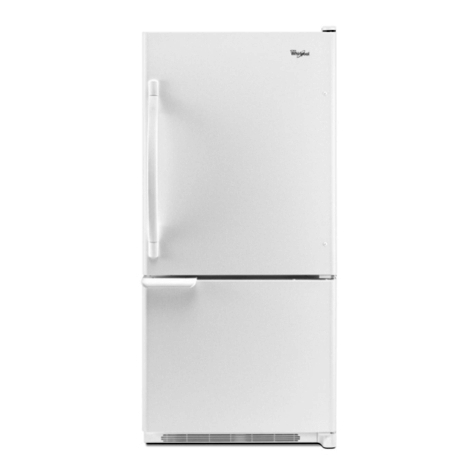
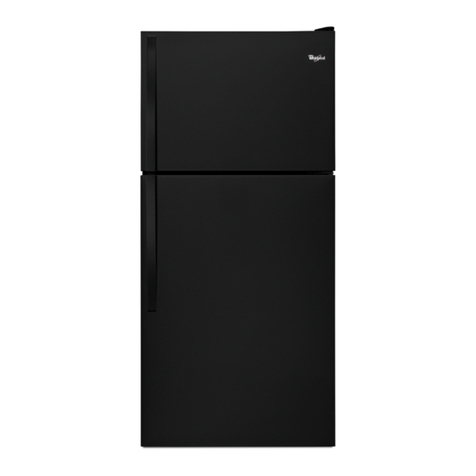
  9. Whirlpool EL11SC User manual

Whirlpool EL11SC User manual

This manual suits for next models

1

Other Whirlpool Refrigerator manuals

Whirlpool ET8WTKXKB07 User manual

Whirlpool

Whirlpool ET8WTKXKB07 User manual

Whirlpool GC5SHEXNB01 User manual

Whirlpool

Whirlpool GC5SHEXNB01 User manual

Whirlpool ET18LK User manual

Whirlpool

Whirlpool ET18LK User manual

Whirlpool EB21DKXDB01 User manual

Whirlpool

Whirlpool EB21DKXDB01 User manual

Whirlpool ETl4EP User manual

Whirlpool

Whirlpool ETl4EP User manual

Whirlpool WF1D061RXG Series User manual

Whirlpool

Whirlpool WF1D061RXG Series User manual

Whirlpool EL02CCXPB00 User manual

Whirlpool

Whirlpool EL02CCXPB00 User manual

Whirlpool W9TXNMFWB - Top Freezer Refrigerator User manual

Whirlpool

Whirlpool W9TXNMFWB - Top Freezer Refrigerator User manual

Whirlpool ETl8CK User manual

Whirlpool

Whirlpool ETl8CK User manual

Whirlpool ET12PC User manual

Whirlpool

Whirlpool ET12PC User manual

Whirlpool Gold GR2SHWXV Manual

Whirlpool

Whirlpool Gold GR2SHWXV Manual

Whirlpool WF2T203 Installation guide

Whirlpool

Whirlpool WF2T203 Installation guide

Whirlpool WRF995FIFZ User manual

Whirlpool

Whirlpool WRF995FIFZ User manual

Whirlpool 20RI-D3 SF User manual

Whirlpool

Whirlpool 20RI-D3 SF User manual

Whirlpool ED2VHGXMB01 User manual

Whirlpool

Whirlpool ED2VHGXMB01 User manual

Whirlpool WT1715Q User manual

Whirlpool

Whirlpool WT1715Q User manual

Whirlpool GI7FVCXWA Bottom User manual

Whirlpool

Whirlpool GI7FVCXWA Bottom User manual

Whirlpool G2IXEFMW - 2-20-09 User manual

Whirlpool

Whirlpool G2IXEFMW - 2-20-09 User manual

Whirlpool WRS537SIAB Assembly instructions

Whirlpool

Whirlpool WRS537SIAB Assembly instructions

Whirlpool ET8WTKXKB06 User manual

Whirlpool

Whirlpool ET8WTKXKB06 User manual

Whirlpool WF2B280 User manual

Whirlpool

Whirlpool WF2B280 User manual

Whirlpool REFRIGERATOR User manual

Whirlpool

Whirlpool REFRIGERATOR User manual

Whirlpool REFRIGERATOR User manual

Whirlpool

Whirlpool REFRIGERATOR User manual

Whirlpool lT20AK User manual

Whirlpool

Whirlpool lT20AK User manual

Popular Refrigerator manuals by other brands

Frigidaire FRS26TS7DW2 Use & care manual

Frigidaire

Frigidaire FRS26TS7DW2 Use & care manual

Fisher Scientific 10ECEEFSA manual

Fisher Scientific

Fisher Scientific 10ECEEFSA manual

Summit FF22BDRSS user manual

Summit

Summit FF22BDRSS user manual

Frigidaire FFRU17B2QWE use & care

Frigidaire

Frigidaire FFRU17B2QWE use & care

Hotpoint ENBGH 19xxx FW operating instructions

Hotpoint

Hotpoint ENBGH 19xxx FW operating instructions

Hitachi R-SG28KPH instruction manual

Hitachi

Hitachi R-SG28KPH instruction manual

Dometic RMH 7390 L operating instructions

Dometic

Dometic RMH 7390 L operating instructions

AEG S71700TSW0 user manual

AEG

AEG S71700TSW0 user manual

Electrolux ENB3669 Instruction book

Electrolux

Electrolux ENB3669 Instruction book

Electrolux ERN 2930 Instruction book

Electrolux

Electrolux ERN 2930 Instruction book

Beko GNE 60520 X user manual

Beko

Beko GNE 60520 X user manual

Jenn-Air JUR248LBES00 Use & care guide

Jenn-Air

Jenn-Air JUR248LBES00 Use & care guide

Dometic RGE 4000 Installation and operating manual

Dometic

Dometic RGE 4000 Installation and operating manual

Dometic L-0191B Brochure & specs

Dometic

Dometic L-0191B Brochure & specs

LG LRBP1031W - 10 Cu. Ft. Cabinet Depth Bottom Freezer... owner's guide

LG

LG LRBP1031W - 10 Cu. Ft. Cabinet Depth Bottom Freezer... owner's guide

Daewoo RN-33 Series user manual

Daewoo

Daewoo RN-33 Series user manual

Haier RF-8888-174 Service manual

Haier

Haier RF-8888-174 Service manual

Blaupunkt 5CK2 Series user manual

Blaupunkt

Blaupunkt 5CK2 Series user manual

manuals.online logo
manuals.online logoBrands
  • About & Mission
  • Contact us
  • Privacy Policy
  • Terms and Conditions

Copyright 2025 Manuals.Online. All Rights Reserved.

i
MANUAL
DEFROST
REFRIGERATOR-
FREEZER
Models EL11SC
and
EL13SC
~~r-freezers. Ice Makers. Dishwashers. Builbln Ovens and Surlace Units. Ranges. Microwave Ovens. Trash Compactors. Room Air Condllioners. Oehumiddiers, Aulomallc Washers Clothes Oryers reez~
Please read this
Use and Care Guide
before you do anything else...
This booklet tells you how to start your
refrigerator, clean it, move shelves and adjust
controls. It even tells you what new sounds to
expect from your refrigerator.
Treat your new refrigerator with care. Use it
only to do what home refrigerators are designed
to do.
Parts and features
FREEZER
COMPARTMENT
FREEZER
TRAY ’
MODEL AND --
SERIAL NUMBER
PLATE
RUN SWITCH
SHELVES
EXTRA COLD
STATIONARY
CRISPER/
COVER
CRISPER
LEVELING -
LEG tNSX FOR
MODEL ELtlSC FOR
MODEL ELl3SC
Copy your Model and Serial Numbers here...
When you need service or call with a question,
have this information ready:
Model Number
1. Complete Model and Serial Numbers (from
the plate located as shown).
2. Purchase date from sales slip.
Serial Number
Copy this information in these spaces. Keep
this bobk, your warranty and sales.slip together
in a handy place.
Purchase Date
Please complete and mail the Owner Regis-
tration Card furnished with this product.
Service Company and Telephone Number
2
Contents
Paae
PARTS AND FEATURES. ..............
SAFETY FIRST .......................
BEFORE YOU PLUG IT IN .............
Install Properly ...................
Level Refrigerator-Freezer ........
Remove Sales Labels .............
Clean It ..........................
Plug It In .........................
TurnttOn.. .......................
USING YOUR REFRIGERATOR ........
Setting the Controls. ..............
The Freezer Tray ..................
Changing the Light Bulb ..........
Adjusting the Refrigerator Shelves
Removing Crisper and Crisper
Cover ..........................
Page
2
:
4
4
4
4
4
5
z
6
6
.
6
IceCubeTrays . . . . . . . . . . . . . . . . . . . . . .
Sounds You May Hear
Energy Saving Tips
DEFROSTING AND CLEANING YOUR
REFRIGERATOR . .
Defrosting the Freezer Compartment
Cleaning the Refrigerator
Cleaning Chart . . . . .
FOOD STORAGE GUIDE . .
Storing Fresh Food . .
Freezing and Storing Frozen Foods
VACATION AND MOVING CARE.. .
IF YOU NEED SERVICE OR ASSISTANCE.
WHIRLPOOL REFRIGERATOR
WARRANTY. .
01987 Whirlpool Corporation
-6
6
7
7
7
il
9
9
10
13
14
16
Before you plug it in
Important
Before using your refrigerator, you are personally
responsible for making sure that it...
l
is installed and leveled on a floor that will hold
the weight, and in an area suitable for its size
and use.
l
is connected only to the right kind of outlet, with
the right electrical supply and grounding.
(Refer to your “Electrical Requirements and
Grounding Instructions:‘)
l
is used only for jobs expected of home
refrigerators.
l
is not near an oven, radiator or other heat
source.
l
is properly maintained.
l
is out of the weather.
l
is used in an area where the room temperature
will not fall below 55°F (13°C).
l
is not used by those who may not understand
how it should be used.
l
is not loaded with food before it has time to get
properly cold.
Install properly... Remove sales labels...
Remove the Consumer Buy Guide label, tape
and any inside labels before using the re-
frigerator. To remove any remaining glue:
1. Rub briskly with thumb to make a ball then
remove.
OR
2. Soak area with liquid hand dishwashing
detergent before removing glue as described
in step 1.
DO NOT USE rubbing alcohol or flammable or
toxic solvents, such as acetone, gasoline, car-
bon tetrachloride, etc. These can damage the
material.
NOTE: DO NOT REMOVE ANY PERMANENT IN-
STRUCTIONS LABELS INSIDE YOUR REFRIGER-
ATOR.
Do not remove the Tech sheet fastened under
the refrigerator at the front.
1. Allow 3 inches (7.5 cm) between overhead cab-
inets and the refrigerator top.
2. Allow at least an inch (2.5 cm] between the re-
frigerator condenser on the back and the wall
3. Allow li2 inch (1.25 cm) on each side of the re-
frigerator for ease of installation.
4. If the refrigerator is to be against c wall, you
might want to leave extra space on the hinge
side so the door can be opened wider.
Level refrigerator-freezer. ..
LEVE
LEG
RAISE LOWER
1. Keep the 4 bolts that held refrigerator in ship-
ping crate. They are the levelling legs.
2. Screw these bolts all the way into bolts holes at
the bottom corners of refrigerator.
3. Adjust each leg until the refrigerator won’t rock.
Slide refrigerator into place.
4. Adjust front legs to level the refrigerator.
-To raise corners, turn legs in direction shown.
-To lower corners, turn legs in direction shown.
5. Check with level.
Clean it...
Clean your refrigerator before plugging it in or
using it. See cleaning instructions on page 7.
Plug it in...
3-PRONG GROUNDING
TYPEWALL RECEPTACLE
REFRIGERATOR
POWER CORD 3-PRC
GROUNDING PLUG
RECOMMENDED GROUNDING METHOD
A 115Volt, 60 Hz., AC only 15 or 20 ampere tused
and properly grounded electrical supply is
required. It is recommended that a separate cir-
cuit serving only this appliance be provided.
Do not use an extension cord. Use a recepta-
cle which cannot be turned off with a switch or
pull chain. See Individual electrical requirements
and grounding instruction sheet in your literature
package
l
Move Run Switch to RUN.
NOTE: The refrigerator motor will not operate
until the Run Switch is on RUN.
4
Using your refrigerator
TEMPERATURE
CONTROL
Setting the control...
The control for the refrigerator temperature is in
the refrigerator. When the refrigerator is plugged in
and the Run Switch is moved to RUN.
l
Set the Thermostat Control to 3.
The freezer tray...
The freezer tray is located under the freezer
compartment.
The damper at the rear of the freezer tray helps
control the refrigerator temperature for warm
weather operation. The damper can be adjusted
for proper cooling and defrosting of the
refrigerator.
To adjust the damper:
1. Pull out the freezer tray.
2. Lift out the damper from the rear of the tray.
3. Slide damper into the desired position.
NOTE: “B&D” positions provide fine cooling
adjustments to best meet your cooling needs in
warm weather.
LIGHT SWITCH
Give the refrigerator time to cool down
completely before adding food. (This may take
several hours.)
This setting should be about right for normal
household refrigerator usage.
The control will be set about right when milk or
juice is as cold as you like. In hot weather or if the
door is opened often, turn the control to a higher
number to keep the temperature you like. Ifthe milk
or juice is too cold or refrigerator items start to
freeze, turn the control to a lower number or adjust
the freezer tray damper. Wait 24 hours after an
adjustment is made before further change is
made to the controls.
B- “A” POSITION FOR NORMAL
C- COOLING AND DEFROSTING.
D-
E - IFULL Open1
“E” POSITION FOR WARM
WEATHER SElllNG.
Changing the light bulb...
1. Reach behind the control console to find bulb
2. Remove bulb.
3. Replace with a 40-watt appliance bulb.
Adjusting the refrigerator shelves...
To remove the shelf:
1. First, remove food from shelf.
2. Slide shelf straight out to stop.
GUIDE STOP.
3. Lift front, slide shelf the rest of the way out. SHELFSTOP
To replace the shelf:
1. Fit back of shelf on top of guides with wire stops
on the bottom of guides.
2. Lift front, slide shelf in until it clears guide stops.
Removing crisper and crisper cover...
To remove the crisper:
l
Slide crisper straight out.
To remove the cover:
1. Lift back, then slide to the rear until the front can
be lifted.
2. Lift cover up and out.
To replace the cover:
1. Slide the front cover tabs into the back of the
front supports on the refrigerator walls.
2. Lower back into place.
LIFT THE FRONT, THEN THE BACK.
GUIDE
OUT.
Ice cube trays... h I1
i i
For best results when freezing ice cubes, place
ice cube trays side-by-side in bottom of freezer
compartment.
Ifcubes are not used, they may shrink. The longer
cubes are stored, the smaller they get.
? EE’:?both ends.
2. Slightly twist.
Sounds you may hear...
Possible Sounds:
Your new refrigerator may make sounds that your old one didn’t
Because the sounds are new to you, you might be concerned about them.
Don’t be. Most of the new sounds are normal. Hard surfaces like the floor,
walls and cabinets can make the sounds seem louder.
The following chart describes the kinds of sounds that might be new to
you, and what may be making them.
Probable Causes:
l
Wafer Sounds: When the refrigerator stops running, you may hear gurgling in the
tubing for a few minutes after it stops.
l
Running Sounds:
6
Your refrigerator has a high-efficiency compressor and motor.
It will run longer than older designs. It may even seem to run most
of the time.
Energy saving tips...
You can help your refrigerator use less electricity.
l
It is a waste of electricity to set the refrigerator
l
Check door gaskets for a tight seal. Level the and freezer to temperatures colder than they
cabinet to be sure of a good seal. need to be. If ice cream is firm in the freezer and
l
Clean the condenser coil regularly. drinks are as cold as your family likes them,that’s
l
Open the door as few times as possible. Think cold enough.
about what you need before you open the door.
l
Make sure your refrigerator is not next to a heat
Get everything out at one time. Keep foods orga- source such as a range, water heater,
furnace.
nized so you won’t have to search for what you radiator or in direct sunlight.
want. Close door as soon as food is removed.
l
Go ahead and fill up the refrigerator, but don’t
overcrowd it so air movement is blocked.
Defrosting and cleaning your refrigerator.
The freezer compartment in your refrigerator
should be defrosted whenever frost builds up to
Y4-inch (6 mm].
The entire refrigerator should be cleaned about
once a month to help prevent odors from building
up. Of course, spills should be wiped up right away.
Defrosting the freezer
compartment...
1. Move the Run Switch to “OFF.”
2. Remove food and ice cube trays. Wrap food in
newspaper and put in a cooler to keep frozen.
3. Make sure the freezer tray damper is in the “A”
position.
4. Place a pan of hot water in the freezer com-
partment to speed defrosting. Leave door
open.
5. CAUTION: Do not use any type of electric
defroster or sharp utensils (ice pick, knife,
etc.) to speed defrosting. These can cause
damage. Scrape with plastic window scraper.
6. Replace hot water every 10 to 15 minutes.
7. Soak up defrost water with a cloth or sponge.
“‘A” POSITION FOR NORMAL
COOLING AND DEFROSTING.
8. Empty defrost water from freezer tray. (Pull out
to stops; lift front slightly; pull out the rest of
the way)
9. Clean compartment and freezer tray with a
solution of two tablespoons (26 g] of baking
soda and one quart (.95 I) of warm water.
Rinse well and dry.
10. Replace food and ice cube trays.
11. Move the Run Switch to “RUN:’
Cleaning the refrigerator...
To clean your refrigerator, move the Run Switch
to OFF,unplug it, take out all removable parts, and
clean it according to the following directions.
When cleaning is complete, replace all
refrigerator parts, plug it in, and move the Run
Switch to RUN.
Cleaning chart...
Part
Removable parts
(shelves, crisper, etc.)
Outside
What to use
Sponge or cloth; mild
detergent and warm
water.
Sponge, cloth or paper
towel; mild detergent;
appliance wax (or
good auto paste wax).
How to clean
l
Wash removable parts with warm Water
and a mild detergent.
l
Rinse and dry.
l
Wash with warm water and a mild
detergent. Do not use abrasive or harsh
cleansers.
l
Rinse and dry.
l
Wax painted metal surfaces at
IeaSt
twice a year with appliance wax or a
good auto paste wax. Apply wax with a
clean, soft cloth. Do not use wax on plas-
tic parts.
Waxing painted metal surfaces provides rust protection.
Inside walls (freezer Sponge, soft cloth or
compartment should be pa per towel, baking
allowed to warm up so soda, warm water, mild
cloth won’t stick.) detergent.
l
Wash with warm water and
- mild detergent or
- baking soda (2 tablespoons [26 g] to
1quart [.95 L.] warm water).
l
Rinse and dry.
Door liners and gaskets Sponge, soft cloth or
l
Wash with mild detergent and warm
paper towel; mild water.
detergent, warm water.
l
Rinse and dry.
DO NOT USE Cleaning waxes, concentrated detergents, bleaches
or cleansers containing petroleum on plastic parts.
Dark plastics
(covers and panels) Mild detergent and
warm water; soft clean
sponge and soft, clean
cloth.
l
Wash with a soft cloth or sponge.
l
Rinse and dry
DO NOT USE paper towels, window sprays, scouring cleansers,
or flammable or toxic solvents like acetone, gasoline, carbon
tetrachloride, etc. These can scratch or damage the material.
Condenser coils Use vacuum cleaner
with brush attachment.
l
Clean dust and lint from condenser
coils behind the refrigerator at least
every other month. Be careful, the fins
on the coils are sharp.
Floor under refrigerator Usual floor cleaners.
l
Slide refrigerator out away from the
wall.
l
Clean the floor.
l
Slide refrigerator back into place.
l
Check to see if the refrigerator is level.
Food storage guide
STORING FRESH FOOD
There is a right way to package and store
refrigerated or frozen foods. To keep foods fresher,
longer, ta ke the time to study these recommended
steps.
leafy Vegetables...Remove store wrapping
and trim or tear off bruised and discolored areas.
Wash in cold water and drain. Place in plastic bag
or plastic containerand store in crisper. Cold, moist
air helps keep leafy vegetables fresh and crisp.
Vegetables with Skins (carrots, peppers)...Store
in crisper, plastic bags or plastic container.
Fruit...Wash, let dry and store in refrigerator in
plastic bags or crisper. Do not wash or hull berries
until they are ready to use. Sort and keep berries in
their store container in a crisper, or store in a
loosely closed paper bag on a refrigerator shelf.
Meat* ...Meat is perishable and expensive...you
won’t wantto waste an ounce of it through careless
handling. The following list and chart give you
packaging hints and time limits.
Fresh, Prepackaged Meat. Store fresh meat in
the store wrapping. Vacuum packaged meat can
be frozen for as long as one month if the seal is not
broken. If you want to keep it frozen longer, you
should wrap it with special freezer wrapping
material.
Fresh Meat, Not Prepackaged. Remove the
market wrapping paper and re-wrap in aluminum
foil for storing it unfrozen.
Cooked Meat. Wrap or cover cooked meat with
plastic wrap or aluminum foil. Store immediately.
Cured or Smoked Meat and Cold Cuts. Ham,
bacon, sausage, cold cuts, etc., keep best in origi-
nal wrappings. Once opened, tightly re-wrap in
plastic wrap or aluminum foil.
Canned Ham. Store in refrigerator unless the
label says it’s okay to store on the shelf. Do not
freeze.
Fresh Poultry...Wrap in plastic wrap. The plaStiC
on poultry, as purchased, may be used for storage.
STORAGECHART FDRFRESHAND CUREDMEAT*
WLpe
Approximate Time
(days)
Varlefy Meals . . . . . . . . . . . . . . . . . . . . . . .
Chlcken . . . . . . . . . . . . . . . . . . . . . . . . . . . . : ;f
GroundBeef . . . . . . . . . . . . . . . . . . . . . . . . lto2
SfeaksandRoasfs
. . . . . . . . . . . . . . . . . . 3to5
CuredMeats . . . . . . . . . . . . . . . . . . . . . . . .
Bacon . . . . . . . . . . . . . . . . . . . . . . . . . .. . . . ‘5to;O
cold cut, . . . . . . . . . . . . . . . . . . . . . . . . . . .
3to5
‘If meat Is to be stored longer than the tlmes glven,
follow the dlrectlons for freezlna.
NOTE: Fresh fish and shellfish should be used the
same day as purchased.
Eggs...Store without washing in the original carton
or use the egg nest in the door.
Milk...Wipe milk cartons. For best storage, place
milk on top interior shelf.
Beverages...Wipe bottles and cans. Store on
lower door shelves beneath the egg nest or interior
shelves.
Butter...Store daily needs on serving dish in butter
compartment. When storing an extra supply, wrap
in air-tight packaging and store in freezer com-
partment or on top door shelves.
Cheese...Store in original wrapping until you are
ready to use. Once the package is opened,
rewrap tightly in plastic wrap or aluminum foil.
Store on interior refrigerator shelves.
Condiments...Store catsup, mustard, jelly, olives,
pickles, etc. on door shelves. NOTE: Store bottled
and canned items on the door shelves beneath
the egg nest.
Leftovers...Always cover the container with plas-
tic wrap or aluminum foil to keep food from drying.
Store on refrigerator shelves. 9

FREEZING & STORING
FROZEN FOODS
The freezer section is designed for storage of
commercially frozen foods and for freezing foods
at home.
Packaging-The secret of successful freezing is
in the packaging. The wrap you use must be air,
moisture and vapor proof. The way you close and
seal the package must not allow air, moisture or
vapor in or out. Packaging done in any other way
could cause food odor and taste transfer through-
out the refrigerator and drying of frozen food.
Rigid polyethylene (plastic) containers with
tightfitting lids, straight-sided canning/freezing
jars, heavy-duty aluminum foil, plastic-coated pa-
per and nonpermeable plastic wraps (made from
a Saran film) are recommended. NOTE: Heat-
sealed boiling
bags are easy
to use and can be
used by themselves or as carton liners.
Sealing-When sealing foods in bags squeeze
out the
air
(liquids need headspace to allow for
expansion). Twist the top and turn it back. Fasten tie
securely around the doubled-over tail. Put the
label inside transparent bags; use self-adhesive
label on outside of opaque ones.
Air-tight wrapping calls for”drugstore” wrap. Cut
the sheet about one-third longerthan the distance
around the food. Bring the ends together and fold
in (toward the food] at least twice to seal out air.
Crease ends close to food, press air from package.
Fold tips over twice. Finish package and tape
closed. NOTE: With unboned meats, pad sharp
edges with extra wrap or use stockinette to pro-
tect the wrap from punctures.
DO NOT
USE:
l Bread wrappers
l Non-poiyethylene plastic containers
l Containers without tight llds
l Waxed paper
0 Waxed-coated freezer wmp
l Thin, semi-permeable wmp
1None of these are totally moisture, alr or vapor
proof. The use of these wrapplngs could
~cause food odor and taste fmnster and dry-
ing of frozen tood.
Freezing Fruits - Select ripe, blemish-free fruits.
Be sure they taste as good as they look. Wash 2 to 3
quarts (liters) at a time and drain. Fruitthatstands in
water may lose food value and become soggy.
Sort, peel, trim, pit and slice as needed.
Pack in rigid wide-mouthed containers or other
recommended material. Leave head space to
allow liquids to expand during freezing.
10