3
IMPORTANT SAFETY INSTRUCTIONS
Read all instructions before using this appliance.
Save these instructions for future reference.
This guide contains important safety symbols and instructions. Please pay special attention to these symbols and follow all instructions
given. Here is a brief explanation of the use of these symbols.
Thissymbolwillhelpalertyoutosituationsthatmay
cause serious bodily harm, death or property damage. This symbol will help alert you to situations that
may cause bodily injury or property damage.
• Remove all tape and packaging wrap before using the
cooktop.Destroythecartonandplasticbagsafterunpacking
the cooktop. Never allow children to play with packaging
material. Donot removetheserial plateattachedto thecooktop.
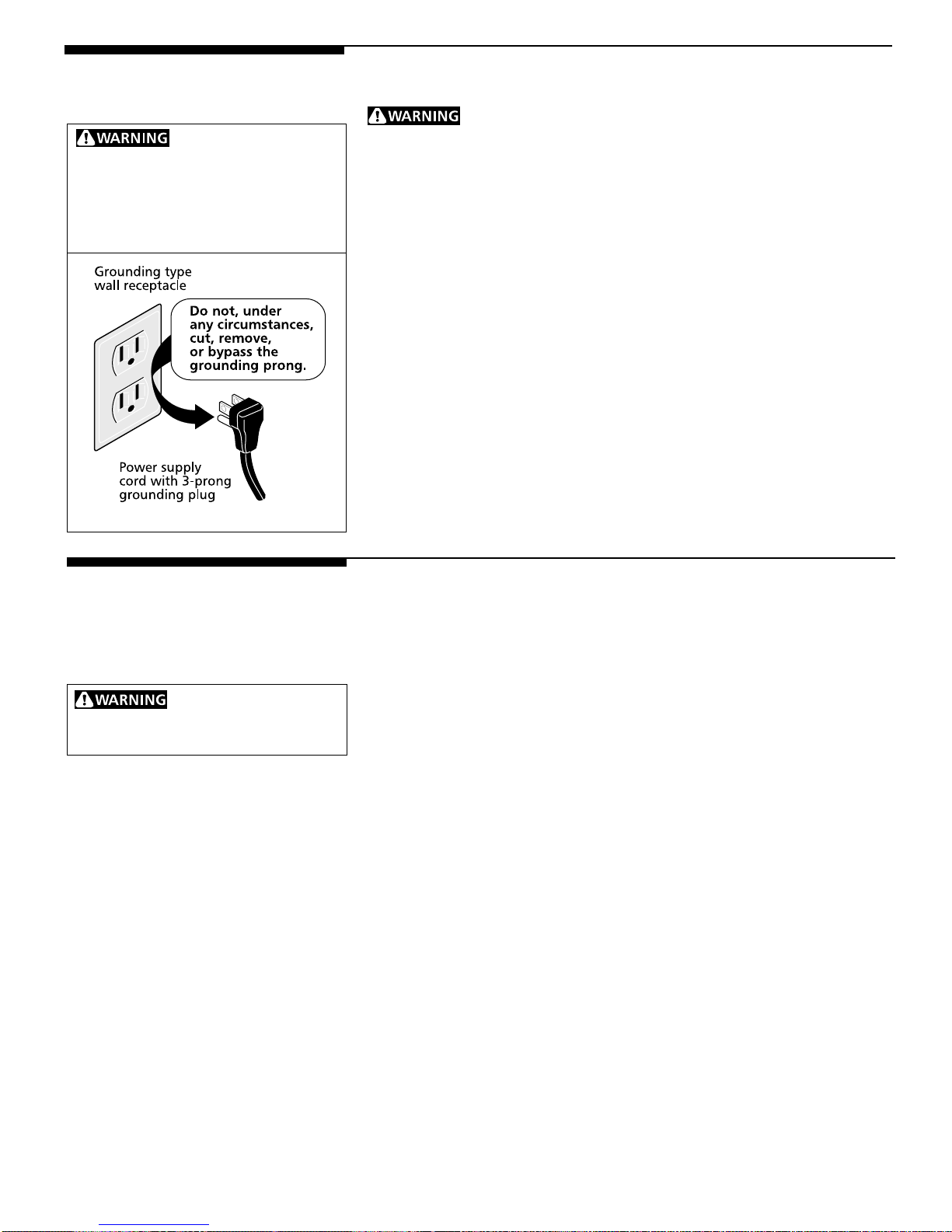
•Proper Installation—Be sure your appliance is properly
installed and grounded by a qualified technician in
accordance with the National Fuel Gas Code ANSI Z223.1
latest edition, and the National Electrical Code ANSI/NFPA
No. 70—latest edition, and local code requirements. Install
and/or adjust only per installation instructions provided in the
literature package for this cooktop.
Ask your dealer to recommend a qualified technician and an
authorizedrepair service. Know how to shut off gas supply at the
meter and disconnect the electrical power to the cooktop at the
circuit breaker or fuse box in case of an emergency.
• User Servicing—Do not repair or replace any part of the
appliance unless specifically recommended in the manuals.
All other servicing should be done only by a qualified technician.
This may reduce the risk of personal injury and damage to the
cooktop.
• Never modify or alter the construction of a cooktop by
removing panels, wire covers, or any other part of the
product.
Steppingor leaning onthis cooktop canresult
inseriousinjuriesandmayalsocausedamagetothecooktop.
Do not allow children to climb or play around the cooktop.
• Storage on Appliance—Flammable materials should not be
stored on the cooktop, near surface burners. This includes
paper,plasticandclothitems,suchascookbooks,plasticwareand
towels,aswellasflammableliquids. Donotstoreexplosives,such
as aerosol cans, on the cooktop. Flammable materials may
explode and result in fire or property damage.
Do not store items of interest to children in
the cabinets above the cooktop.
• Do not leave children alone—Children should not be left
aloneorunattendedintheareawhereanapplianceisinuse.
They should never be allowed to sit or stand on any part of the
appliance.
• DO NOT TOUCH SURFACE BURNERS, GRATES, AREAS NEAR
THESE BURNERS. Surface burners may be hot even though the
flamesarenotvisible. Areasnearsurfaceburnersmaybecomehot
enough to cause burns. During and after use, do not touch or let
clothingorother flammablematerialstouchtheseareasuntilthey
have had sufficient time to cool. Among these areas are the
cooktop and the surfaces facing the cooktop.
• Wear Proper Apparel—Loose-fitting or hanging garments
should never be worn while using the appliance. Do not let
clothing or other flammable materials contact hot surfaces.
Never use your appliance for warming or
heating the room.
• DoNotUseWaterorFlouronGreaseFires—Smotherthefire
with a pan lid, or use baking soda, a dry chemical or
foam-type extinguisher.
•Whenheatingfatorgrease,watchitclosely.Fatorgreasemay
catch fire if allowed to become too hot.
•UseOnlyDryPotholders—Moistordamppotholdersonhot
surfaces may result in burns from steam. Do not let the
potholderstouchtheflameorburners.Donotuseatowelorother
bulky cloth instead of a potholder.
•Do Not Heat Unopened Food Containers—Buildup of
pressuremaycausethecontainertoburstandresultininjury.
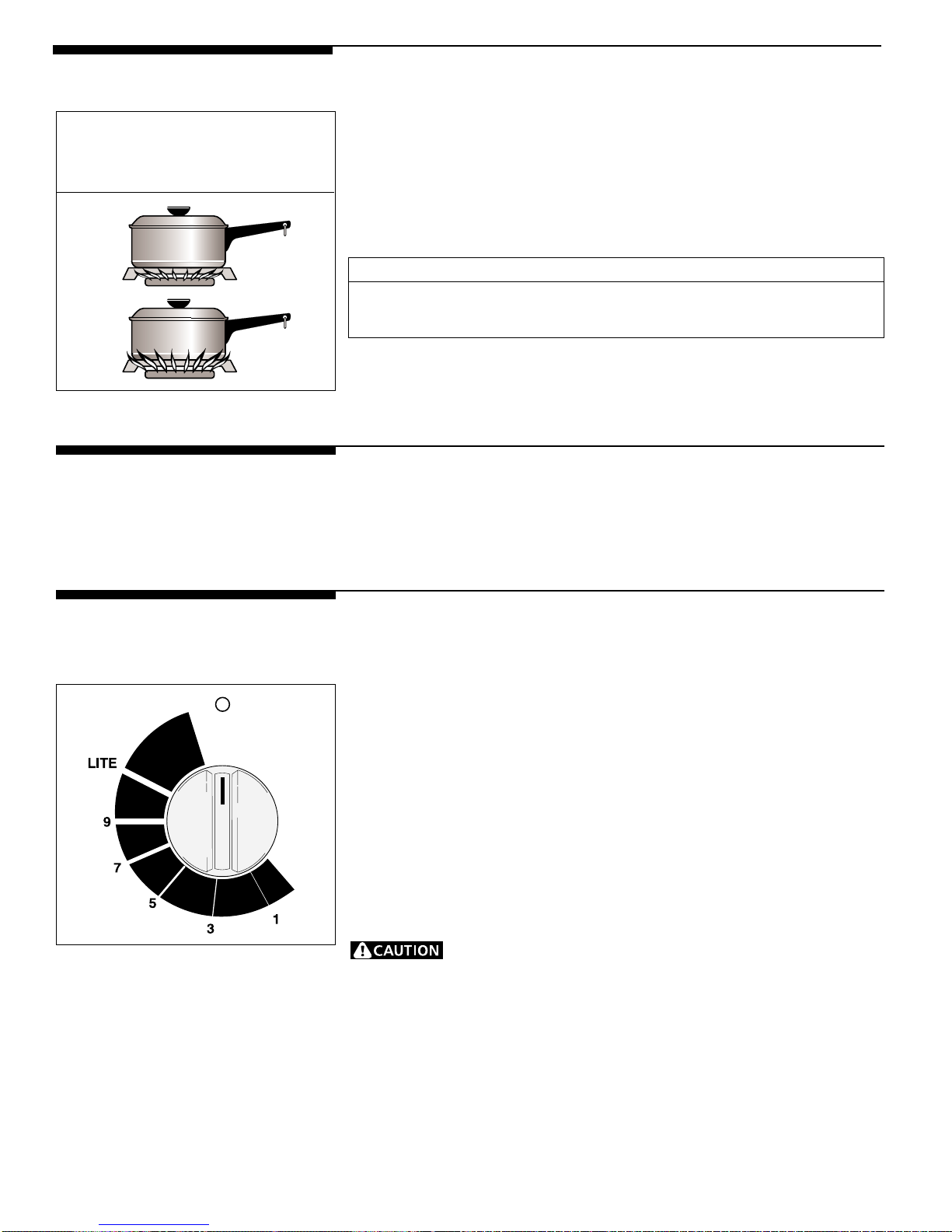
•Know which knob controls each surface burner. Always turn
the knob to the LITE position when igniting the burners. Visually
check that the burner has lit. Then adjust the flame so it does not
extend beyond the edge of the utensil.
Use Proper Flame Size—Adjust flame size so it
does not extend beyond the edge of the utensil. The use of
undersizedutensilswillexposeaportionoftheburnerflametodirect
contact and may result in ignition of clothing. Proper relationship of
utensil to flame will also improve efficiency.