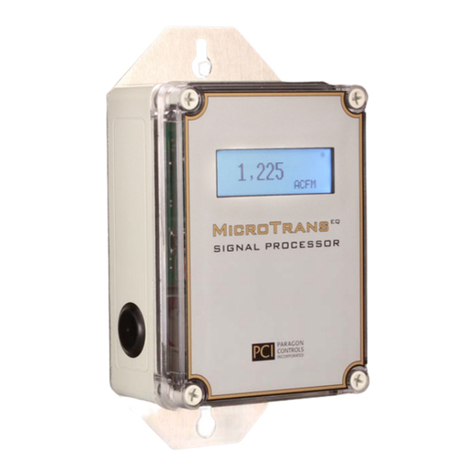
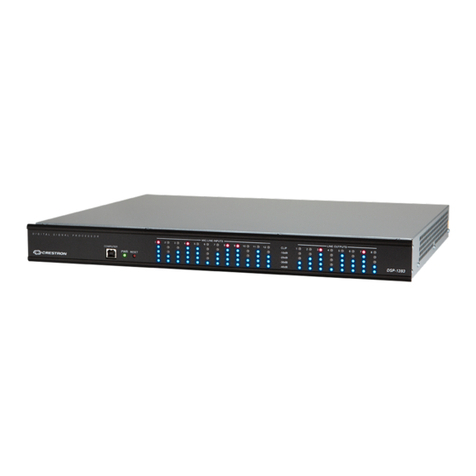
Wilson Electronics 2B1401 User manual

Signal Booster
Installation
Guide
Direct Connect
Signal Boosters
Contents:
How it Works ...................................1
Before Getting Started............................2
In-Vehicle Wilson Installation
Outside Antenna..............................3
SignalBooster ...............................4
Adapter.......................................5
Lightning Surge Protection . . . . . . . . . . . . . . . . . . . . . . . . 6
In-Building Wilson Installation
Outside Antenna..............................7
SignalBooster ...............................7
Powering Up a Wilson Signal Booster................8
Warnings and Recommendations ...................9
Guarantee and Warranty .........................10
Signal Booster Specications . . . . . . . . . . . . . .Back Cover
Wilson
®
Electronics, Inc.
Note: This manual contains important safety and operating information.
Please read and follow the instructions in this manual. Failure to do
so could be hazardous and result in damage to your Signal Booster.

2
Mini
Magnet
Dual-Band
(301113) Magnet
Mount
Dual-Band
(301103)
NMO
Mount
Dual-Band
(301104)
Marine
Antenna
Dual-Band
(301130)
Trucker
Mount
Dual-Band
(301101)
800 MHz Yagi Cellular Antenna (301111)
1900 MHz Yagi PCS Antenna (301124)
800 MHz Yagi Cellular
Antenna (301129)
Contact Wilson Electronics Tech Support with any questions at 866-294-1660
1
12v DC
Hardwire
Power Supply
(859905)
Installation Instructions for the Following Wilson Electronics Signal Boosters
Direct Connect 800/1900 MHz with GPS amplication – Model # 2B1401
FCC ID: PWO2B1401SA IC: 4726A-2B1401SA
The term “IC” before the radio certication number only signies that Industry Canada technical
specications were met.
Antenna Options and Accessories
How it Works
Wilson Electronics Signal Boosters are small, portable, bi-directional devices that deliver
service levels consistent with what would be expected in areas of high cell network
coverage. They amplify a weak or shadowed signal in mobile, marine, M2M and in-building
applications.
When using a Wilson Electronics Signal Booster in conjunction with Wilson Electronics
antennas, the outside antenna will collect the cell tower signal and send it through the
cable to the Signal Booster adapter. Cell phones and cellular data cards (laptops) then
communicate with the improved signal. When a cellular device transmits, the signal is
amplied by the Signal Booster and broadcasted back to the cell tower through the outside
antenna.
Lightning Surge Protector
75 Ohm (859902)
Lightning Surge Protector
50 Ohm (859988)

2
Contact Wilson Electronics Tech Support with any questions at 866-294-1660
Before Getting Started
This guide will help you properly install Wilson’s Direct Connect Signal Boosters in both
in-vehicle and in-building applications. It is important to read through all of the
installation steps for your particular application prior to installing any equipment.
Read through the instructions, visualize where all the equipment will need to be installed
and do a soft installation before mounting any equipment. If you have any questions
contact Wilson Electronics Technical Support at 866-294-1660.
Inside this Package
• Direct connect Signal Booster
• DC plug-in power supply
• 6’ inside antenna extension cable
Note: Products may vary due to product kit purchases.
Additional Required Equipment
• Outside antenna for in-vehicle or in-building use (required)
(NOTE: Specically tuned iDEN antennas available)
• Cell phone or data card specic external antenna adapter (required)
• AC/DC power supply (required for in-building use)
In addition to Dual-Band cellular signal amplication, the 811201 Dual-Band Direct
Connect Signal Booster incorporates GPS signal amplication. The amplied GPS
signal enhances the performance of any GPS applications which your phone may
support, including the E911 emergency location feature if your phone is so
equipped. In emergencies, E911 enabled phones provide caller location to 911
call centers.
Direct Connect
Signal Booster 6‘ inside
antenna
extension
cable
DC plug-in power
supply

3Contact Wilson Electronics Tech Support with any questions at 866-294-1660
4
The outside antenna must be installed
vertically. Signal performance will be
degraded if the antenna is not vertical.
Run the antenna cable through the door to
the Signal Booster.
For a more professional looking installation,
run the antenna cable under the door seal.
Carefully pull down the door seal. Run the
cable through the seal and push the seal
back into place. This prevents constant
wear and tear on the cable as the door
opens and closes.
The antenna cable is small enough to easily
tuck under the door seal or plastic molding.
Optional Magnet-
Mount Antenna
Shown
Carefully
Pull Down
Door Seal
Run Cable
Under
Seal
Tuck Cable
Under Seal
Installing a Wilson Outside Antenna
To receive the best cell signal, select a location in the center of the vehicle’s roof at least 12
inches away from any other antennas and free of obstructions.
Follow the specic antenna installation instructions included with the outside antenna (sold
separately).
NOTE: See RF Safety Warnings (p. 9)
In-Vehicle

3
4
Contact Wilson Electronics Tech Support with any questions at 866-294-1660
Select a location to install the Signal
Booster that is away from excessive heat,
direct sunlight, moisture and that has proper
ventilation.
Recommended installation locations for
in-vehicle are:
• Under the seat
• In the trunk
• Under the dash
Run the cable from the outside antenna and
attach it to the connector labeled “Outside
Antenna” on the Signal Booster.
Installing a Wilson Signal Booster
Outside
Antenna
Signal Booster
DC Power
Supply
Cell Phone
Adapter
Warning: Do not plug in the DC Power
Supply until the Outside Antenna and
external adapter cables are attached to
the Signal Booster.
!
In-Vehicle

5Contact Wilson Electronics Tech Support with any questions at 866-294-1660
6
NOTE: Depending on your
specic cell phone, the adapter
socket may be located beneath a
rubber plug.
Figure 1
In-Vehicle/In-Building
Installing a Wilson External Adapter
An external adapter is required to connect the cell phone or cellular data card to the Signal
Booster. The external adapter is cell phone/data card-specic and may be purchased
through a local retailer.
Refer to Wilson’s Adapter Guide to identify
the right adapter for your cell phone or
cellular data card. The adapter guide is
available through a local retailer or visit
www.WilsonElectronics.com.
The external adapter plugs into the included six-foot extension cable and directly into a
socket on the cell phone or cellular data card as shown in Figure 1. (NOTE: See the user’s
manual for your specic phone or data card to determine the socket location.)
Run the extension cable from the external adapter on the cell phone or cellular data card
and attach it to the connector labeled “Inside Antenna” on the Signal Booster.
Sample
external
adapter

5
6
Contact Wilson Electronics Tech Support with any questions at 866-294-1660
In-Vehicle/In-Building
951101 5’ Extension Cable RG58U
Low Loss Coax
951102 10’ Extension Cable RG58U
Low Loss Coax
951103 15’ Extension Cable RG58U
Low Loss Coax
951104 20’ Extension Cable RG58U
Low Loss Coax
952320
20’ Extension Cable Wilson 400
(9913 Equivalent)
Ultra Low Loss Coax
952330
30’ Extension Cable Wilson 400
(9913 Equivalent)
Ultra Low Loss Coax
952350
50’ Extension Cable Wilson 400
(9913 Equivalent)
Ultra Low Loss Coax
Extension Cable Chart
The following Wilson extension cables are available to help you customize your installation
for peak performance.
952375
75’ Extension Wilson 400
(9913 Equivalent)
Ultra Low Loss Coax
952400
100’ Extension Wilson 400
(9913 Equivalent)
Ultra Low Loss Coax
952302
2’ Extension Wilson 400
(9913 Equivalent)
Ultra Low Loss Coax
(N-Male to N-Male Ends)
951110
2’ Extension RG58U Low
Loss Coax (N-Male to FME-
Female)
RG58U - FME connectors / 9913 - N connectors
Installing Lightning Protection
Install the Lightning Surge Protector (LSP) close
to the Signal Booster. Attach the cable from the
outside antenna to the surge protector. Using a
short length of low loss cable, attach one end to
the LSP and the other to the outside antenna.
Ensure the LSP is properly grounded. (For RG6
cable use #859988-75 Ohm, For 50 Ohm use Part
#859902).
From the
outside
antenna
Ground Wire
Lightning Surge
Protection
To the Signal Booster

7Contact Wilson Electronics Tech Support with any questions at 866-294-1660
8
Installing a Wilson Signal Booster
Select a location to install the Signal Booster that is away from excessive heat, direct
sunlight, moisture and that has proper ventilation. Ensure the Signal Booster is installed
within six feet of where the cellular device will be used (to accommodate the six-foot
adapter extension cable). Run the cable from the outside antenna and attach it to the
connector labeled “Outside Antenna” on the Signal Booster. Connect the power supply
(sold separately) to the power input labeled “12V DC” on the Signal Booster.
Recommended installation locations for
in-building are:
• On a wall
• On the ceiling
• Near a power outlet
In-Building
Installing a Wilson Outside Antenna – In-Building
Select a location on the roof of the building to install the outside antenna that has the most
unobstructed line of sight to the cell tower.
A Yagi antenna must be installed horizontally with the elements vertical and the drip hole
on the bottom. Ensure there are three feet of clearance in all directions surrounding the
antenna.
Follow the specic antenna installation instructions included with the outside antenna.
Lightning protection is recommended for all in-building installations. Take extreme care to
ensure neither you nor the antenna come in contact with any electrical power lines.
To obtain maximum performance, the antenna should point toward the cell tower. Follow
the instructions included with the outside antenna.
Cell Tower RF Signal
Yagi Outside Antenna
NOTE: See RF Safety Warnings (p. 9)

7
8
Contact Wilson Electronics Tech Support with any questions at 866-294-1660
Powering up a Wilson Electronics Signal Booster
For In-Vehicle use, rst connect the power
cable to the Signal Booster input marked
“12V DC” and then insert the large end into a
12V DC power socket or vehicle power outlet.
The Signal Booster may remain on all the
time; however, leaving the Signal Booster
on in a vehicle when it is not running can
discharge the battery in a day or two.
A good option is to power the Signal Booster
through the ignition switch so that the Signal
Booster turns off and on with the vehicle. Or
unplug the power supply. (Part# 859905
12V DC Hardwire Kit available from
www.WilsonElectronics.com).
For In-Building use, rst connect the optional
AC/DC power supply to the Signal Booster
input labeled “12V DC” and then into a wall
outlet.
Carefully insert the power cable.
In-vehicle 12V DC power supply (included)
Warning: Use only a Wilson power supply.
Use of a non-Wilson power supply could
damage your equipment, phone and/or
data card.
!
Testing a Wilson Signal Booster
To test your Signal Booster, go to a weak signal area where your cell phone registers only
1-2 bars without the Signal Booster turned on. Then connect the Signal Booster to the
phone. You should see a signal improvement of 2 or more bars. Note: Many phones take
up to 20 seconds to reset the bar indicator.
Warning: Verify that both the outside
antenna and the adapter extension cable
are connected to the Signal Booster
before powering up the Signal Booster.
!
In-building AC/DC power supply (sold
separately)
In-Vehicle/In-Building

Contact Wilson Electronics Tech Support with any questions at 866-294-1660
9 10
Warnings and Recommendations
Warning: Verify that both the outside antenna and the adapter extension cable are
connected to the Signal Booster before powering up the Signal Booster.
Warning: RF Safety: In-Vehicle - The outside antenna must be installed with a
separation of at least 20 inches from any of the vehicle’s occupants or
nearby persons and must not be located or operating in conjunction
with any other antenna or Signal Booster. Use of a cellular Signal
Booster with an antenna gain higher than 6.12 dBi is in violation of
FCC regulations, for which the offender is fully liable. All Wilson mobile
antennas are 6.12 dBi or less.
Warning: RF Safety: In-Vehicle - All roof-mount antennas should be centrally
located on the roof of the vehicle. Glass-mount antennas should be
located in the middle of either the front or back windshield. Mirror-mount
antennas should be at least 20 inches from any persons in or around the
vehicle.
Warning: RF Safety: In-Building - The outside antenna must be installed on an
outdoor structure with a separation of at least 26 inches from all persons
during normal operation. The outside building antenna must not have a
gain that exceeds 15 dBi. All Wilson outside building antennas have gains
of 15 dBi or less.
Warning: Do not plug in the power supply until the Outside Antenna and external
adapter cables are attached to the Signal Booster.
Lightning protection is recommended for all in-building installations.
NOTE: The aluminum casing of a Wilson Signal Booster will adjust very quickly to the
ambient temperature of its environment. For example, in the summer, when the inside
of a car can reach 140 degrees Fahrenheit, the Signal Booster temperature may be 150
degrees or higher. The casing will be hot to the touch, similar to a metal door handle or a
steering wheel. Such high temperatures will not damage the Signal Booster, nor do they
pose a re risk to the vehicle. As recommended in these instructions, install the Signal
Booster in a location with adequate ventilation, such as under the seat, in the trunk or under
the dashboard. Keep the area free of items that could block air ow to the Signal Booster.
Other manuals for 2B1401
2
Table of contents