Xip -Q01 LEOPARD User manual

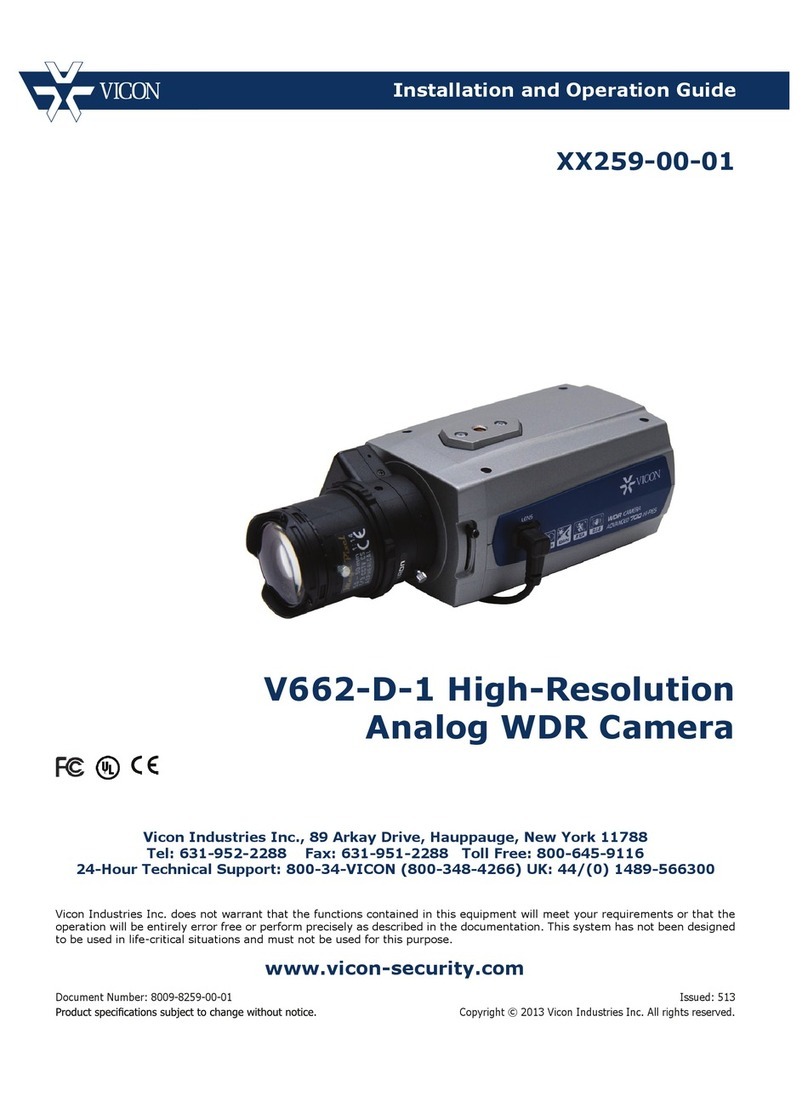
Micro-IP Camera type cube
XIP-Q01 LEOPARD
User’s Manual
Ver. 1.2

1
Table of Contents
1. Overview................................................................................................................................2
1.1 Features......................................................................................................................2
1.2 Package Contents .......................................................................................................3
1.3 Dimensions..................................................................................................................4
1.4 Connectors..................................................................................................................5
2. Camera Cabling.....................................................................................................................6
2.1 Connect Power............................................................................................................6
2.2 Connect Ethernet Cable...............................................................................................6
2.3 Connect Alarm I/O.......................................................................................................6
3. System Requirements ..........................................................................................................7
4. Access Camera .....................................................................................................................8
5. Setup Video Resolution......................................................................................................11
6. Configuration Files Export / Import ...................................................................................12
Appendix A: Technical Specifications ......................................................................................13
Appendix B: Delete the Existing DC Viewer..............................................................................17
Appendix C: Setup Internet Security.........................................................................................18

2
1. Overview
The Micro-camera IP type bucket full HD LEOPARD, Camera is an easy setup
camera with PoE supported to reduce complicate cabling. The IP Camera has
built-in microphone and speaker which allows two-way audio communication.
2 Megapixel Resolution is supported for providing high definition images. Quad
Streams Compression (H.264 Baseline / Main / High Profile + MJPEG) are
available for efficient bandwidth and storage management. For low light
situations, the IP Camera has incorporated Day/Night ICR technologies to
capture clear images.
1.1 Features
Progressive Scan CMOS Sensor
2M Resolution
Quad Stream Support
Dual stream- Full HD 1080P Real-Time + D1 Real-Time
Quad Stream Compression- H.264 Baseline / Main / High Profile + MJPEG
Multi-language Support
Wide Dynamic Range
Built-In Microphone and Speaker*
Motion Detection
Privacy Masks
Smart Picture Quality / 3D Noise Reduction
Smart IR Mode
Day/Night (ICR)
IR LED Module (working distance up to 5m)*
microSD Support
ONVIF Support
(*) Optional

3
1.2 Package Contents
Please check the package contains the following items listed below.
Full HD Multiple Stream
Micro-camera IP LEOPARD (PoE)
Quick Guide
CD
(bundled software and documentation)

4
1.3 Dimensions
The dimensions of the IP Camera are shown below.

5
1.4 Connectors
The diagrams below show the connectors of the IP Camera. Definition for each
connector is also given as follows.
No.
Connector
Definition
1
PoE NETWORK
For Ethernet cable and PSE connection
2
Network LEDs
Network connection and activity indication
3
DC 12V Connector
For power connection
4
Alarm I/O
1
Alarm Output +
2
Alarm Output −
3
Alarm Input +
4
Alarm Input −
5
microSD Card Slot
For videos and snapshots storage
6
Default Button
Press the button with a proper tool for at least 20 seconds to
restore the system.

6
2. Camera Cabling
Please follow the instructions below to complete IP Camera connection.
2.1 Connect Power
For power connection, please refer to section Connectors. Alternatively, users
can power the camera by PoE. Use an Ethernet cable and connect it to the
camera and a PoE switch.
NOTE: If PoE is used, make sure Power Sourcing Equipment (PSE) is in
used in the network.
2.2 Connect Ethernet Cable
To have best transmission quality, cable length shall not exceed 100 meters.
Connect one end of the Ethernet cable to the PoE Network connector of the IP
Camera, and plug the other end of the cable to the network switch or PC.
NOTE: In some cases, Ethernet Crossover cable might be needed when
connecting the IP Camera directly to the PC.
Check the status of the link indicator and activity indicator LEDs. If the LEDs are
unlit, please check the LAN connection.
Green Link Light indicates good network connection.
Orange Activity Light flashes for network activity indication.
2.3 Connect Alarm I/O
The camera equips one alarm input and one relay output for alarm application.
Refer to alarm pin definition below to connect alarm devices to the IP Camera if
needed.
PIN 1: Output +
PIN 2: Output −
PIN 3: Input +
PIN 4: Input −

7
3. System Requirements
To perform the IP Camera via web browser, please ensure the PC is in good
network connection, and meet system requirements as described below.
Items
System Requirement
Personal Computer
1. Intel®Pentium®M, 2.16 GHz or
Intel®CoreTM2 Duo, 2.0 GHz
2. 2 GB RAM or more
Operating System
Windows VISTA / Windows XP / Windows 7
Web Browser
Microsoft Internet Explorer 6.0 or later
Firefox
Chrome
Safari
Network Card
10Base-T (10 Mbps) or 100Base-TX (100 Mbps) operation
Viewer
ActiveX control plug-in for Microsoft IE

8
4. Access Camera
For initial access to the IP Camera, users can search the camera through the
installer program: DeviceSearch.exe, which can be found in “DeviceSearch”
folder in the supplied CD.
Accessing the Camera by Device Search Software
Step 1: Double click on the program Device Search.exe.
Step 2: After its window appears, click on the <Device Search> button on the
top. All the finding IP devices will be listed in the page.
Step 3: Find the camera in the list by its IP address and click on it. The default
IP address of the camera is: 192.168.0.250.
Step 4: The default IP address of the camera may not be in the same LAN as
the IP address of the PC. If so, the IP address of the camera needs to
be changed. Right click on the camera and click <Network Setup>.
Meanwhile, record the MAC address of the camera, for future
identification.
Step 5: The <Network Setup> page will come out. Select <DHCP> and click
<Apply> down the page. The camera will be assigned with a new IP
address.
Step 6: Click <OK> on the Note of setting change. Wait for one minute to
re-search the camera.
Step 7: Click on the <Device Search> button to re-search all the devices. Find
the camera in the list by its MAC address. Then double click or right
click and select <Browse> to access the camera directly via a web
browser.

9
Step 8: A prompt window requesting for default username and password will
appear. Enter the default username and password shown below to
login to the camera.
Login ID
Password
Admin
1234
NOTE: ID and password are case sensitive.
NOTE: It is strongly advised that administrator’s password be
altered for the security concerns. Refer to Full HD Multiple
Streams IP Camera Menu Tree for further details.
Installing DC Viewer Software Online
For initial access to the IP Camera, a client program, DC Viewer, will be
automatically installed on the PC when connecting to the IP Camera.
If the Web browser does not allow DC Viewer installation, please check the
Internet security settings or ActiveX controls and plug-ins settings (refer to
chapter Appendix C: Setup Internet Security) to continue the process.
The Information Bar (just below the URL bar) may come out and ask for
permission to install the ActiveX Control for displaying video in browser. Right
click on the Information Bar and select <Install ActiveX Control…> to allow the
installation.
The download procedure of DC Viewer software is specified as follows.
Step 1: In the DC Viewer installation window, click on <Next> to start
installation.
Step 2: The status bar will show the installation progress. After the installation
is completed, click on <Finish> to exit the installation process.
Step 3: Click on <Finish> to close the DC Viewer installation page.
Table of contents