manuals.online logo
Brands
  1. Home
  2. •
  3. Brands
  4. •
  5. 3dEPP
  6. •
  7. Toy
  8. •
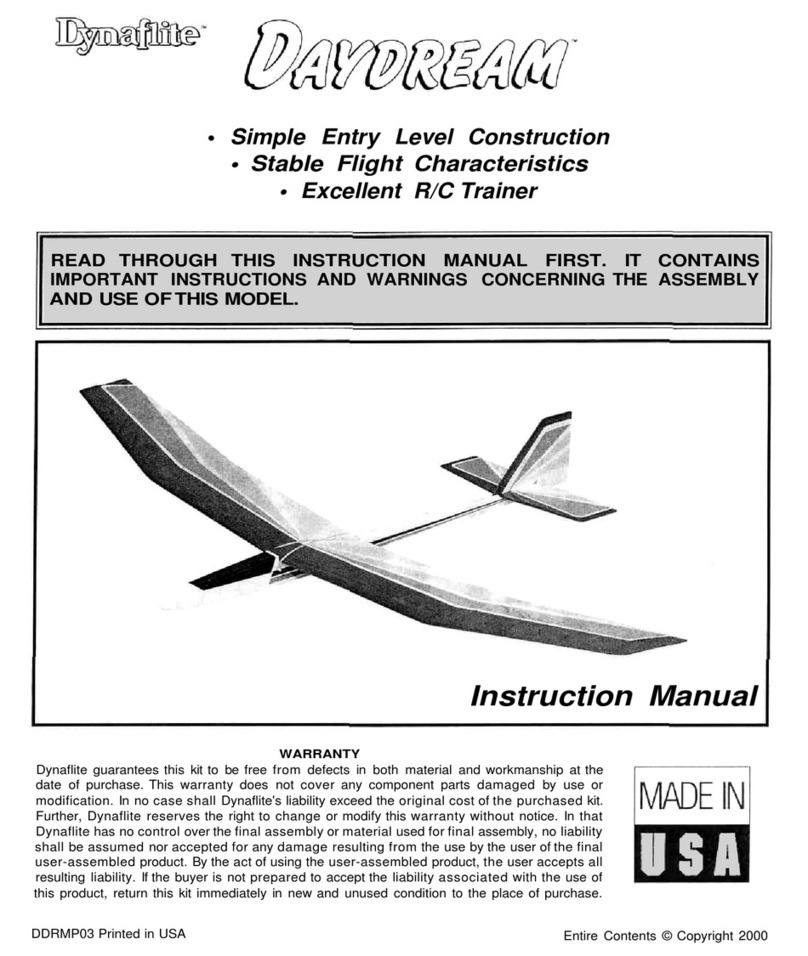
  9. 3dEPP EPP Yak 55 User manual

3dEPP EPP Yak 55 User manual

Popular Toy manuals by other brands

FUTABA GY470 instruction manual

FUTABA

FUTABA GY470 instruction manual

LEGO 41116 manual

LEGO

LEGO 41116 manual

Fisher-Price ColorMe Flowerz Bouquet Maker P9692 instruction sheet

Fisher-Price

Fisher-Price ColorMe Flowerz Bouquet Maker P9692 instruction sheet

Little Tikes LITTLE HANDIWORKER 0920 Assembly instructions

Little Tikes

Little Tikes LITTLE HANDIWORKER 0920 Assembly instructions

Eduard EF-2000 Two-seater exterior Assembly instructions

Eduard

Eduard EF-2000 Two-seater exterior Assembly instructions

USA Trains EXTENDED VISION CABOOSE instructions

USA Trains

USA Trains EXTENDED VISION CABOOSE instructions

Modellbau Laffont Z1601 Assembly instructions

Modellbau Laffont

Modellbau Laffont Z1601 Assembly instructions

NOCH 12905 instruction manual

NOCH

NOCH 12905 instruction manual

Eduard Ki-61-Id quick start guide

Eduard

Eduard Ki-61-Id quick start guide

Viessmann Vollmer 45616 Mounting instruction

Viessmann

Viessmann Vollmer 45616 Mounting instruction

Vollmer 42004 Mounting instruction

Vollmer

Vollmer 42004 Mounting instruction

Phoenix Model CLASSIC-EP instruction manual

Phoenix Model

Phoenix Model CLASSIC-EP instruction manual

H-KING Sopwith Camel British WW1 Fighter instruction manual

H-KING

H-KING Sopwith Camel British WW1 Fighter instruction manual

MODSTER Predator 4x4 Crawler user manual

MODSTER

MODSTER Predator 4x4 Crawler user manual

DHK Hobby 8136 User instruction manual

DHK Hobby

DHK Hobby 8136 User instruction manual

THUNDER TIGER Raptor 50 V2 kit manual

THUNDER TIGER

THUNDER TIGER Raptor 50 V2 kit manual

Timberkits Skateboarder instructions

Timberkits

Timberkits Skateboarder instructions

Hangar 9 Funtana 125 Assembly manual

Hangar 9

Hangar 9 Funtana 125 Assembly manual

manuals.online logo
manuals.online logoBrands
  • About & Mission
  • Contact us
  • Privacy Policy
  • Terms and Conditions

Copyright 2025 Manuals.Online. All Rights Reserved.

1
EPP Yak 55 Assembly Manual
Congratulations on the purchase of your new EPP Yak 55 airframe! The 3dEPP.com Yak airframe is a great
flyer for pilots wanting to learn basic and advanced 3D maneuvers and has been proven to be the airframe of
choice for some of the top pilots in the realm of 3D Flying. The tabbed design makes assembly super fast,
super simple allowing you to get in the air quicker than ever before. Constructed from EPP this airframe is
very durable and will provide hours of 3D flying fun!
SAFETY during Assembly
While assembling this kit the builder will be using standard modeling tools such as knives, adhesives,
soldering iron and other common power tools. Please follow all safety precautions outlined by the
manufactures of the products you use during construction of your kit, and always follow the important
guidelines listed below.
ALWAYS protect your eyes when working with power tools, hand tools, knives and adhesives. It is highly
recommended that safety glasses are always utilized when working with this type of equipment.
ALWAYS protect your body, fingers and hands when working with knives, adhesives, or tools. Never cut
towards exposed skin when using hobby knives or blades. Insure hobby knives are placed on tables or
benches in a manner that will not allow them to roll or be knocked off.
ALWAYS have access to a first-aid kit handy when working with knives, adhesives, or tools.
ALWAYS keep knives, adhesives, and tools out of reach of children.
SAFETY while Flying
SAFETY FIRST: Your EPP Yak 55 should not be considered a toy, but rather a sophisticated, working model.
The EPP Yak 55 is capable of extreme maneuvers and if not operated correctly, could possibly cause injury to
yourself or others and damage to property.
ONLY fly your aircraft in a safe open area, away from spectators, roads, vehicles. Never fly near overhead
power or utility lines. Never attempt to retrieve an airplane that has become stuck in utility power lines or
trees.
NEVER fly to close to yourself or other spectators. Spinning propellers are DANGEROUS!
ALWAYS fly within your control and never outside of your ability. If you are not an experienced pilot or have
not flown this type of model before, we recommend that you get the assistance of an experienced pilot in your
area or R/C club for your first flight.
ALWAYS have fun and be safe!

2
REQUIRED TOOLS
Hot Glue Gun
Hobby Knife
Small Phillips Screwdriver
Scissors
Wire Cutters
Needle Nose Pliers
Ruler or Straight Edge
Soldering Iron
REQUIRED MATERIALS
Welder’s Adhesive (Available at Lowes Home Improvement)
Medium or thick CA (does not have to be foam safe with EPP)
Connectors for ESC to Battery
Hot Glue Sticks
Velcro
Solder
For additional information we highly recommend checking out the following links on RC Groups for tips,
tricks and additional information.
3dEPP Website: www.3depp.com
3dEPP YAK 55 THREAD: http://www.rcgroups.com/forums/showthread.php?t=1101664
Leadfeathers EPP YAK 55 TREAD: http://www.rcgroups.com/forums/showthread.php?t=964237
EPP YAK 55 OWNERS CLUB: http://www.rcgroups.com/forums/showthread.php?t=1028213
3
3Depp.com
Build instructions
1. Lay out wax paper on flat surface.
2. Align wing, forward fuselage, aft fuselage and stabilizer.
3. Starting at the front motor mount apply a small amount of Welders glue along the back
edge of the motor mount and forward center section of the wing where the tab is
located. Pin or weight parts down to hold them in place while the glue dries.
4
4. Repeat this process for the joints between the aft wing and forward side of aft
horizontal fuselage assembly and between the aft side of the aft horizontal fuselage
assembly and the forward side of the horizontal stabilizer and elevator assembly.
5. Next separate the upper & lower fuselage and, retain the center section. The area of
the servo from the center section can be used as a plug by cutting it off the center
section and gluing in it place with Welders glue on the lower fuselage. The same can be
done for the elevator and aileron servo which are located on the top fuselage. This is an
option if using dual aileron servos or if a different size servo is used however; we
recommend the HXT500 servo on all control surfaces.
6. Test fit top of fuselage to wing assembly to ensure tabs align. Leavening the rudder
hanging off end of table will aid in test fitting the upper fuselage assembly.
5
7. Once alignment is verified glue top of fuselage to top of wing assembly. Use a thin
bead of Welders glue on the lower mating surface of the upper fuselage spreading glue
evenly with your finger. Do not put glue in the area forward of the aileron servo cutout
or forward where the motor mount will go.
8. Using a straight edge insure the top fuselage is straight along the length of the wing and
tail section. A carpenter’s square can also be used to insure the upper fuselage is square
to the wing and tail section.
9. Let the upper fuselage and wing assembly dry for a few minutes. It is a good idea to
press the upper fuselage assembly firmly into the wing and tail sections making sure
the upper fuselage is not lifting or separating from the wing assembly as it dries.
10. Next test fit the lower fuselage into the bottom side of wing and tail assembly. Make
sure the lower fuselage and rudder fit flush against each other this joint will form the
lower hinge.
11. Place fuselage upside down on edge of table, and place a weight on top of the wing to
keep it stationary on table.
12. Again making sure the lower fuselage to rudder hinge area is flush against each other,
glue the lower fuselage to the wing and tail assembly. Do not glue forward of the
aileron servo or the motor mount area. Let this assembly dry for a few minutes.
13. Place a small bead of Welders glue on the lower rudder hinge line and fuselage area.
Run a popsicle stick or scrap piece of balsa along the hinge line to spread glue evenly
to form the lower section of the hinge. Using a push pin in the top of the rudder and
down into the vertical stabilizer will aid in holding the rudder in place
6
14. Next wipe each of the servos with a clean cloth and alcohol to remove grease residue
on the outside of the servo housing.
15. Center the aileron servo with your radio or servo centering tool and install the long
double sided servo arm. Use the outer holes on the long servo arm.
7
16. Glue aileron servo with horn located towards the rear of aircraft. Glue servo in place
with hot glue a small amount on the mounting tabs of the servo case is sufficient.
17. Next locate the 10mm motor mount supplied with the kit. Lightly sand the surface of
the motor mount to insure a good bond between the motor mount and the foam. Test
fit the mount before gluing in position. Place a small amount of glue on each of the four
sides of the motor mount and spread evenly along the mount. Carefully but quickly
slide the mount into place making sure the screw is located on the bottom side. Make
sure the upper and lower fuselage and the forward horizontal motor mount foam are
aligned with the plastic motor mount.
8
18. Put a bead of Welders glue on all sides of the upper & lower fuselage to wing assembly
mating areas. Use a round dowel rod along the length of the joint form a nice fillet
between fuselage and wing and tail assembly.
9
19. Test fit the plywood control horns in precut slots on top side of ailerons. Make sure
the small hole in the control horn is directly above the hinge line. Once the fit has been
verified remove the control horn and apply a small amount of Welders glue or super
glue to the control horn and insert into slot in foam again making sure the hole in the
control horn is directly above the hinge line.
10
20. Install the pre-made end of the aileron control horn into the plywood control horn that
was just glued into the aileron control surface.