Basic features:
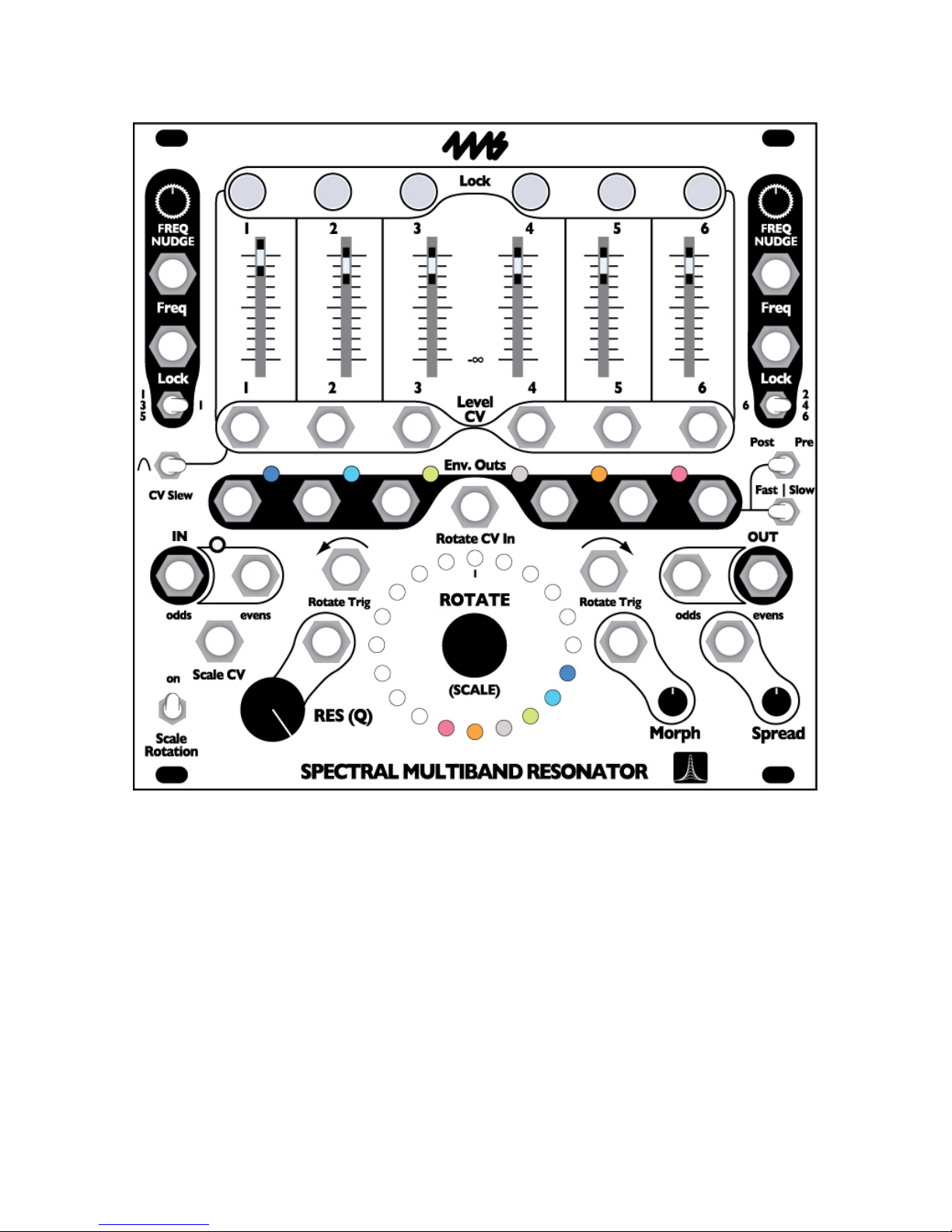
•Six resonator/filter channels
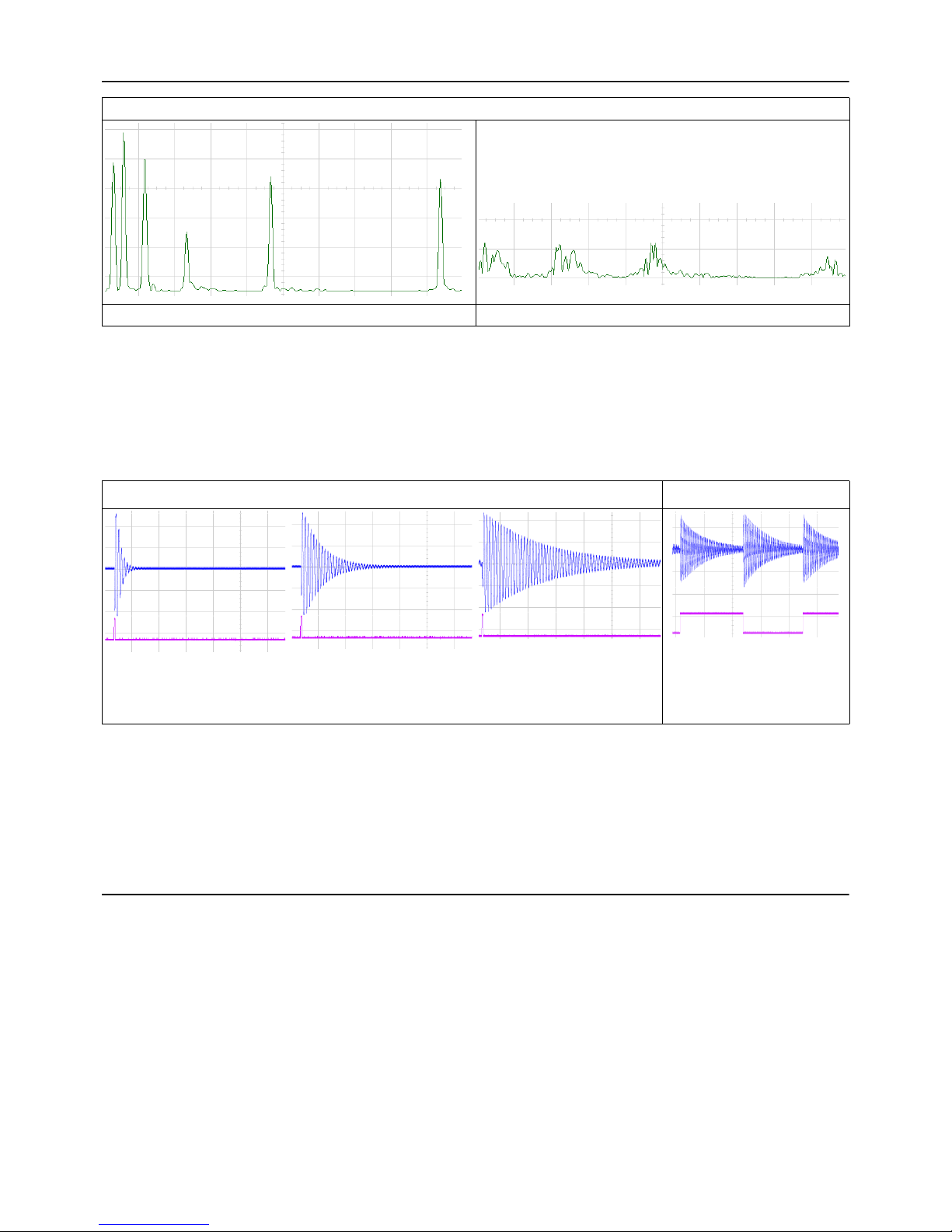
•Variable "Q" (Resonance) ranges from classic band-pass to highly resonant ringing
•Ring of 20 full-color lights displays the channel frequency
•Channel frequencies move about the scale using Rotation and Spread
° Rotation "spins" the frequencies around the scale
° Spread controls the gap between neighboring bands
•Morph creates a variable speed cross-fade when the channels are rotated or spread
•Lock buttons prevent each channel from changing in frequency (resonance can also be locked)
•Freq Nudge knobs create de-tuning effects, or are useful for picking out a precise frequency
•Frequency CV input (1V/octave) for even and odd bands (flip switch selects single or multiple channel control)
•Stereo inputs and outputs stagger the bands into evens/odds for an immersive stereo field
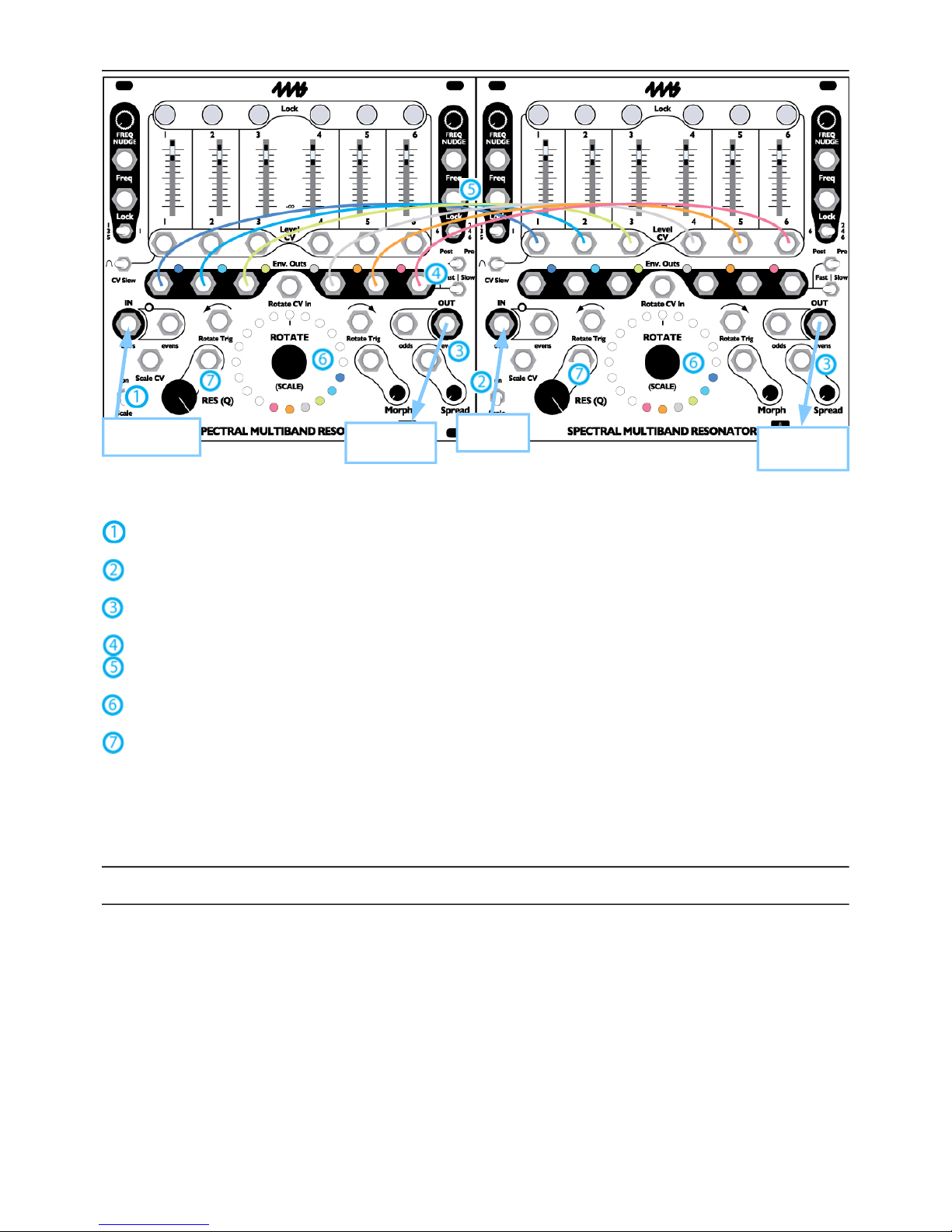
•Spectral content outputs for each channel (Env Out jacks) allow for vocoding (spectral transfer)
° Switch selects Fast or Slow tracking speeds, or trigger outputs
° Trigger output mode fires a trigger when envelope crosses a threshold: useful for extracting a beat from music
•Sliders and CV jacks control each filter's level
•Slew switch applies slew-limiting to the CV level jacks, which prevents clicking from clocks or triggers
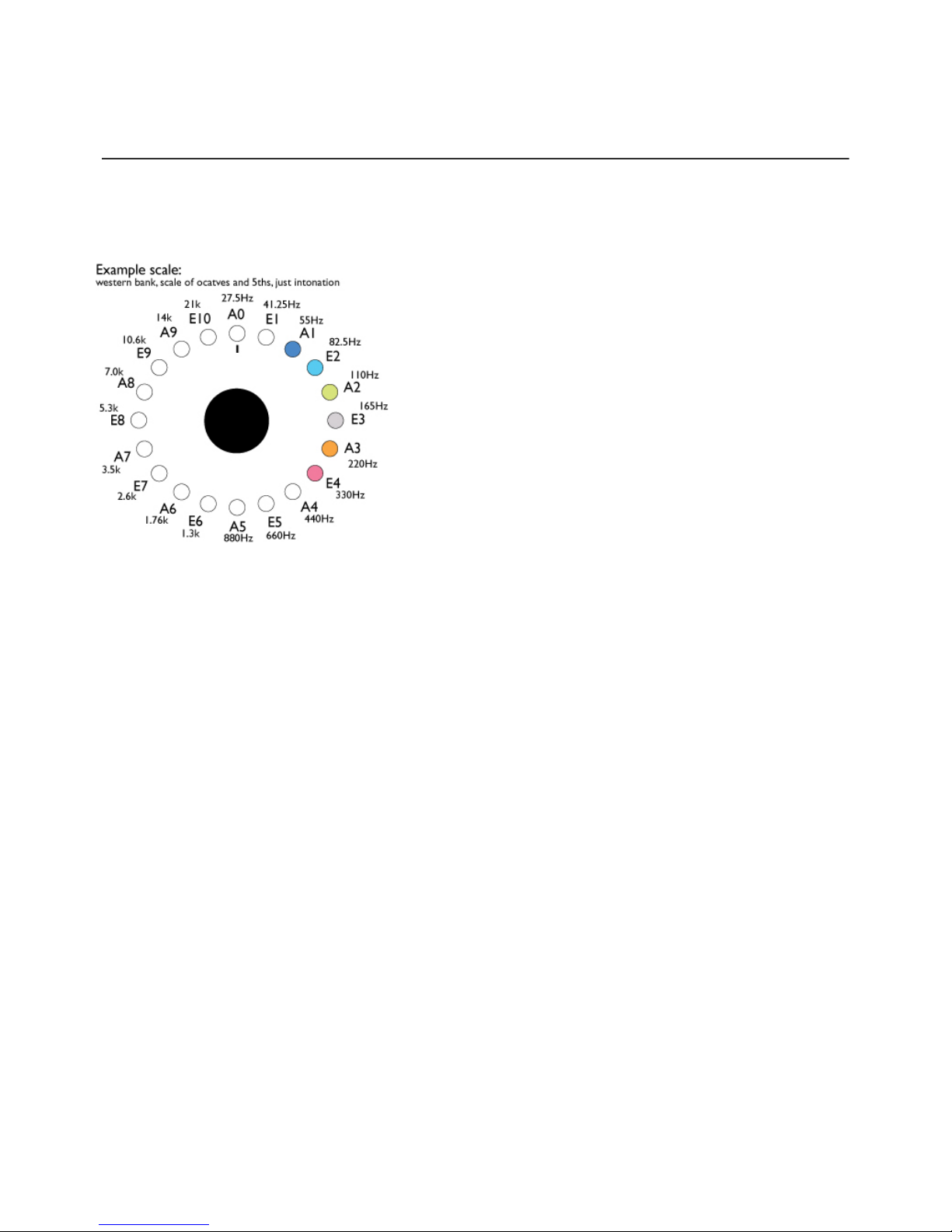
•Each bank has 11 scales of 20 frequencies/notes each
•Scale banks for Western, Shrutis (India), Chromatic, Diatonic, Micro-tonal 17-note/octave, Gamelan (Pelog and
Slendro), Bohlen-Pierce 13-note tritave, Wendy Carlos's Alpha and Gamma scales. Both equal tempered and just
intonation tunings
•Rotation/Spread moves about an entire bank, or can be limited to a single scale
•White noise is normali ed to the inputs, so the SMR can be used without an external signal
•Settings and LED color scheme can be saved and recalled in multiple banks
Controls and jacks:
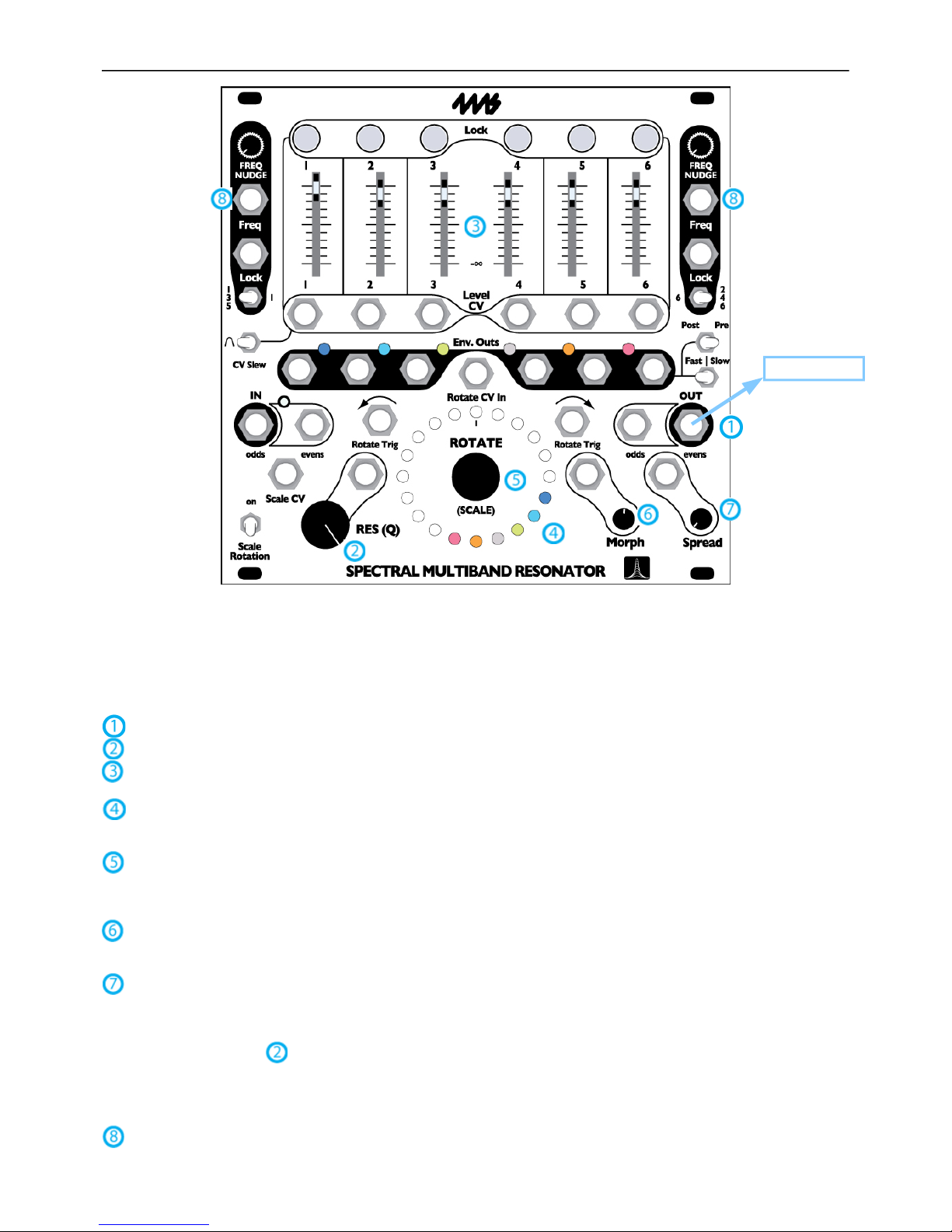
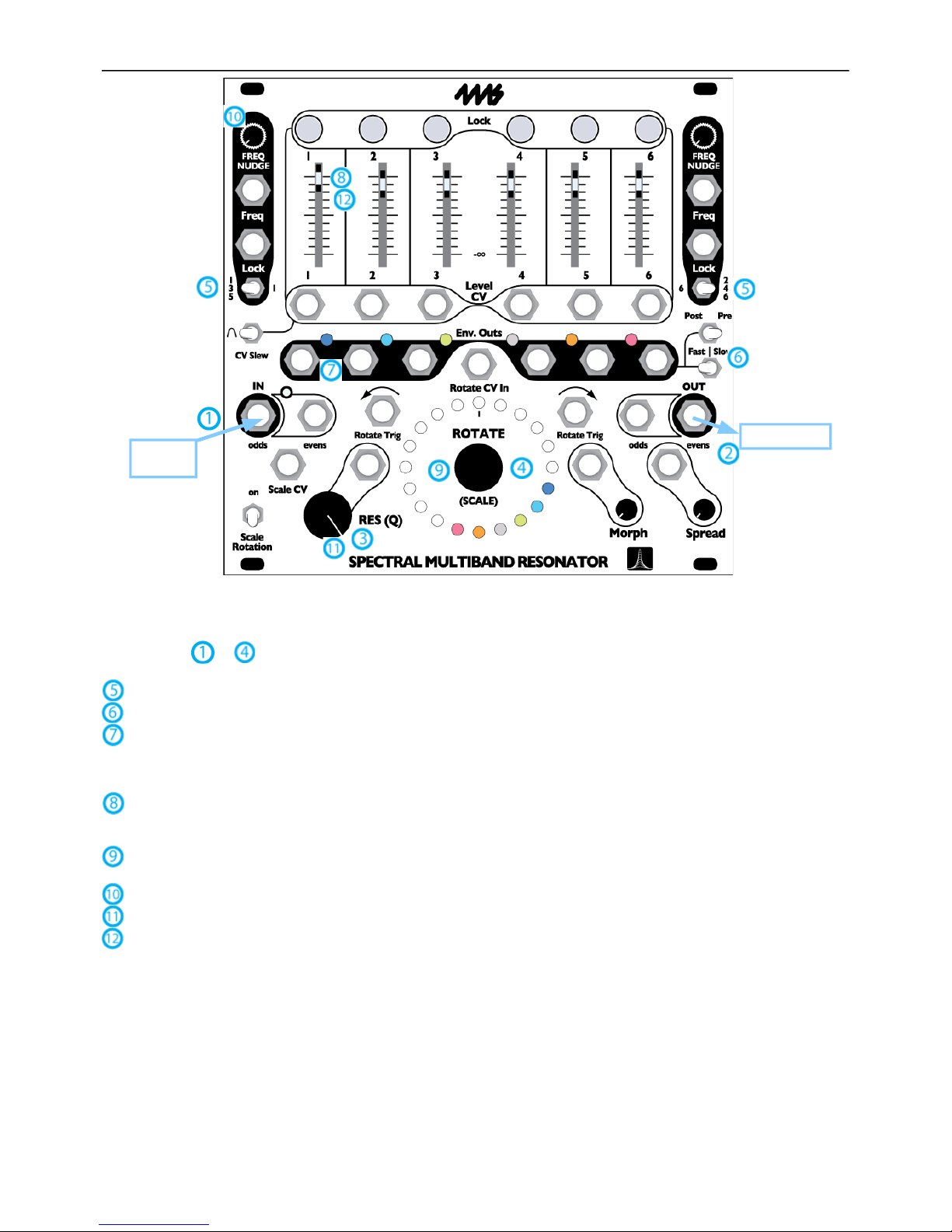
•Filter channel level
° Six sliders set the level of each filter
° White light on each slider indicates filter level (flashes for clipping)
° Six CV inputs for level of each filter. (0 to +5V). Slider attenuates CV on jack
•Twenty full-color LEDs indicate which filters are assigned to which channel
° Colors on light ring match colors of Env Out LEDs
° Brightness of each light shows level of each filter
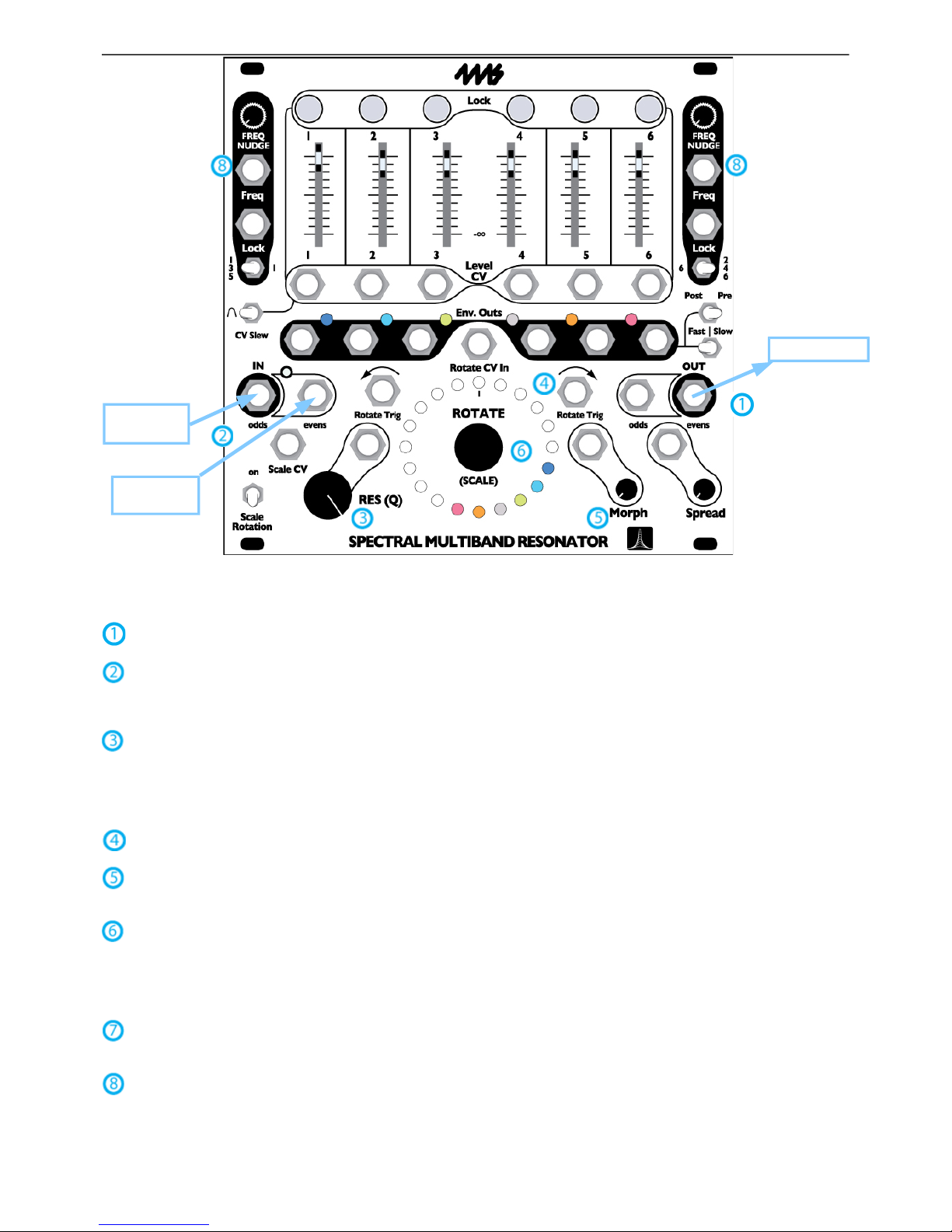
•Resonance (Q)
° Res (Q) CV jack (0 to +5V)
° Knob (offsets CV jack)
•Stereo input and output (divided into even/odd bands)
° Odd input jack and Even output jack serve as Mono in/out
° Clipping LED between IN jacks flickers when input is clipping (about 20Vpp or +/-10V)
•Rotation shifts frequency pattern up or down
° Rotate Clockwise trigger input (2V threshold)
° Rotate Counter-clockwise trigger input (2V threshold)
° Rotate CV jack maps any waveshape to a rotation pattern (0 to +5V)
•Spread sets the interval (spacing) between channels
° Spread CV input jack (0 to +10V)
° Knob (offsets CV value)
•Morph sets speed of cross fading rotating, spreading, or scale selection
° Morph CV input jack (0 to +10V)
° Knob (offsets CV jack)
•Scale CV input jack selects scale from current bank (0 to +5V)
•Six Env Out jacks: CV outputs that follow envelope of frequency content per band
° Fast | Slow switch selects envelope tracking speed, or Trigger output mode
° Pre/Post switch selects whether Env Out jacks track the filter before or after the slider attenuates
° 0 to +8V output
•Six Lock buttons lock the frequency of each channel
° Button is lit when locked
° Rotation, Spread, Freq Nudge, Scale, and Bank will not change when locked
° Turning Q knob while holding a lock button also locks the Q value (button flashes to indicate Q-lock)
° Lock jack: locks/unlocks even or odd channels when triggered (2V threshold)
•Freq jacks: 1V/oct frequency input jacks for even and odd channels (10 octave range, 0 to +10V)
•135 | 1 switch selects if Freq jack, Freq Nudge knob, and Lock jack control all odd channels (1/3/5) or just channel 1
•246 | 6 switch selects if Freq jack, Freq Nudge knob, and Lock jack control all even channels (2/4/6) or just channel 6
•Slew switch enables slew-limiting of incoming CV on the level CV jacks (click and pop prevention)
° Amount of slew limiting is proportional to Morph setting at the time the switch is flipped on.
•Scale Rotation switch enables channels to rotate into the next/previous scale each time they rotate fully around
Note: The active voltage range for each jack is given. All jacks are tolerant of signals from -12V to +12V, but signals outsi e
the active range are clippe to the active range. For example, on a jack with an active range of 0 to +5V, a voltage of -4V is
seen by the SMR as 0V, an +8V is seen as +5V.
2