manuals.online logo
Brands
  1. Home
  2. •
  3. Brands
  4. •
  5. Accustic Arts
  6. •
  7. Amplifier
  8. •
  9. Accustic Arts Power ES User manual

Accustic Arts Power ES User manual

Other Accustic Arts Amplifier manuals

Accustic Arts CD-PLAYER I (MK 3) User manual

Accustic Arts

Accustic Arts CD-PLAYER I (MK 3) User manual

Accustic Arts MONO III MK2 User manual

Accustic Arts

Accustic Arts MONO III MK2 User manual

Accustic Arts POWER I you User manual

Accustic Arts

Accustic Arts POWER I you User manual

Accustic Arts AMP I MK 2 User manual

Accustic Arts

Accustic Arts AMP I MK 2 User manual

Popular Amplifier manuals by other brands

Magnat Audio EDITION FOUR Owner's manual/warranty document

Magnat Audio

Magnat Audio EDITION FOUR Owner's manual/warranty document

Inter-m PA-2000A Operation manual

Inter-m

Inter-m PA-2000A Operation manual

Yamaha TX6n owner's manual

Yamaha

Yamaha TX6n owner's manual

Peavey TNT 150 user guide

Peavey

Peavey TNT 150 user guide

Bosch LBB 1903/10 Installation and user instructions

Bosch

Bosch LBB 1903/10 Installation and user instructions

Avocent Emerge DA1200D Installer/user guide

Avocent

Avocent Emerge DA1200D Installer/user guide

Redgum RGi35 operating instructions

Redgum

Redgum RGi35 operating instructions

Cambridge Audio AXA25 user manual

Cambridge Audio

Cambridge Audio AXA25 user manual

Alpine MRP-M200 owner's manual

Alpine

Alpine MRP-M200 owner's manual

Technical Pro H1502UrBT user manual

Technical Pro

Technical Pro H1502UrBT user manual

FMS EMGZ307 operating manual

FMS

FMS EMGZ307 operating manual

Racal Instruments 5601 user manual

Racal Instruments

Racal Instruments 5601 user manual

Valcom V-1094A Technical specifications

Valcom

Valcom V-1094A Technical specifications

Cambridge Audio 851D user manual

Cambridge Audio

Cambridge Audio 851D user manual

QSC 3800 Specifications

QSC

QSC 3800 Specifications

NAD C300 owner's manual

NAD

NAD C300 owner's manual

Rotel RMB-1077 owner's manual

Rotel

Rotel RMB-1077 owner's manual

Peavey Monitor 300 Series operating guide

Peavey

Peavey Monitor 300 Series operating guide

manuals.online logo
manuals.online logoBrands
  • About & Mission
  • Contact us
  • Privacy Policy
  • Terms and Conditions

Copyright 2025 Manuals.Online. All Rights Reserved.

2
To our valued customer and music enthusiast,
With the purchase of your POWER ES from ACCUSTIC ARTS
®
you have opted for a product which
incorporates the most modern technology to achieve excellent sound and quality. To make sure that
you have pleasure for as long as possible with your preamplifier we kindly ask you to thoroughly read
this instruction manual through to the end.
We wish you many enjoyable hours of listening to music with your new unit.
SCHUNK AUDIO ENGINEERING – The home of ACCUSTIC ARTS
®
1 POWER ES highlights
•Audiophile integrated stereo power amplifier with high output performance
•4 selected MOS-FET output transistors of highest quality
•Powerful 330 VA toroidal core transformer of premium quality for high output reserves; separate
windings for preamp section, for power amp section and for right and left channel
•Very good smoothing thanks to more than 50.000 µF power supply capacity
•High damping factor
•Integrated protective circuit switches ascents off when clipping, HF oscillations or too high DC
offset occurs
•Constant low operating temperature due to generously dimensioned heat sink
•4 x unbalanced high level inputs (RCA)
•1 x unbalanced input (RCA) configured as “SURROUND-BYPASS”
•Premium quality relays and premium quality rotary switch (“Made in Germany”) with gold-plated
silver contacts for the input selection
•Encapsulated high grade volume potentiometer
•Full metal housing for optimum shielding
•High quality phono module (MM / MC) available as option (RIAA: +/- 0.15 dB)
•ACCUSTIC ARTS
®
POWER ES is “Handmade in Germany”
3
CAUTION: WARNING:
TO REDUCE THE RISK OF FIRE OR
ELECTRIC SHOCK DO NOT EXPOSE
THIS PRODUCT TO RAIN OR MOISTURE
RISK OF ELECTRIC SHOCK
DO NOT OPEN
The lightning flash with arrowhead symbol, within an equilateral triangle,
is intended to alert the user to presence of uninsulated “dangerous voltage”
within the product’s enclosure that may be of sufficient magnitude to constitute
a risk of electric shock to persons.
The exclamation point within an equilateral triangle is intended to alert the user
to the presence of important operating and maintenance (servicing) instructions
in the literature accompanying the appliance.
Marking by the “CE” symbol indicates compliance of this device with the EMC
(Electromagnetic Compatibility) and LVD (Low Voltage Directive) standards of
the European Community.
To guarantee a reliable function of this unit over the long-term we kindly ask you to thoroughly read
this instruction manual before connecting this unit and to observe the following instructions. This is
also necessary for your own safety when dealing with the unit.
2 Important safety instructions
•Read these instructions.
•Keep these instructions.
•Follow all instructions.
•Do not use this appliance near water.
•Never use this appliance near hot surfaces.
•Never use this appliance outside and always place it in a dry environment.
•Check that your mains voltage corresponds to that stated on the appliance.
•Never leave the appliance unsupervised when in use. Always keep electrical equipment out of the
reach of children.
•Never pour or spill liquids directly onto this appliance.
•Never operate this apparatus in an explosive atmosphere.
•Do not put any vases or similar objects containing water or liquids on top of this appliance.
•Unplug this appliance during lightning storms or when unused for long periods of time.
4
•Ensure that the appliance has sufficient air around it and avoid extreme temperature influences on
the unit, especially direct sunshine and high humidity.
•Always disconnect the appliance from the mains power before carrying out any changes to the
cables or when cleaning the appliance.
•Protect the mains cable from being walked on or pinched particularly at plugs, convenience
receptacles and the point where they exit from the appliance.
•The mains cable (power cord) of this appliance is equipped with an equipment grounding
conductor. This equipment grounding conductor must never be disconnected or taped over. In
case any humming occurs please contact your authorized dealer.
•From time to time check the mains cable and the appliance for damages. Take care that the mains
cable is not buckled or damaged by any house pets.
•Never move the appliance by pulling the mains cable. Make sure the mains cable cannot get
caught in any way. Do not wind the mains cable around the appliance and do not bend it.
•Never use accessories which are nor recommended by the manufacturer. They could constitute a
danger to the user and risk to damage the appliance.
•Never operate the appliance with the housing open.
•To clean the aluminium housing please only use a cloth moistened with water and some
detergent. Never use inflammable or chemically aggressive cleaning agents.
•In the event of a defect, please never attempt to repair it yourself. Any tampering with the
appliance by an unauthorised person will make the warranty void. Please get in contact with your
authorized dealer.
•Refer all servicing to qualified service personnel. Servicing is required when the appliance has
been damaged in any way, such as power-supply cord or plug is damaged, liquid has been spilled
or objects have fallen into the appliance, the appliance has been exposed to rain or moisture,
does not operate normally or has been dropped.
•Replace fuses only with original types having the same ampere value, the same voltage
endurance and the same time-lag. You can find the corresponding value in chapter 5.7 of this
instruction manual or on the backside of the apparatus.
•Never bypass a fuse.
•No user-serviceable parts inside.
3 Unpacking
The weight of this appliance is approx. 11 kg / 24.2 lbs. Great care must be exercised when unpacking
the unit.
Carefully store the transportation packaging for the possibility of further use. If you have a claim on the
warranty, always use the original packaging for any necessary transportation. Transportation without
this packaging can lead to damage to the housing.
Please check, if the following items are included:
1 x AC mains cable (type depends on your country)
1 x remote control – RC II
2 x batteries for the remote control
1 x replacement fuse (type depends on your mains voltage)

5
4 Positioning
For reasons of better access to the various input and output sockets we recommend you position the
unit in an audio rack. Professionally designed audio racks, e.g. from ACCUSTIC ARTS
®
, can have a
positive effect on the music reproduction of your audio system.
Please observe at all times:
●Ensure that the unit has sufficient air around it and avoid extreme temperature influences
on the unit, especially direct sunshine and high humidity.
●Before you connect the unit with some other unit using a cable, please never forget that
both units must first be switched off and disconnected from the mains power.
●DANGER OF FIRE! Please never cover the ventilation slots. This could lead to overheating
of the power amplifier and cause serious damage. Therefore leave a minimum of 5 cm
distance at the sides and 10 cm distance above the housing cover.
5 Installation and start-up
Fig. 1: Rear view of POWER ES (without phono module)
Description of Fig. 1:
1 Mains power switch
2 FUSE: Fuse holder for the main fuse (plastic cap with integrated fuse)
3 SPEAKER LEFT: Left pair of loudspeaker output sockets
4 SPEAKER RIGHT: Right pair of loudspeaker output sockets
5.1 Earth contact (for an external device, like a record player/turntable)
please see chapter 5.4.2 before use
5.2 GND: Ground (option; only available with the optional phono module)
please see chapter 5.4.2 before use
6 INPUT 1: Unbalanced input (RCA) for connection of reproduction device 1
optional available as phono input for MM and MC; see chapter 5.4
7 INPUT 2 to 4: Unbalanced input (RCA) for connection of reproduction device 2, 3 and 4
6
8 SURROUND: Unbalanced input (RCA) configured as “SURROUND BYPASS”
(before use, please see chapter 5.3)
9 Earth contact e.g. for a shielded speaker cable like the ACCUSTC ARTS
®
PREMIUM LINE – MK 2
Fig. 2: Front view
Description of Fig. 2:
10 IN 1 – IN 2 – IN 3 – IN 4 – SURR.: (SURR. = SURROUND-BYPASS)
Rotary switch to select input of reproduction device
11 REMOTE: Infrared remote control receiver for volume control
12 ON: LED (blue) indicates unit is ready for operation
13 PROTECT: LED (red) indicates unit is in protection mode; the transmission of a music signal
to the connected loudspeaker is interrupted
14 VOLUME: Rotary potentiometer for volume setting
5.1 Connection to mains power
Only connect the POWER ES to the mains power when all the other cable connections have already
been carried out.
Plug in the mains cable firstly in the inlet connector sockets of the unit and only then the earthing pin-
plug in the mains socket.
By actuating the mains power switch 1 you can turn on or turn off your unit.
5.2 Use and start-up of an analog input
7
The POWER ES is an audiophile integrated power amplifier fulfilling the highest demands of
audiophile listeners. For the POWER ES only the best parts of the world’s most renowned
manufacturers are used.
The unit has 4 unbalanced (analog) high level inputs INPUT 1 to 4. This gives you the possibilities to
connect 4 various reproduction devices via their analog outputs.
If you want to connect a digital-to-analog converter, in order to use digital devices via the converter,
then simply connect the analog output of your digital-to-analog converter with an analog input of the
POWER ES.
If you have a record player (= phono or turntable), you need the optional phono module which
offers an MM or MC input (switchable). Please refer to chapter 5.4.
If your POWER ES doesn’t have the optional phono module installed you can upgrade your POWER
ES or you may as well use a separate, external phono preamplifier. To connect a record player you
must wire such an external phono preamplifier between the record player and the POWER ES.
You can activate the individual connected reproduction devices using the rotary switch 10.
Please use only high quality interconnect cables. This is the only way to ensure that the sound quality
of the POWER ES is fully exploited.
Pin declaration of the balanced input / output (XLR):
Pin 1: Ground (shield) Pin 2: Non-inverting (hot; 0°) Pin 3: Inverting (cold; 180°)
These pin assignments comply with the standard adopted by the Audio Engineering Society. Refer to
the operating manual of your other units to verify that the pin assignments of their connectors
correspond to your ACCUSTIC ARTS
®
unit.
IMPORTANT!
Always switch off this amplifier before connecting an additional unit.
Using the rotary potentiometer VOLUME you can set the volume of the reproduction devices.
The volume can also be changed using the separate ACCUSTIC ARTS
®
remote control – RC II.
Fig. 3: Volume setting on the rotary potentiometer VOLUME
8
Minimum Maximum
Fig. 4: ACCUSTIC ARTS
®
remote control – RC II
reducing volume
increasing volume
5.3 Use of the analog input SURROUND
The SURROUND input is a special input configuration that allows the signal from a surround
processor to pass through this integrated amplifier with no gain. The volume will be controlled by the
surround processor.
WARNING!
You can not connect “standard” units like for example a CD-Player to this input. In the
SURROUND configuration the volume of this input is not controlled, this means that the
incoming signal is transferred unchanged to the speaker outputs. This could otherwise lead to
very high volume levels and do serious harm to your connected loudspeakers.
The SURROUND input will be activated by turning the rotary switch 10 into position >SURR.<
5.4 Optional MM/MC phono module
9
If your POWER ES has got the optional phono module, you can connect a record player directly.
Generally you’ve got the choice between 2 different systems:
MM (moving magnet) or MC (moving coil).
For that reason the phono module of the POWER ES offers both possibilities.
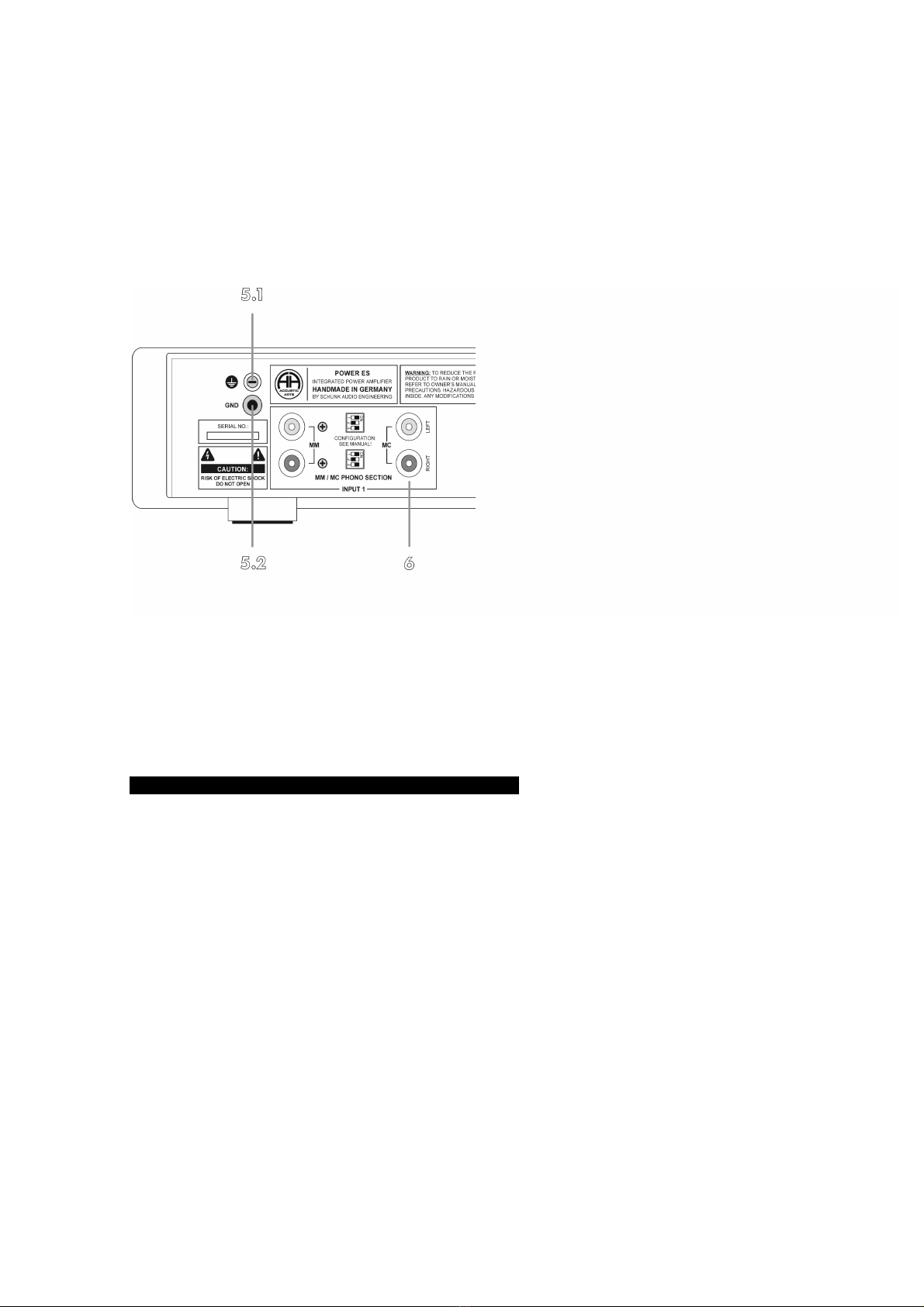
Fig. 5: Rear view of POWER ES with integrated phono module
5.1 Earth contact
5.2 GND: Ground for an external record player
6 MM / MC PHONO SECTION – INPUT 1:
Switchable unbalanced inputs (MM / MC) for connection of a record player
5.4.1 Configuration possibilities MM / MC
On the rear panel of the POWER ES you will find the code switches to configure input 1. The
configuration depends on your record player.
If your record player has a MC system, please set both code switches to MC and use the MC input.
The input impedance for MC systems is fixed to 100 Ω. If you need different input impedance, please
ask your dealer or distributor.
If your record player has a MM system, please set both code switches to MM and use the MM input.
Check out the best capacity for your configuration (see instruction manual of your record player). The
POWER ES phono module offers 4 different input capacities from 50 pF to 370 pF.
Fig. 6: Code switch configuration possibilities of the phono section
10
IMPORTANT!
Both DIP switches must be set in the same way.
5.4.2 How to earth your record player?
A record player has to be connected to the earth / ground. The POWER ES offers two possible
connections:
An earth contact 5.1 (connection with the housing) and a ground contact 5.2 (connection with
internal POWER ES main board).
In most cases the use of the ground contact 5.2 is the better choice, so try out this possibility first.
5.5 Loudspeaker cables
For each channel the POWER ES has one pair of high quality loudspeaker terminals. Please use only
high quality loudspeaker cables. This is the only way to ensure that the sound quality of the power
amplifier is fully exploited.
Loudspeaker cables from ACCUSTIC ARTS
®
are excellently matched to the needs of the POWER ES.
But naturally other high quality brand name products may also be used.
To connect the cables to the power amplifier or loudspeakers if possible use high quality terminal ends
or banana plugs
*)
and avoid connecting bare litz wires (except with OFC copper cables) since these
corrode and so restrict the signal flow.
11
IMPORTANT!
*)
Instruction for the use of banana plugs:
Use only banana plugs with a corresponding CE conformity declaration. For
questions regarding certain plug types please get in contact with your authorized
dealer.
5.6 Correct phase for the loudspeakers
The terminals on your amplifier and your loudspeaker are color coded or marked with a plus (+) and
minus (-). Connect the red (+) output terminal of your amplifier with the red (+) input terminal of your
loudspeaker. Proceed in the same way with the white or black (-) terminals.
IMPORTANT!
Avoid short circuits!
Never connect the output terminals of your power amplifier to each other. Neither
connect red (+) with white or black (-) of the channel nor the channels to each
other.
IMPORTANT!
Please observe at all times!
Before you connect the amplifier with some other units using a cable, please
never forget that both units must first be switched off.
5.7 Replacing damaged mains fuses
If a fuse is damaged only replace the fuse with original types having the same ampere value, the
same voltage endurance and the same time-lag. Never use fuses with other ampere classes or time-
lag classes.
IMPORTANT!
Pull out the mains plug!
Always disconnect the unit from the mains power before replacing a fuse.
To change the fuse 2 please use a screwdriver suitable for the slot in the fuse holder. Press the
screwdriver lightly into the slot and gently lever the fuse holder (plastic cap) carefully out of the
respective socket. Now you can take out the fuse holder and replace the fuse.
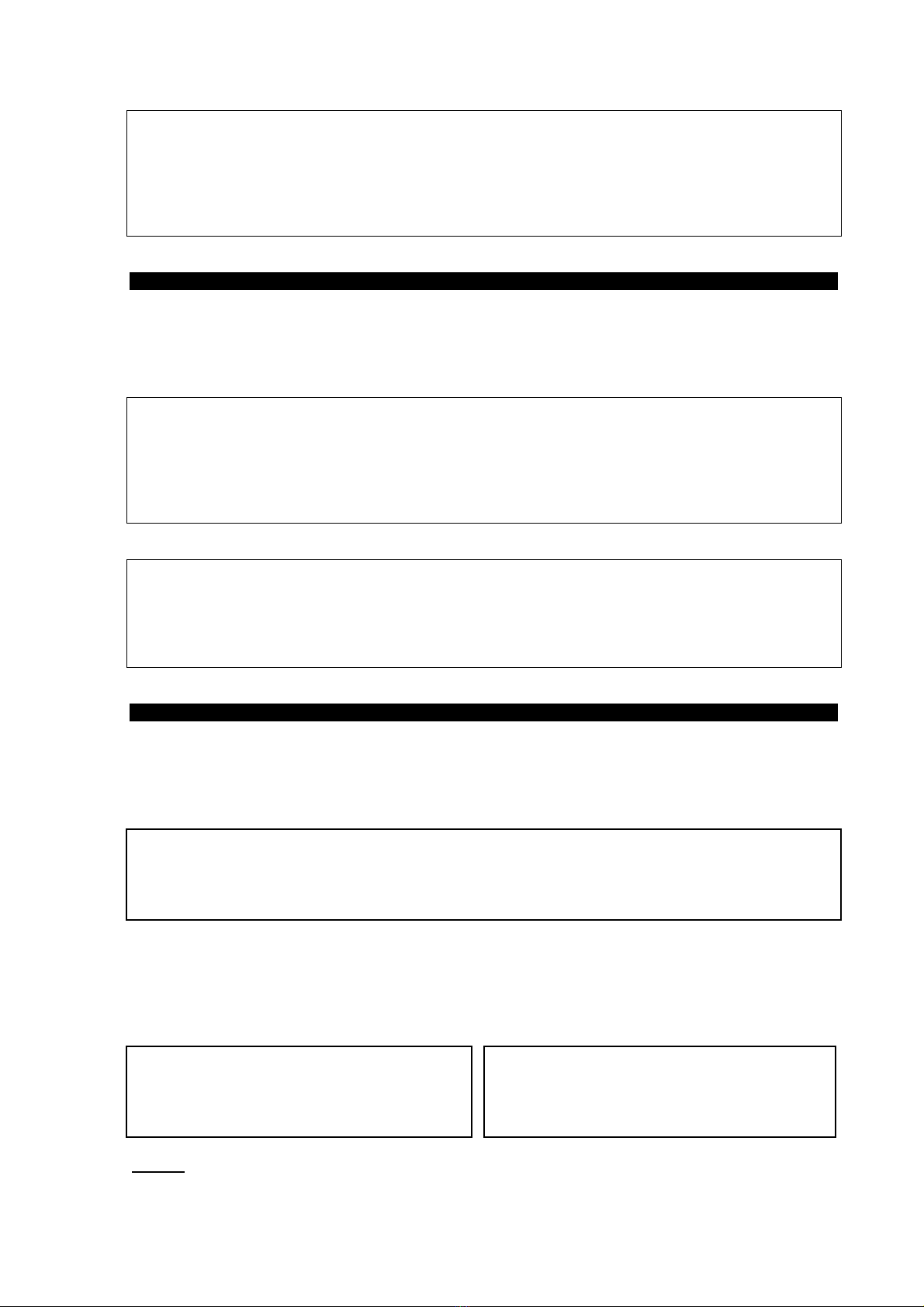
For countries with 220- 240 V / 50- 60 Hz
please use the following fuse types:
For countries with 100-120 V / 50- 60 Hz
please use the following fuse types:
3.15 Ampere – time lag
6.3 Ampere – time lag
Notice: Use the included fuse for replacement! Use only original parts!