manuals.online logo
Brands
  1. Home
  2. •
  3. Brands
  4. •
  5. Adobe
  6. •
  7. Software
  8. •
  9. Adobe 29180248 - Photoshop Elements 5.0 User manual

Adobe 29180248 - Photoshop Elements 5.0 User manual

This manual suits for next models

1

Other Adobe Software manuals

Adobe 38039336 - Flash CS3 Professional Reference manual

Adobe

Adobe 38039336 - Flash CS3 Professional Reference manual

Adobe FLASH PLAYER 10 - AT A GLANCE User manual

Adobe

Adobe FLASH PLAYER 10 - AT A GLANCE User manual

Adobe 65030365 - FrameMaker - PC User manual

Adobe

Adobe 65030365 - FrameMaker - PC User manual

Adobe 22012057DM - Soundbooth CS3 - PC User manual

Adobe

Adobe 22012057DM - Soundbooth CS3 - PC User manual

Adobe 22101156 - Acrobat Capture - PC User manual

Adobe

Adobe 22101156 - Acrobat Capture - PC User manual

Adobe 12040118 - After Effects Standard Guide

Adobe

Adobe 12040118 - After Effects Standard Guide

Adobe FLEX 2-TESTING FLEX APPLICATIONS WITH MERCURY QUICKTEST... User manual

Adobe

Adobe FLEX 2-TESTING FLEX APPLICATIONS WITH MERCURY QUICKTEST... User manual

Adobe 38040334 - Dreamweaver CS3 User manual

Adobe

Adobe 38040334 - Dreamweaver CS3 User manual

Adobe ACROBAT COM User manual

Adobe

Adobe ACROBAT COM User manual

Adobe 12001196 - Acrobat - Mac User manual

Adobe

Adobe 12001196 - Acrobat - Mac User manual

Adobe 27530402 - PageMaker - PC User manual

Adobe

Adobe 27530402 - PageMaker - PC User manual

Adobe 65008009 - After Effects CS4 Guide

Adobe

Adobe 65008009 - After Effects CS4 Guide

Adobe 22002420 - Acrobat Standard - PC User manual

Adobe

Adobe 22002420 - Acrobat Standard - PC User manual

Adobe 65030089 - Robohelp - PC Guide

Adobe

Adobe 65030089 - Robohelp - PC Guide

Adobe FLEX 2-MIGRATING APPLICATIONS TO FLEX 2 User manual

Adobe

Adobe FLEX 2-MIGRATING APPLICATIONS TO FLEX 2 User manual

Adobe 8500 User manual

Adobe

Adobe 8500 User manual

Adobe 0046100128056 - InDesign - Mac User manual

Adobe

Adobe 0046100128056 - InDesign - Mac User manual

Adobe 38040334 - Dreamweaver CS3 User manual

Adobe

Adobe 38040334 - Dreamweaver CS3 User manual

Adobe 27510753 - InDesign CS2 - PC User manual

Adobe

Adobe 27510753 - InDesign CS2 - PC User manual

Adobe 22002484 Guide

Adobe

Adobe 22002484 Guide

Adobe 65029902 - Robohelp Server - PC Guide

Adobe

Adobe 65029902 - Robohelp Server - PC Guide

Adobe INDESIGN 2.0 - USING HELP Reference guide

Adobe

Adobe INDESIGN 2.0 - USING HELP Reference guide

Adobe PHOTOSHOP CS2 User manual

Adobe

Adobe PHOTOSHOP CS2 User manual

Adobe 22020772 Installation and operating instructions

Adobe

Adobe 22020772 Installation and operating instructions

Popular Software manuals by other brands

Garmin 010-10844-00 - Mobile XT - GPS Software null

Garmin

Garmin 010-10844-00 - Mobile XT - GPS Software null

COMPRO COMPROFM manual

COMPRO

COMPRO COMPROFM manual

Muratec OFFICEBRIDGE ONLINE user guide

Muratec

Muratec OFFICEBRIDGE ONLINE user guide

Oracle Contact Center Anywhere 8.1 installation guide

Oracle

Oracle Contact Center Anywhere 8.1 installation guide

Avaya NULL One-X for RIM Blackberry user guide

Avaya

Avaya NULL One-X for RIM Blackberry user guide

HP ProLiant BL420c user guide

HP

HP ProLiant BL420c user guide

PS Audio PowerPlay Programming manual

PS Audio

PS Audio PowerPlay Programming manual

Brady LOCKOUT PRO 3.0 Administrator's guide

Brady

Brady LOCKOUT PRO 3.0 Administrator's guide

Avaya Interaction Center user guide

Avaya

Avaya Interaction Center user guide

Texas Instruments TI-83 Plus Silver Edition Guide book

Texas Instruments

Texas Instruments TI-83 Plus Silver Edition Guide book

Novell GROUPWISE 8 - INTERNET AGENT manual

Novell

Novell GROUPWISE 8 - INTERNET AGENT manual

Oracle Application 9i Configuration guide

Oracle

Oracle Application 9i Configuration guide

Acer RDM user guide

Acer

Acer RDM user guide

Canon Vixia HF21 instruction manual

Canon

Canon Vixia HF21 instruction manual

Canon ZR950 instruction manual

Canon

Canon ZR950 instruction manual

Samsung Auto Backup user manual

Samsung

Samsung Auto Backup user manual

Polycom Vortex EF2201 Application note

Polycom

Polycom Vortex EF2201 Application note

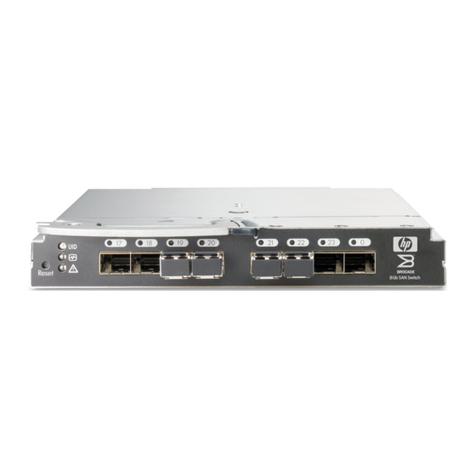
Brocade Communications Systems Brocade 8/12c user manual

Brocade Communications Systems

Brocade Communications Systems Brocade 8/12c user manual

manuals.online logo
manuals.online logoBrands
  • About & Mission
  • Contact us
  • Privacy Policy
  • Terms and Conditions

Copyright 2025 Manuals.Online. All Rights Reserved.

Packaging Extensions with
ADOBE® EXTENSION MANAGER CS5
© 2010 Adobe Systems Incorporated. All rights reserved.
Using Adobe® Extension Manager CS5 for Windows® and Mac OS
This user guide is protected under copyright law, furnished for informational use only, is
subject to change without notice, and should not be construed as a commitment by Adobe
Systems Incorporated. Adobe Systems Incorporated assumes no responsibility or liability for
any errors or inaccuracies that may appear in the informational content contained in this
guide.
This user guide is licensed for use under the terms of the Creative Commons Attribution Non-
Commercial 3.0 License. This License allows users to copy, distribute, and transmit the user
guide for noncommercial purposes only so long as (1) proper attribution to Adobe is given as
the owner of the user guide; and (2) any reuse or distribution of the user guide contains a
notice that use of the user guide is governed by these terms. The best way to provide notice is
to include the following link. To view a copy of this license, visit http://creativecommons.org/
licenses/by-nc-sa/3.0/.
Adobe, the Adobe logo, Adobe Bridge, Adobe Premiere Pro, Contribute, Creative Suite,
Dreamweaver, Fireworks, Flash, Illustrator, InCopy, InDesign, Kuler, and Photoshop are either
registered trademarks or trademarks of Adobe Systems Incorporated in the United States and/
or other countries.
Windows is either a registered trademark or trademark of Microsoft Corporation in the
United States and/or other countries. Mac and Mac OS are trademarks of Apple Inc.,
registered in the U.S. and other countries. All other trademarks are the property of their
respective owners.
Updated Information/Additional Third Party Code Information available at http://
www.adobe.com/go/thirdparty.
Portions include software under the following terms:
This product contains either BSAFE and/or TIPEM software by RSA Security, Inc.
This product includes software developed by the Apache Software Foundation (http://
www.apache.org/).
Flash video compression and decompression is powered by On2 TrueMotion video
technology. © 1992-2005 On2 Technologies, Inc. All Rights Reserved. http://www.on2.com.
Portions licensed from Nellymoser (www.nellymoser.com).
Sorenson Spark® video compression and decompression technology licensed from Sorenson
Media, Inc.
MPEG Layer-3 audio compression technology licensed by Fraunhofer IIS and THOMSON
multimedia (http://www.iis.fhg.de/amm/).
Adobe Systems Incorporated, 345 Park Avenue, San Jose, California 95110, USA.
Notice to U.S. Government End Users: The Software and Documentation are “Commercial
Items,” as that term is defined at 48 C.F.R. §2.101, consisting of “Commercial Computer
Software” and “Commercial Computer Software Documentation,” as such terms are used in 48
C.F.R. §12.212 or 48 C.F.R. §227.7202, as applicable. Consistent with 48 C.F.R. §12.212 or 48
C.F.R. §§227.7202-1 through 227.7202-4, as applicable, the Commercial Computer Software
and Commercial Computer Software Documentation are being licensed to U.S. Government
end users (a) only as Commercial Items and (b) with only those rights as are granted to all
other end users pursuant to the terms and conditions herein. Unpublished-rights reserved
under the copyright laws of the United States. Adobe agrees to comply with all applicable equal
opportunity laws including, if appropriate, the provisions of Executive Order 11246, as
amended, Section 402 of the Vietnam Era Veterans Readjustment Assistance Act of 1974 (38
USC 4212), and Section 503 of the Rehabilitation Act of 1973, as amended, and the regulations
at 41 CFR Parts 60-1 through 60-60, 60-250, and 60-741. The affirmative action clause and
regulations contained in the preceding sentence shall be incorporated by reference.
4
Packaging Extensions with Extension Manager CS5
This document describes how to package extensions with Extension Manager CS5. The
development and creation of extensions is covered in other documents.
To package extensions, you need to do the following:
1Choose the extension package format
2Create the extension installation file
3Create the extension package from the Extension Manager user interface or command line.
In this document, most instructions are for the command-line interface. See Use Extension
Manager from the command line.
For information on packaging extensions using the Extension Manager user interface, see Use
Extension Manager from the graphical user interface (GUI).
Choose the extension package format 5
Choose the extension package format
Extension Manager CS5 supports various extension formats.
Extensions can be packaged into two file formats:
•MXP extensions (with filename extension .mxp) for CS4 and earlier.
•ZXP extensions (with filename extension .zxp) for CS5. The ZXP format is based on the ZIP
standard, and extensions in this format can be digitally signed to verify the identity of the
extension author. For more information, see Creating a ZXP extension package
(version 5.0 only) on page 56
From extension function perspective, there are three kinds of extensions:
•Ordinary extensions:
Any Adobe product-specific extension or plug-in that extends the functionality of an Adobe
application— such as a Dreamweaver extension or a Photoshop C++ plug-in. Ordinary
extensions were previously packaged as MXP files with Extension Manager CS4 or before, and
they require an extension installation (.mxi) file.
•Creative Suite extensions (hereafter called CS extensions):
Flash-based extensions that can be installed and run in multiple Creative Suite applications,
built using the Creative Suite SDK. A CS extension must be a ZXP file, but it doesn't require
an extension installation (.mxi) file. You can’t create a CS extension with Extension Manager,
but such an extension can be installed or removed by Extension Manager CS5.
•Hybrid extensions:
A package that contains both files that can be contained in an ordinary extension and a CS
extension. Hybrid extensions are used when the feature developed needs both a Creative Suite
Flash-based component and a native C++ plug-in or script file. This allows developers to build
extensions with rich Flash-based interfaces and still take advantage of the extended native
integration with the application. For more information, see Creating Hybrid Extension
packages (version 5.0 only) on page 57.
Consider the following when determining whether to use the ZXP or MXP format to package
your extensions:
•If you want to create an ordinary extension, you can use either ZXP or MXP.
•If your extension is not designed for CS4 and earlier, you should use ZXP.
•If you want to create a hybrid extension, you should use ZXP.
•If you want to digitally sign the extension, you must use ZXP. Fore more information, see
Creating a ZXP extension package (version 5.0 only) on page 56
For information on digitally signing extensions, refer to the Creative Suite SDK:
http://www.adobe.com/devnet/creativesuite/sdk
6 Packaging Extensions with Extension Manager CS5
Create the extension installation file
An extension installation file is an XML file (with the extension .mxi) that provides the following
information about the extension for Extension Manager:
•extension name and version number
•information about each file included in the extension, including where each file is installed
•information about how users access the extension from an Adobe application, such as product-
specific information about menu items or other user interface items to add
•information about language-specific files for multilingual extensions
•information about update information for updatable extension packages
When you create your extension installation file, give it a filename that is valid on both Windows
and Mac OS, which is no more than 20 characters long, and contains no spaces.
This section describes the tags used in the installation file. For a list of each tag and compatible
Adobe applications, see Tags and their compatible products on page 51. After reading
about these tags, you can examine the sample installation file in the Extension Manager’s Samples
folder, or you can make a copy of the blank installation file and fill in values for the attributes.
This section contains the following:
•About careful XML coding on page 7
•MXI tag summary on page 7
•MXI tag descriptions on page 9
•Tags and their compatible products on page 51
•Example MXI file on page 53
•Creating multilingual extension packages (version 2.1 and later) on page 54
•Creating a ZXP extension package (version 5.0 only) on page 56
•Creating Hybrid Extension packages (version 5.0 only) on page 57
•Creating plug-in extension packages for InDesign CS5 and InCopy CS5 (version
5.0 only) on page 58
•Creating updatable extension packages (version 5.0 only) on page 59
MXI tag summary 7
About careful XML coding
XML files have fairly strict syntax requirements. When you’re creating or editing an extension
installation file, make sure that you use correct XML syntax:
•Every attribute value must be enclosed in a single pair of double quotation marks. For example,
version = 1.0.0 and version = ""1.0.0"" are both incorrect syntax; instead, use
version = "1.0.0".
•A tag defined as an empty tag (a tag with no contents) must end with />. Do not include any
spaces between the slash and the closing angle bracket.
•Each attribute name must be preceded by a space (or other form of white space). In particular,
if you use more than one attribute in a tag, you must put a space between each attribute’s value
and the next attribute’s name.
•XML does not support special characters such as ampersands (&). To include an ampersand
within a tag, you must use the code &amp (for instance, to use ampersands in menu items or
other UI elements).
Encoding characters
If Extension Manager 5.0 can't get the explicit encoding information from the MXI file,
Extension Manager assumes that the MXI is encoded with the operating system default code
page. To avoid confusion, it is recommended to encode MXI with UTF-8 and explicitly declare
the encoding of MXI as UTF-8.
To declare that the MXI is encoded with UTF-8, do the following:
•(Windows) Put the UTF-8 representation of the BOM at the head of the MXI file. The easiest
way to make sure of the presence of the BOM is to open the MXI file with Windows built-in
program Notepad and select File > Save As, then set Encoding as UTF-8. Note that it is not
enough to just specify <?xml version="1.0" encoding="UTF-8"?>
•(Mac OS) Put the UTF-8 encoding declaration at the head of the MXI file. It is <?xml
version="1.0" encoding="UTF-8"?>.
MXI tag summary
The following table lists the primary tags available in the MXI file, briefly describes each tag, and
specifies whether the tag contains child tags. Use this table to get an overview of what tags are
available and what functions they perform.
Tag Description Contains Child Tags?
macromedia-extension Main tag for extension installation file. Yes
defaultLanguage Default for multilingual extensions (version 2.1 and
later). No
author Name of the extension’s author. No
description Describes what the extension does. No
update Specifies extension update information (version 5.0
only). No
8 Packaging Extensions with Extension Manager CS5
products Container tag that contains tags specifying an
extension’s compatibility. Yes
license-agreement Allows a third-party developer to include a license
agreement that is displayed at installation. No
ui-access Specifies the text that will appear in the Extension
Manager window when the extension is selected. No
files Container tag that contains tags describing the files an
extension installs. Yes
configuration-changes Container tag for tags that modify the application’s
configuration. These include menus, shortcuts, server
behaviors, and data sources.
Yes
documenttype-changes Describes changes made to the MMdocumentTypes.xml
file. Yes
toolpanel-changes Marks the beginning of Flash toolpanel changes. Yes
ftp-extension-map-changes Specifies a change to the FTPExtensionMap.txt file. This
defines whether the file is downloaded or uploaded as an
ASCII or binary file from Dreamweaver to an FTP
server.
Yes
insertbar-changes Specifies changes to be made to the insertbar.xml file
and add new toolbars files. Yes
server-behavior-changes Container tag for changes to menus in the menus.xml file
in any of the Dreamweaver MX Configuration/
ServerBehaviors/document_type folders.
Yes
server-format-changes Container tag for changes to menus in the menus.xml file
in any of the Dreamweaver MX Configuration/
ServerFormats/document_type folders
Yes
data-source-changes Container tag for changes to menus in the menus.xml file
in any of the Dreamweaver MX Configuration/
DataSources/document_type folders.
Yes
menu-remove Provides information about a menu bar, menu, menu
item, or format to remove during installation of an
extension.
No
menu-insert Specifies where in the application’s menus to insert a
menu bar, menu, menu item, or format during
installation of an extension.
No
menubar Provides information about a menu bar to be inserted
into the application's menu structure during installation
of this extension.
No
menu Describes a menu or submenu to be inserted into the
application’s menu structure during installation of an
extension.
No
Tag Description Contains Child Tags?
MXI tag descriptions 9
MXI tag descriptions
The tags used in the extension installation file are described below. Attribute names enclosed in
curly braces ({ }) are optional. The tags are listed according to their position with the MXI file
hierarchy. For example, the macromedia-extension tag is the main tag within the file, and is the
first tag described.
menuitem Describes the menu item to be inserted into the
application’s menu structure during installation of an
extension.
No
format Describes the data format to be inserted into the
Dreamweaver Format menu during installation of
the extension.
No
separator Specifies that a separator be inserted into a menu at the
location indicated by the containing menu-insert tag. No
comment Provides a comment about an item being inserted into the
menu structure. The Extension Manager inserts this
comment (in the form of an XML comment tag) into the
menus.xml file as it installs the extension.
No
shortcut-remove Indicates that the specified keyboard shortcut should be
removed from the menus.xml file. No
shortcut-insert Indicates that a keyboard shortcut should be added to the
menus.xml file. No
shortcut Specifies a keyboard shortcut to be added to the
menus.xml file. No
taglibrary-changes Describes changes to be made to the TagLibraries.vtm
file. Yes
toolbar-changes Inserts the specified tag library at the end of the file. Yes
extensions-changes Container tag that describes any changes to the
Extensions.txt file, such as adding or removing
extensions that you can open in Dreamweaver.
Yes
Tags and their compatible
products Container tag that allows you to specify tokens. Tokens
let you specify the destination folder of one or more files
from your extension during installation or provide a
dialog box for the user to choose a destination folder for
certain files.
Yes
token Defines a custom token for an extension.
Custom tokens let you specify the destination folder of
one or more files from an extension during installation,
or provide a dialog box for the user to choose a
destination folder.
No
Tag Description Contains Child Tags?
10 Packaging Extensions with Extension Manager CS5
macromedia-extension
Description
Main tag for extension installation file.
Attributes
id, name, version, {type}, {requires-restart}, {ismultilingual}, {name_resid},
{plugin-manager-type}, {show-files}, {force-quit}
id A unique extension ID, to be created by Adobe after you submit your extension. Never add
or modify this attribute yourself.
name The name of the extension. This must be a VARCHAR data type with a limit of 255
characters.
version The version number of the extension, in the format a{.b{.c}}, where a, b, and care
all positive integers. For example, valid version numbers include 1.3.6, and 10.0.1. The first
number is the major version number, incremented when you make substantial changes to the
extension; the second number is the minor version number, incremented for smaller changes. The
third number is incremented for each new “build” of the extension between releases; for example,
after you submit version 4.1 of your extension to Adobe, it may be returned to you for minor
corrections. You might label the fixed version 4.1.1; after a couple of rounds of corrections, the
version number of the posted extension might be 4.1.3.
mxiversion Attribute for version 5.0 that degrades gracefully. Indicates the version of the MXI
specification. Extension Manager 5.0 supports mxiversion 5.0 and earlier. If mxiversion is
unspecified, the default value is 1.0.
Note: If the specified mxiversion is more recent than the current Extension Manager, an alert appears during
installation, indicating that a newer Extension Manager is required.
xmanversion Attribute for version 5.0 that degrades gracefully. Indicates the oldest version of
Extension Manager that can install this extension.
Note: Specify the xmanversion attribute only if a newer version of Extension Manager doesn’t support the
extension. To indicate the application versions that are compatible with an extension, see the maxversion attribute
for product on page 16.
icon Attribute for version 5.0 that does not degrade gracefully. Indicates the path to customized
extension icon displayed by Extension Manager. To specify this relative path, use the
$ExtensionSpecificEMStore attribute. For more information, see the destination attribute
for file on page 19. If icon is unspecified, the default icon is used.
Note: The icon attribute applies only to CS4 applications and later. To specify an icon for CS3 or earlier
applications, use the type attribute.
type Indicates the kind of extension. This optional attribute applies only to Dreamweaver,
Fireworks, and Flash.
•Valid values for Dreamweaver: