— 6 —
Operation Instructions
1. Prior to operation check the blades and replace if cracked or damaged. All blades must be re-
placed at the same time. Tighten the blade carrier to the gearbox, blade bolts/nuts, and hydraulic
motor mount nuts to torque specification on Page 8. Check the hydraulic fluid. A low level could
indicate a leak and require a closer inspection of your unit.
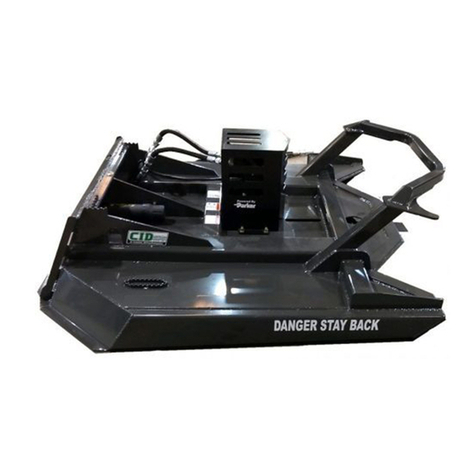
2. Connect the BCSS Brush Cutter to your skid steer with the universal quick-tach mount.
3. Once connected, visually check the lock pins to make sure the Bush Hog is securely locked in
place. Raise the Bush Hog to 12” above ground level. Loop the lift limit chain through the chain
ring on your skid steer and back to the chain bracket on your Bush Hog. Verify the hydraulic flow
of your skid steer is within the range of the Bush Hog rating of GPM - Gallons per Minute.
4. Inspect the hydraulic couplers and wipe off water, dust or any debris. Dirt and debris can damage
hydraulic components. Once cleaned, connect the couplers from the cutter to the auxiliary hy-
draulic system on the skid steer.
5. Connect the auxiliary hydraulic lines for the brush cutter to the skid steer. If you have a High Flow
skid steer and brush cutter - attach the case drain to the skid steer. Twist the collars of the quick
connect couplers to secure the hydraulic connections. Do not operate the brush cutter on High
Flow hydraulics (over 30 GPM) unless the brush cutter is equipped with a High Flow motor this
may cause damage to the motor and void the warranty.
6. Confirm all safety measures have been completed per the Safety Instructions. Most importantly
make sure the area is clear of personnel and pets.
7. Enter shatter-proof cab door, engage seat belt, release brake and start engine. The runners of the
Bush Hog should be as close to the ground as possible. Never raise the cutter deck more than sev-
en (7) inches off the ground while in operation.
8. Slowly apply hydraulics to the brush cutter and increase the engine speed to high idle. Make sure
the unit is operating smoothly before moving the skid steer forward. When tempatures are below
zero allow additional time for hydraulic fluids to warm-up.
9. Maintain a speed to handle the volume of brush and to prevent stalling.
10. Stay alert for drop-offs, rocks, holes, abandoned wells and septic tanks. Do not operate or drive
across a steep embankment as this may cause a rollover and possible injuries or death.
11. To cut large diameter brush and trees, move forward slowly to make the cut.
12. When finished cutting, lower lift arms, make sure the cutter is placed flat on the ground, throttle
down the skid steer and shut off the hydraulic flow to the unit, stop engine, and engage parking
brake prior to leaving the cab. Noise at shut down is normal.
13. To disconnect hoses use proper hand protection as the couplers may be hot.