manuals.online logo
Brands
  1. Home
  2. •
  3. Brands
  4. •
  5. Amulet Hotkey
  6. •
  7. PCI Card
  8. •
  9. Amulet Hotkey DXH4 User manual

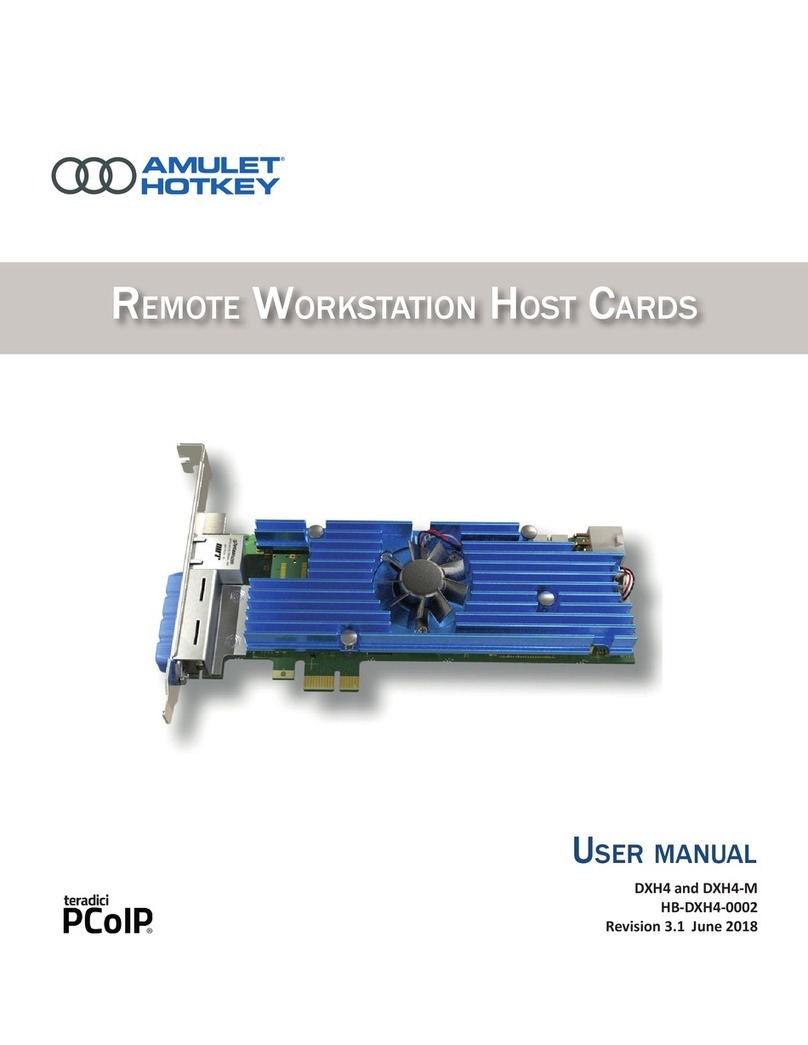
Amulet Hotkey DXH4 User manual

Other manuals for DXH4

3

Other Amulet Hotkey PCI Card manuals

Amulet Hotkey DXH4 User manual

Amulet Hotkey

Amulet Hotkey DXH4 User manual

Amulet Hotkey DXH4 User manual

Amulet Hotkey

Amulet Hotkey DXH4 User manual

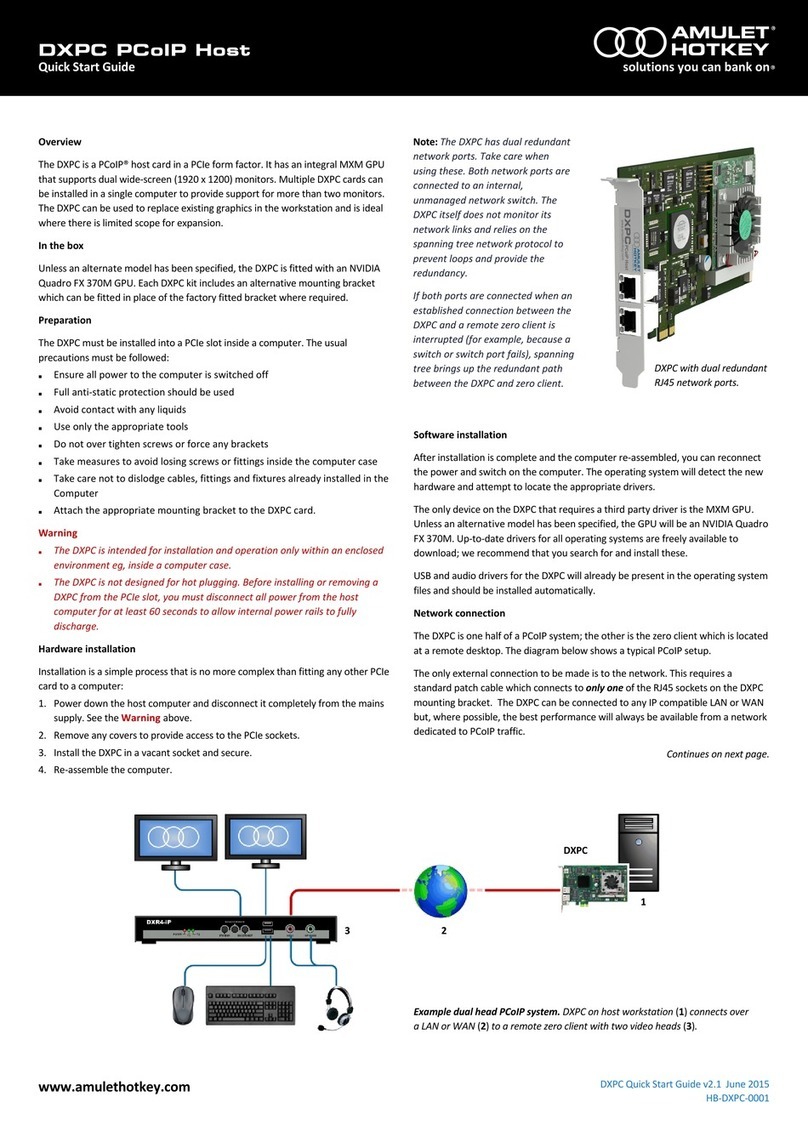
Amulet Hotkey DXPC User manual

Amulet Hotkey

Amulet Hotkey DXPC User manual

Popular PCI Card manuals by other brands

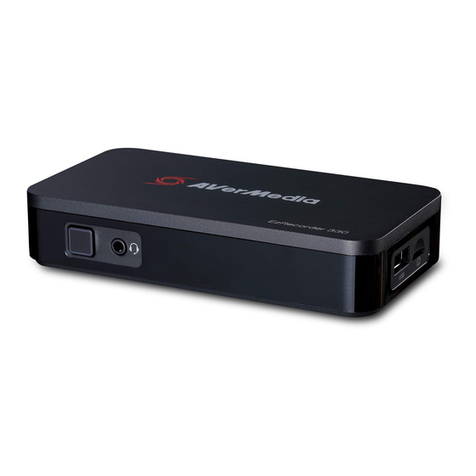
Avermedia ER330 Quick installation guide

Avermedia

Avermedia ER330 Quick installation guide

ERMA SSI 1417 instruction manual

ERMA

ERMA SSI 1417 instruction manual

SIIG CyberSerial Dual PCI Software installation

SIIG

SIIG CyberSerial Dual PCI Software installation

Airlink101 AWLH3028 user manual

Airlink101

Airlink101 AWLH3028 user manual

Dolphin MXH932 user guide

Dolphin

Dolphin MXH932 user guide

I-Bus IBC2602 user guide

I-Bus

I-Bus IBC2602 user guide

ICP DAS USA PCI-1002H user manual

ICP DAS USA

ICP DAS USA PCI-1002H user manual

Exsys EX-60102 manual

Exsys

Exsys EX-60102 manual

Chelsio Communications T5 Series Installation and user guide

Chelsio Communications

Chelsio Communications T5 Series Installation and user guide

Conrad Electronic 97 46 71 operating instructions

Conrad Electronic

Conrad Electronic 97 46 71 operating instructions

Micro Innovations USB650A Quick installation guide

Micro Innovations

Micro Innovations USB650A Quick installation guide

KTI Networks KF-310 user guide

KTI Networks

KTI Networks KF-310 user guide

Intellinet 500517 user manual

Intellinet

Intellinet 500517 user manual

Asus SpaceLink WL230 user manual

Asus

Asus SpaceLink WL230 user manual

SIIG SC2475 Quick installation guide

SIIG

SIIG SC2475 Quick installation guide

TRENDnet TEW-703PI Quick installation guide

TRENDnet

TRENDnet TEW-703PI Quick installation guide

Pericom PI7C7100 manual

Pericom

Pericom PI7C7100 manual

ADLINK Technology cPCI-3548 user manual

ADLINK Technology

ADLINK Technology cPCI-3548 user manual

manuals.online logo
manuals.online logoBrands
  • About & Mission
  • Contact us
  • Privacy Policy
  • Terms and Conditions

Copyright 2025 Manuals.Online. All Rights Reserved.

DXH4
PCoIP Host Card for PCs and Workstations
Quick Start Guide
www.amulethotkey.com QS-DXH4-0001 v2.0 March 2020
For Health and safety informaon, refer to the sheet LS-TEMP-0001.
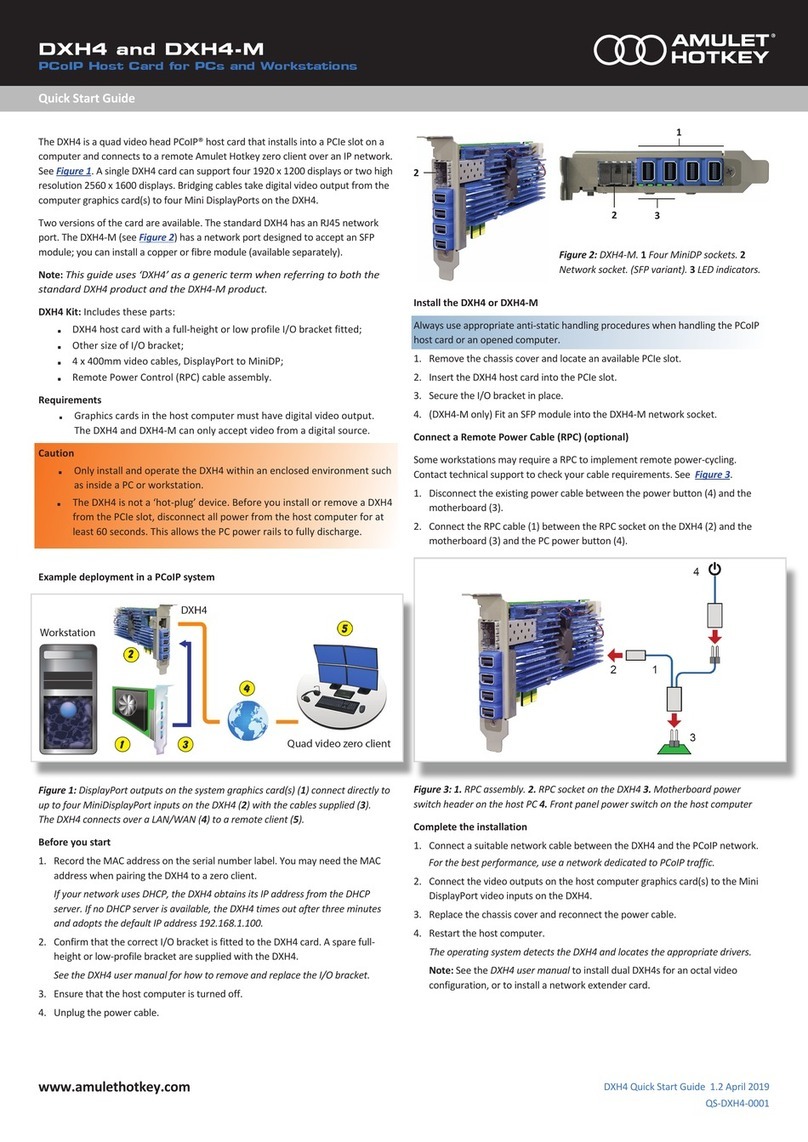
The DXH4 is a quad video head PCoIP® host card that installs into a PCIe slot on
a computer and connects to an Amulet Hotkey zero client over an IP network.
See Figure 1. One DXH4 card can support four 1920 x 1200 displays or two high
resoluon 2560 x 1600 displays. Cables take digital video output from the host
graphics card(s) to four Mini DisplayPorts on the DXH4.
The standard DXH4 has an RJ45 network port. The DXH4-M has a network port
designed to accept a copper or ber SFP module (available separately).
Note: This guide uses ‘DXH4’ as a generic term when referring to both the
standard DXH4 product and the DXH4-M product.
Requirements
The DXH4 kit includes:
DXH4 host card with a full-height or low prole I/O bracket ed;
Other size of I/O bracket;
4 x 400mm video cables, DisplayPort to MiniDP;
Remote Power Control (RPC) cable assembly.
Graphics cards in the host computer must have digital video output. The DXH4
and DXH4-M can only accept video from a digital source.
Cauon: !
Only install and operate the DXH4 within an enclosed environment
such as inside a PC or workstaon.
Cauon: !
The DXH4 is not a ‘hot-plug’ device. Before you install or remove
a DXH4 from the PCIe slot, disconnect all power from the host computer for at
least 60 seconds. This allows the PC power rails to fully discharge.
Example deployment in a PCoIP system
Figure 1:
Quad video zero client
DXH4
Workstation
2
1 3
4
5
DisplayPort outputs on the system graphics card(s) (1) connect
directly to up to four MiniDisplayPort inputs on the DXH4 (2) with the cables
supplied (3). The DXH4 connects over a LAN/WAN (4) to a remote client (5).
Before you start
1 Record the MAC address on the serial number label. You may need the MAC
address when pairing the DXH4 to a zero client.
If your network uses DHCP, the DXH4 obtains its IP address from the DHCP
server. If no DHCP server is available, the DXH4 mes out aer three minutes
and adopts the default IP address 192.168.1.100.
2 Conrm that the correct I/O bracket is ed to the DXH4 card. A spare full-
height or low-prole bracket are supplied with the DXH4.
See the DXH4 user manual for how to remove and replace the I/O bracket.
3 Ensure that the host computer is turned o.
4 Unplug the power cable.
Install the DXH4 or DXH4-M
Always use appropriate an-stac handling procedures when handling the PCoIP
host card or an opened computer.
1 Remove the chassis cover and locate an available PCIe slot.
2 Insert the DXH4 host card into the PCIe slot.
3 Secure the I/O bracket in place.
4 (DXH4-M only) Fit an SFP module into the DXH4-M network socket.
Connect a Remote Power Cable (RPC) (oponal)
Some workstaons may require a RPC to implement remote power-cycling.
Contact technical support to check your cable requirements. See Figure 2.
1 Disconnect the exisng power cable between the power buon (4) and the
motherboard (3).
2 Connect the RPC cable (1) between the RPC socket on the DXH4 (2) and the
motherboard (3) and the PC power buon (4).
Figure 2:
2 1
3
4
1. RPC assembly. 2. RPC socket on the DXH4-M 3. Motherboard
power switch header on the host PC 4. Front panel power switch on the host
Complete the installaon
1 Connect a suitable network cable between the DXH4 and the PCoIP network.
For the best performance, use a network dedicated to PCoIP trac.
2 Connect the video outputs on the host computer graphics card(s) to the Mini
DisplayPort video inputs on the DXH4.
3 Replace the chassis cover and reconnect the power cable.
4 Restart the host computer.
The operang system detects the DXH4 and locates the appropriate drivers.
Note: See the DXH4 user manual to install dual DXH4s for an octal video
conguraon, or to install a network extender card.
www.amulethotkey.com DXH4 Quick Start Guide
Health and Safety (Refer also to the DXH4 manual HB-DXH4-0002)
• This device complies with part 15 of the FCC Rules (Class B)
• Operang temperature range: 15° to 55° C (59° to 131° F)
• Operang humidity range: 10% to 80% (non-condensing)
For product documentaon, downloads and technical assistance, visit:
For further informaon on all our products, visit www.amulethotkey.com.
© 2020 Amulet Hotkey Ltd. All rights reserved.
Informaon in this document is subject to change. No part of this document may be reproduced through any means including (but not limited to) electronic or
mechanical, without express wrien permission from Amulet Hotkey Ltd. Amulet Hotkey Ltd may have patents, patent applicaons, trademarks or copyrights or other
intellectual property rights covering subject maer in this document. PC-over-IP, PCoIP and the PCoIP logo are registered trademarks of Teradici Corp. Amulet Hotkey
and ‘soluons you can bank on’ are registered trademarks of Amulet Hotkey Ltd. Other product names and company names listed within this document may be trade-
marks of their respecve owners. Amulet Hotkey products are designed and built in the UK.
Connect a zero client to the DXH4
Several connecon methods are supported. The default method is Auto Detect,
but there are other methods such as SLP Discovery or Direct to Host.
You can also use a connecon broker. See the DXH4 user manual for more details.
1 Make sure the remote Amulet Hotkey zero client is powered on.
2 Click Connect to start a PCoIP session with the zero client using the default
connecon method, or follow the steps in Change the connecon method.
Change the connecon method (oponal)
1 Select Opons → Conguraon from the Menu Bar.
2 Click Unlock and enter the default password ahkdante.
See the DXH4 user manual for how to change the default password.
3 Select the Session tab and select the connecon type required from the menu.
4 Click on OK.
DHCP assignment
If your network uses DHCP, the DXH4 obtains its IP address from the DHCP server.
If no DHCP server is available, the DXH4 mes out aer three minutes and adopts
its default IP address of 192.168.1.100.
Cauon: !
Change the default IP address as soon as possible.
Change the default IP address
All DXH4 cards will revert to the same default IP address, this can cause conicts
as the network grows. Use the Administrave Web Interface (AWI) to assign a
dierent stac IP address than the default.
1 Enter the IP address of the DXP4 into your browser to access the AWI.
2 Enter the default password ahkdante and click Log In.
3 From the Conguraon menu select the Network opon.
4 Make sure the Enable DHCP opon is unchecked.
5 Enter the new fall-back default IP address into the IP Address elds.
6 Make sure the Enable DHCP opon is checked.
Addional informaon
LED indicators
See the DXH4 Manual for full LED descripons.
Figure 3:
1 2 3 4
LED indicators
1 Speed LED: Network speed. Green 1 Gbit/s. Amber 100 Mbit/s.
2 Acvity LED: Network acvity and connecon type. Also shows progress of
rmware updates. Red ash, half duplex connecon.
3 Status LED: Indicates the PCoIP link status. Blue - bre link. Green - copper link.
LED ashes if PCoIP link exists but not in session. Red ash, card error.
4 INT FN LED: Not used.
DXH4 user manual
The DXH4 user manual and other product documentaon are available on the
Amulet Hotkey website. See the DXH4 user manual for more details about:
Internal card connecons. The DXH4 card has several internal sockets
and jumpers, including an RPC socket, an inter-card connecon, and a
supplemental power socket.
Remote power cycling. The DXH4 supports Wake-on-LAN and Remote
Power Cycling (RPC), allowing users to wake up from standby or power down
the host computer from a remote zero client.
Because of SFP module power requirements, the DXH4-M does not support
Wake-on-LAN on some PCs.
Troubleshoong. Refer to the manual if you have any display or
connecon issues, or contact Amulet Hotkey Technical Support.
Technical specicaons. Full details of the product specicaons.