logo
Brands
  1. Home
  2. •
  3. Brands
  4. •
  5. Ariston
  6. •
  7. Oven
  8. •
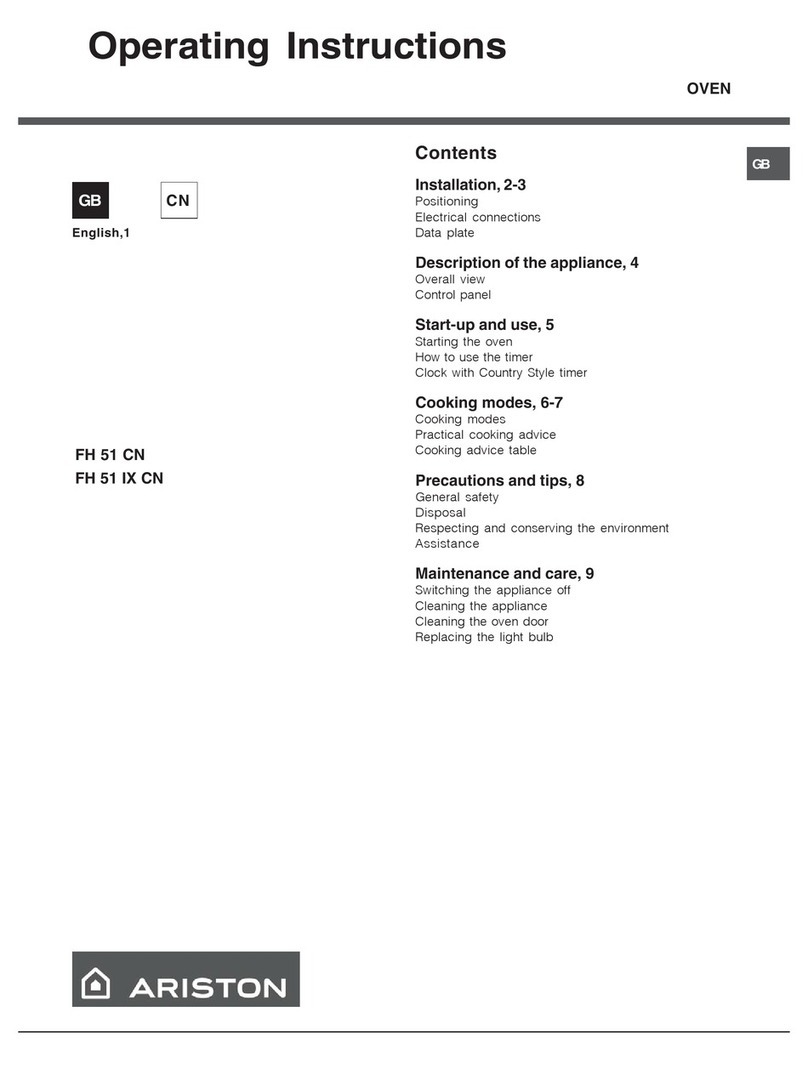
  9. Ariston FH 51 CN S User manual

Ariston FH 51 CN S User manual

Other manuals for FH 51 CN S

1

Other Ariston Oven manuals

Ariston FK G X User manual

Ariston

Ariston FK G X User manual

Ariston FH 62/HA User manual

Ariston

Ariston FH 62/HA User manual

Ariston FD771P User manual

Ariston

Ariston FD771P User manual

Ariston FM 51 IX GB User manual

Ariston

Ariston FM 51 IX GB User manual

Ariston FB 52 C.2 AG User manual

Ariston

Ariston FB 52 C.2 AG User manual

Ariston FB 21 A.2 User manual

Ariston

Ariston FB 21 A.2 User manual

Ariston GS3 3Y4 30 IX A Installation guide

Ariston

Ariston GS3 3Y4 30 IX A Installation guide

Ariston A64IMCA1 User manual

Ariston

Ariston A64IMCA1 User manual

Ariston FZ 990 C.1 User manual

Ariston

Ariston FZ 990 C.1 User manual

Ariston 7 Cuochi User manual

Ariston

Ariston 7 Cuochi User manual

Ariston FA2844PIXAAUS Installation and operation manual

Ariston

Ariston FA2844PIXAAUS Installation and operation manual

Ariston MB 91 User manual

Ariston

Ariston MB 91 User manual

Ariston CX64SP4 IL User manual

Ariston

Ariston CX64SP4 IL User manual

Ariston FB 86 P User manual

Ariston

Ariston FB 86 P User manual

Ariston OK 89ED X 60HZ User manual

Ariston

Ariston OK 89ED X 60HZ User manual

Ariston FH 52 User manual

Ariston

Ariston FH 52 User manual

Ariston FA3 844 H IX A AUS Installation and operation manual

Ariston

Ariston FA3 844 H IX A AUS Installation and operation manual

Ariston 7OF 627 C RU/HA User manual

Ariston

Ariston 7OF 627 C RU/HA User manual

Ariston FK 898E P X AUS S User manual

Ariston

Ariston FK 898E P X AUS S User manual

Ariston FK 62C X User manual

Ariston

Ariston FK 62C X User manual

Ariston OS 99D P IX User manual

Ariston

Ariston OS 99D P IX User manual

Ariston FK 617 X AUS User guide

Ariston

Ariston FK 617 X AUS User guide

Ariston A6TMH2AF EX User manual

Ariston

Ariston A6TMH2AF EX User manual

Ariston FC 52.2 User manual

Ariston

Ariston FC 52.2 User manual

Popular Oven manuals by other brands

Bosch HVA531NS0 instruction manual

Bosch

Bosch HVA531NS0 instruction manual

Electrolux EOF6P46X user manual

Electrolux

Electrolux EOF6P46X user manual

NEFF B44S32 5GB Series instruction manual

NEFF

NEFF B44S32 5GB Series instruction manual

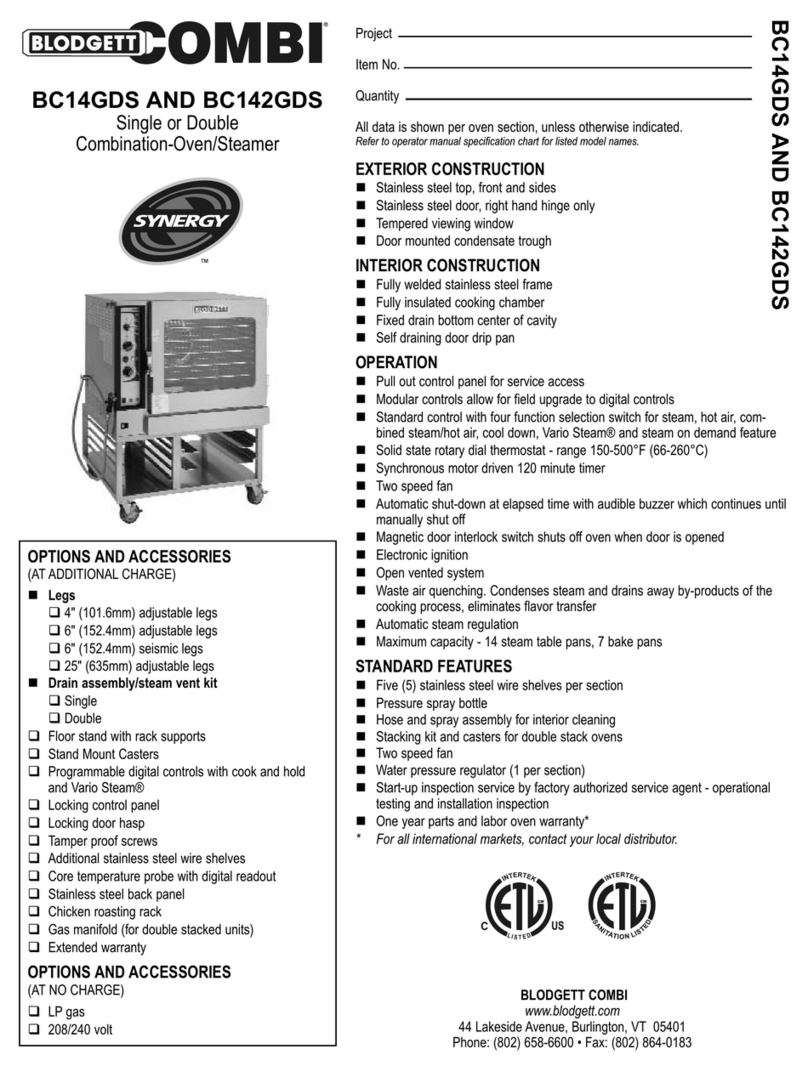
Combi BLODGETT BC142GDS Specifications

Combi

Combi BLODGETT BC142GDS Specifications

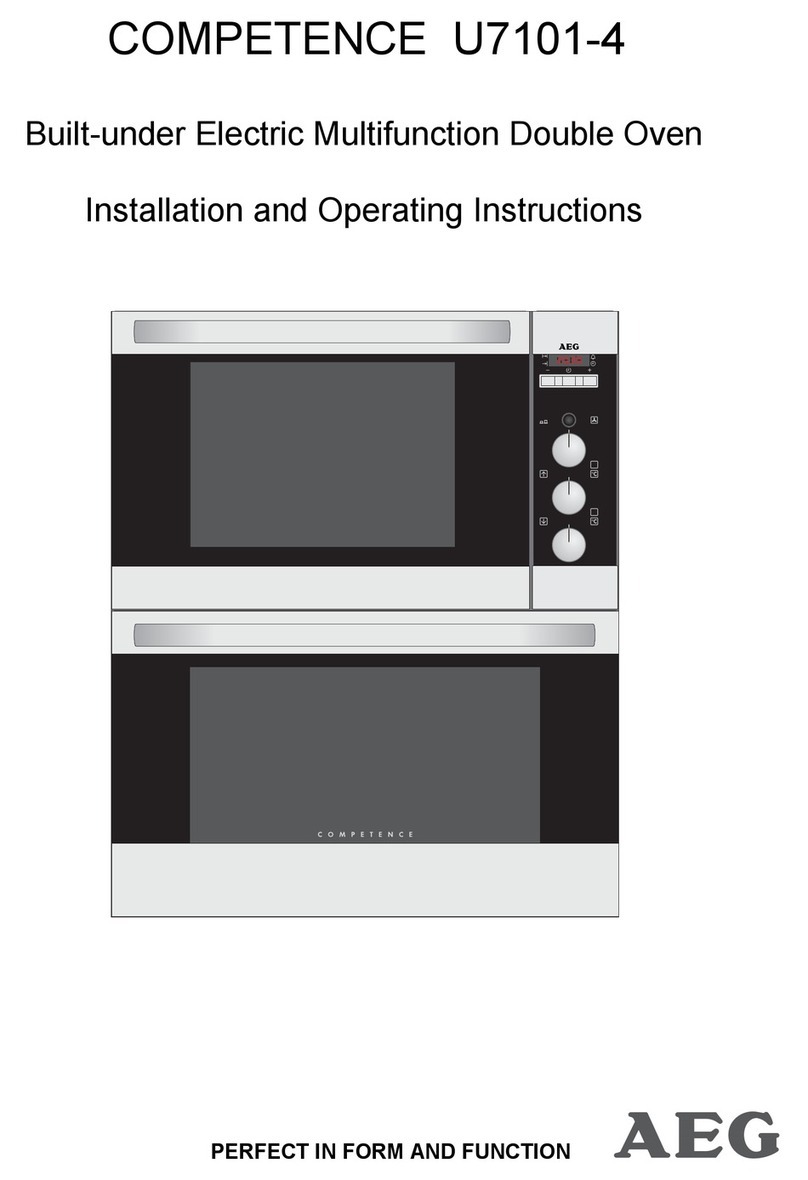
AEG COMPETENCE 311704300 Installation and operating instructions

AEG

AEG COMPETENCE 311704300 Installation and operating instructions

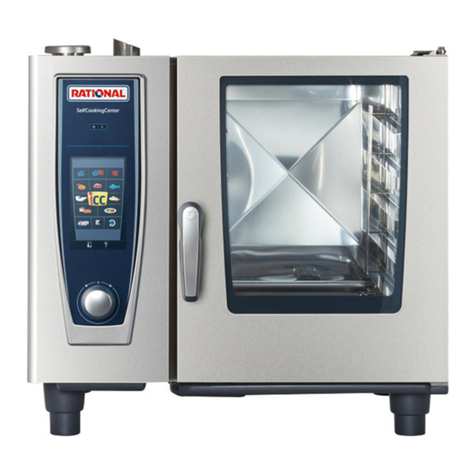
Rational SCC WE 61G installation manual

Rational

Rational SCC WE 61G installation manual

Smeg DOSPA38X User manuals

Smeg

Smeg DOSPA38X User manuals

Electrolux air-o-convect 20 GN 2/1 user manual

Electrolux

Electrolux air-o-convect 20 GN 2/1 user manual

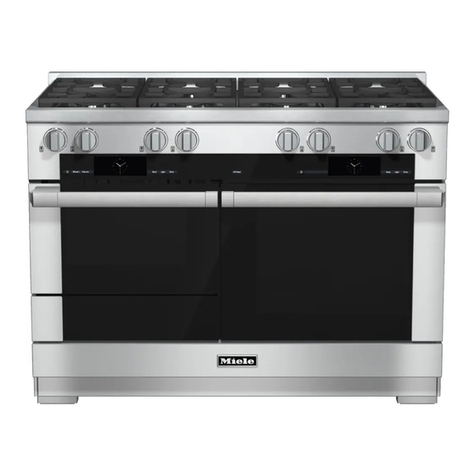
Miele HR 1954-2 operating instructions

Miele

Miele HR 1954-2 operating instructions

KHIND OT50 instruction manual

KHIND

KHIND OT50 instruction manual

Henny Penny Smoker Box installation manual

Henny Penny

Henny Penny Smoker Box installation manual

Lang ECOD-AP Installation and operation instructions

Lang

Lang ECOD-AP Installation and operation instructions

AEG BEK455310M user manual

AEG

AEG BEK455310M user manual

Frigidaire FNGE90JGR user manual

Frigidaire

Frigidaire FNGE90JGR user manual

Hotpoint FE9 S831 JSH IX user manual

Hotpoint

Hotpoint FE9 S831 JSH IX user manual

GE Advantium SCB2000 owner's manual

GE

GE Advantium SCB2000 owner's manual

AEG DE401301DM user manual

AEG

AEG DE401301DM user manual

DeLonghi XA660 Directions for use

DeLonghi

DeLonghi XA660 Directions for use

https://manuals.online logo
https://manuals.online logoBrands
  • About & Mission
  • Contact us
  • Privacy Policy
  • Terms and Conditions

Copyright 2026 Manuals.Online. All Rights Reserved.

Contents
Installation, 2-3
Positioning
Electrical connections
Data plate
Description of the appliance, 4
Overall view
Control panel
Start-up and use, 5
Starting the oven
How to use the timer
Clock with Country Style timer
Cooking modes, 6-7
Cooking modes
Practical cooking advice
Cooking advice table
recautions and tips, 8
General safety
Disposal
especting and conserving the environment
Assistance
Maintenance and care, 9
Switching the appliance off
Cleaning the appliance
Cleaning the oven door
eplacing the light bulb
Operating Instructions
OVEN
GB
English,1
GB
CN
FH 51 CN
FH 51 IX CN
2
GB
 Before placing your new appliance into operation
please read these operating instructions carefully.
They contain important information for safe use, for
installation and for care of the appliance.
 Please keep these operating instructions for future
reference. Pass them on to possible new owners of
the appliance.
ositioning
 Keep packaging material out of the reach of
children.It can become a choking or suffocation
hazard. (see Precautions and tips).
 The appliance must be installed by a qualified
person in compliance with the instructions provided.
Incorrect installation may cause harm to persons,
animals or may damage property.
Fitting the appliance
Use the appropriate cabinet to ensure that the
appliance functions properly.
 The panels adjacent to the oven must be made of
heat-resistant material.
 Cabinets with a veneer exterior must be assembled
with glues which can withstand temperatures of up
to 100°C.
 to install the oven under the counter (see diagram)
and in a kitchen unit, the cabinet must have the
following dimensions:
 The appliance must not come into contact with
electrical parts once it has been installed.
The consumption indications on the data plate have
been calculated for this type of installation.
Ventilation
To ensure good ventilation, the back panel of the
cabinet must be removed. It is advisable to install
the oven so that it rests on two strips of wood, or on
a completely flat surface with an opening of at least
45 x 560 mm (see diagrams).
Centring and fastening
Position the 4 tabs on the side of the oven according
to the 4 holes of the outer frame. Adjust the tabs
according to the thickness of the cabinet side panel,
as shown below:
thickness of 20 mm: take off
the removable part of the tab
(see diagram)
thickness of 18 mm: use the
first groove, which has already
been set in the factory (see
diagram)
thickness of 16 mm: use the
second groove (see diagram)
Secure the appliance to the
cabinet by opening the oven
door and putting 4 screws into
the 4 holes of the outer frame.
! All parts which ensure the
safe operation of the
appliance must not be
Installation
595 mm.
595 mm.
24 mm.
545 mm.
5 mm.
567 mm.
23 mm.
593 mm.
45 mm.
558 mm.
547 mm. min.
560 mm.
45 mm.
3
GB
removable without the aid of a tool.
Electrical connections
! Ovens equipped with a three-pole power supply
cable are designed to operate with alternating
current at the voltage and frequency indicated on
the data plate located on the appliance (see below).
Fitting the power
supply cable
1. Open the terminal
board by inserting a
screwdriver into the
side tabs of the cover.
Use the screwdriver as
a lever by pushing it
down to open the cover
(see diagram).
2. Loosen the cable
clamp screw and
remove it, using a
screwdriver as a lever
(see figure).
3. emove the wire
contact screws L-N-
, then fasten the wires
under the screw heads,
respecting the colour
code: Blue (N), Brown
(L) and Yellow-Green Verde ( ).
Connecting the supply cable to the mains
Install a standardised plug corresponding to the
load indicated on the data plate (see side).
The appliance must be directly connected to the
mains using an omnipolar circuit-breaker with a
minimum contact opening of 3 mm installed between
the appliance and the mains, suitable for the load
indicated and complying with current electrical
regulations (the earthing wire must not be interrupted
by the circuit-breaker). The supply cable must not
come into contact with surfaces with temperatures
higher than 50°C.
! The installer must ensure that the correct electrical
connection has been made and that it is compliant
with safety regulations.
Before connecting to the power supply, make sure
that:
 The appliance is earthed and the plug is
compliant with the law.
 The socket can withstand the maximum power of
the appliance, which is indicated on the data
plate (see below).
 The voltage must be in the range between the
values indicated on the data plate (see below).
 The socket is compatible with the plug of the
appliance. If the socket is incompatible with the
plug, ask an authorised technician to replace it. Do
not use extension cords or multiple sockets.
! Once the appliance has been installed, the power
supply cable and the electrical socket must be easily
accessible.
! The cable must not be bent or compressed.
! The cable must be checked regularly and replaced
by authorised technicians only (see Assistance).
! The manufacturer declines any liability should
these safety measures not be observed.
DATA PLATE
Dimensions
width cm 43.5
height cm 32
depth cm 41,5
Volume lt. 58
Electrical
connections
voltage: 220-240V ~ 50/60Hz o 50Hz
(see data plate maximum power
absorbed 2250W
Directive 2002/40/EC on the label of
electric ovens Norm EN 50304
ENERGY LABEL
Energy consumption for Natural
convection heating mode:
= Convection
Declared energy consumption for
Forced convection Class
heating mode: > Fan assisted
This appliance conforms to the
following European Economic
Community directives:
- 2006/95/EEC of 12/12/06 (Low
Voltage and subsequent
amendments;
- 2004/108/EEC of 15/12/04
(Electromagnetic Compatibility and
subsequent amendments;
- 93/68/EEC of 22/07/93 and
subsequent amendments.
- 2002/96/EC and subsequent
amendments.
4
GB
* Only on certain models
Description of the appliance
Overall view
Control panel
Control panel
GRILL
DRIPPING PAN
GUIDES for the
sliding racks
position 5
position 4
position 3
position 2
position 1
SELECTOR
knob
TIMER
knob *
THERMOSTAT
knob
THERMOSTAT
indicator light
5
GB
! The first time you use your appliance, heat the
empty oven with its door closed at its maximum
temperature for at least half an hour. Ensure that the
room is well ventilated before switching the oven off
and opening the oven door. The appliance may
produce a slightly unpleasant odour caused by the
burning away of protective substances used during
the manufacturing process.
Starting the oven
1. Select the desired cooking mode by turning the
SELECTO knob.
2. Select the desired temperature with the
THE MOSTAT knob. See the Cooking advice table for
cooking modes and the suggested cooking
temperatures (see Cooking Modes).
3. When preheating is finished, the THE MOSTAT
indicator light will stay on: place the food in the oven.
4. You may do the following during cooking:
- change the cooking mode by turning the SELECTO
knob.
- change the temperature by turning the
THE MOSTAT knob.
- stop cooking by turning the SELECTO knob to the
0 position.
! Never put objects directly on the oven bottom to
avoid damaging the enamel coating.
! Always place cookware on the rack(s) provided.
Cooling ventilation
In order to cool down the external temperature of the
oven, some models are fitted with a cooling fan that
blows out air between the control panel and the oven
door.
! Once the cooking has been completed, the cooling
fan remains on until the oven has cooled down
sufficiently.
ven light
It goes on when selecting & with the SELECTO
knob. It stays on when a cooking mode is selected.
How to use the timer *
1. To set the buzzer, turn the TIME knob clockwise
almost one complete revolution.
2. Turn the knob anticlockwise to set the desired
time: align the minutes shown on the knob with the
indicator on the control panel.
3. The timer operates in minutes: when the selected
time has elapsed, a buzzer will sound.
! The timer does not turn the oven on or off.
* Only on certain models
Start-up and use
6
GB
Cooking modes
! A temperature value can be set for all cooking
modes between 60°C and Max, except for
 G ILL (recommended: set only to MAX power
level);
 G ATIN (recommended: do not exceed 200°C).
= TRADITINAL VEN mode
Both the top and bottom heating elements will come
on. With this traditional cooking mode, it is best to use
one cooking rack only; if more than one rack is used,
the heat will be distributed unevenly.
> MULTI-C KING mode
All the heating elements (top and bottom), as well as
the fan, will come on. Since the heat remains constant
throughout the oven, the air cooks and browns food
uniformly. A maximum of two racks may be used at
the same time.
? TP VEN mode
The top heating element comes on. This mode can be
used to brown food at the end of cooking.
@ GRILL mode
The top heating element comes on. The extremely
high and direct temperature of the grill makes it
possible to brown the surface of meats and roasts
while locking in the juices to keep them tender. The
grill is also highly recommended for dishes that
require a high temperature on the surface: such as
beef steaks, veal, rib steak, filets, hamburgers etc...
Some grilling examples are included in the Practical
Cooking Advice paragraph. Always cook in this mode
with the oven door closed.
A GRATIN mode
The top heating element, as well as the fan, will
come on. This combination of features increases the
effectiveness of the unidirectional thermal radiation of
the heating elements through forced circulation of the
air throughout the oven. This helps prevent food
from burning on the surface, allowing the heat to
penetrate right into the food. Always cook in this
mode with the oven door closed.
Cooking modes
Practical cooking advice
! Do not place racks in position 1 and 5 during fan-
assisted cooking. Excessive direct heat can burn
temperature sensitive foods.
! In the G ILL and G ATIN cooking modes, place
the dripping pan in position 1 to collect cooking
residues (fat and/or grease).
MULTI-COOKING
 Use position 2 and 4, placing the food that requires
more heat on 2.
 Place the dripping pan on the bottom and the rack
on top.
G ILL
 Insert the rack in position 3 or 4. Place the food in
the centre of the rack.
We recommend that you set the maximum power
level. The top heating element is regulated by a
thermostat and may not always be on.
PIZZA
For best results when cooking pizza, use the
MULTI-COOKING mode.
 Use a light aluminium pizza pan. Place it on the
rack provided.
For a crispy crust, do not use the dripping pan
(prevents crust from forming by extending cooking
time).
 If the pizza has a lot of toppings, we recommend
adding the mozzarella cheese on top of the pizza
halfway through the cooking process.
7
GB
Cooking advice table
Cooking
modes Foods Weight
(in kg)
Rack
position
Pre-
heating
time (min)
Recommended
temperature
Cooki
n
time
(minut
e
Convection
Oven
Duck
Roast veal or beef
Pork roast
Biscuits (short pastry)
Tarts
1
1
1
-
1
3
3
3
3
3
15
15
15
15
15
200
200
200
180
180
65-75
70-75
70-80
15-20
30-35
Multi-cooking
Pizza (on 2 racks)
Lasagne
Lamb
Roast chicken + potatoes
Mackerel
Plum cake
Cream puffs (on 2 racks)
Biscuits (on 2 racks)
Sponge cake (on 1 rack)
Sponge cake (on 2 racks)
Savoury pies
1
1
1
1+1
1
1
0.5
0.5
0.5
1
1.5
2 and 4
3
2
2 and 4
2
2
2 and 4
2 and 4
2
2 and 4
3
15
10
10
15
10
10
10
10
10
10
15
230
180
180
200
180
170
190
180
170
170
200
15-20
30-35
40-45
60-70
30-35
40-50
20-25
10-15
15-20
20-25
25-30
Top oven Browning food to perfect cooking - 3/4 15 220 -
Grill
Soles and cuttlefish
Squid and prawn kebabs
Cod filet
Grilled vegetables
Veal steak
Cutlets
Hamburgers
Mackerels
Toasts
1
1
1
1
1
1
1
1
4
4
4
4
3 or 4
4
4
4
4
4
5
5
5
5
5
5
5
5
5
Max
Max
Max
Max
Max
Max
Max
Max
Max
8-10
6-8
10
10-15
15-20
15-20
7-10
15-20
2-3
Gratin Grilled chicken
Cuttlefish
1.5
1.5
2
2
5
5
200
200
55-60
30-35
8
GB
Precautions and tips
! The appliance was designed and manufactured in
compliance with international safety standards. The
following warnings are provided for safety reasons
and must be read carefully.
General safety
 The appliance was designed for domestic use
inside the home and is not intended for
commercial or industrial use.
 The appliance must not be installed outdoors,
even in covered areas. It is extremely dangerous
to leave the appliance exposed to rain and
storms.
When handling the appliance, always use the
handles provided on the sides of the oven.
 Do not touch the appliance with bare feet or with
wet or moist hands and feet.
The appliance must be used by adults only for
the preparation of food, in accordance with the
instructions outlined in this boo let. Any other
use of the appliance (e.g. for heating the room)
constitutes improper use and is dangerous.
The manufacturer may not be held liable for
any damage resulting from improper, incorrect
and unreasonable use of the appliance.
When the appliance is in use, the heating
elements and some parts of the oven door
become extremely hot. Mae sure you don't
touch them and eep children well away.
 Ensure that the power supply cable of other
electrical appliances does not come into contact
with the hot parts of the oven.
 The openings used for ventilation and dispersion
of heat must never be covered.
 Always grip the oven door handle in the centre:
the ends may be hot.
 Always use oven gloves to place cookware in the
oven or when removing it.
 Do not use aluminium foil to line the bottom of the
oven.
 Do not place flammable materials in the oven: if
the appliance is switched on by mistake, it could
catch fire.
 Always make sure the knobs are in the l/¡
position when the appliance is not in use.
When unplugging the appliance always pull the
plug from the mains socket, do not pull on the
cable.
 Never carry out any cleaning or maintenance work
without having unplugged the plug from the
mains.
 In the case of a malfunction, under no
circumstances should you attempt to repair the
appliance yourself. epairs carried out by
inexperienced persons may cause injury or further
malfunctioning of the appliance. Contact a Service
Centre (see Assistance).
 Do not rest heavy objects on the open oven door.
 The appliance should not be operated by people
(including children) with reduced physical,
sensory or mental capacities, by inexperienced
individuals or by anyone who is not familiar with
the product. These individuals should, at the very
least, be supervised by someone who assumes
responsibility for their safety or receive
preliminary instructions relating to the operation of
the appliance.
 Do not let children play with the appliance.
Disposal
 Observe local environmental standards when
disposing packaging material for recycling
purposes. Observe existing legislation when
disposing of the old appliance.
 The European Directive 2002/96/EC on Waste
Electrical and Electronic Equipment (WEEE),
requires that old household electrical appliances
must not be disposed of in the normal unsorted
municipal waste stream. Old appliances must be
collected separately in order to optimise the
recovery and recycling of the materials they
contain and reduce the impact on human health
and the environment. The crossed out wheeled
bin symbol on the product reminds you of your
obligation, that when you dispose of the
appliance it must be separately collected.
Consumers should contact their local authority or
retailer for information concerning the correct
disposal of their old appliance.
Respecting and conserving the
environment
 By using the appliance in the hours between late
afternoon and early morning, you can help reduce
the work load placed on electrical companies.
 Always keep the oven door closed when using the
G ILL and G ATIN mode to attain best results
and to save energy (approximately 10%).
 egularly check the door seals and wipe clean to
ensure they are free of debris so that they stick
properly to the door and do not allow heat to
disperse.
Assistance
Communicating:
 appliance model (Mod.)
 serial number (S/N)
This information is found on the data plate located
on the appliance and/or on the packaging.

GB
Maintenance and care
Switching the appliance off
Disconnect your appliance from the electricity
supply before carrying out any work on it.
Cleaning the appliance
 The stainless-steel or enamel-coated external parts
as well as the rubber seals may be cleaned using a
sponge that has been soaked in lukewarm water
and neutral soap. If these stains are difficult to
remove, use only specialised products. After
cleaning, rinse and dry thoroughly. Do not use
abrasive powders or corrosive substances.
 Ideally, the inside of the oven should be cleaned
after each use, when it is still lukewarm. Use hot
water and detergent, rinse and dry with a soft cloth.
Do not use abrasive products.
 All accessories - with the exception of the sliding
racks - can be washed like everyday crockery.
 Never use steam cleaners or pressure cleaners on
the appliance.
Cleaning the oven door
Clean the glass part of the oven door using a sponge
and a non-abrasive cleaning product, then dry
thoroughly with a soft cloth. Do not use rough abrasive
material or sharp metal scrapers as these could
scratch the surface and cause the glass to crack. To
clean more thoroughly, you can remove the oven door.
1. Open the oven door fully (see diagram).
2. Lift up and turn the small levers located on the
two hinges (see diagram).
3. Grip the door on the two
external sides and close it
approximately half way. Unlock
the door by pressing on the
clamps ., then pull the door
towards you lifting it out of its
seat (see diagram).
To replace the door, reverse
this sequence.
Inspecting the seals
Check the door seals around the oven periodically. If
the seals are damaged, please contact your nearest
After-sales Service Centre (see Assistance).
We recommend not using the oven until the seals have
been replaced.
Replacing the light bulb
To replace the oven light bulb:
1. emove the glass cover of the lamp-holder.
2. emove the light bulb and replace it with a similar
one: Wattage 25 W, cap E 14.
3. eplace the glass cover (see diagram).
F
F
10
GB