Stationary VLA Batteries,
Installation and Operation Instructions
Page 6 of 17 www.baebatteriesusa.com Rev: 0219
4.0 UNPACKING-HANDLING
Single cells and multi-cell blocks may be received packed in individual Styrofoam
containers with shrink-wrap or packing cases, surrounded by foam, shrink-wrap and
attached to a wooden pallet. Carefully open the cases or carton to avoid possibly
damaging any of the cells or blocks.
NOTE: When removing the blocks or cells from the containers or cases always lift cells
from the bottom, never from the connectors or cell posts as this can damage cell
covers or post seals and void your warranty.
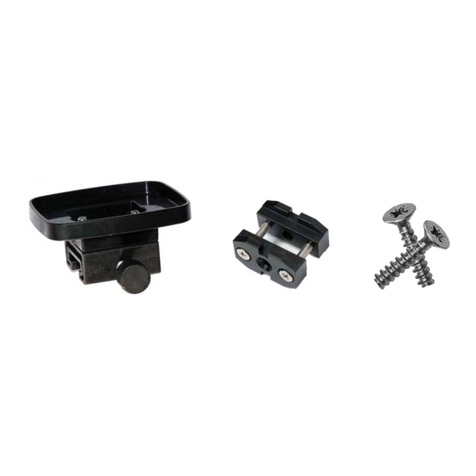
NOTE: A BAE lifting sling may be used on the larger capacity
cells and blocks - slip the lifting sling under the cell and
use the loops in the sling for hoisting the cell. Four
battery lift sizes are available based jar dimensions. .
•Small Block Lift Kit, L = 272 mm (10.7 in)
•Large Block Lift Kit, L = 385 mm (15.16 in)
•Small Cell Kit, H < 620 mm (24.4 in)
•Large Cell Kit, min: L x W x H, 145 x 205 x 700 mm
(5.71 x 8.07 x 27.56 in)
max: L x W x H, 220 x 580 x 855 mm
(8.66 x 22.83 x 33.66 in)
weight: 250 kg (551.1 lbs)
See the specific battery lifting sling operating instructions for details on use.
NOTE: A mechanical battery lift may also be used to move the cells.
If the cells were ordered wet (filled), immediately check the electrolyte level in each cell
or block. The electrolyte level should be between the maximum and minimum level lines
on the container. If the level is below the minimum line, check the container for damage.
If your visual inspection, after unpacking, indicates damaged posts, cell covers or jars, or
electrolyte levels are below the minimum line immediately contact BAE USA or your local
representative.
4.1 ACCESSORIES
When unpacking the cells, place the accessories along with the installation and operating
instructions in a safe location to avoid misplacement or loss. If you find any of the items
listed on the packing list are missing please contact BAE USA or your local
representative.
5.0 PRE-INSTALLATION PLANNING
We recommend batteries not be installed in battery rooms that are still under
construction; this avoids the risk of damage to the batteries during construction.
The installation of the individual cells is dependent on the size and type of cell and the
intended application of the battery. Standard designs provide for installation in battery
cabinets, conventional steel racks or seismic (earthquake resistant) racks.
For all installation options, the ideal designs should include acid-resistant coatings and
rail insulation to ensure that the required insulation between the rack and battery is
present over the life of the batteries.