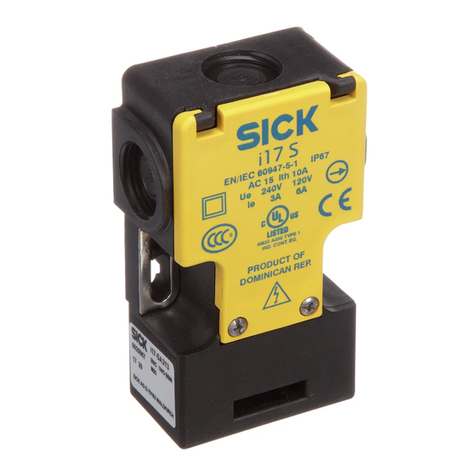
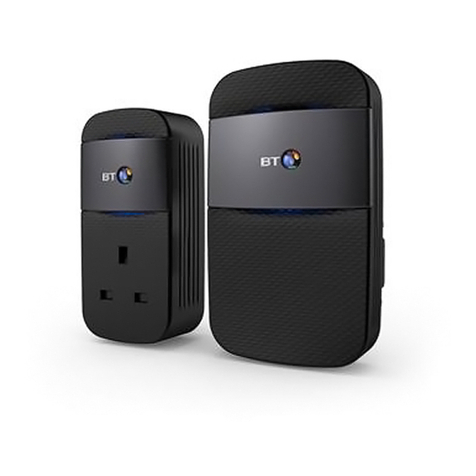
Light Sensitive Outdoor Timer Switch
Installation Information
Connect Brown Live wire to Live terminals (Supply to ‘L’, Load to ‘L1’) Connect Blue Neutral wire to Neutral terminal (N). Connect Green/ yellow Earth wire to (symbol) terminal.
Note: the colours of wires will be dependent on the type of cable used. See Wire Identification section for reference.
4. All earth connections MUST be made and continuity maintained. Where any earth conductor has a bare wire it MUST be sleeved with Green/Yellow sleeving.
5. Ensure all terminal screws are tight, and all wires are neatly routed & not unduly stretched or pinched.
6. After wiring the unit is now ready for testing before final assembly. Turn the right dial switch to the “D-D” position, and turn power back on.
CAUTION – DO NOT TOUCH TERMINALS.
7. Testing. First, cover the light sensor above the dials. The connected light will turn on after 10 seconds. Uncover the sensor and the light will turn off after 10 seconds.
8. Light Sensitivity Adjustment. The activation light level (or Twilight Setting) can be adjusted by rotating the left dial. (from 3 lux to 1000 lux). Or alternatively to set the activation light level use a small
screwdriver or blunt point, and hold in the “M” button on the side of the unit for 1 second.
9. Operation Selection
The unit has options for the length of time the connected light will remain on after the activation light level has been reached.
The following options can be selected using the right dial.
10. “D-D” – the connected light will go on at dusk, and off at dawn (according to the light level set).
“2H” – light will turn off after 2 hours.
“4H” – light will turn off after 4 hours.
“6H” – light will turn off after 6 hours.
“8H” – light will turn off after 8 hours.
Once the desired settings have been made, re-fit cover and secure accordingly.
Do not overload the timer switch.
Max Load
1000W – Resistive Load
500W – Inductive Load
Troubleshooting
Changes To Building Regulations – Important!
As from 1 January 2005, any electrical work done in domestic, fixed wiring installations in England and Wales, will have to follow new rules & changes to the Building Regulations Part P. These
rules have been introduced to help reduce the number of deaths, injuries and fires caused by faulty installations.
The installation work may be carried out by anyone providing it is in accordance with the Regulation standards.
Certain electrical work (non-notifiable or minor work) may be carried out without having to use a registered electrician or notify Local Authority Building Control, such as: -
•replacinganyelectricaltting(forexample,socketoutlets,lightttings,controlswitches)
•addingfusedspurs,socketsorlightstoanexistingcircuit(butnotinakitchen,bathroomoroutdoors)
•anyrepairormaintenancework
For minor work done by a non-qualified electrician, it is highly recommended it is checked by a qualified electrician to ensure it is safe.
For all other work (notifiable or major work) a Building Regulations application is required & it must be checked to make sure it is safe.
This may be done by either an electrician who is part of a competent person self-certification scheme, or by notifying the Local Authority Building Control Department who will make required ar-
rangements.
An application must be made to the Local Authority before commencing work such as: -
•addinganewcircuit
•adding/alteringanycircuitinaroomwithwater(kitchen,bathroom,etc)
•adding/alteringanycircuitoutdoors(outdoorsockets,lights,etc)
Where work is done by a qualified electrician, they will be responsible for checking the work, & Local Authority does not need notification.
Where a qualified electrician or Local Authority is responsible for checking the work, they will provide a certificate or notice to confirm that the installation is tested & safe to use.
IT IS RECOMMENDED TO USE A QUALIFIED ELECTRICIAN
If there is any doubt whether electrical work needs notification of the Local Authority, they should be contacted first for advice.
Malfunction Remedy
Unit does not switch on Check connections
Unit turns on and off when connected to a light source Make sure that connected light does not shine on unit
Unit does not switch off Check if sensor window is being obstructed