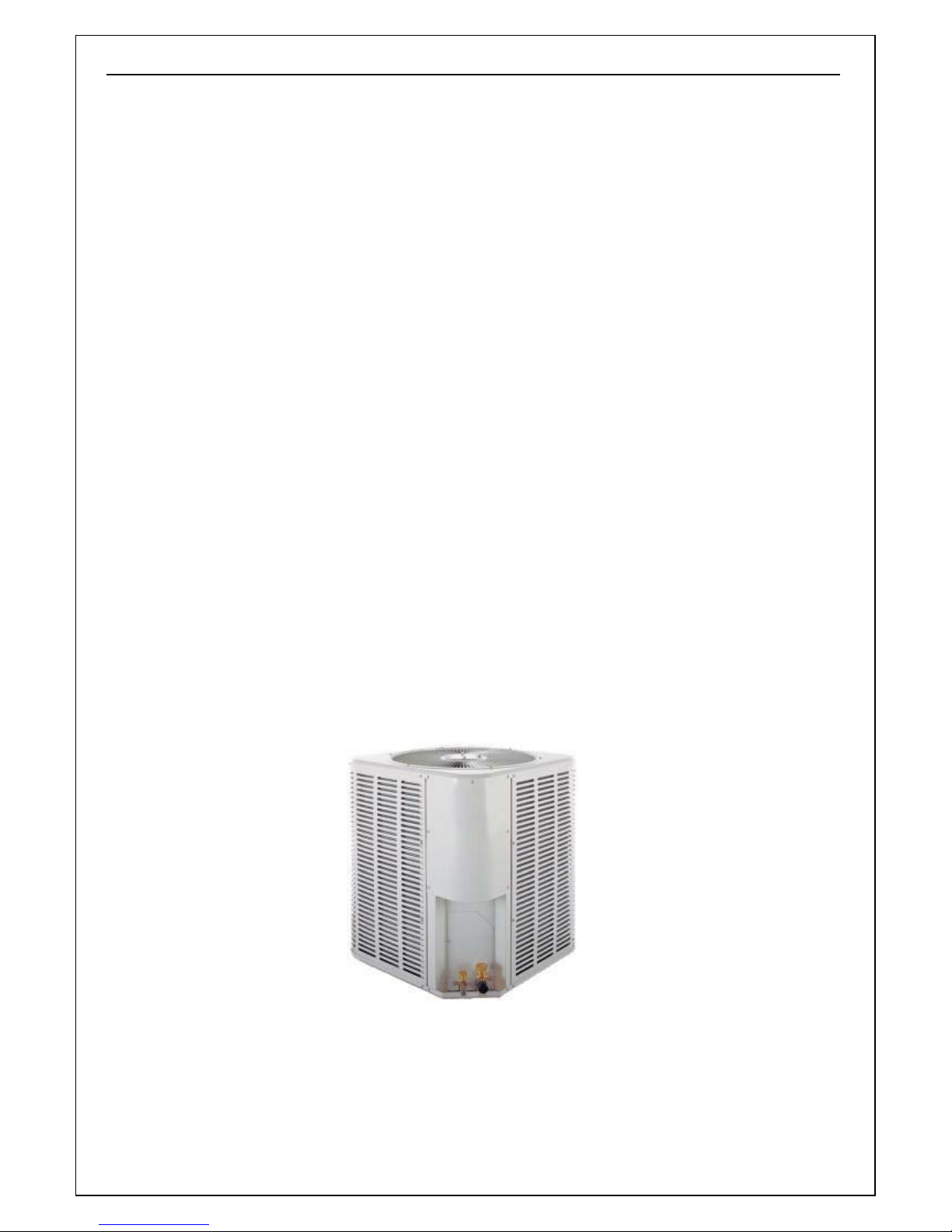
Comfortstar Service manual for 13seer Cooling Only Condensing
3
3°in the return duct and 4°in the supply duct. This can reduce the cooling capacity of an air conditioning
system by as much as 30%.This means a loss of almost one ton of cooling capacity from a three ton system.
Air leakage of only 3% in a return duct can cause a 5% loss in system capacity. 3% leakage on a three
ton system is only 30 CFM. Two or three unsealed joints can cause this leak. Sealing the return and supply
ducts pays dividends in increased system capacity and lower operating costs.
Effective duct insulation is essential to prevent loss of capacity and sweating ducts in the cooling mode.
Duct systems installed in the conditioned space can be left uninsulated , but a dense 1/2” fiberglass duct
liner reduces blower and air noises, and prevents sweating ducts when humidity levels are high.
Supply and return duct systems in attics and crawl spaces require a minimum 1” of dense duct liner or
2” fiberglass wrap with a sealed vapor barrier. A leaky vapor barrier results in duct sweating, causing wet
insulation.
Wet insulation does not insulated .Heat transfer through poorly insulated systems can result in over
50% loss in operating capacity. Sweating ducts also promote rusting ducts resulting in premature duct failure.
Other duct materials have been successfully used. Carefully follow the duct manufacturers’ installation
instructions. The duct system is only as good as the planners and installers construct.
Air supply diffusers must be selected and located carefully. They must be sized and positioned to
deliver treated air along the perimeter of the space. If they are too small for their intended air flow the
become noisy. If they are not located properly they cause drafts on the occupants in the rooms. Return air
grilles must be properly sized to carry air back to the blower. If they are too small they also cause noise. The
installers should balance the air distribution system to ensure proper air flow to all rooms in the home. This
ensures a comfortable living space.
5. Installation Instructions
! WARNING
These instructions are intended as an aid to qualified, licensed service personnel for proper installation,
adjustment and operation of this unit. Read these instructions thoroughly before attempting installation or
operation. Failure to follow these instructions may result in improper installation, adjustment, service
or maintenance possibly resulting in fire, electrical shock, property damage, personal injury or
death.
5.1 Outdoor Unit Inspection
This product has been inspected at the factory and released to the transportation agency without known
damage. Inspect exterior of carton for evidence of rough handling in shipment. Unpack carefully. If damage
is found, report immediately to the transportation agency.
5.2 Equipment Protection From Environment
The metal parts of the unit may be subject to rust or corrosion in adverse environmental conditions. This
oxidation could shorten the unit life. Salt spray or mist in seacoast areas, sulphur or chlorine from lawn
watering systems and various chemical contaminants from industries such as paper mills and petroleum
refineries are especially corrosive.
If the unit is to be installed in an area where contaminants are likely to be a problem, special attention should
be given to the equipment location and exposure.