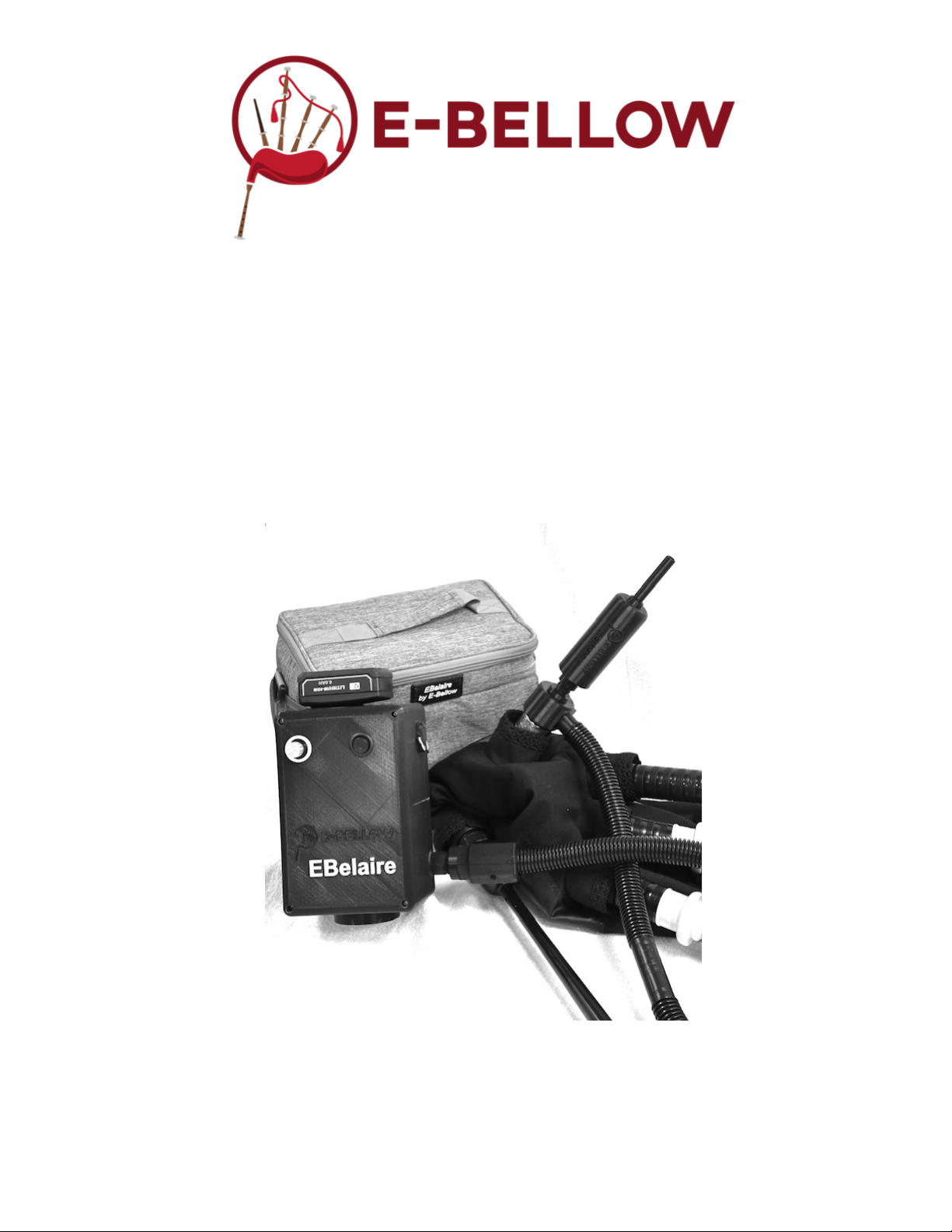
2. Place the EBelaire on your shoulder using a cross chest placement with the
EBelaire resting above your right hip.
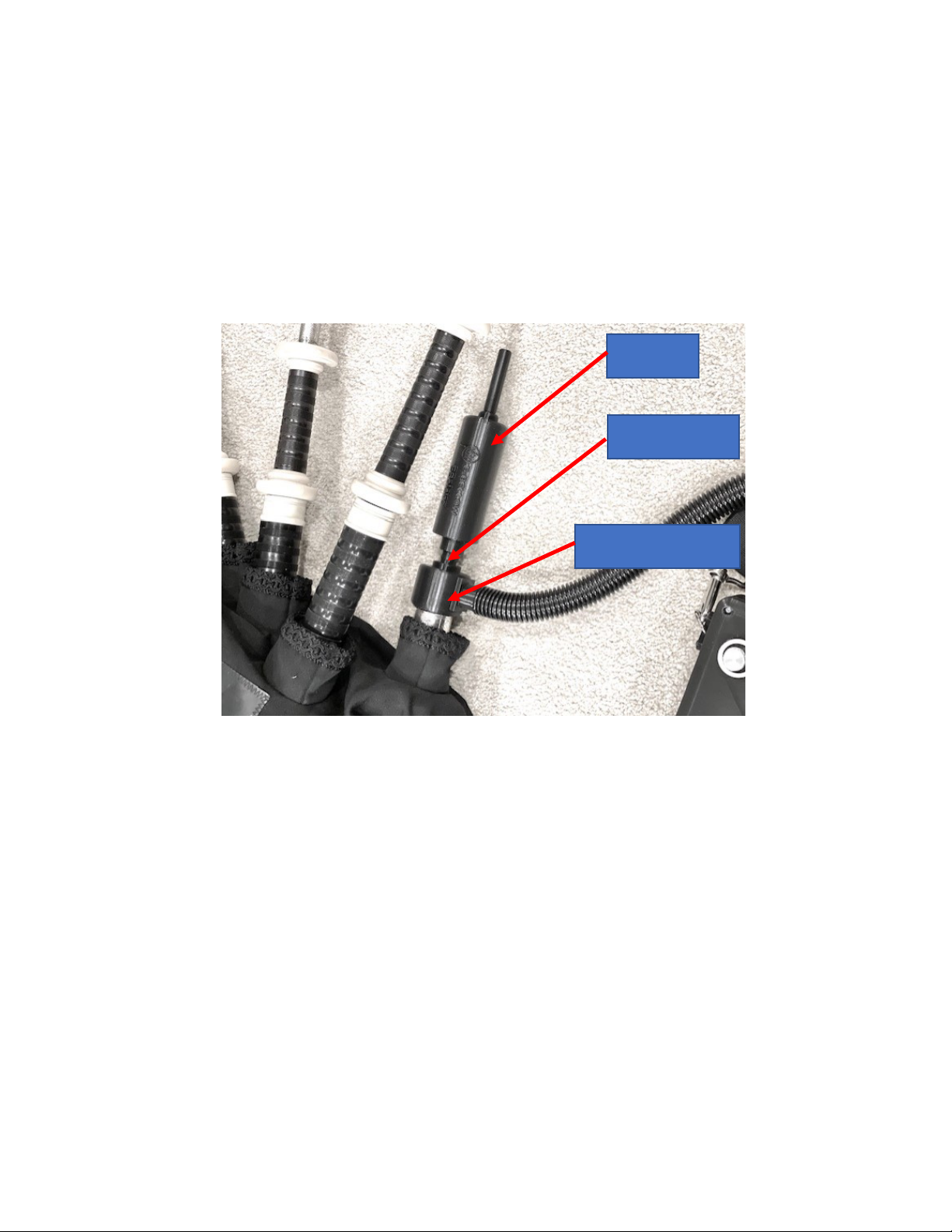
3. Place your bagpipe on your left shoulder as normal and place the tube from the
WCU between your lips.
4. Using your Lips and Cheeks create a short ‘Puff’ into the WCU. This will turn
the EBelaire ON which will inflate your bagpipe. *
5. To Stop the airflow simply create a Second ‘Puff’ into the Mouthpiece Tube.
This will stop the EBelaire.
6. When finished playing Set the Rocker Switch back to the ‘OFF’ position. The
colored LED will no longer glow.
*The Puff Switch Remote Starter resembles the traditional blowstick and requires only a soft
puff from the mouth to activate. Note: Do not try to blow as if to inflate, but simply puff
into it as though to blow out a single small candle using a straw. This action is only
necessary to engage the sensor that will start, or stop, the EBelaire.
Initial Use and Calibration
The first time the EBelaire is used, adjustments to all reeds will be required to achieve
optimal performance from your instrument. It is strongly recommended that you take an
incremental approach to setup. Begin with your chanter. Once you are satisfied with your
chanter sound you can move to introducing, and calibrating, the drones.
Chanter Setup
1. Place stoppers into each drone top and inspect all joints to ensure they are properly
Hemped.
2. Insert the chanter with a seated reed into the bagpipe.
3. Shoulder your bagpipe. With the battery in place and the Rocker ON/Off switch in
the on position, give one ‘puff’ to the mouthpiece to activate the EBelaire.
4. Adjust the pressure delivered to the chanter using the ‘Variable Pressure’ control
knob.
5. The Chanter should sound and allow you to assess its tone once the bag is filled
with air.
6. Use one ‘Puff’ to turn off the EBelaire when satisfied.
a. Adjust the reed and any tape to properly balance the sound from the chanter as
you would if you were playing without the aid of the EBelaire.
b. Repeat as needed to achieve a balanced sound.
Note: This is a trial-and-error process. Patience is needed to achieve optimal
performance.
Reeds that require more than 30 inches of water pressure may not sound
properly.