manuals.online logo
Brands
  1. Home
  2. •
  3. Brands
  4. •
  5. extronics
  6. •
  7. GPS
  8. •
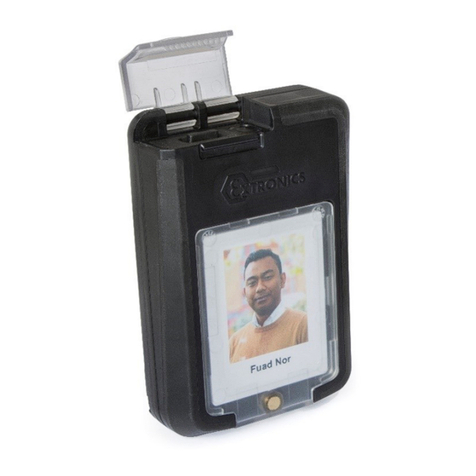
  9. extronics iTAG XB BLE User manual

extronics iTAG XB BLE User manual

Other extronics GPS manuals

extronics iTAG X-Range User manual

extronics

extronics iTAG X-Range User manual

Popular GPS manuals by other brands

Polar Electro RCX3 Getting started guide

Polar Electro

Polar Electro RCX3 Getting started guide

Tobii Pro Spectrum user manual

Tobii Pro

Tobii Pro Spectrum user manual

Gosafe G91I user manual

Gosafe

Gosafe G91I user manual

Fisher TW-8800 operating manual

Fisher

Fisher TW-8800 operating manual

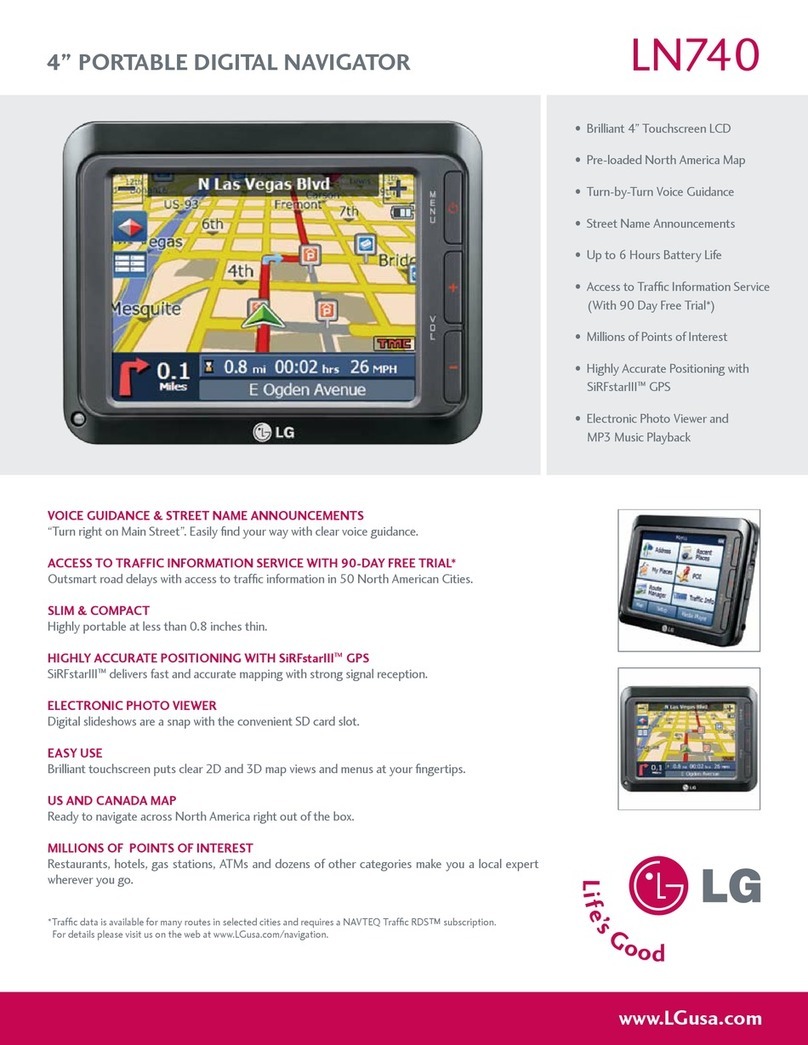
LG LN740 Series Specifications

LG

LG LN740 Series Specifications

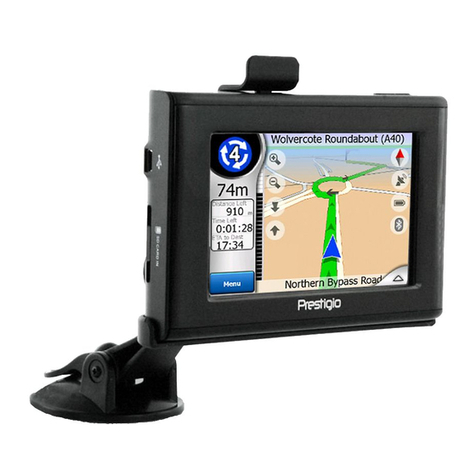
Prestigio GeoVision 430 user manual

Prestigio

Prestigio GeoVision 430 user manual

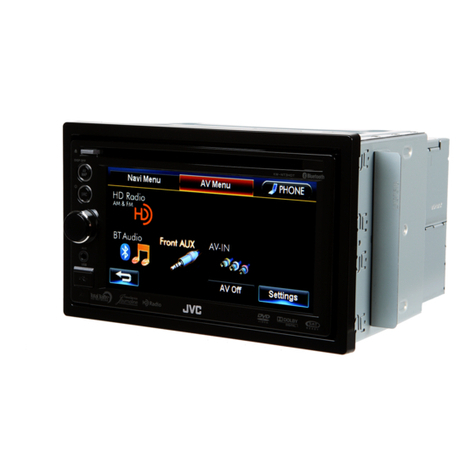
JVC KW-NT3HDT instructions

JVC

JVC KW-NT3HDT instructions

Yoctopuce Yocto-GPS user guide

Yoctopuce

Yoctopuce Yocto-GPS user guide

RightWay GPS Navigator RW 200 user manual

RightWay

RightWay GPS Navigator RW 200 user manual

TomTom VIA user guide

TomTom

TomTom VIA user guide

Garmin ECHOMAP PLUS owner's manual

Garmin

Garmin ECHOMAP PLUS owner's manual

Telit Wireless Solutions GM862GPS Series Hardware user's guide

Telit Wireless Solutions

Telit Wireless Solutions GM862GPS Series Hardware user's guide

Hama 53118 Operating	 instruction

Hama

Hama 53118 Operating instruction

Garmin DEZL 580 owner's manual

Garmin

Garmin DEZL 580 owner's manual

Jigabot EX quick start guide

Jigabot

Jigabot EX quick start guide

Pointer Cellocator CelloTrack XT LTE overview

Pointer

Pointer Cellocator CelloTrack XT LTE overview

Queclink GV55LITE user manual

Queclink

Queclink GV55LITE user manual

Starcom Systems Kylos Compact user guide

Starcom Systems

Starcom Systems Kylos Compact user guide

manuals.online logo
manuals.online logoBrands
  • About & Mission
  • Contact us
  • Privacy Policy
  • Terms and Conditions

Copyright 2025 Manuals.Online. All Rights Reserved.

Document Number X130458(1) (See Extronics DDM for the latest Version)
For warranty information, refer to Terms and Conditions at http://www.extronics.com
©2022 Extronics Limited. This document is Copyright Extronics limited.
Extronics reserve the right to change this manual and its contents without notice, the
latest version applies.
Firmware User Guide
iTAG XB BLE
2
Contents
Tag Operation ..................................................................................................... 3
1.1 Device States: ............................................................................................... 3
1.2 Wake up procedure ....................................................................................... 3
1.3 Power on self-test mode................................................................................ 3
1.4 LED Status Indicator...................................................................................... 4
Supported Beacon Profiles.................................................................................. 5
Motion detection Engine: ..................................................................................... 9
3.1 Coarse Filter.................................................................................................. 9
Device Configuration ......................................................................................... 11
Device MAC address......................................................................................... 13
PC Tool - SenseBLE Control............................................................................. 14
Open SenseBLE Control....................................................................................... 14
6.1 Read existing Device Configuration............................................................. 15
6.2 Save new Configuration to Device............................................................... 16
6.3 Write new Configuration to Device .............................................................. 18
Battery Information ............................................................................................ 19
7.1 Battery Types: ............................................................................................. 19
7.2 Battery Replacement –iTAG XB10 - Sense Lite V2.................................... 20
7.2.1 Remove the battery............................................................................... 21
7.2.2 Install the battery................................................................................... 22
7.3 Battery Replacement –iTAGXB40 - Sense Ultra ........................................ 25
7.3.1 Remove the Batteries ........................................................................... 26
7.3.2 Install the Batteries ............................................................................... 27
Care and Maintenance ...................................................................................... 29
Recycling and Disposal ..................................................................................... 29
APPENDIX A - iTAGXB40-B parameters for iTAG X-Range .................................... 30
3
Tag Operation
The device is a Bluetooth Low Energy beacon designed for tracking objects that move. The
device is equipped with an accelerometer, a push button, an LED light (to indicate device
status) and on some products offers over the air configurability.
The device has the following built-in sensors:
•Accelerometer
•Temperature
1.1 Device States:
•Storage State
•Button pressed State
•Moved State
•Idle State
Storage State
The device is shipped in storage state
In this state device is asleep, the BLE radio is turned off to conserve battery.
1.2 Wake up procedure
Push button for more than 3 seconds to wake the device up. The device will move from
storage to Button pressed State and the LED will blink or blink rapidly 3 times to confirm
state change.
The device will start beaconing, with Omni-ID custom beacon, as a non-connectable beacon
for the duration the button is pressed at 100 msec beacon rate. Once the button is released,
it will advertise as a connectable beacon for a duration of 60 seconds. This allows a 60
second time window to change the configuration of the device. Unless preconfigured as per
Appendix A….
1.3 Power on self-test mode
If the unit is inactive, a short button press (less than 3 sec) causes the device to power up for
3 seconds and reverts to storage state. The LED will blink once to confirm state change.
During the 3 seconds, the device will beacon Omni-ID custom beacon every 100ms as a
non-connectable beacon.
On power cycle/battery replacement, the device will start beaconing without going into
storage state (by default).
Button pressed State
By default, when the button is pressed, the device advertises the Omni-ID custom beacon
along with Button pressed state flag at 100ms beacon rate as a connectable advertisement
for 30sec, unless specified and preconfigured otherwise At the point of order.
Beacon type, beacon rate and state time are configurable.
4
Idle State
Unless preconfigured, the device transitions to Idle state if there is no motion detected at the
expiry of Button pressed state. By default, device beacons with 5 types of interleaving
beacons, all as connectable, at beacon rate of 5000 msec.
Idle beaconing can be configured to announce a burst of up to 5 packets, 100ms apart. Burst
mode is recommended when using slow beacon rates to ensure packets are received and to
aid in rapid connection.
Beacon type, connectable or non-connectable, burst count and beacon rate are configurable.
If a beacon rate of 1sec or less is selected, then a single advertisement type is sent at the
configured beacon rate, interleaving will only work when the beacon rate is greater than
1sec.
Interleaving
While in the Idle state, the advertisement and scan data can be switched based upon an
Interleaving timer and an advertisement mask.
Note: As the interleaving switch rate is an independent timer it should be made a multiple of
the Idle advertisement rate so that each packet selected in the mask has an opportunity to be
transmitted.
Moved State
The device is fitted with an accelerometer which is controlled by a configurable motion
engine. The Accelerometer detects movement and depending on the motion engine
configurations, it changes the state of the device from stationary to moved, and from moved
to stationary.
By default, the device beacons with iBeacon as a connectable beacon at 200ms beacon rate
while in Moved state.
Moved state is advertised in the BLE payload with a moved flag.
Once the Moved state times out, at that point the device reverts to Idle state beaconing. By
default, the moved flag will persist in Idle state for 5sec.
Beacon type, connectable or non-connectable, beacon rate and state time are configurable.
Note that in this state, a single packet type can be transmitted.
1.4 LED Status Indicator
The device is equipped with a red colour LED to indicate device status.
When awake, on button press, device will change state to Button pressed state for
configured duration of time, the LED will blink or blink rapidly 3 times to indicate change of
state.
LED will blink again on Button pressed state time out, to aid the operator with visual
indication that state is changed from Button pressed to Idle.

5
Supported Beacon Profiles
The following beacon profiles are supported:
•Omni-ID Custom Beacon
•Eddystone UID
•Eddystone URL
•Eddystone TLM
•iBeacon
Advertisement Data
The Advertisement and Scan response data will vary depending upon the configuration.
Each of the GAP records will be added to the Advertisement and/or scan response.
SR - Scan Response
AD - Advertisement
Advertisement - Gap Flags
Every advertisement has a flag record
6
Advertisement - Local Name
Advertisement - Temperature
Advertisement - Manufacturer Data
Advertisement - Eddystone UUID
Advertises a configurable unique ID
7
Advertisement total length: 31 Bytes (Including Flags)
Advertisement - Eddystone URL
8
Advertisement - Eddystone TLM
25 Bytes Including flags
Advertisement - iBeacon
Advertisement total length: 30 Bytes (Including Flags)
9
Motion detection Engine:
The motion engine two-stage filter mechanism determines if the device is moving or
stationary, the purpose of this two-stage filter is to be able to filter out both short spurious
unintended accelerometer interrupts and filter out slightly longer period of stop or start such
as when an asset stops moving for short period of time due to an obstruction on route.
Motion Engine.
The first stage filter is a Coarse filter to filter out the odd unintended accelerometer
interrupts such as when a heavy item is dropped adjacent to the device. This can be seen as
a short time-based filter on detected acceleration. The second stage filter is the Fine Filter to
filter out short periods of motion start.
3.1 Coarse Filter
The Coarse filter takes accelerometer interrupts as an input and as an output, will set the
device state into either Active or Inactive, which are the two inputs for the further Fine filter.
The Coarse Filter uses the following configurable variables:
•Motion Threshold
•Activity Window (Seconds)
•Activity Threshold (Seconds)
The accelerometer generates an interrupt when it senses movement, this interrupt is the
trigger for activity and occurs when the detected acceleration events are over the Motion
Threshold (OTA programable Accelerometer threshold 0-10, where 0 is off and 10 is most
sensitive). The accelerometer is configured to generate a maximum of 1 interrupt per
second.
For the device to be set into Active state, the device needs to detect more interrupts than the
Activity threshold during the configurable Activity Window.
Active state is True when the number of interrupts > Activity Threshold during Activity
Window.
10
The Activity window specifies the length of a ring buffer that captures a history of events
over its period. With a maximum of 1 event per second.
For example, a 10 second Activity window, with an Activity Threshold of 2, requires a
minimum of 3 interrupts within a 10 second window for the device to be set to Active state.
Moved state time:
Moved state timer works in combination with the Motion detection engine.
For example, if the device is configured with below settings:
•Activity window Length:5
•Activity Thershold:0
•Stationary to Moved: 1
•Moving to stationary Threshold: 5
•Moved State: 30
After detecting single accelerometer interrupt in 5 seconds window, the device is set to active
state and after staying active for 1 second (above 0 in stationary to moved threshold), the
state changes from stationary to moved.
Therefore, after detecting motion for a second, state changes from stationary to moved.
Moved to stationary state works as below,
After device being stationary for 1 second in a 5 second window, device is set to inactive and
if device stays stationary above 1 second then a counter in the “moved to stationary” window
starts incrementing. If device stays stationary for next 5 seconds (moved to stationary
threshold:5) then the motion detection engine puts the device into Stationary state. From
there, the “moved state timer” starts and the device will transition to Idle state with moved
flag advertised for 30 seconds after which the moved flag will be disabled.