01—P1
GETTING STARTED
•Never charge or store batteries in extremely hot or cold places
(recommended between 50º-80ºF/10º-26ºC), leave in a hot
environment (inside an automobile in hot weather), or leave in direct
sunlight.
•Never place or carry batteries in your pockets or clothing.
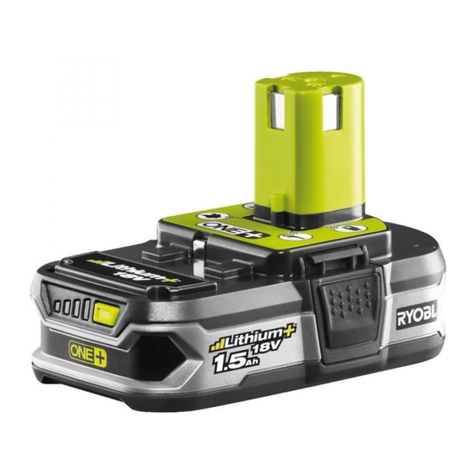
•Always use Freefly-approved LiPo batteries.
•Always inspect the battery before charging.
•Always connect the positive red lead (+) and negative black lead (-)
terminals of the battery to the charger terminals correctly.
•Always disconnect the battery after charging, and let the charger
cool between charges.
•If a battery will not be used for more than one week, it is recommended
that the battery is stored with a voltage of approximately 3.8V per
cell. Do not store the battery fully charged. Store the battery at room
temperature in a cool or shaded area (ideally between 50º-80ºF
/10º-26ºC).
•Batteries should be stored in a vented, fire-resistant container. No
more than two batteries should be placed in a container to avoid
chain reactions. Storage temperatures should not fall below
32ºF/0ºC or above 130ºF/54ºC. Damaged batteries are extremely
sensitive to temperature fluctuation and care should be taken in
their immediate disposal. High temperatures may cause fire, even
with undamaged batteries.
NOTICE: All instructions and warnings must be followed exactly.
Mishandling of LiPo batteries can result in fire. By handling, charging
or using the included LiPo batteries, you assume all risks associated
with LiPo batteries. If you are not prepared to accept complete
liability for the purchase and/or use of the batteries, you are advised
to return them in new and unused condition to the place of purchase
immediately.
IMPORTANT NOTE: If you are using the battery to power or charge an
accessory used with the MōVI, it is your responsibility to constantly
monitor the battery’s voltage through the use of a voltage checker. If
the accessory drains the battery below 3.0V per cell, it will damage the
battery and render the battery unusable. Never attempt to charge a
battery that has individual cell voltages below 3.0V.
BATTERIES AND BATTERY CHARGER
WARNING: You must read these safety instructions and warnings
carefully before charging or using your batteries. Failure to exercise
caution while using Lithium Polymer (LiPo) batteries and comply
with the following warnings could result in battery malfunction,
electrical issues, excessive heat, fire, or injury and property damage.
GENERAL GUIDELINES AND WARNINGS
You must read these safety instructions and warnings carefully
before charging or using your battery.
•Stop using or charging the battery immediately if the battery
becomes or appears damaged, starts to balloon or swell, leaks,
becomes deformed or gives off an odor, exceeds a temperature of
160ºF (71ºC), or if anything else abnormal occurs. Disconnect the
battery and observe in a safe area outside of any building or vehicle
for at least 45 minutes, as a damaged battery can experience a
delayed chemical reaction that could possibly result in fire.
•Never disassemble, modify, puncture, shock, drop, crash and/or
short circuit the battery. Leakage, smoke emission, ignition,
explosion or fire can occur, which may result in personal injury or
property damage.
•DO NOT leave the battery and charger unattended during use.
•Never drop charger or batteries.
•Never attempt to charge “dead” or damaged batteries.
•Never charge a battery if the cable has been pinched or shortened.
•Never allow minors to charge or use battery packs without
adult supervision.
•Never allow batteries to come in contact with moisture at any time.
CHARGING PROCESS WARNINGS AND SAFETY PRECAUTIONS
•Never charge or use a LiPo battery that shows any damage or
disfigurement of any kind, as this may be a sign of internal damage.
Any damage to the protective cover, wiring or plugs is also reason to
discontinue use.
•Never charge a battery unattended.
•Never connect more than one battery pack to the charger at a time.
•Never charge near moisture, extreme temperatures, flammable or
combustible materials.
•Never charge the battery while installed on the MōVI or other
equipment or while inside a vehicle.
•Never attempt to charge a battery that is damaged or has individual
cell voltages below 3.0V.
•Always inspect batteries before charging.
•Always use a specific LiPo charger only. Do not use a Nickel-cadmium
(NiCd) or Nickel-metal hydride (NiMh) charger, even though these
chargers may appear similar to a LiPo charger. Failure to do so may
cause a fire, which may result in personal injury and/or property
damage.
•Always let the battery cool down to ambient temperature before
charging.
•Always monitor the temperature of the battery while charging. If the
battery becomes hot to the touch or begins to swell, discontinue
charging immediately. Disconnect the battery from the charger and
observe it is a safe place for at least 45 minutes.
•Always ensure that the proper cell count or voltage is selected on
your charger for this battery. Failure to properly set the cell count or
voltage could result in fire or explosion of the battery.
•For optimal performance and extended life, do not allow your battery
voltage to drop below 3.4V. It is recommended that you use a voltage
checker to actively monitor battery voltage.
BATTERY DISPOSAL:
NOTICE: LiPo batteries require special handling for safe disposal. The
following steps must be taken to avoid damage or injury to yourself,
your property or anyone who comes in contact with the battery.
If the battery is undamaged but no longer useful:
1.Discharge the battery to a maximum of 1.0V per cell using a safe
discharge method.
2.Leave the battery uncharged and retest the battery after 24 hours. If
the battery is over 1.0V per cell, repeat the procedure until the
battery is 1.0V per cell or less.
3.Place electrical tape over each wire lead and tape the wire leads to
opposite sides of the battery.
4.Place battery in a sealed plastic bag and place plastic bag in a vented,
fire-safe container.
5.Use a fire-safe container to deliver battery to a recycling center
authorized for LiPo batteries. Please note that not all battery-
recycling services include LiPo batteries. If no LiPo recycling facility
is available in your area, contact your state or local HAZMAT agency
for instructions.
If the battery is damaged:
1.If the battery or wiring is damaged, please contact your state or local
HAZMAT facility for instructions. Batteries must be rendered safe
before being transported or recycled.
2.DO NOT transport or ship batteries which have more than 1.0V per
cell charged OR that show signs of damage without following the
instructions given by the HAZMAT agency.