manuals.online logo
Brands
  1. Home
  2. •
  3. Brands
  4. •
  5. Gaggenau
  6. •
  7. Range
  8. •
  9. Gaggenau VC 230-912 Product guide

Gaggenau VC 230-912 Product guide

Other Gaggenau Range manuals

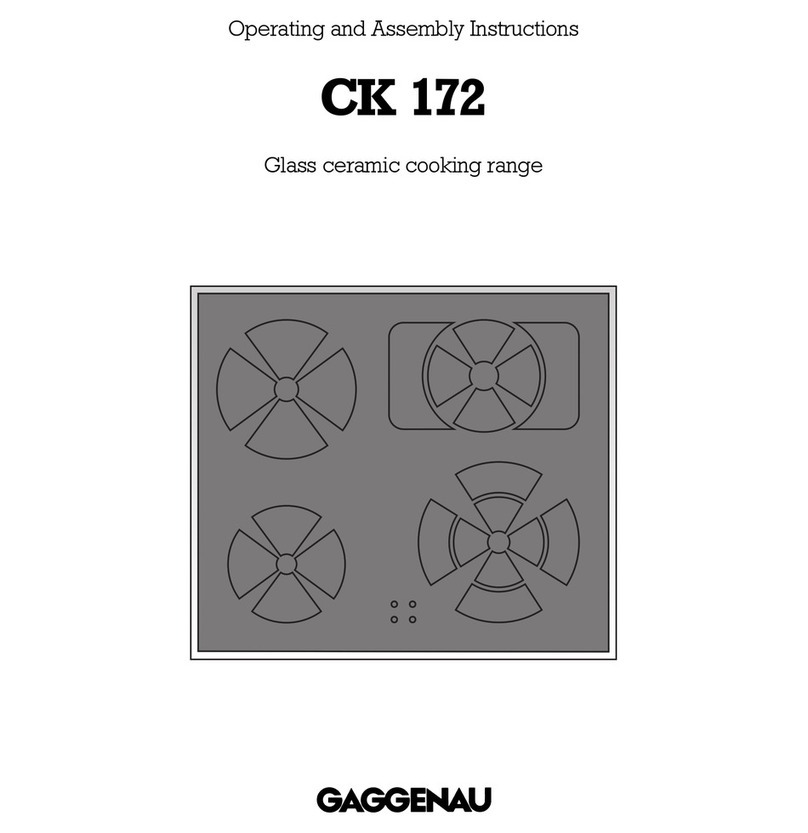
Gaggenau CK 172 Product guide

Gaggenau

Gaggenau CK 172 Product guide

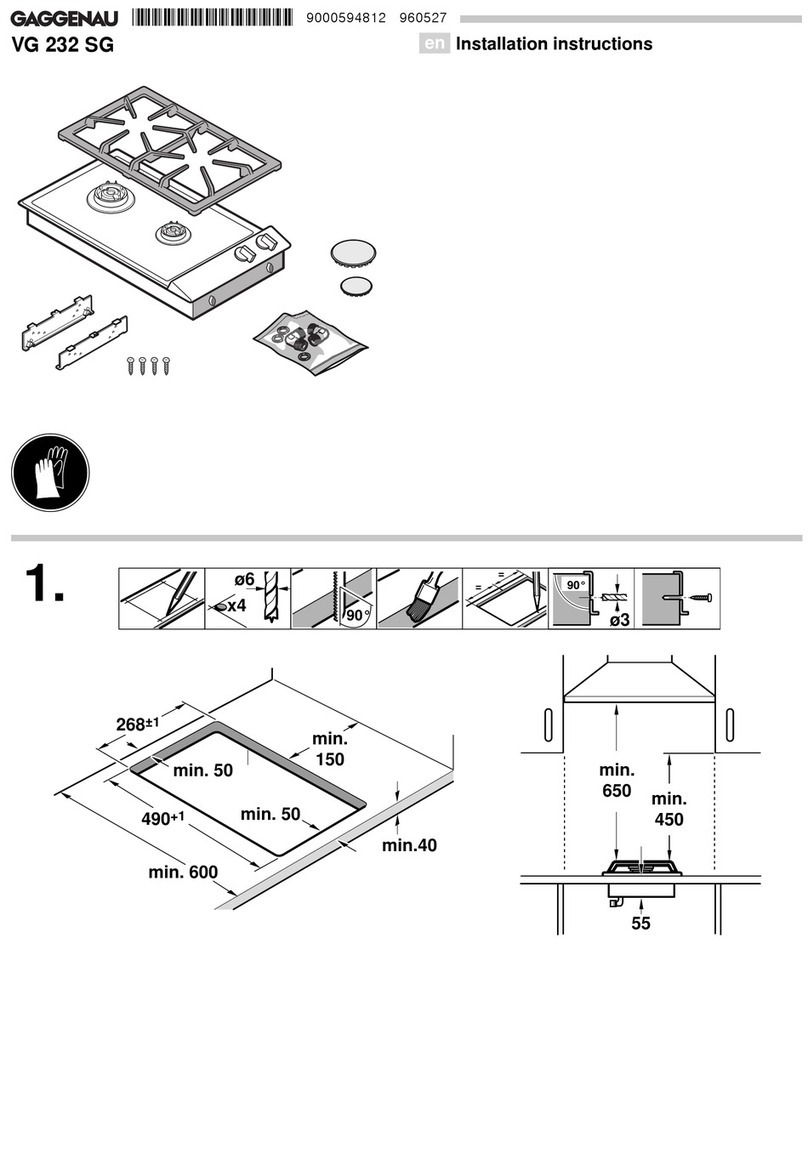
Gaggenau VG 232 SG User manual

Gaggenau

Gaggenau VG 232 SG User manual

Gaggenau CK 596-615 User manual

Gaggenau

Gaggenau CK 596-615 User manual

Gaggenau VG295150F User manual

Gaggenau

Gaggenau VG295150F User manual

Gaggenau CK 171-614 User manual

Gaggenau

Gaggenau CK 171-614 User manual

Gaggenau CK 236 User manual

Gaggenau

Gaggenau CK 236 User manual

Popular Range manuals by other brands

Maytag MGR5875QDW - 30 Inch Gas Range Use and care guide

Maytag

Maytag MGR5875QDW - 30 Inch Gas Range Use and care guide

Frigidaire FFGF3024SS use & care

Frigidaire

Frigidaire FFGF3024SS use & care

Capital Precision Series GCR484W Specifications

Capital

Capital Precision Series GCR484W Specifications

Officine Gullo GGS8P Installation and use instruction

Officine Gullo

Officine Gullo GGS8P Installation and use instruction

LG LSD4913 Series owner's manual

LG

LG LSD4913 Series owner's manual

Kenmore 4101 - Elite 30 in. Slide-In Electric Range installation instructions

Kenmore

Kenmore 4101 - Elite 30 in. Slide-In Electric Range installation instructions

Moffat Blue Seal Evolution G576 Technical data sheet

Moffat

Moffat Blue Seal Evolution G576 Technical data sheet

CornuFé C1NF user guide

CornuFé

CornuFé C1NF user guide

GE JGS650SEFSS Dimensions and installation information

GE

GE JGS650SEFSS Dimensions and installation information

LG LDG3015ST Manual De Propietario

LG

LG LDG3015ST Manual De Propietario

Whirlpool RF350PXP Use and care guide

Whirlpool

Whirlpool RF350PXP Use and care guide

Samsung FCQ321HTUW Service manual

Samsung

Samsung FCQ321HTUW Service manual

Kenmore 790.45712 Use & care guide

Kenmore

Kenmore 790.45712 Use & care guide

Wolf CHR CHSSR owner's manual

Wolf

Wolf CHR CHSSR owner's manual

Smeg Built-in Microwave Oven Instructions for the user

Smeg

Smeg Built-in Microwave Oven Instructions for the user

Zanussi ZCG054G user manual

Zanussi

Zanussi ZCG054G user manual

GE JCSS630 quick start guide

GE

GE JCSS630 quick start guide

Samsung NX58M9960P series installation manual

Samsung

Samsung NX58M9960P series installation manual

manuals.online logo
manuals.online logoBrands
  • About & Mission
  • Contact us
  • Privacy Policy
  • Terms and Conditions

Copyright 2025 Manuals.Online. All Rights Reserved.

0
1 9
37
0
1 9
37
Operating and Assembly Instructions
VC 230-912
Glass ceramic cooking range
VC 230-912
1
Preface
1. Important notes Page 3 - 4
1.1 For your safety Page 3
1.2 Operating for the first time Page 4
1.3 About use Page 4
2. Structure and operating principle Page
2.1 Structure Page
2.2 Special accessories Page
2.3 Operating principle Page
2.4 Energy saving tips Page
3. Operation Page 6 - 7
3.1 Switching on / off Page 6
3.2 Operating with the combination function Page 7
4. Cleaning and care Page 8
5. Maintenance Page 8
6. Assem ly instructions Page 9 - 11
6.1 Technical data Page 9
6.2 Important notes on installation Page 10
6.3 Installation and removal Page 11
2
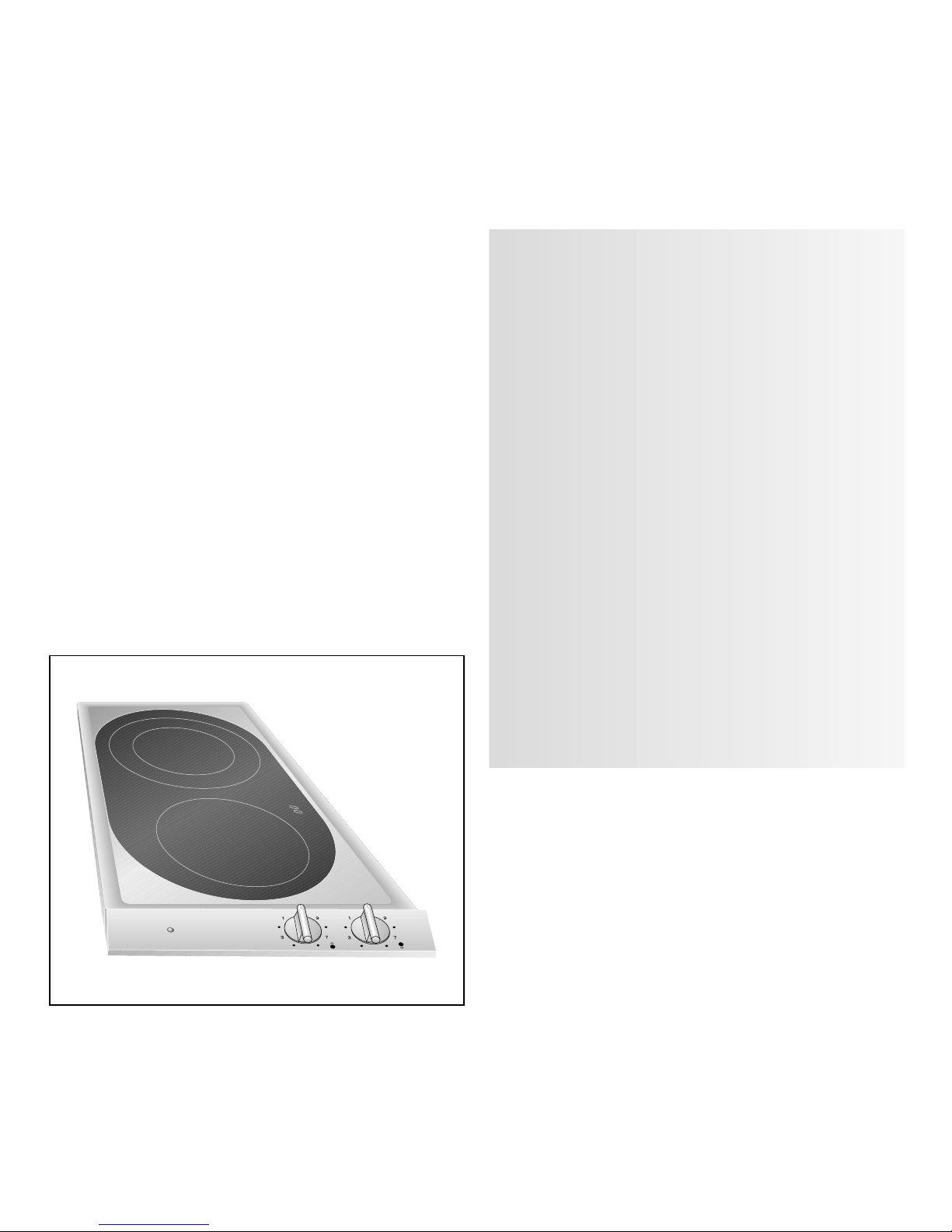
Preface
Fig. 1
Cooking with your new glass-ceramic cooker
will e even more fun than efore.
The appliance offers you the following
advantages
– The cooker features SuperQuick cooking zones.
– Thanks to the novel installation method
implemented, installation is child's play!
To ensure that you will be able to use this appli-
ance in all its diversity, read through the operating
and assembly instructions conscientiously efore
operating it for the first time. The instructions
contain important notes on use,installation
and maintenance of the appliance.
On the following pages you will find important
notes on safety and operation. These will serve
to ensure your personal safety and the lasting
value of your appliance.
You will find notes on Page 4 that you ought to
observe efore operating the appliance for the
first time.
The chapter entitled “Cleaning and care" will
make sure that your appliance will stay operable
and beautiful for a long time.
And now we wish you lots of fun cooking.
3
1.1 For your safety
You must not operate the appliance if it is
damaged.
The appliance must only be connected by an
authorised specialist, paying attention to the
relevant regulations of the power supply companies
and the regional construction regulations.
O serve the assem ly instructions!
When connecting electrical appliances and
devices in the proximity of cooking surfaces and
ovens, make sure that connecting cables do not
become jammed under the hot oven door or come
into contact with hot cooking surfaces.
As the user, you yourself are responsible for
maintenance and proper use in the household.
Only ever operate the appliance under
supervision.
Observe caution with oils and fats. Overheated oils
and fats can easily cause fires.
Important: the appliance heats up during
operation. Keep children away.
Do not operate the hotplates without pots and
pans placed on them.
Note: to avoid jeopardising the electrical safety of
the appliance, it is for idden to use high-pressure
or steam jet cleaning devices.
Isolate the appliance from the mains during every
maintenance operation. To do this, remove the
mains plug or actuate the corresponding fuse.
Repairs must be carried out by authorised
specialists, thus ensuring electrical safety.
No warranty claims can be lodged for any
damage resulting from failure to observe these
instructions.
Do not store any su stances that are sensitive
to high temperatures, or which pose a fire hazard
(e.g. cleaning agents or spray cans), in drawers or
cupboards under the appliance.
Note:
If you have fitted the appliance cover VD 201-010
(special accessory) on the appliance, it must not be
closed until the appliance has cooled down
completely. Do not operate the appliance with the
cover closed! Heat development may damage the
appliance and the cover. Do not use the appliance
cover as a surface for placing objects or for
keeping things warm.
Technical modifications reserved.
1. Important notes
VC 230 can be combined with the entire range of
appliances in the Vario series.
1.2 Operating for the first time
Before operating the appliance for the first time,
please pay attention to the following notes:
– The appliance must be installed and connected
by a specialist before it is operated for the first
time.
– If an earthing-pin plug is fitted on the
appliance, it must be connected to a socket
outlet with earthing contact that conforms to
regulations.
– The rating plate for this appliance is included
with the instructions on a separate sheet. Store
the rating plate in the same location as your
operating and assembly instructions.
–Conscientiously read through the operating and
assembly instructions before operating the
appliance for the first time.
–Remove the packaging from the appliance and
dispose of it properly.
Pay attention to the fact that there are accessories
in the base of the packaging.
Keep packaging elements out of the reach of
children.
–Thoroughly clean the appliance and
accessories before using them for the first time.
This will eliminate any 'newness' smells and
soiling (see chapter entitled Cleaning and care).
–Tip: you are advised to have the new appliance
added to any existing glass insurance.
– Operation of the appliance must be
discontinued immediately if improper use
produces cracks, breaks or flaws on the cooking
surface, with the result that live parts can come
into contact directly or indirectly with seeping
liquid or if there is a risk of injury. Remove the
mains plug or actuate the corresponding mains
fuses. Inform your after-sales service.
–Before operating the appliance for the first time,
check that the mains connection is in proper
working order.
1.3 A out use
–The appliance is intended solely for use in the
household and must not be put to any other uses.
– Use the appliance to prepare meals only. It must
not be used to heat up the room in which it is
installed.
– The glass-ceramic hob must not e used as a
storage surface.
– Place a cooking vessel on the corresponding
hotplate efore operating it. Do not remove the
cooking vessel until you have switched off the
hotplate. The size of pots and pans should
correspond to the size of the hotplate. This will
save you energy and time.
–O serve caution with oils and fats. They may
overheat and burn easily.
–After use, turn all control knobs to 0.
– In the event of malfunctions, first of all check the
household fuses. If the problem has nothing to
do with the power supply, please contact your
specialist dealer or your local Gaggenau after-
sales service.
– A built-in temperature protection facility
prevents overheating of the appliance.
– Use of aluminium kitchenware or stainless steel
kitchenware with aluminium bases may produce
mother of pearl-coloured stains on your cooker.
These will not have a detrimental effect on
functioning of the cooking surface, though.
The appliance is not suitable for preparing
foodstuffs in aluminium foil or in plastic vessels.
– Use the residual heat to warm up meals, for
example. This will save you energy.
– Remove any spilt food before opening the cover
of the appliance.
–The appliance cover must not be closed after
use until the appliance has cooled down.
4

2.1 Structure
2.2 Special accessories
2.3 Operating principle
2.4 Energy saving tips
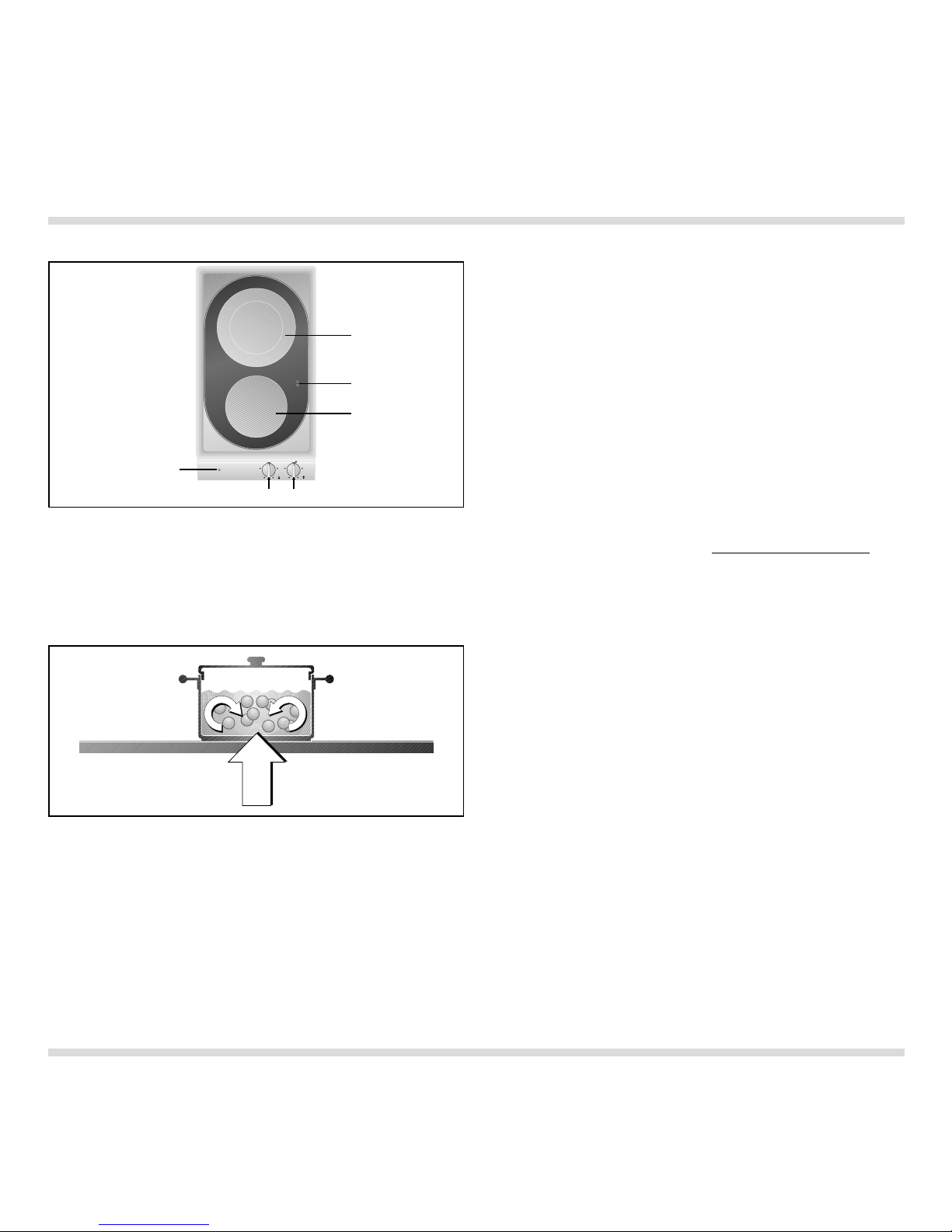
1Pilot light
2Control knob for front cooking zone
3Control knob for rear cooking zone
4SuperQuick cooking zone Ø 140 mm (1200 W)
5Residual heat display
6SuperQuick cooking zone Ø 120/180 mm
(700/1800 W)
You can order the following special accessories
– VV 200-000: connecting trim
– VD 201-010: appliance cover
The glass-ceramic cooker features SuperQuick
cooking zones. These cooking zones possess
good heat distribution properties and light up red
while they are heating up. The cooking zones are
controlled electrically and are switched on and off
during operation.
– Always cook with the lid on. This considerably
shortens the time needed for cooking.
– Pay attention to the right size when choosing pots
and pans. The diameters of pots and pans should
correspond to that of the hotplate.
– Kitchenware should consist of suitable material.
Remember that high-quality ktchenware will help
to minimise energy consumption.
– Depending on the experience you have gathered,
you can switch off the cooking surface at an earlier
time. You can make use of residual heat in this way.
2. Structure and operating principle
Fig. 3
0
1 9
37
0
1 9
37
Fig. 2
4
32
1
5
6
6
3.1 Switching on/off
Switching on
Switching off
Individual residual heat display
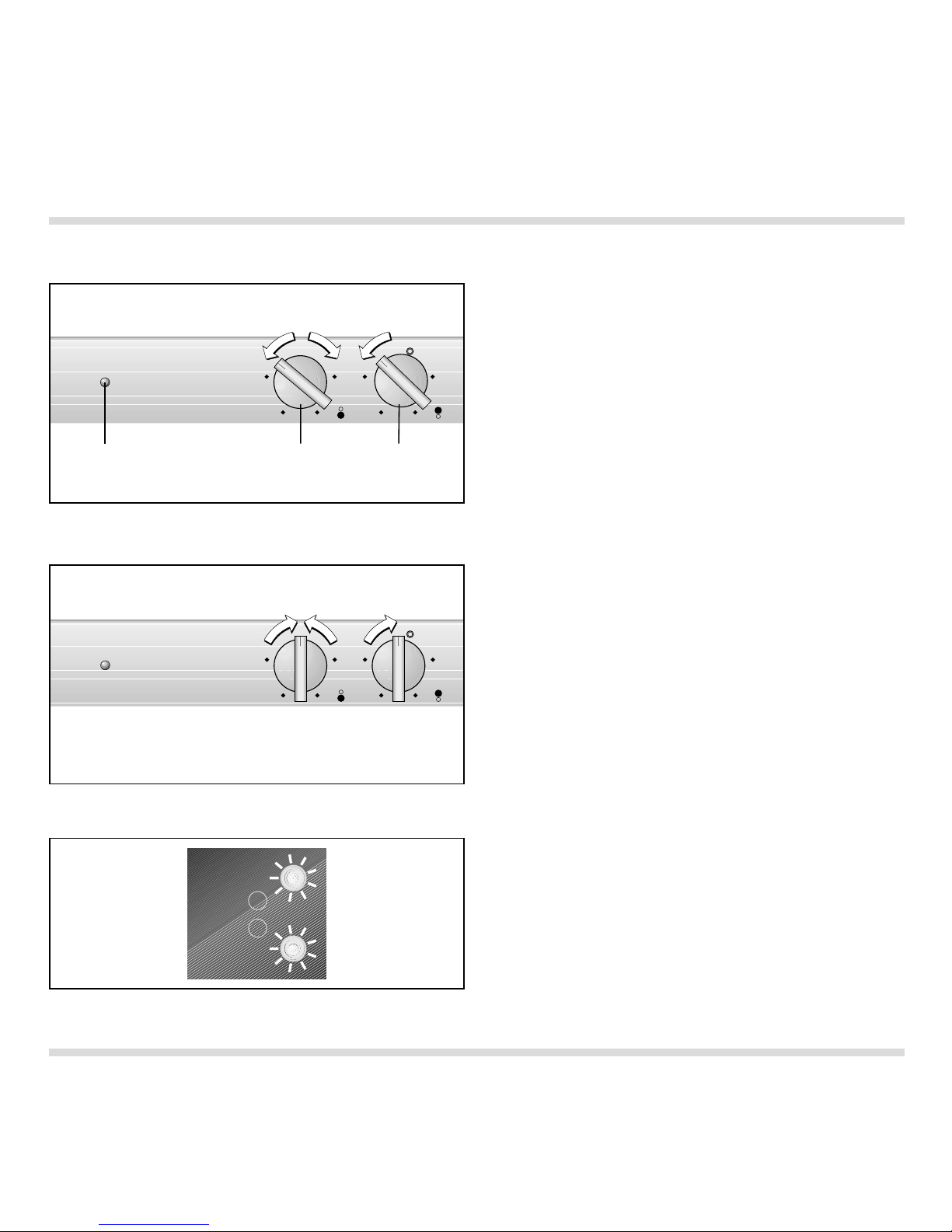
Switching on:
Front cooking zone
Turn control knob 2 to the left or right to the
required cooking level (1-9). (Fig. 4)
Rear cooking zone
Turn control knob 3 to the left to the required
cooking level (1-9). (Fig. 4)
The power is set continuously varia ly.
Note: the pilot light 1lights up as soon as a cooking
level has been set.
A few seconds after switching on, the individual
residual heat display (red dot) indicating the
chosen cooking zone lights up in the residual heat
display panel.
Switching off:
Turn the control knob to the 0 position (Fig. ).
Note:
Control knob 3(with combination function) cannot
be switched from the combination position directly
to the 0 position.
The glass-ceramic cooker additionally features
an individual residual heat display. It lights up
in the residual heat display panel as a red dot for
each cooking zone.
3. Operation
0
19
37
0
19
37
0
19
37
0
19
37
Fig. 4
Fig.
21 3
Fig. 6
3.2 Operating with the com ination
function
Switching on the com ination function
– Turn control knob 3(rear cooking zone) to the
left to the (Combination) position on the left
and then to the cooking level you require.
Switching off com ination:
– Turn control knob 3 to the 0 position. The combi-
nation and the corresponding cooking area are
now off.
You must switch on the cooking area again if you
wish to continue using it.
It is not possible to turn the control knob from the
combination position directly to the 0 position.
Settings ta le
0OFF
1Keeping warm
2Melting, soaking
3Thawing, warming up
4Cooking, Continued cooking
5Steaming, stewing
6Stewing
7Baking and gentle roasting
8Roasting
9Deep frying, bringing to the boil
Only switch to the highest cooking level for
bringing to the boil and browning. Then always
switch back to the lower cooking level.
7
The values in the settings table serve only as a
guide because heat levels required will depend
on the nature and condition of the food and on
the size and fillings of pots and pans used.
0
19
37
0
19
37
3
Fig. 7
Please thoroughly clean the appliance before
operating it for the first time and after every use.
Use a moist cloth and light soapy solution. Wipe dry
with a dry, soft cloth.
This glass-ceramic cooker does not have
any edges that might make cleaning difficult by
accumulating dirt. Please pay attention to the fact
that the edges of the appliance are sensitive to
impact.
The cooker's control panel must only be cleaned
using a soft, dry cloth and light soapy solution. Do
not use any commercially available stainless steel
cleaners as these may be aggressive to the printed
markings.
Do not use any a rasive sponges either. Use
commercially available window cleaner and apply it
to a soft, moist cloth.
Please refer to the enclosed brochure for further
notes on cleaning.
Use a commercially available stainless steel and
cooker cleaner for cleaning.
Remove aked-in food remainders and coarse
dirt with our small scraper (nr.: 087670).
Clean the cooking surface regularly with the
Gaggenau cooker cleaner (nr.: 098690).
Note: to avoid jeopardising the electrical safety of
the appliance, it is for idden to use high-pressure
or steam jet cleaning devices.
In the event of malfunction, first check your
household fuses. If the power supply is in proper
working order, but the appliance is still not
functioning, please inform your specialist
dealer or your nearest Gaggenau after-sales
service. Specify the appliance type (see rating
plate).
Repairs must be carried out by authorised
specialists, thus ensuring electrical safety.
Repairs must only be carried out by authorised
specialists, thus ensuring that the appliance
remains safe. Improper tampering will render
warranty claims null and void.
8
4. Cleaning and care
. Maintenance
Isolate the appliance from the mains before all
repairs.
9
6.1 Technical data
Pay attention to the "Important notes" (Chapter 1).
The appliance must only be installed by an
authorised specialist, paying attention to the
relevant regulations of the power supply companies
and the regional construction regulations.
The installing technician is responsible for
perfect functioning of the appliance at its
installation location. The operation principle must
be explained to the user with reference to the
operating instructions. He must draw the user's
attention as to how to isolate the appliance from
the mains whenever necessary.
This cooker corresponds to heat class Y and must
be installed in a cabinet as detailed in the sketch
(Fig. 8).
When establishing the electrical connections,
make sure that connecting leads cannot come into
contact with hot parts of the cooking surface.
Protection against shock hazards must be ensured
after installation!
Pay attention to the data on the rating plate and
connect the PE conductor. Connect the connecting
cable to the mains. The appliance can be
connected with an earthing-pin plug or it can be
connected permanently.
Shock hazard protection from below must be
ensured after installation, e.g. by the installation of
an intermediate shelf that can only be removed
using tools.
If all poles of the appliances cannot be isolated
from the mains by removing an accessible plug (of
a permanent connecting lead), an isolating device
with a contact gap of at least 3 mm must be
installed (e.g. domestic fuse).
Damages caused by failure to observe these
installation instructions cannot be recognised.
There should be a distance of at least 20 mm
between the edge of the appliance and
combustible walls or furniture items.
The distance between the intermediate shelf and
the worktop in which the range is recessed must be
at least 70 mm.
There should be a distance of at least 20 mm from
the bottom edge of the housing trough and the next
combustible item of furniture.
If installed at an offset above a base cupboard or
if several appliances from the Vario series are
installed adjacently, the housing can lie on the side
walls of the cupboard.
Note: please note that a distance of 10 mm from
the cupboard side walls must be observed for
safety reasons.
This appliance may be installed in kitchen
combinations made of wood or similar combustible
materials without taking additional measures.
Note: do not stick the cooking surface onto the
worktop with silicone!
6. Assembly instructions