Maintenance and Servicing
The Banshee IS28 MK6 AWD needs no adjustment, providing the environment it operates in has not
changed. Any such change may mean adjustment to volume control.
The sounder needs no servicing beyond avoiding the removal of any obstruction to the sound outlet
“nose”. All debris should be removed as soon as possible to avoid loss of sound output.
Water should be allowed to drain from the nose area. The sounder should not been mounted on a
horizontal surface facing up. Any other debris should be gently blown from the nose using low pressure (2
to 5 psi) air. High pressure, (shop) air, may result in debris getting into ‘eyes’ or ‘ears’ etc. of service
personnel, and must not be used for this purpose.
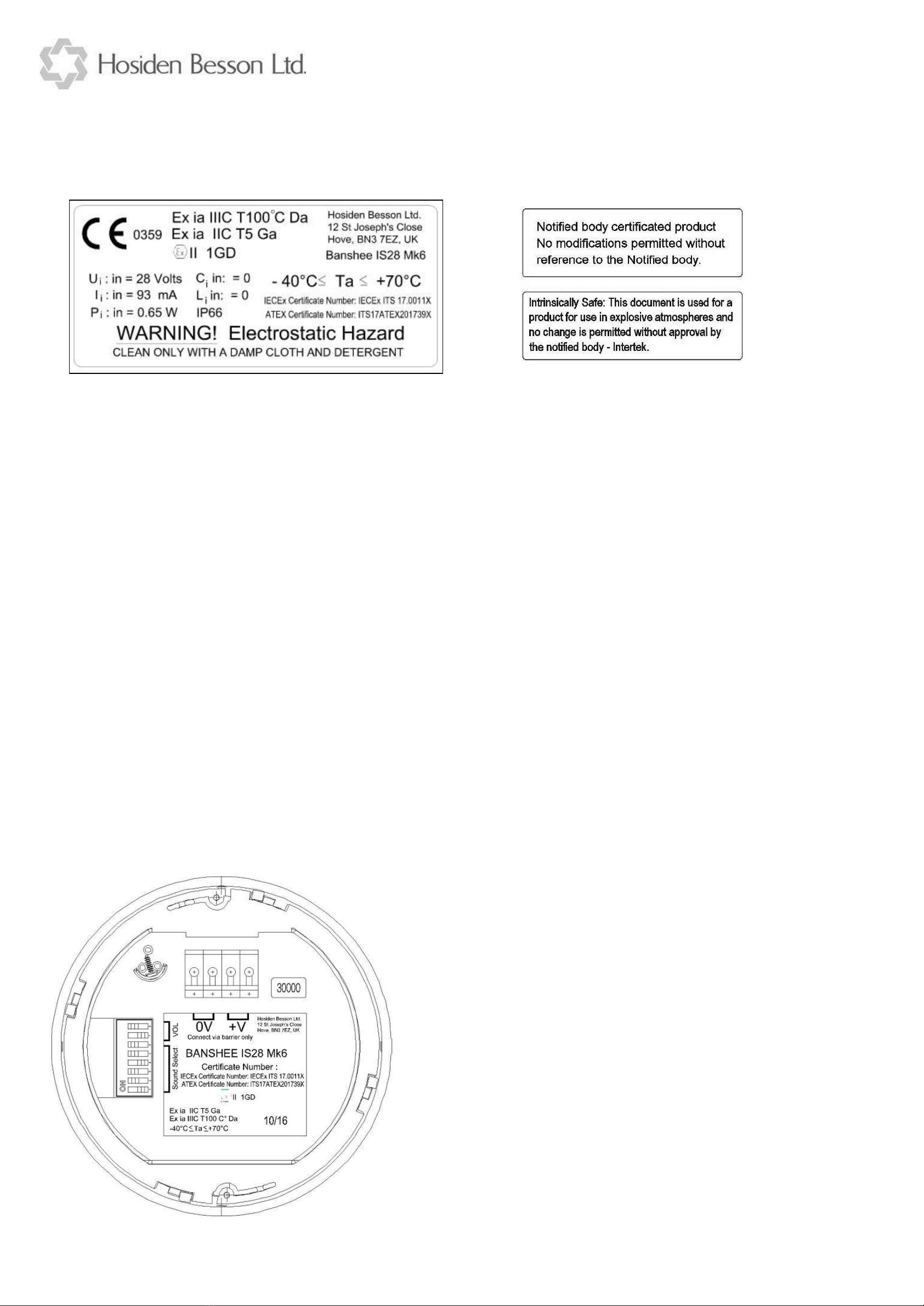
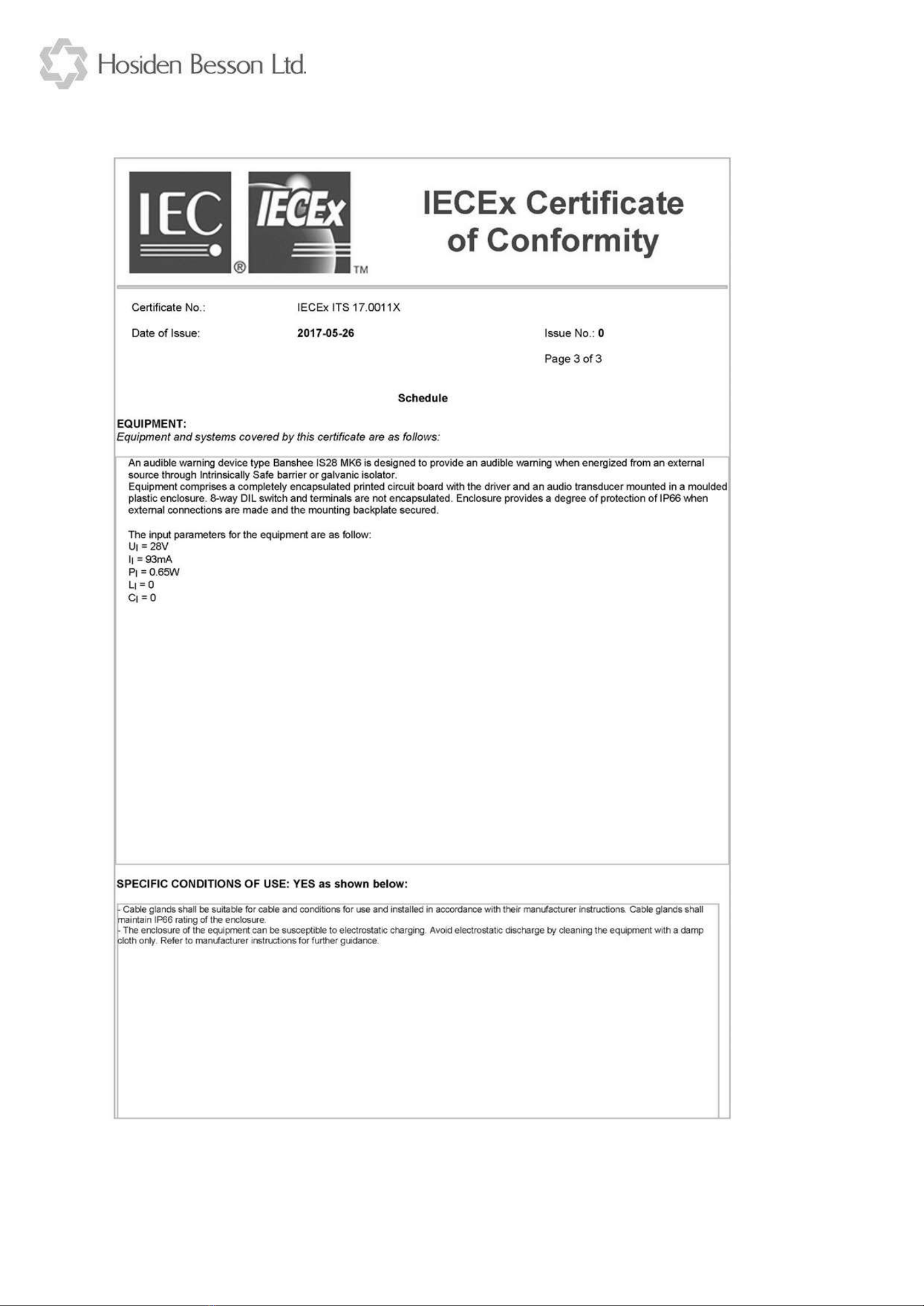
A warning notice on the sounder allows for cleaning of the apparatus, only with a damp cloth, to avoid
any electrostatic hazard from the plastics housings.
No hydro-carbon based solvents should be used as these will cause a chemical reaction with the (ABS)
plastics mouldings, as will any other substance with similar composition.
If the Banshee IS28 MK6 sounder fails to function, there are no user parts to change, the complete product
must be removed from its installation and a replacement sounder obtained and fitted.
Other Notes and warnings
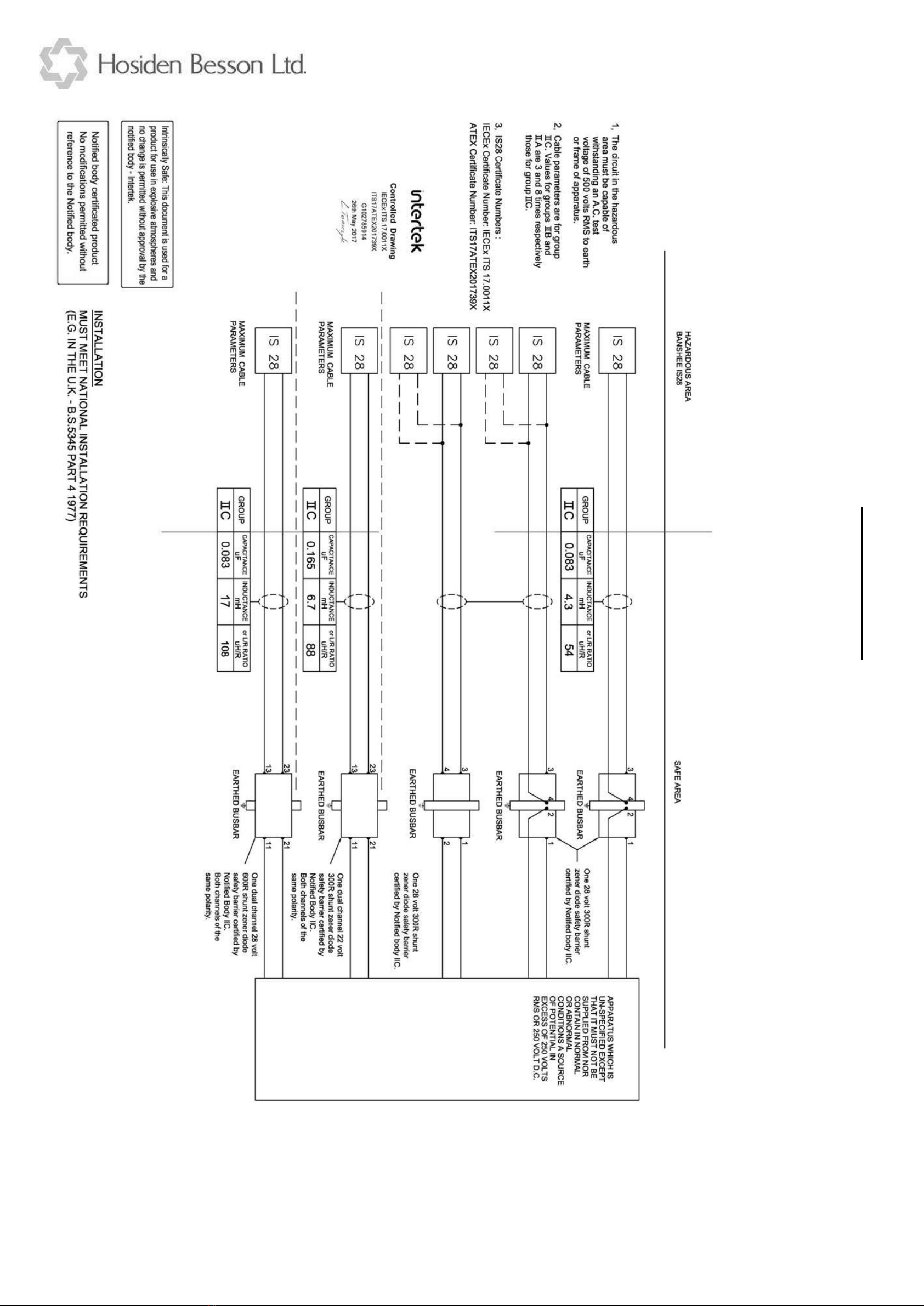
This product is intended for use ONLY with Zener barrier, or similar intrinsic safety protection power
supply device. It is NOT intend for direct connection to “24 volt” fire alarm panels, as the supply voltage
will be too high for safe operation. Also the fire panel is unlikely to be approved for this type of operation.
Simple zener barriers are not suitable for operation from “24 volt” fire alarm panels (as the float charge
voltage can exceed 27 volts dc, which is beyond the maximum rating of this type of barriers).
Some “dc/dc galvanically isolated barriers” may accept input voltages beyond 30 volts dc, and could be
safe to use with the Banshee IS28 MK6. Consult the barrier manufacture for further clarification.
Note however, that these cannot generally be used in “Alarm line monitoring” applications as even if they
support input polarity reversal, they will still require some current to function, when in the line monitor
mode, and this would be seen by the fire alarm panel as a leakage or short circuit condition.