8
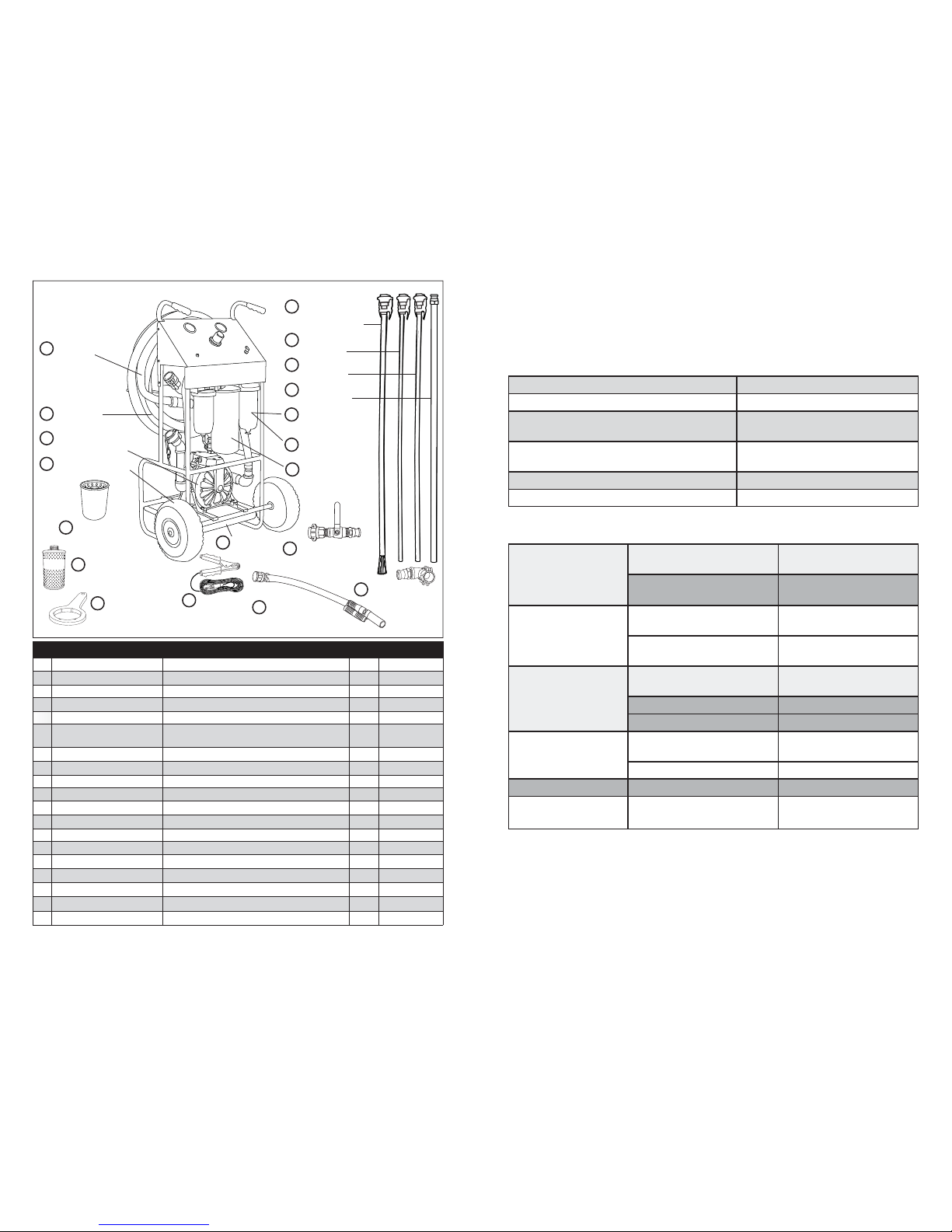
OPTIONAL FILTERS
(A) #FIL00003 30-Micron Particulate-Blocking Filter
(A) #FIL00010 10-Micron Water-Blocking Filter
(A) #FIL-02WB 2-Micron Water-Blocking Filter
(A) #FIL-02PT 2-Micron Particulate-Blocking Filter
(B) #FIL00001A 17-Micron Water-Blocking Filter
(C) #FIL00004 381-Micron Wire Mesh Filter
(C) #FIL00013 178-Micron Wire Mesh Filter
NOTE: Each unit includes one extra filter for each option available to that unit.
Additional quantities are available.
ACCESS WANDS
The #9046 Pneumatic Tank Sweeper®series offers four wands for input and output
depending on the unit. See below for a description of each wand.
1. 5' Long x 1" Dia. Rigid Wand: Should be used on the input side for accessing
55-gallon drums and other stationary tanks.
2. 5' Long x ¾" Dia. Flex Wand: Can be used on either input or output side.
3. 5' Long x ½" Dia. Flex Wand: Only used on the output side to avoid restricting
flow to the pump. The ½" wand is traditionally used for blasting the inside of tank
walls with a higher pressure.
4. 5' Long x ¾" Dia. Flex Wand w/ Flow-Through Brush: The flow-through brush is
removable and should only be used with extreme caution to avoid losing the brush
inside a fuel tank. Be sure to securely tighten the brush to the wand before use.
(Comes with #9046F and #9046FH only. Available separately for #9046H.)
ABC
CHANGING FILTERS
1. If output flow stops while pump is still active, the filters may be clogged. Verify
the filters are clogged by disconnecting the air supply and observing OUTPUT/
FILTER PRESSURE Gauge. If the filters are clogged, the gauge will continue
displaying a high-pressure reading.
2. Prior to changing filters, be sure the drain pan is in place. Dissipate any remaining
pressure in the system by opening the petcock at the base of the clear filter housing and
Valves 2 and 3.
Valve 2
Valve 1
Valve 3
5
MUST READ BEFORE USE
This diaphragm pump is meant for use with liquids only. DO NOT suck up leaves,
gravel or other solids. Doing so will void the warranty.
SUMMARY
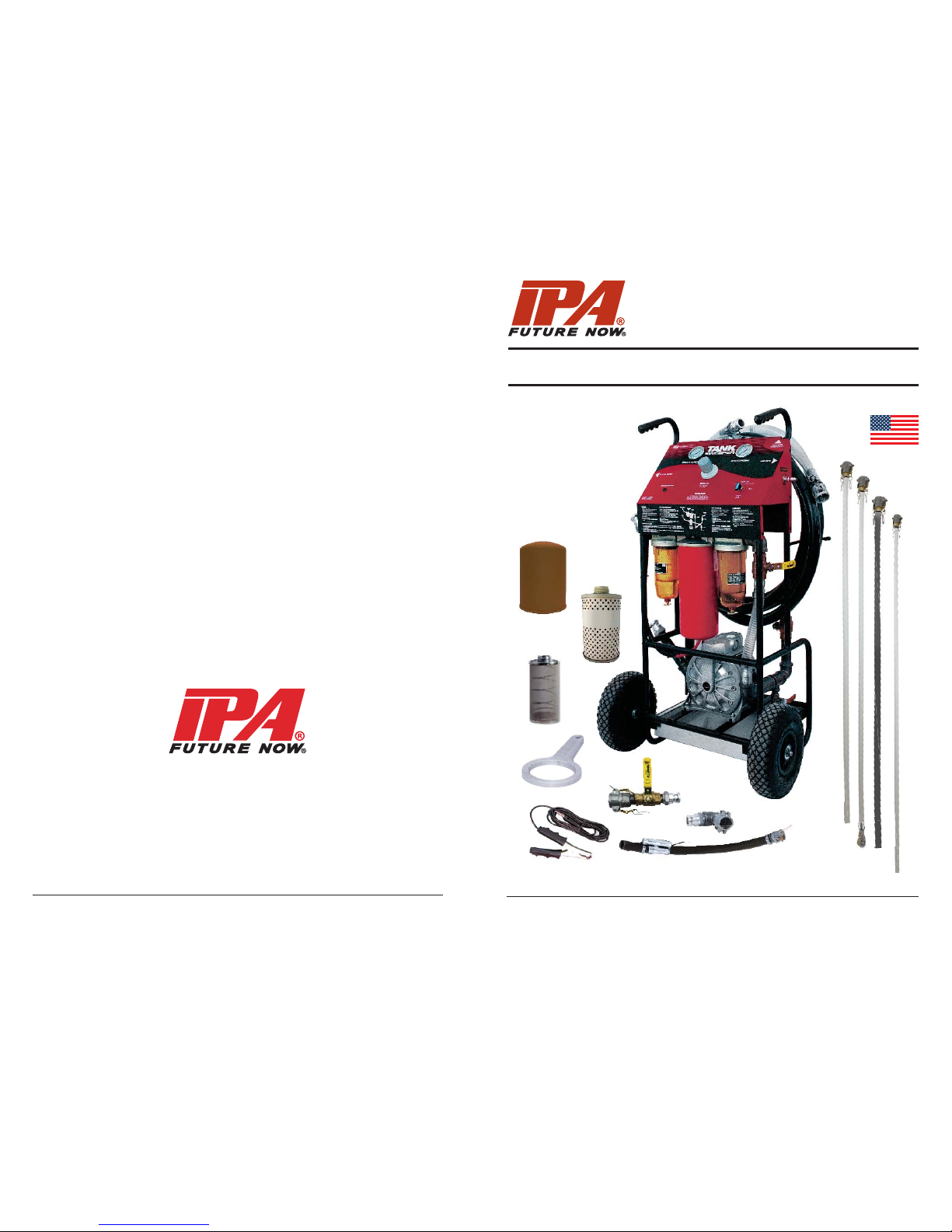
The Pneumatic Tank Sweeper®is a portable system designed for recovering and
salvaging hydraulic/diesel fuel and oil. This system is offered in three model types:
#9046F - for filtering diesel and fuel oil, #9046H - for filtering hydraulic oil, and
#9046FH - for filtering diesel fuel, fuel oil and hydraulic oil. Specific options such as
filters, wands and adapters are included for each model type. Each model utilizes
diverter valves, which allow the user to bulk transfer without filtering for removing
contaminants from the bottom of the tank where the majority of the sludge, water
and debris settle. It also transfers through the filters for the purpose of polishing
the fuel/oil, which is typically performed as a scheduled preventative maintenance
procedure. The provided input and output wands are specifically built for these
applications.
SET-UP INSTRUCTIONS
1: ASSESSING THE CONDITION OF THE FUEL/OIL
It is recommended that you visit the site 48 hours before tank sweeping to prepare
the tank and assess the site condition. Using the optional IPA®#9042 Sample Stick,
insert the tool all the way down to the bottom of the tank you are cleaning. Draw the
piston shaft up enough to get a good sample of the fuel (approximately 12"). Remove
the Sample Stick and note the amount of water and crud at the bottom of the tank.
It is recommended that you transfer the sample into a glass jar and allow the various
contaminants to settle and separate for 24 hours. This will give you an idea of the
fuel condition inside the tank and the amount/type of the contaminated fuel.
2: KILLING MICROBIAL GROWTH
Add an algae biocleaner or equivalent to the tank in appropriate amounts. Using the
Sample Stick, stir the tank briskly to mix the algae cleaner into the oil. After 48 hours,
the algae should be killed off and the tank is now ready for sweeping. If convenient
and safe, you may use a small jack to elevate the tank a few degrees on one side to
allow the majority of contaminates to collect on one end of the tank. This is the end
you will choose to sweep.
3: REMOVING SLUDGE AND DEBRIS FROM BOTTOM OF TANK
WARNING: Do NOT hook up air to cart until set-up is complete!
1. Set up your Tank Sweeper®near the tank to be cleaned, allowing enough room
for the input hose to reach the tank.
2. Install the output hose to the bulk/unfiltered output quick-disconnect fitting
located on the side of the Tank Sweeper®.
3. Attach the output wand to the other end of the hose and insert into a 55-gallon
drum (Note: Use a clean and leak-free 55-gallon drum).
4. Connect the desired wand to the input hose via couplers.
WARNING: Be sure to use the locking pins on all the quick-disconnect
fittings so that the locking levers do not vibrate loose.
5. Insert the wand all the way down to the bottom of the oil/fuel tank you are cleaning.