POSITIONING
•Place the appliance in a dry, well ventilated room.
WARNING! The appliance should not be operated in an unheated
room or porch. Place the appliance away from heat sources such as
kitchen stove/oven, radiators, or direct sunlight.
WARNING! The appliance must not touch any pipes for
heating, gas or water supply, or any other electrical
devices.
Do not cover the ventilation hole at the top of the appliance – it mu t be
a good air circulation around the appliance. There hould be a gap of at
lea t 10 cm between the top of the appliance body and any furniture that
may be above it. If thi requirement i not
followed, the appliance con ume more
electrical energy and it compre or may
overheat.
•If the appliance i placed in a corner, a gap
of at lea t 60 mm mu t be left between the
appliance body and the wall ( ee fig.)
•The appliance mu t tand on a level
urface and mu t not touch the wall. If
nece ary, regulate the height of the
appliance by adju ting the levelling feet: by
turning them clockwi e – the front of the
appliance ri e , by turning them counter
clockwi e – it come down. If the appliance i tilted lightly
backward – the door will clo e by them elve .
TEMPERATURE REGULATION
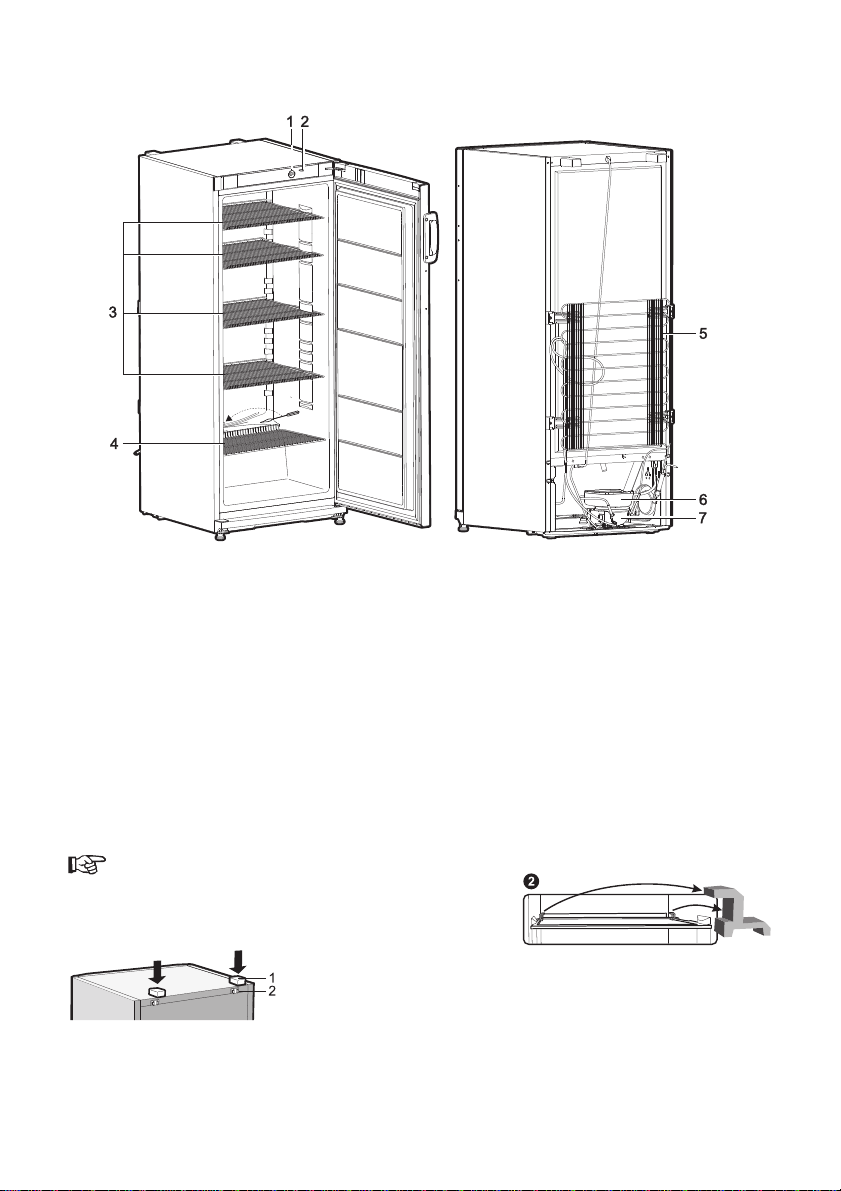
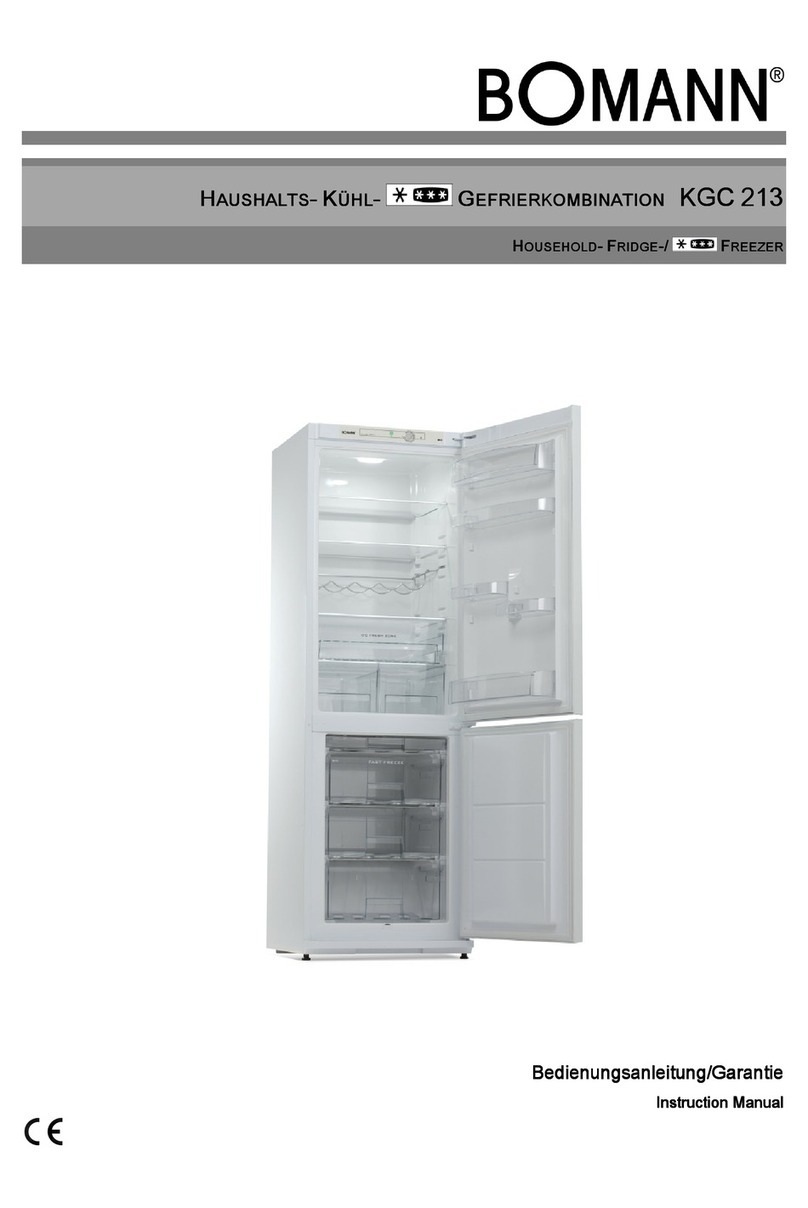
The temperature in the refrigerator compartment i controlled u ing the thermo tat knob 1 (fig. 1)
by turning it to one ide or the other. The temperature indication in digit i hown be ide the
thermo tat knob. The temperature i regulated on the cale:
0 = Compre or i witched off. WARNING! Electric current is n t switched ff.
1 = highe t temperature (lowe t cooling)
7 = lowe t temperature (highe t cooling)
If food product in the refrigerator compartment are too cold, et the thermo tat knob to 1, 2 or
3. If food product in the refrigerator compartment are not being chilled ufficiently, et the
thermo tat knob to 4 or 5 - 7.
Plea e et the de ired temperature in the appliance according to your own requirement !
THE TEMPERATURE IN THE REFRIGERATOR COMPARTMENT MAY VARY DEPENDING ON
AMBIENT TEMPERATURE, THE AMOUNT OF FOODSTUFFS, THE TEMPERATURE OF THE
FOODSTUFFS, AND HOW OFTEN THE APPLIANCE DOOR IS OPENED AND CLOSED.
Therefore we recommend:
•locate the appliance away from heat ource ,
•food placed in the appliance hould not be warmer than the room temperature,
•appliance door mu t not to be left open,
•the appliance door hould not be open longer than it i nece ary to take out or put in food tuff .
IF THE ROOM IS COOL, THE APPLIANCE COOLS LESS. THE TEMPERATURE IN THE APPLIANCE
MAY THEREFORE RISE. U e the thermo tat wheel to et a lower temperature.