Maintenance
1. General Notice
Maintain the refrigerator's cleanliness with regular upkeep. Always unplug before maintenance.
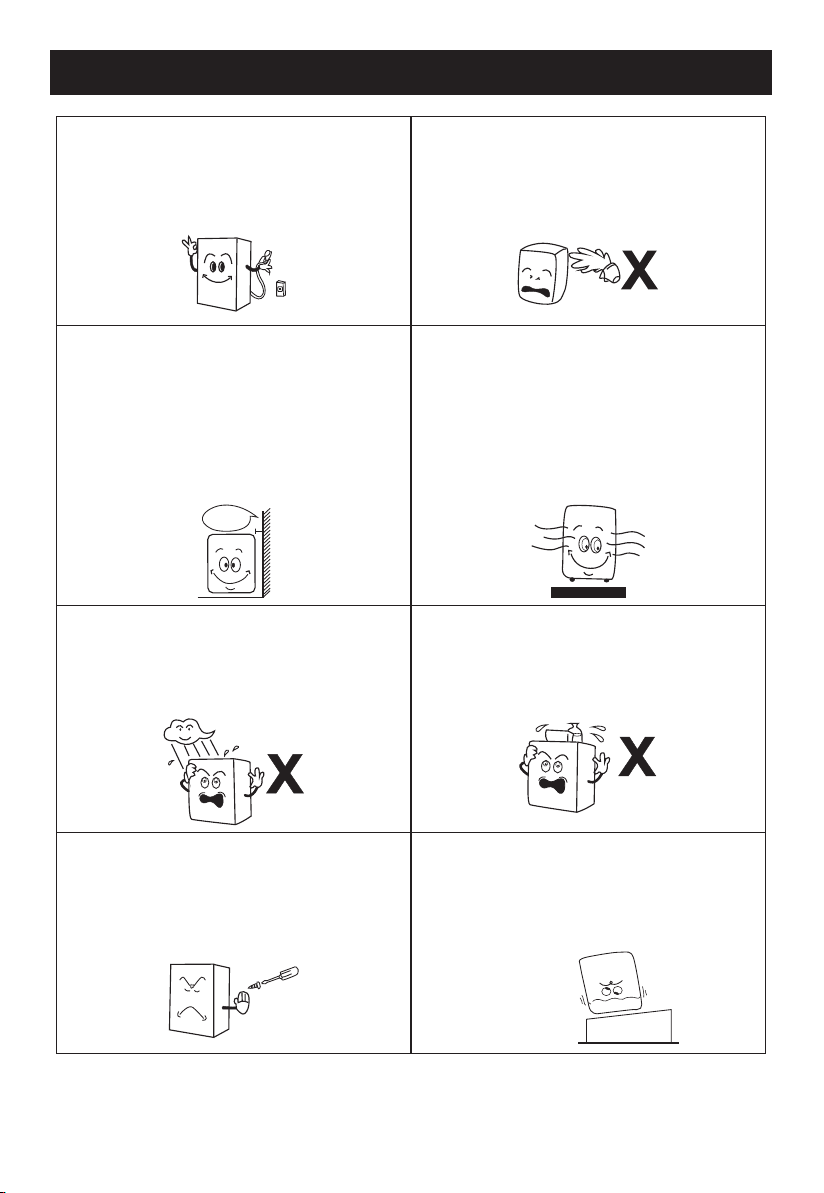
Avoid using a damaged plug or loose socket to prevent electric shocks or short circuits. Do not
clean the refrigerator with water, alkali detergent, soap, gasoline, acetone, or a brush.
2. Cleaning the Exterior
Use a soft cloth dipped in neutral detergent (like dish soap) to clean the refrigerator's exterior.
Follow up by wiping with a dry, soft cloth.
3. Cleaning the Interior
Remove the rack for water cleaning. Use a soft cloth to clean the interior of the refrigerator.
4. Extended Shutdown
If the refrigerator will be unused for a prolonged period, remove all food and unplug it from the
wall socket. Thoroughly clean the interior and exterior, leaving the door open to fully dry. As the
glass can break easily, ensure it is kept out of reach from children.
5. Replacing the Lamp
If the LED lamp is damaged, it must be replaced by the manufacturer or its service agent.
Troubleshooting
Note
Certain phenomena are normal and should not be considered as faults with your refrigerator:
▪A murmuring or gurgling sound may be heard when the refrigerator is running. This is normal as
it's simply the coolant circulating within the system.
▪In humid weather, condensation may form on the exterior of the refrigerator. This is also normal
and not a cause for concern. It occurs due to high humidity levels. Simply wipe it off with a cloth.
No Refrigeration
Describes a refrigerator that completely fails to
cool or maintain the desired temperature inside.
Unsatisfactory Refrigeration
Describes a refrigerator that is working but not
cooling to the expected or set temperature.
▪Check if the plug is properly inserted into the socket.
▪Verify if the fuse is intact.
▪Ensure there is power supply.
▪Check if the refrigerator is placed under direct sunlight or
near any heat source.
▪Ensure good ventilation in the surrounding area.
▪Verify if the door is properly closed or has been left open for a
long period.
▪Inspect the door seal strip for any deformity or damage.
▪Check if the refrigerator is overloaded or congested with food.
▪Ensure food items do not block the air suction or outlet.
▪Adjust the temperature controller as needed.
▪Check if the refrigerator is level.
▪Verify if the refrigerator is in contact with a wall or another object.
▪Check for any loose parts in the refrigerator.
Excessive Noise
6