Description of the amplifier
This stereo amplifier is a microprocessor controlled hybrid system with low frequency power
beam tetrodes in the output stage. The output tubes work in Class A/B ( Push-Pull Ultralinear
with output transformer ). Condition of vacuum tubes is fully regulated by auto-biased
circuitry, so no extra adjustment for power devices is necessary. The circuit works with low
feedback. The output stage is powered by solid-state driver also working in class A with power
MOSFET transistors. The amplifier has four identical stereo channels which are switched by
mechanical (reed) relays. Level of output signal is possible to regulate by a motorized ALPS
potentiometer. The amplifier is equipped with remote control. All electronic parts are carefully
selected and only the best quality components are used in the KR amplifiers.
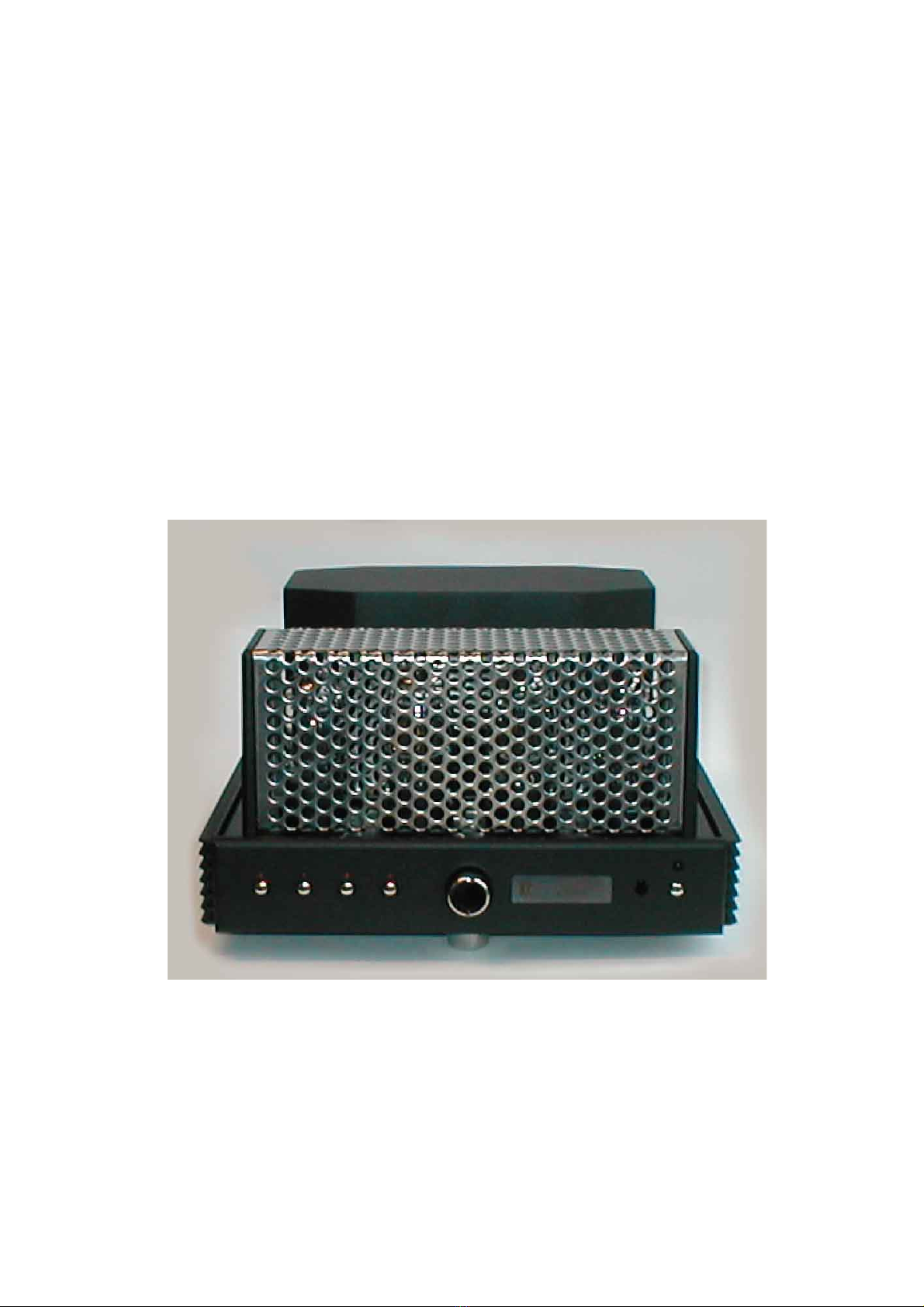
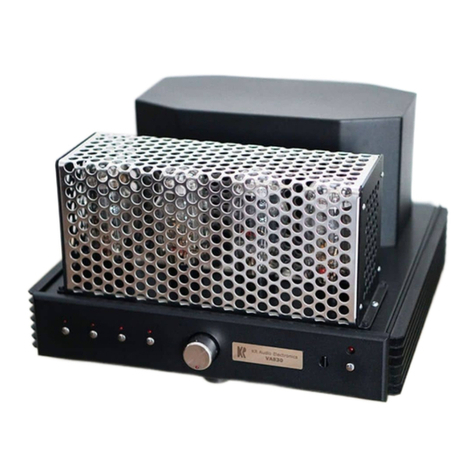
All high quality components used in KR amps are placed in black paited steel chassis. The
power supply cover, front panel and side plates are painted with a black composite material.
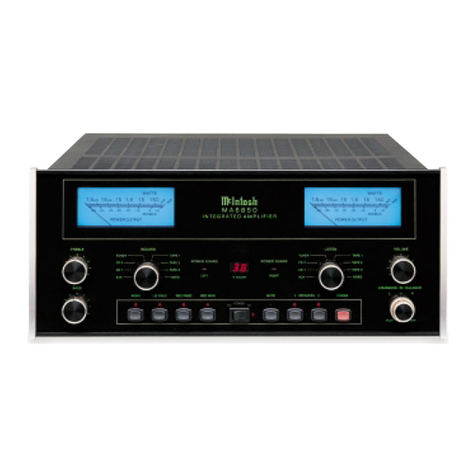
composite material. Power tubes are covered by mesh metal protector housing. On the front
panel there are four channel buttons with LED indicators, volume knob, IR-sensor for remote
control, standby switch and status LED light. On the rear panel, you can find mains switch,
mains socket with integrated fuse (standard PC type), mains voltage selectors, 4x2 RCA
(Cinch) input connectors, 2x2 speaker connectors and finally output load impedance selector
covered by a small metal deck which is fixed by a small screw.
Installing
•Take the amplifier out of the paper shipping crate and place it on a solid and massive base.
•Allow adequate air circulation to prevent internal heat buildup. We do not recommend
placing the amps on bookshelves or in closed cabinets.
•Do not place the unit on surfaces (rugs, blankets, etc.) or near materials (curtains, draperies)
that may block the ventilation slots.
•Do not install the unit near heat sources such as radiators or air ducts, or in places subject to
direct sunlight, excessive dust, mechanical vibration or shock.
•To prevent fire or shock hazard, do not expose the unit to rain or moisture.
•Under the top of the housing there is a damping paper to protect tubes during a transport. It
has to be removed for cooling of output tubes.
•Connecting an audio system to the amplifier: Use shielded audio cables with male RCA
(Cinch) connectors. Use cables as short as possible to avoid higher levels of hum and noise.
•Connect speakers units to the amplifier with correct phase and adequate cross-section of
speaker leads. It is recommended to use speakers with a continuous power not below
100WRMS per speaker unit. Check that the amplifier is set to same (or close to the)
impedance which your speakers have. The amplifier is preset to 4 ohms impedance but it is
possible to change it to 8 ohms by the user.
•Check the setting of the mains voltage selectors on the rear panel and make sure you are
plugging into a correct mains feed.
•To avoid added hum and noise to the signal feed all audio equipment (the amplifier, CD
player, equalizer, preamplifier, etc.) from common mains socket.
•Switch on the mains voltage switch on the rear panel and press the standby switch located
on the front panel. The status LED light will be on (red) and tubes will be heated. In
approximately 1 min. the light on the volume knob becomes bright red when the pre-
heating cycle is completed and the amplifier will be ready for your listening enjoyment.