`
Page 5
D-2 – CONNECTING GAS SUPPLY:
Always connect or disconnect the gas supply outdoors in a well-ventilated area and never near an open flame, heat
source or spark.
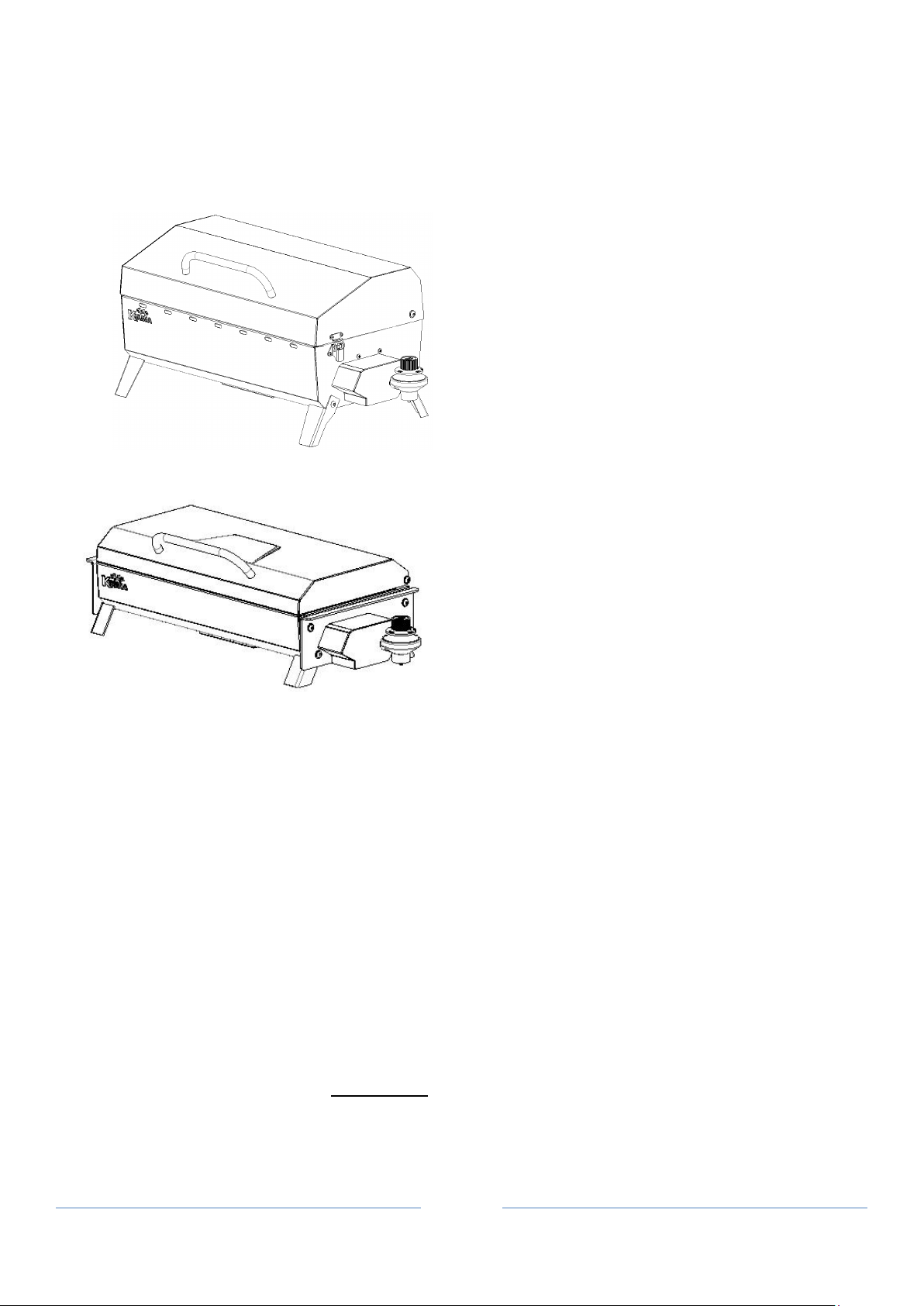
All models (FIG. 1a) have an integral regulated control valve and are intended to be used with a standard “Coleman
style” throwaway propane bottle or a propane connection hose that connects to larger LP gas cylinders. Hoses must
be compliant to Australian standards.
This appliance shall only be used with disposable Coleman propane 1lb cartridges certified to DOT-39
NRC 232/290 M1110.
IT MAY BE HAZARDOUS TO ATTEMPT TO FIT OTHER TYPES OF GAS CONTAINERS’
Standard “Coleman” style throwaway cylinders are valve
operated; they can be detached from the appliance for easy
storage or transportation (even when not empty).
IMPORTANT: Always check the bottle and seals before use.
Never use a bottle if damaged or any seals are missing from
the bottle or the appliance’s regulator. Discard bottles if
dust, dirt or rust particles are in the outlet valve area.
IMPORTANT: Review instruction and warnings on the
propane bottle as indicated by arrow in FIG. 1.
Remove cap from end of propane bottle. Cap should always
be kept on bottle when not in use to prevent dirt and debris
from entering regulator valve.
• Verify regulated control valve is in the “OFF” position,
turn to “OFF” if needed.
• Insert threaded end of the gas bottle into regulated
control valve and hand tighten. Do not use tools! Over-
tightening can damage threads on regulator.
• Perform a leak test, refer to “SECTION H – LEAK TESTING”
• When the existing canister is empty, refer to section “H – REMOVING GAS CANISTER”.
D-3 – Checking gas levels in gas bottles
1. Do NOT use boiling water, as you would risk scalding yourself. Filling a bucket or large jug with hot tap
water from your home should work fine.
2. Using care, SLOWLY pour the hot water down one side only of the gas bottle. QUICK TIP: More water is
better, as it will make it easier to feel the gas bottle level indicator difference in temperature to check gas
bottle level. I actually fill a cleaning bucket with hot tap water when I check gas bottle level.
3. A line of condensation may appear as your gas bottle level indicator to check gas bottle level. If not:
4. Wait a few seconds and then run your hand down the same side of the gas bottle, where you poured the
water to tell how much gas in gas bottle.
5. You should feel a change of temperature to tell how much gas is in gas bottle.
If you feel no difference, the gas bottle level may well be empty.
Be careful not to scald yourself with the hot water when you check gas bottle level!