EnglishDeutsch
 logo
Brands
  1. Home
  2. •
  3. Brands
  4. •
  5. Mackie
  6. •
  7. Stereo System
  8. •
  9. Mackie 1642-VLZ PRO User manual

Mackie 1642-VLZ PRO User manual

Other manuals for 1642-VLZ PRO

6

This manual suits for next models

1

Popular Stereo System manuals by other brands

LG CM3330B owner's manual

LG

LG CM3330B owner's manual

Sony SS-CEP50 Service manual

Sony

Sony SS-CEP50 Service manual

Cetacea Sound CVS-II user guide

Cetacea Sound

Cetacea Sound CVS-II user guide

Denon UCD-250 Service manual

Denon

Denon UCD-250 Service manual

Sanyo DC-MX41i instruction manual

Sanyo

Sanyo DC-MX41i instruction manual

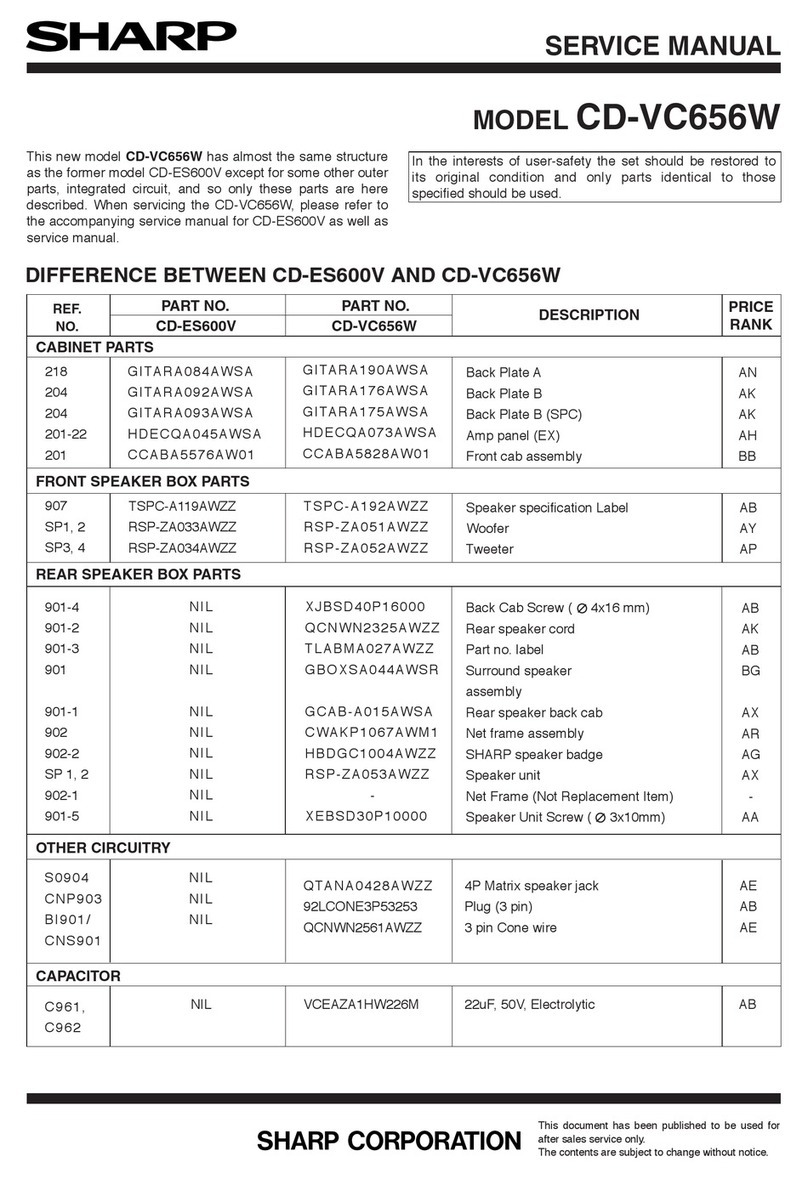
Sharp CD-ES600V Service manual

Sharp

Sharp CD-ES600V Service manual

Exibel BDX600-UK user manual

Exibel

Exibel BDX600-UK user manual

Sanyo DC-F320 Service manual

Sanyo

Sanyo DC-F320 Service manual

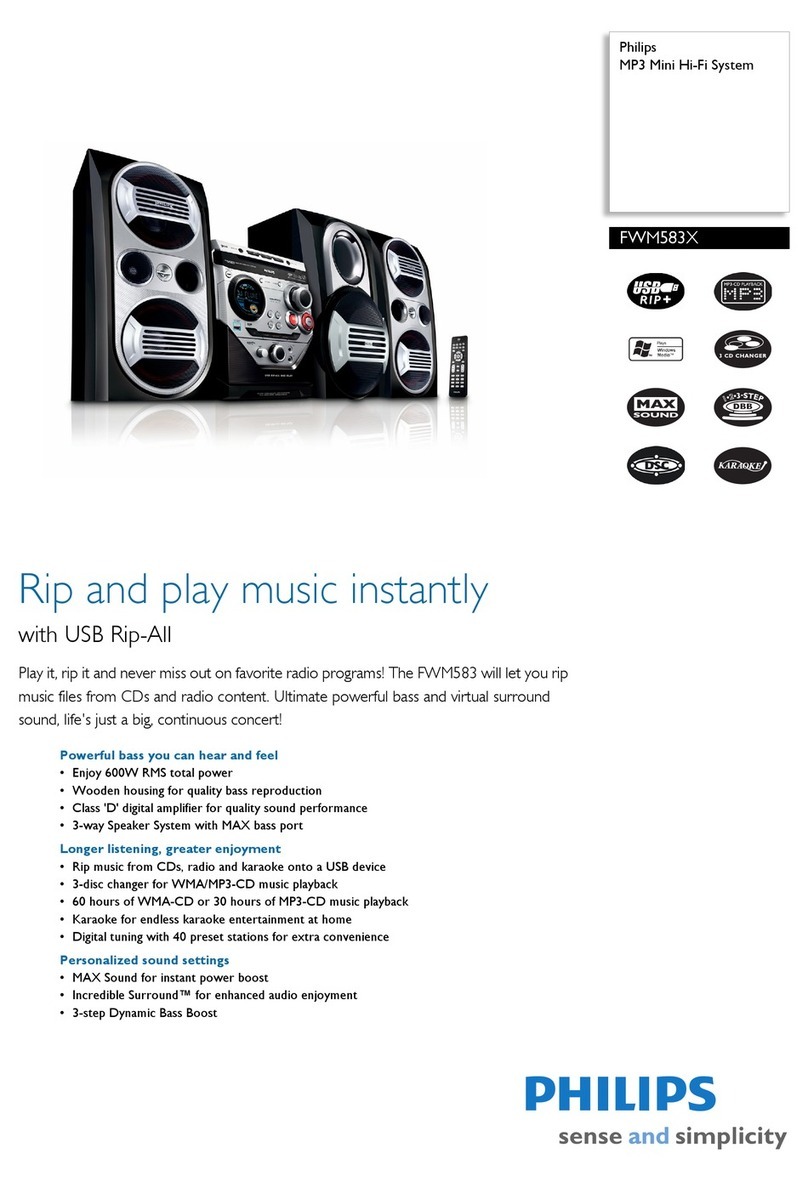
Philips FWM583X Specifications

Philips

Philips FWM583X Specifications

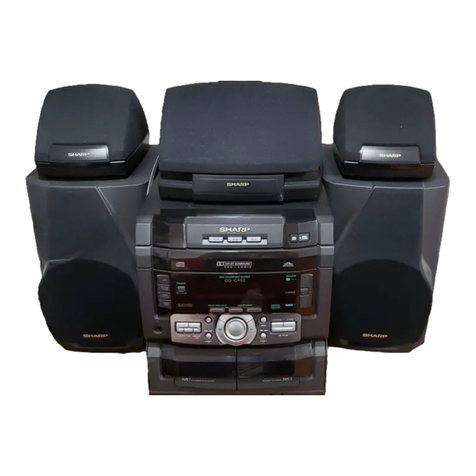
Sharp CD-C462 Service manual

Sharp

Sharp CD-C462 Service manual

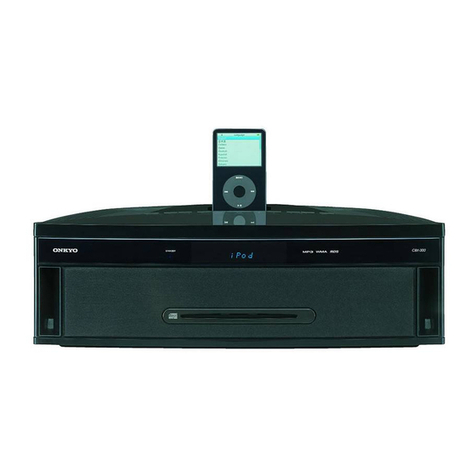
Onkyo CBX 300 - CD / MP3 Clock Radio instruction manual

Onkyo

Onkyo CBX 300 - CD / MP3 Clock Radio instruction manual

Aiwa XR-EM70 Service manual

Aiwa

Aiwa XR-EM70 Service manual

Cyrus Lyric user guide

Cyrus

Cyrus Lyric user guide

Philips MCM159/98 quick start guide

Philips

Philips MCM159/98 quick start guide

Philips/Magnavox Magnavox FW 62C owner's manual

Philips/Magnavox

Philips/Magnavox Magnavox FW 62C owner's manual

RCA RS3965SB user manual

RCA

RCA RS3965SB user manual

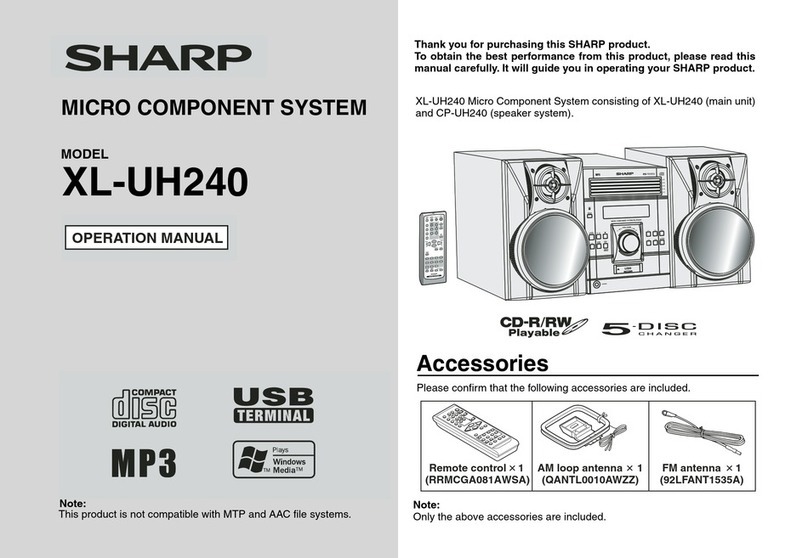
Sharp XL-UH240 Operation manual

Sharp

Sharp XL-UH240 Operation manual

Philips FW 690 Instructions for use

Philips

Philips FW 690 Instructions for use

https://manuals.online logo
https://manuals.online logoBrands
  • About & Mission
  • Contact us
  • Privacy Policy
  • Terms and Conditions

Copyright 2026 Manuals.Online. All Rights Reserved.

Glossary
of pro audio terms
2
Glossary
This Glossary contains brief definitions of
many of the audio and electronic terms and
acronyms used in discussions of sound mixing
and recording. Many of the terms have other
meanings or nuances or very rigorous technical
definitions, which we have sidestepped here
because we figure you already have a lot on
your mind.
If you’d like to get more information, there are
plenty of useful textbooks out there. We recom-
mend the following titles:
The Audio Dictionary
by Glenn White,
Tech Terms
by Peterson &
Oppenheimer,
Handbook for Sound Engineers
by
Glen Ballou,
Mackie Mixer Book
by Rudy Tru-
bitt,
Pro Audio Reference
by Dennis Bohn, and
Sound Reinforcement Handbook
by Gary Davis.
A
ACRONYM
An acronym for A Contrived Reduction Of
Nomenclature Yielding Mnemonics
adiabatic
Literally, it means "not to pass through." In
describing the high-density foam used inside
the HR Series studio monitors, it means that
internal reflections within the cabinet are
absorbed by the foam. In physical terms, it
means the mechanical energy of the sound
wave is converted into heat energy.
A/D converter (ADC)
Analog-to-digital converter, a device that trans-
forms incoming analog signals into digital
form.
A L
An acronym for After Fade Listen, which is
another way of saying post-fader solo function.
aliasing
This is a type of distortion caused during the
analog-to-digital conversion process. If the fre-
quency of the analog signal exceeds one-half
the sampling rate, spurious signals and harmon-
ics not present on the original signal may be
created (see Nyquist Theorem). Careful design
and filtering before the sampling stage can
reduce this aliasing to a minimum.
assign
In sound mixers, assign means to switch or
route a signal to a particular signal path or com-
bination of signal paths.
attenuate
To reduce or make quieter.
aux
Short for Auxiliary.
auxiliary
In sound mixers, supplemental equipment or
features that provide additional capabilities to
the basic system. Examples of auxiliary equip-
ment include: serial processors (equalizers,
compressors, limiters, gates) and parallel pro-
cessors (reverberation and delay).
aux send
A mixer bus output designed to send a signal to
an auxiliary processor or monitor system.
aux return
A mixer input (sometimes a pair of inputs) with
limited control capabilities, intended for bring-
ing the output of an auxiliary processor or
other line-level source into the main mix bus.
Aux returns can sometimes be assigned to other
buses in the mixer.
3
B
balanced input
An input consists of two leads, neither of which
is common to the circuit ground. This is a “dif-
ferential pair”, where the signal consists of the
difference
in voltage between the two leads. Bal-
anced input circuits can offer excellent rejec-
tion of common-mode noise induced into the
line.
balanced output
In a classic balanced audio circuit, the output is
carried on two leads (high or + and low or -)
which are isolated from the circuit ground by
exactly the same impedance.
A symmetrical balanced output carries the same
signal at exactly the same level but of opposite
polarity with respect to ground.
A special case of a balanced output carries the
signal on only one lead, with the other lead
being at zero voltage with respect to ground,
but at the same impedance as the signal-carry-
ing lead. This is sometimes called
impedance bal-
anced
.
bandwidth
The band of frequencies that pass through a
device with a loss of less than 3 dB, expressed in
Hertz or in musical octaves. Also see Q.
bit
The smallest component of a digital word, rep-
resented by either a one or a zero.
bridged mono
A mode of operation for a stereo amplifier that
routes a single input to both channels, but
inverts the signal on channel 2, thereby provid-
ing twice the voltage of an individual output by
connecting the speaker between the two posi-
tive output terminals (the negative output ter-
minals are not used).
bus
An electrical connection common to three or
more circuits. In mixer design, a bus usually
carries signals from a number of inputs to a
mixing amplifier, just like a city bus carries peo-
ple from a number of neighborhoods to their
jobs. It comes from the British “omnibus”.
C
Cannon
A manufacturer of electrical connectors who
first popularized the three-pin connector now
universally used for balanced microphone con-
nections. In sound work, a Cannon connector
is taken to mean a Cannon XLR-3 connector or
any compatible connector. You can tell an
audio geezer because he refers to this connector
as “Cannon”. Today the term “XLR” is more
common.
cardioid
Heart-shaped. In sound work, cardioid refers to
the shape of the sensitivity vs. direction plot for
a particular style of directional microphone. A
cardioid mic rejects sound arriving from the
rear.
channel
A functional path in an audio circuit: an input
channel, an output channel, a recording chan-
nel, the left channel and so on.
channel strip
The physical realization of an audio channel on
the front panel of a mixer; usually a long, verti-
cal strip of controls.
chorusing
A time-based effect available in some digital
delay effects units and reverbs. Chorusing
involves a number of moving delays and pitch
shifting, usually panned across a stereo field.
4
Depending on how used, it can be lovely or
grotesque.
clipping
A form of severe audio distortion that results
from peaks of the audio signal attempting to
rise above the capabilities of the amplifier cir-
cuit. Seen on an oscilloscope, the audio peaks
appear clipped off. To avoid clipping, reduce
the system gain in or before the gain stage in
which the clipping occurs. Also see headroom.
common mode
A signal which is referenced to the circuit com-
mon point, usually chassis ground.
compressor
This is a dynamics processor used to smooth
out any large transient peaks in an audio signal
that might otherwise overload your system or
cause distortion. The amplitude threshold and
other parameters such as attack time, release
time, and tire pressure are adjustable.
condenser
Another term for the electronic component
generally known as a capacitor. In audio, con-
denser often refers to a type of microphone that
uses a capacitor as the sound pickup element.
Condenser microphones require electrical
power to run internal amplifiers and maintain
an electrical charge on the capacitor. They are
typically powered by internal batteries or
“phantom power” supplied by an external
source, such as a mixing console.
console
Another term for a sound mixer, usually a large
desk-like mixer.
crest factor
The ratio of the peak value to the RMS value.
Musical signals can have peaks many times
higher than the RMS value. The larger the tran-
sient peaks, the larger the crest factor.
cueing
In broadcast, stage and post-production work,
to “cue up” a sound source (a record, a sound
effect on a CD, a song on a tape) means to get
it ready for playback by making sure you are in
the right position on the “cue,” making sure the
level and EQ are all set properly. This requires a
special monitoring circuit that only the mixing
engineer hears. It does not go out on the air or
to the main mixing buses. This “cueing” circuit
is the same as pre-fader (PFL) solo on a Mackie
mixer, and often the terms are interchangeable.
D
D/A converter (DAC)
Digital-to-analog converter, a device that trans-
forms incoming digital signals into analog
form.
damping
Damping factor is a number that represents the
ratio of the impedance of the load to the out-
put impedance of the amplifier. In practical
terms, it is a measure of how well the amplifier
can control the movement of a speaker's cone.
The greater the damping factor, the better its
ability to control the cone's movement. A low
damping factor (high amplifier output imped-
ance) allows a woofer to continue to move after
the signal stops, resulting in an indistinct and
mushy low frequency response. A high damp-
ing factor (200 or above) provides excellent
control over low frequency woofers and pro-
duces a tight, clean bass.
DAT
Digital Audio Tape is a recording/playback sys-
tem where analog signals are converted to digi-
tal form and stored on magnetic tape. It offers
all the benefits of digital audio including low
noise and wide dynamic range.
5
DAW
Digital Audio Workstation is a dedicated
recording/editing software application and
hardware system, used for hard disk (non-lin-
ear) random access recording and playback.
Many DAWs are used with personal computers
using Windows® or Macintosh® operating
systems, though some use their own proprietary
computers.
dB
See decibel.
dBA
Sound Pressure Level (SPL) measured with an
"A" weighting filter.
dBm
A unit of measurement of power in an electrical
circuit, expressed in decibels referenced to 1
milliwatt. The “m” in dBm stands for “milli-
watt.” In a circuit with an impedance of 600
ohms, this reference (0 dBm) corresponds to a
signal voltage of 0.775 VRMS (because 0.775 V
across 600 ohms equals 1 mw).
dBu
A unit of measurement of audio signal voltage
in an electrical circuit, expressed in decibels ref-
erenced to 0.775 VRMS into any impedance.
Commonly used to describe signal levels within
a modern audio system. Nobody is really sure if
“u” stands for anything.
dBv
A unit of measurement equal to the dBu no
longer in use in the US, but sometimes still in
Great Britain. It was too easy to confuse a dBv
with a dBV, to which it is not equivalent.
dBV
A unit of measurement of audio signal voltage
in an electrical circuit, expressed in decibels ref-
erenced to 1 VRMS across any impedance.
Commonly used to describe signal levels in
consumer equipment. To convert dBV to dBu,
add 2.2 dB.
decibel (dB)
The dB is a ratio of quantities measured in sim-
ilar terms using a logarithmic scale. Many audio
system parameters measure over such a large
range of values that the dB is used to simplify
the numbers. A ratio of 1000:1=60 dB. Since
dB is a unitless quantity, it doesn’t matter if it’s
volts or dollars. (just try asking the chief engi-
neer for a 3 dB raise) When one of the terms in
the ratio is an agreed upon standard value such
as 1.23 V, 1 V or 1 mw, the ratio becomes an
absolute value, i.e., +4 dBu, -10 dBV or 0 dBm.
delay
In sound work, delay usually refers to an elec-
tronic circuit or effects unit whose purpose it is
to delay the audio signal for some short period
of time. Delay can refer to one short repeat, a
series of repeats or the complex interactions of
delay used in chorusing or reverb. When
delayed signals are mixed back with the original
sound, a great number of audio effects can be
generated, including phasing and flanging, dou-
bling, Haas precedence-effect panning, slap or
slapback, echo, regenerative echo, chorusing
and hall-like reverberation. Signal time delay is
central to many audio effects units.
detent
A point of slight physical resistance (a click-
stop) in the travel of a knob or slide control.
Most knobs on Mackie mixers are detented to
indicate their unity gain or centered position.
It’s handy in the dark.
diffraction
The bending of sound waves around an obsta-
cle (Huygens Principle). The longer the wave-
length in comparison to the obstacle, the more
the wave will diffract around it.
6
dipping
The opposite of peaking, of course, used in
audio to describe the shape of a frequency
response curve. A dip in an EQ curve looks like
a valley, or a dip. Dipping with an equalizer
reduces a range of frequencies. (See guacamole.)
dither
This is an interesting technique to reduce the
audibility of low level noise in a digital record-
ing. Low level random noise is added to the
analog signal before the sampling stage, reduc-
ing an effect called quantization error.
doubling
A delay effect, where the original signal is
mixed with a medium (20 to 50 ms) delayed
copy of itself. When used carefully, this effect
can simulate double-tracking (recording a voice
or instrument twice).
dry
Usually means without reverberation, or with-
out some other applied effect like delay or cho-
rusing. Dry is not wet, i.e., totally unaffected.
DSP
Digital Signal Processing can accomplish the
same functions found in analog signal proces-
sors, but performs them mathematically in the
digital domain, with more precision and accu-
racy than its analog counterpart. Since DSP is a
software-based process, parameters and process-
ing functions are easily changed and updated
by revising the software, rather than redesigning
the hardware. DSP can be found in an out-
board effects device, such as a reverb or delay
unit, or it can be integrated into a DAW or dig-
ital mixing console.
dual mono
A mode of operation for a stereo amplifier that
routes a single input to both channels, but still
allows independent level control over each
amplifier output.
dynamic microphone
The class of microphones that generate electri-
cal signals by the movement of a coil in a mag-
netic field. Dynamic microphones are rugged,
relatively inexpensive, capable of very good per-
formance and do not require external power.
dynamics processor
A type of processor that only affects the overall
amplitude level of the signal (sometimes as a
function of its frequency content), such as a
compressor, expander, limiter, or gate.
dynamic range
The range between the maximum and mini-
mum sound levels that a sound system can han-
dle. It is usually expressed in decibels as the
difference between the level at peak clipping
and the level of the noise floor.
E
echo
The reflection of sound from a surface such as a
wall or a floor. Reverberation and echo are
terms that are often used interchangeably, but
in audio parlance a distinction is usually made:
echo is considered to be a distinct, recognizable
repetition (or series of repetitions) of a word,
note, phrase or sound, whereas reverberation is
a diffuse, continuously smooth decay of sound.
Echo and reverberation can be added in sound
mixing by sending the original signal to an elec-
tronic (or electronic/acoustic) system that mim-
ics natural echoes, and then some. The added
echo is returned to the mix through additional
mixer inputs.
effects device or
effect processor
An external signal processor used to add reverb,
delay, spatial or psychoacoustic effects to an
audio signal. An effects processor may be used
7
as an insert processor (serial) on a particular
input or subgroup, or it may be used via the
aux send/return system (parallel). See also echo,
reverb.
EIN
Equivalent Input Noise. A specification that
helps measure the “quietness” of a gain stage by
deriving the equivalent input noise voltage nec-
essary to obtain a given preamp’s output noise.
Numerically, it’s the output noise at a given
gain setting minus the gain. EIN is usually mea-
sured at maximum gain and typically ranges
from -125 to -130 dBm.
EMI
Electro-Magnetic Interference. This refers to
current induced into the signal path as a result
of an external magnetic field. In audio systems,
this is usually manifested as a 60 Hz or 120 Hz
hum or buzz (50 Hz or 100 Hz in 50 Hz sys-
tems). The source of this noise can be from a
ground loop or from the signal wire coming too
close to a strong magnetic field such as a trans-
former or high-current linecord.
EQ
Short for equalization.
EQ curve
A graph of the response of an equalizer, with
frequency on the x (horizontal) axis and ampli-
tude (level) on the y (vertical) axis. Equalizer
types and effects are often named after the
shape of the graphed response curve, such as
peak, dip, bell, shelf, or notch.
equalization
Equalization (EQ) refers to purposefully chang-
ing the frequency response of a circuit, some-
times to correct for previous unequal response
(hence the term, equalization), and more often
to boost or cut the level at certain frequencies
for sound enhancement, to remove extraneous
sounds, or to create completely new and differ-
ent sounds.
Bass and treble controls on your stereo are EQ;
so are the units called parametrics and graphics
and notch filters.
A lot of how we refer to equalization has to do
with what a graph of the frequency response
looks like. A flat response (no EQ) is a straight
line; a peak looks like a hill, a dip is a valley, a
notch is a really skinny valley, and a shelf looks
like a plateau (or a shelf). The slope is the grade
of the hill on the graph.
Aside from the level controls, EQs are probably
the second most powerful controls on any
mixer (no, the power switch doesn’t count!).
F
fader
Another name for an audio level control.
Today, the term refers to a straight-line slide
control rather than a rotary control.
family of curves
A composite graph showing on one chart sev-
eral examples of possible EQ curves for a given
equalizer or equalizer section.
filter
A simple equalizer designed to remove certain
ranges of frequencies. A low-cut filter (also
called a high-pass filter) attenuates frequencies
below its cutoff frequency. There are also high-
cut (low-pass) filters, bandpass filters, which cut
both high and low frequencies but leave a band
of frequencies in the middle untouched, and
notch filters, which remove a narrow band but
leave the high and low frequencies alone.
flanging
A term for an effect similar in sound to phas-
ing. Before we had electronic delay units, flang-
ing was accomplished by playing two tape
machines in synchronization, then delaying
one slightly by rubbing a finger on the reel
flange. Get it?

8
OH
An acronym for Front Of House. See house
and main house speakers. Nobody involved
with audio ever goes to the Back of House
because they never have time to drink enough
beer.
frequency
The number of times an event repeats itself in a
given period of time. Generally the time period
for audio frequencies is one second, and fre-
quency is measured in cycles per second, abbre-
viated Hz, honoring the physicist Dr. Heinrich
Hertz (who did not invent the rental car). One
Hz is one cycle per second. One kHz (kilo-
hertz) is 1000 cycles per second.
The audio frequency range is generally consid-
ered to be 20 Hz to 20, 000 Hz. This covers the
fundamental pitch and most overtones of musi-
cal instruments.
G
gain
The measure of how much a circuit amplifies a
signal. Gain may be stated as a ratio of input to
output voltage, current or power, such as a volt-
age gain of 4, or a power gain of 1.5, or it can
be expressed in decibels, such as a line amplifier
with a gain of 10 dB.
gain stage
An amplification point in a signal path, either
within a system or a single device. Overall sys-
tem gain is distributed between the various gain
stages.
gate
A dynamics processor that automatically turns
off an input signal when it drops below a cer-
tain level. This can reduce the overall noise
level of your mix by turning off inputs when
they are not in use. Threshold, attack time,
hold, and release time are some of the adjust-
able gate parameters.
graphic EQ
A graphic equalizer uses slide pots for its boost/
cut controls, with its operating frequencies
evenly spaced through the audio spectrum. In a
perfect world, a line drawn through the centers
of the control shafts would form a graph of the
frequency response curve. Or, the positions of
the slide pots give a graphic representation of
boost or cut levels across the frequency spec-
trum. Get it?
ground
Also called earth. Ground is defined as the
point of zero voltage in a circuit or system, the
reference point from which all other voltages
are measured.
In electrical power systems, ground connec-
tions are used for safety purposes, to keep
equipment chassis and controls at zero voltage
and to provide a safe path for errant currents.
This is called a
safety ground
. Maintaining a
good safety ground is essential to prevent elec-
trical shock. Follow manufacturer’s suggestions
and good electrical practices to ensure a safely
grounded system. Never remove or disable the
grounding pin on the power cord.
In sensitive electronic equipment, tiny currents
and voltages riding on the ground (so it’s not
truly zero volts) can cause noise in the circuits
and hamper operation. Often a ground separate
from the power ground is used as the reference
point for the electronics, isolating the sensitive
electronics from the dirty power ground. This is
called a
technical ground
.
Quality audio equipment is designed to main-
tain a good technical ground and also operate
safely with a good safety ground.
ground loop
A ground loop occurs when the technical
ground within an audio system is connected to
the safety ground at more than one place. This
forms a loop around which unwanted current
can, and does flow, causing noise in the audio
9
system. Never disable the safety ground in an
attempt to solve hum problems.
guacamole
Just kidding (see dipping).
H
Haas precedence effect
A psychoacoustic effect in which the time of
arrival of a sound to the left and right ears
affects our perception of direction. If a signal is
presented to both ears at the same time and at
the same volume, it appears to be directly in
front of us. But if the signal to one ear, still at
the same volume, is delayed slightly, the sound
appears to be coming from the earlier (non-
delayed) side.
headroom
The difference between nominal operating level
and peak clipping in an audio system. A mixer
with a nominal operating level of +4 dBu and a
maximum output level of +22 dBu has 18 dB
of headroom. Plenty of room for surprise peaks.
Hertz
The unit of frequency, equal to 1 cycle per sec-
ond. Abbreviated Hz. kHz 1000 Hz, and is usu-
ally pronounced “kay”(with “Hertz” implied)
by sound professions who ask for “a little more
two and a half K” when they want you to boost
2.5 kHz.
house
In Sound Reinforcement parlance, “house”
refers to the systems (and even persons) respon-
sible for the primary sound reinforcement in a
given hall, building, arena or “house.” Hence
we have the house mixer or house engineer, the
house mix, the house mix amps, the main
house speakers and so on.
Hz
Short for Hertz.
I
impedance
The A.C. resistance, capacitance, and induc-
tance in an electrical circuit, measured in ohms.
In audio circuits (and other ac circuits) the
impedance in ohms can often be much differ-
ent from the circuit resistance as measured by a
dc ohmmeter.
Maintaining proper circuit impedance relation-
ships is important to avoid distortion and mini-
mize added noise. Mackie input and output
impedances are set to work well with the vast
majority of audio equipment.
input module
A holdover from the days when the only way
that real consoles were built was in modular
fashion, one channel per module. See channel
strip.
insert
Noun – a place where a signal path can be bro-
ken and a processing device placed in line with
the signal. It’s usually a TRS jack with one con-
ductor being an output (send) and the other
being an input (return). The jack is wired with a
normalled connection
so that with nothing
plugged in, the send and return are connected
together, as if it wasn’t even there. In Mackie
mixers, the
insert
jacks are wired with tip as
send, ring as return, and sleeve as ground.
Verb – we don’t want to go there.
J
10
K
knee
A knee is a sharp bend in a curve (an EQ fre-
quency response or compressor gain curve) not
unlike the sharp bend in your leg.
L
level
Another word for signal voltage, power,
strength or volume. Audio signals are some-
times classified according to their level. Com-
monly used levels are: microphone level (-40
dBu or lower), instrument level (-20 to -10
dBu), and line level (-10 to +30 dBu).
line level
A signal whose level falls between -10 dBu and
+30 dBu.
M
main (house) speakers
The main loudspeakers for a sound reinforce-
ment system. These are usually the largest and
loudest loudspeakers, and are usually posi-
tioned so that their sound seems to come from
the area of the main stage.
mains
Short for
main
or
house speakers
in a sound rein-
forcement system.
master
A control affecting the final output of a bus on
which one or more signals are mixed. A mixer
may have several master controls, which may
be slide faders or rotary controls.
mic amp
See mic preamp.
mic level
The typical level of a signal from a microphone.
A mic level signal (usually but not always com-
ing from a microphone) is generally lower than
-30 dBu. With a very quiet source (a pin drop-
ping?) the signal can be -70 dBu or lower.
Some microphones, notably vintage or vintage-
style condenser mics, deliver a higher signal
level than this for the same sound pressure
level. A “hot” mic output level isn’t necessarily
a measure of the microphone’s quality, it’s just
an option that the designer chose.
mic pre
Short for mic preamp.
mic preamp
Short for microphone preamplifier. An ampli-
fier whose job is to bring the very low micro-
phone level signal up to line level, or in the
case of a mic preamp built into a mixer, the
mixer’s internal operating level (approximately
0 dBu).
Mic preamps often have their own volume con-
trol, called a trim control, to properly set the
gain for a particular source. Setting the mic
preamp gain correctly with the trim control is
an essential step in establishing good signal-to-
noise ratio and sufficient headroom for your
mix.
MIDI
Acronym for Musical Instrument Digital Inter-
face. MIDI is the music industry’s standard
serial communication protocol for the interface
and control of musical instruments.