CAN I USE WEEDKILLERAND INSECTICIDE IN THE SAME SPRAYER?
In theory you can, if the sprayer is thoroughly cleaned out with an
ammonia: water solution of 1:25. In practice, the use of both types
of chemicals in the same unit is not recommended as the risk to the
plants can be high. Use caution when handling any type of chemicals
and when cleaning your sprayer.
WHAT SPRAY NOZZLE SHOULD I USE?
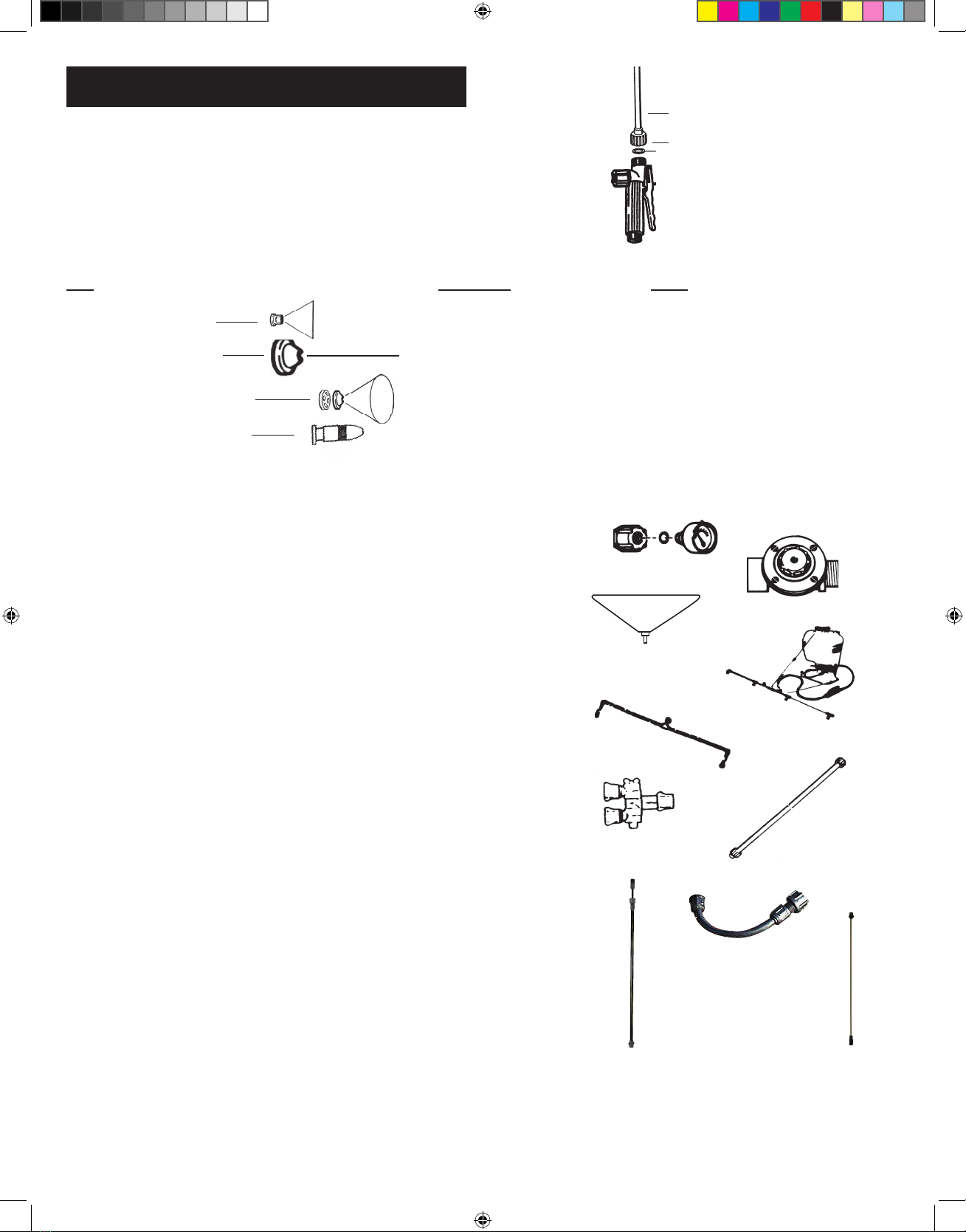
A brass adjustable spray nozzle is supplied for varying the spraying
pattern from a ne mist to a jet stream. A at spray nozzle is supplied
for spraying paths, garden beds, and general area spraying. A cone
nozzle is also supplied for spot spraying and for treatment of bushes
and small trees. For spot spraying, simply remove swirl plate from
behind cone. Save the swirl plate for future use. Standard is a reux
lter with a built-in check valve which opens at 5 psi and closes at
4 psi. This virtually eliminates dripping of uid still contained in the
spray wand. A wide selection of nozzles such as the drift guard and
no-drift nozzles are available
CAN I DO SPOT SPRAYING?
The shut-off valve on the MASTERLINE sprayer is well suited for spot
spraying. It’s almost effortless! The shut-off valve handle incorporates
a clip which holds the trigger valve open for area spraying without
tiring the operator’s hand. A pressure gauge may be added with
increments from 5 psi up to 60 psi.
DOES THE UNIT REQUIRE CONSTANT PUMPING?
NO! The well-designed lever action greatly reduces the pumping
effort. The pressure cylinder within the tank has a hydraulic effect.
Liquid from the pump compresses air in the pressure chamber which
allows irregular pumping action, yet results in steady spray at the
nozzle.
CAN THE SPRAY TANK STAND THE PRESSURE?
Although quite strong, the spray tank itself is intended only as
a container for the spray solution. Pressure is maintained in a
separate pressure chamber. This chamber is injection molded and
built to withstand normal operating pressure. Additionally, an internal
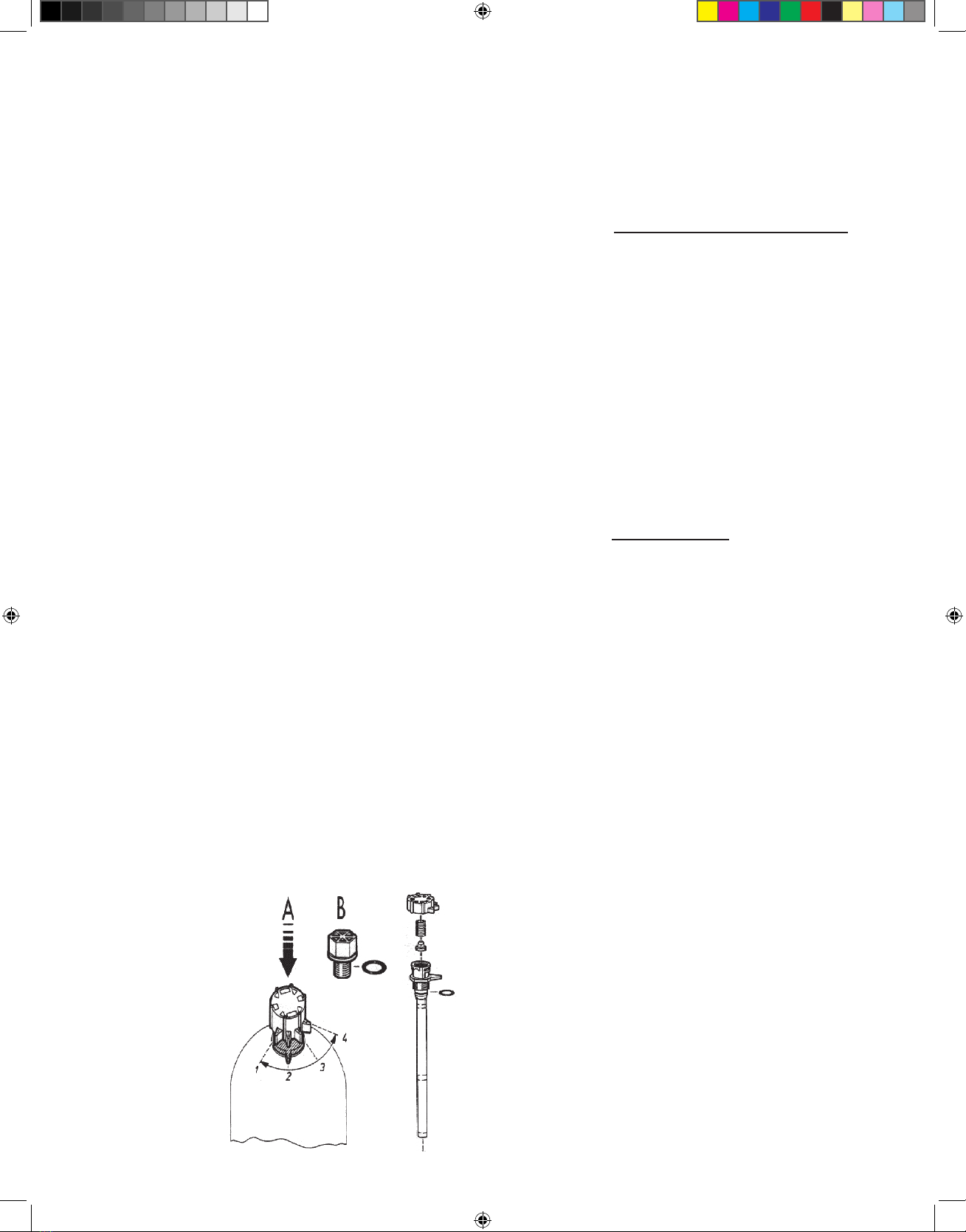
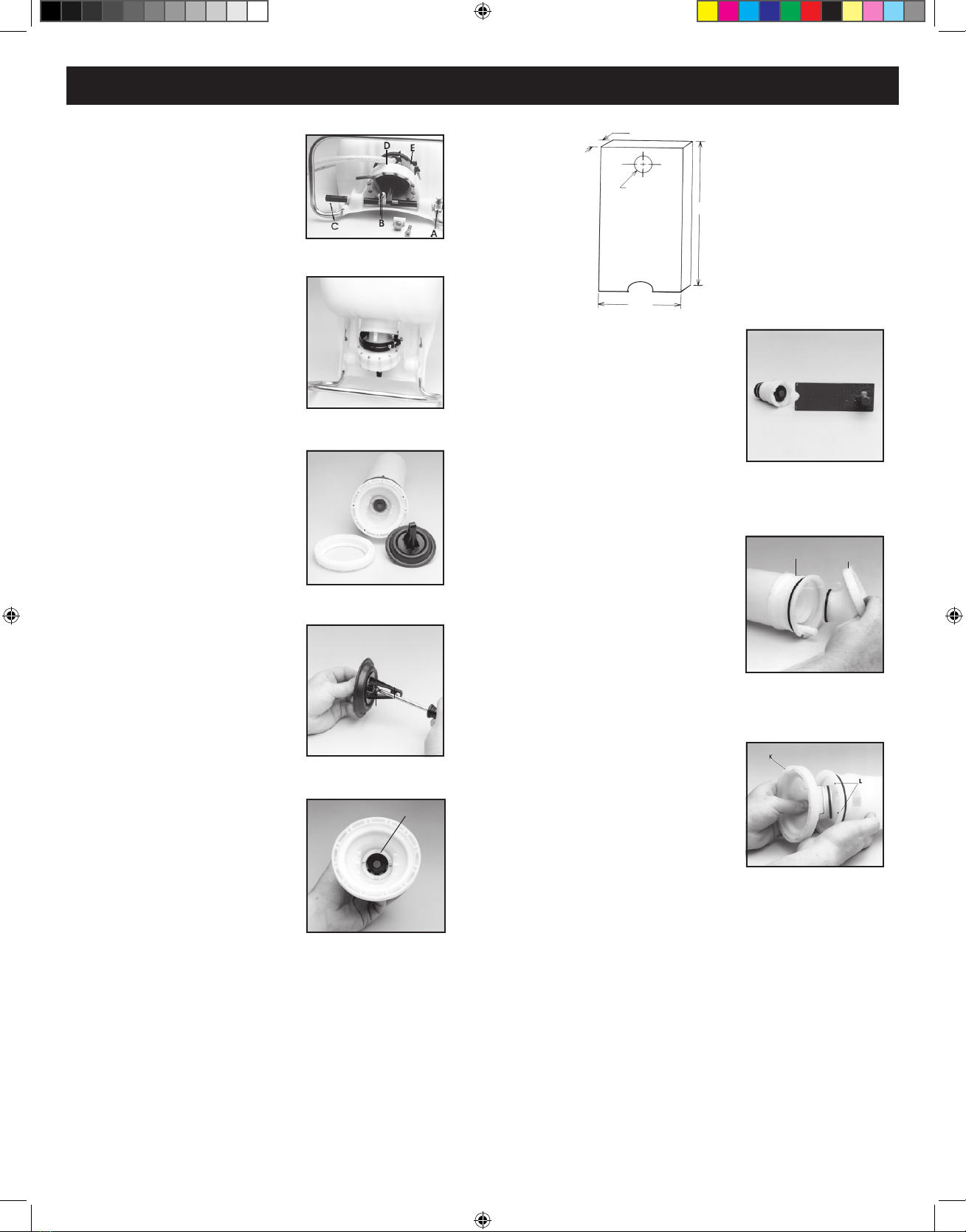
pressure control valve has been tted to the cylinder (see item A). It
has four pressure settings adjustable to specic spraying needs (see
diagram).
3
Gal/Acre = (Gal./min of nozzle) x 43560 Sq. ft./acre
(Sq. ft./min.)
Note: Gal/min for standard nozzles
Flat Spray Nozzle 15 PSI = .22 Gal./min.
29 PSI = .33 Gal./min.
44 PSI = .40 Gal./min.
Hollow Cone Nozzle 15 PSI = .17
29 PSI = .24
44 PSI = .29
Sq. ft., min. = Speed (ft./min.) x Swath Width (ft.)
WARNING: Remember that a sprayer with liquid is a signicant
amount of weight (8 lbs. per gallon). Use caution when bending,
leaning or walking. Bend only at the knees and support yourself as
required to ensure personal safety.
POSSIBLE USES OF SPRAYER:
Plant Feeding and Protection – A variety of spray tips enables user
to perform foliar feeding or apply fungicides and pesticides effectively.
Herbicides – May be applied to reduce pesky weeds and plants;
however, avoid using same sprayer for plant feeding or protection
without rst thoroughly cleaning. (See “Cleaning”.)
Indoor Use – Sprayers may be used to apply detergents, vinegar,
cleaning solutions, warm water up to 110°F (43°C) and other nontoxic
household cleaning and maintenance liquids. Carpets, walls, glass,
oors, ceilings and other surfaces can be treated. Do not use sprayer
which has previously been used with herbicides, pesticides or other
toxic chemicals.
Outdoor Use – Window cleaner, detergent, general purpose
cleaning solutions, certain wood preservatives, waxes, waterproong
are among the many things MASTERLINE sprayers can apply. Avoid
using sprayer for cleaning and other applications once it has been
used for plant protection or herbicide spraying. If sprayer was used
for herbicide or other spraying rst, clean the sprayer as described on
page 2 before using.
Determine the nozzle’s rated capacity. See page 5 of
MASTERLINE parts list for nozzle ratings. Get the capacity in
gallons/minute at the desired pressure. Test the delivery of the
nozzle. Spray for one minute and collect the spray.
Gal/min = oz. collected/minute
128 oz. = 1 gal.
Compute the area covered in square feet per minute. Select a
comfortable walking speed and gure how many feet per minute
you walk. A convenient fast walk for some is 2.5 mph, but this
may vary. One mile per hour equals 88 feet per minute. An easy
way to calculate is to simply measure the distance you walk in
one minute.
Compute the gallons per acre. The above information is used to
compute the gallons of spray that will be applied per acre.
1.
2.
3.
CALIBRATION OF MASTERLINE BACKPACK SPRAYERS
The output of the sprayer should be checked by collecting and
measuring the spray liquid emitted during one minute. Maintain
steady pumping on the pump handle while measuring. Having
determined the output from the nozzle in gallons/minute, the rate
per unit area treated can be calculated knowing the swath width and
walking speed.
Setting #1 15 psi
#2 30 psi
#3 45 psi
#4 60 psi
WILL THE PLASTIC MATERIAL LAST?
Only high-density polyethylene is used. The material is chosen for
high molecular weight, high impact strength, and excellent resistance
to chemicals and stress. Ultraviolet inhibitors are used in the material
to reduce deterioration caused by sunlight.
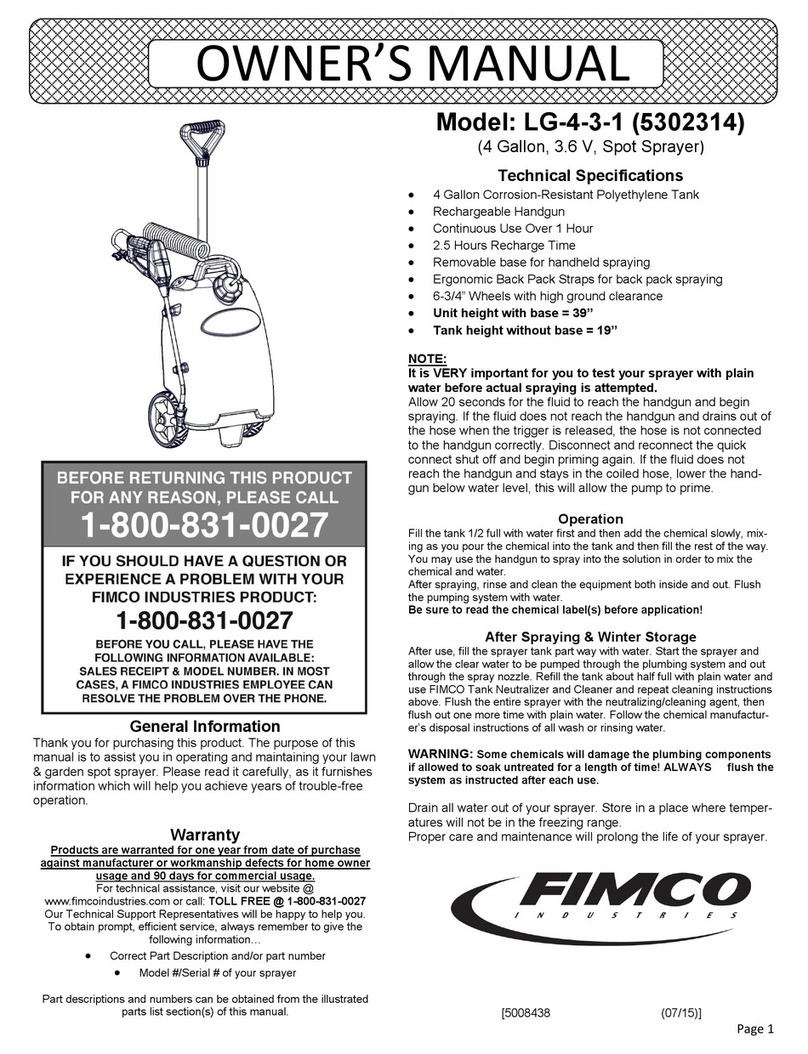
HOW HEAVY IS THE UNIT?
When empty, Model 475 weighs only 9.5 lbs.
IS THE SPRAYER COMFORTABLE TO CARRY?
MASTERLINE sprayers are probably the most comfortable spraying
equipment on the market. The tank rests comfortably against the
operator’s back and the straps are made from a nylon web and are
padded where they rest on the shoulders. The pump lever is positioned
at the most convenient height and can be varied with adjustment of
the straps.