INTRODUCTION
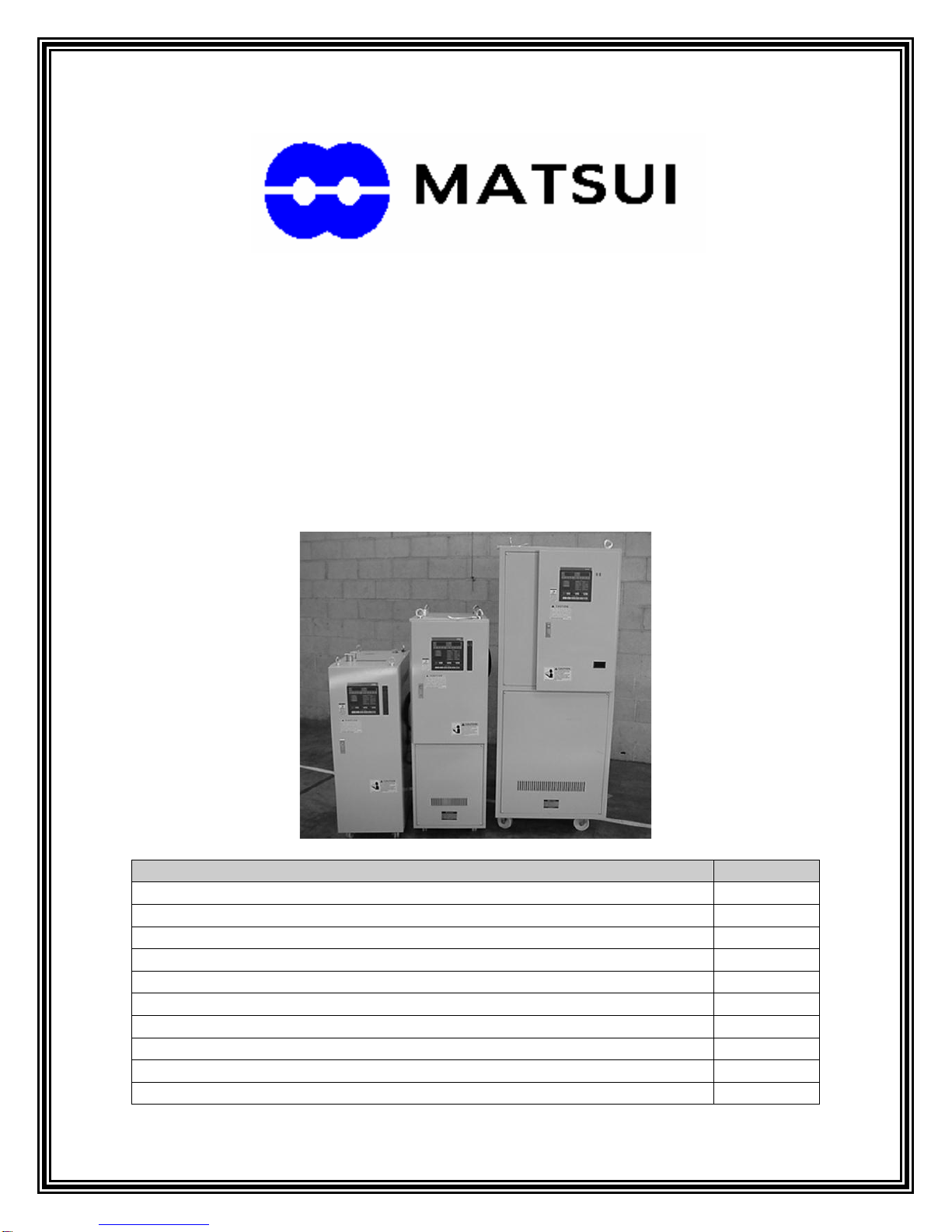
Matsui’s DMZ Desiccant Dryer is a high-performance machine designed for fast,
low dew point drying of plastic pellets, easy maintenance and long life. As with
any machine, some basic maintenance steps must be completed regularly to
ensure proper operation and the quick, complete drying the DMZ is capable of.
This guide contains the recommended maintenance intervals and procedures for
trouble-free operation. Also included is a section on basic troubleshooting. In the
event that a dryer’s performance falters, use this guide to help find the possible
cause, as well as the remedy to keep your DMZ running properly and at peak
performance.
NOMENCLATURE
Desiccant Rotor:The desiccant rotor is the heart of the DMZ dryer. This
revolutionary design allows for constant and steady absorption and regeneration
cycles. The result is a steady, constant low dew point of -40°F or lower. The
desiccant rotor is turned through the various cycles at the rate of 3 revolutions
per hour. If, for whatever reason, this rotor is not turning, absorption and
regeneration will not occur, preventing moisture removal from the material.
Regeneration:Regeneration, as it is referred to in this guide, is the process of
drying the moisture absorbed by the desiccant rotor. This involves the use of a
blower with an intake filter, a heater and heater tank, hoses and an exhaust port.
Ambient air is drawn in through the regeneration filter by the regeneration blower
and blown over the regeneration heater where it is heated to 446°F (230° C). The
heated air is then blown over the saturated desiccant rotor to burn off the
moisture. Heat and airflow are the most important aspects of regeneration. If
either is not correct, proper drying will not occur. A clean regeneration filter and
properly working electrical components are mandatory.
Process: Process, as referred to in this guide, is the heated air that flows over
the plastic pellets inside the drying hopper. This involves a process filter, process
blower and process heater, to produce hot air to blow over the resin in the
hopper. Because hot air gathers and holds more moisture then cold air, it is
important to have the process side of the dryer working correctly. Heat and
airflow are the most important aspects of removing moisture from the plastic
pellets. If there is proper heat, but not enough airflow to carry the moist air out of
the hopper to the desiccant rotor, poor drying will occur. Likewise, if there is
proper airflow, but the air is not hot enough to gather the moisture, inadequate
drying will occur. A clean process filter and properly working electrical
components are mandatory.
2