PAGE 3
WARNING!
Do not place objects or appendages in the path of moving parts.
STORAGE AND OPERATION TEMPERATURES
Transportation or storage: -75°C/-104°F to 70°C/158°F
Operation: 10°C/50°F to 40°C/104°F
ELECTROMAGNETIC AND RADIO FREQUENCY INTERFERENCE (EMI/RFI)
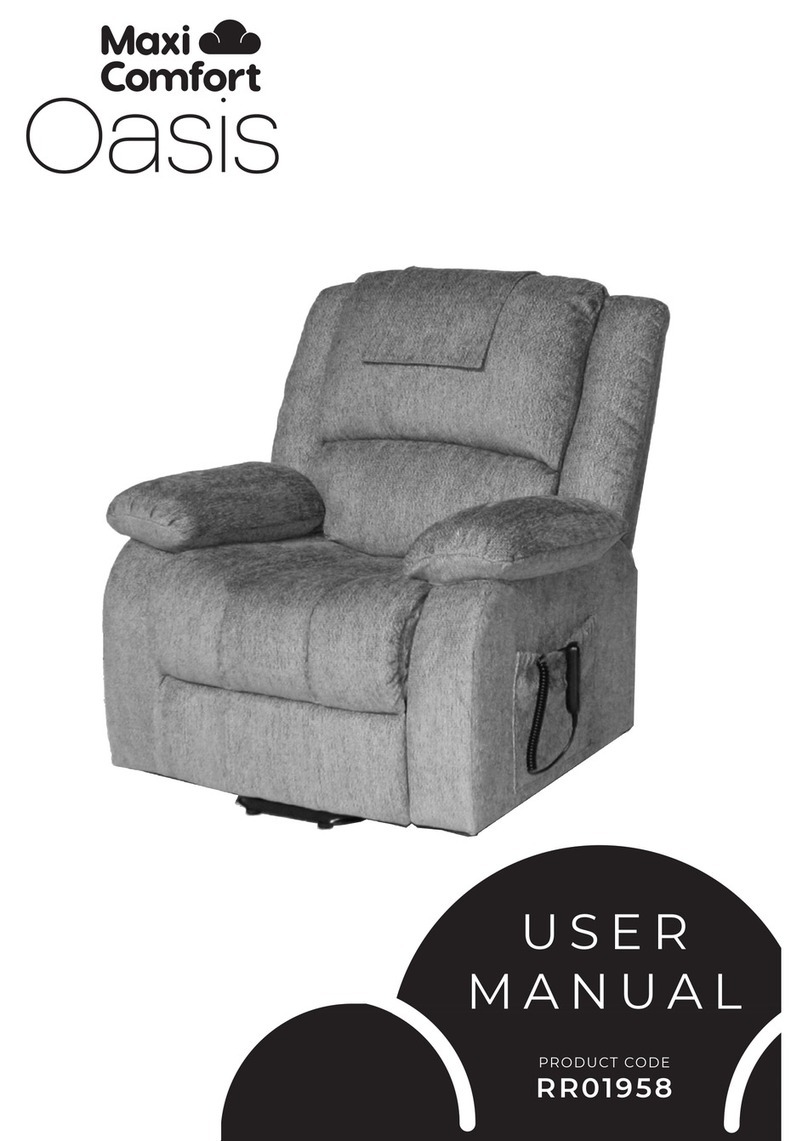
Laboratory tests have shown that electromagnetic and radio frequency waves
can have an adverse effect on the performance of electrically-powered devices,
such as lift chairs.
Electromagnetic and Radio Frequency Interference can come from sources such
as mobile phones, mobile two-way radios (such as walkie-talkies), radio stations,
TV stations, amateur radio (HAM) transmitters, wireless computer links, Wi-Fi,
microwave signals, paging transmitters and medium-range mobile transceivers
used by emergency vehicles. In some cases, these waves can cause unintended
movement or damage to the control system of electrically-powered devices. The
lift chair user can help prevent electromagnetic interference by maintaining
a minimum distance between portable and mobile RF communications
equipment. It is recommended that at least 3 metres (9 feet) of distance be
maintained between the lift chair and any hand-held equipment emitting 10 W
or more of output power. Refer to the manufacturer’s literature for the hand-held
device to determine the maximum output power of that device.
Every electrically-powered device has an immunity (or resistance) to EMI. The
higher the immunity level, the greater the protection against EMI. Per EMC
standards, this product has passed immunity testing and is rated as a Group
1, Class B product, meaning the lift chair uses RF energy only for its internal
function. Therefore, its RF emissions are very low and are not likely to cause any
interference in nearby electronic equipment making the lift chair suitable for use
in all establishments, including domestic establishments and hospitals.
WARNING!
Do not sit or stand on the footrest as this will cause the mechanism
to bend.