manuals.online logo
Brands
  1. Home
  2. •
  3. Brands
  4. •
  5. Multitone
  6. •
  7. Microphone
  8. •
  9. Multitone i-Page IP133 User manual

Multitone i-Page IP133 User manual

Other Multitone Microphone manuals

Multitone ACCESS 3000 COMPACT User manual

Multitone

Multitone ACCESS 3000 COMPACT User manual

Multitone RPR 583 User manual

Multitone

Multitone RPR 583 User manual

Popular Microphone manuals by other brands

Betzold 760932 operating instructions

Betzold

Betzold 760932 operating instructions

Shure A88SM user guide

Shure

Shure A88SM user guide

JTS UF-10TH/12 instruction manual

JTS

JTS UF-10TH/12 instruction manual

Shure BETA 58A User giude

Shure

Shure BETA 58A User giude

Shure SM7 user guide

Shure

Shure SM7 user guide

Sony ECM-Z200 Service manual

Sony

Sony ECM-Z200 Service manual

Electro-Voice 652 engineering data

Electro-Voice

Electro-Voice 652 engineering data

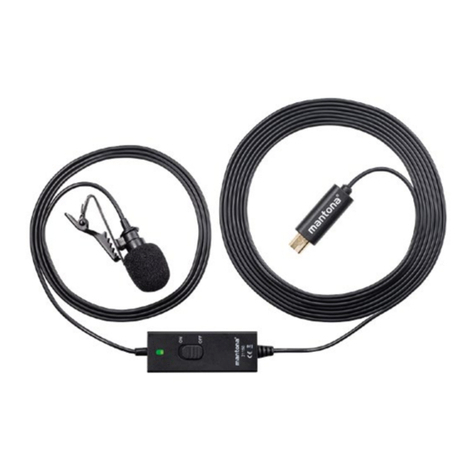
mantona 21150 instruction manual

mantona

mantona 21150 instruction manual

Loewe We. SEE 55 user manual

Loewe

Loewe We. SEE 55 user manual

IK Multimedia iRig Stream MIC PRO user manual

IK Multimedia

IK Multimedia iRig Stream MIC PRO user manual

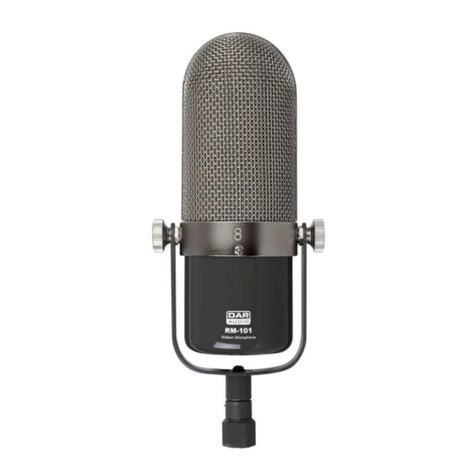
DAPAudio RM-101 user manual

DAPAudio

DAPAudio RM-101 user manual

AKG CHM 21 User instructions

AKG

AKG CHM 21 User instructions

Sennheiser evolution wireless series EM 100 instruction manual

Sennheiser

Sennheiser evolution wireless series EM 100 instruction manual

Sony C-48 operating instructions

Sony

Sony C-48 operating instructions

GIGAMEDIA GGM PAMICUHFG user manual

GIGAMEDIA

GIGAMEDIA GGM PAMICUHFG user manual

Shure WH30TQG user guide

Shure

Shure WH30TQG user guide

auna PRO MIC-900 manual

auna PRO

auna PRO MIC-900 manual

Shure MV51 manual

Shure

Shure MV51 manual

manuals.online logo
manuals.online logoBrands
  • About & Mission
  • Contact us
  • Privacy Policy
  • Terms and Conditions

Copyright 2025 Manuals.Online. All Rights Reserved.

i-Page User Guide
9261-8880 Issue 1
9261-8880 Issue 1
2
Compliance Information
EU Territories - This product complies with the requirements
of the EU Radio & Telecommunications Terminal Equipment
Directive 99/5/EC. A complete copy of the associated
Declaration of Conformity for this and other Multitone products
may be found at the Multitone Internet address
www.multitone.com.
This equipment is classified as Class 2
under the terms of the R & TTE Directive
and is therefore subject to restrictions in
its use. Before the installation and use of
this equipment, you must consult your
national radio communications spectrum authority, for
local licensing and frequency regulation information.
WEEE Directive & Product Disposal
At the end of its serviceable life, this product
should not be treated as household or
general waste. It should be handed over to
the applicable collection point for the
recycling of electrical and electronic
equipment, or returned to Multitone or their
agent, for disposal.
9261-8880 Issue 1
3
Important Safety Information
The Multitone i-Page IP133 Radio Paging
Transcoder equipment, contains a low power (5
Watts) radio transmitter and is intended for use
with either an externally mounted dipole
antenna, or a “local” unity gain (or less) "desk-top" whip
antenna.
The equipment’s performance may be characterized in
accordance with the recommended MPE requirements of the
European Council Directive 1999/519/EC on the limitation of
exposure of the general public to electromagnetic fields (0Hz -
300GHz), as given in Annex III, Table 2; and the requirements
of FCC 47CFR and Industry Canada Standard RSS102.
Where an installation is to be fitted with a "local" whip style
antenna, the following criteria must be adhered to, in order to
reduce and comply with the Electro-magnetic radiation
absorption regulations.
NOTE: Any equipment and antenna that is installed within
an area normally populated whilst it is in use, must be
located in a position where people may not approach, or
be located within 1m of the radiating antenna, for periods
in excess of 5 mins. in any 1 hour. This distance is
calculated to include an additional safety margin for the
product.
9261-8880 Issue 1
4
Thank you for purchasing Multitone i-Page.
Please use this guide in order to to prepare your i-Page ready
for use. These instructions are for a desktop mounted i-Page,
using the supplied pagers and user numbers.
Additional information for installation and programming, may
be found on the Multitone web site –
http://www.multitonei-Page.com
Note: You (the user) are responsible for obtaining a license to
operate your paging system from Ofcom (or your National
Regulatory body) and maintaining this license throughout the
use of the product.
http://licensing.ofcom.org.uk/binaries/spectrum/business-
radio/forms/OfW432.pdf
Checking supplied equipment
Unpack and check your order:
i-Page Transcoder for desktop use;
Power Supply Unit;
Desk top antenna Assembly;
Customer assembly guide (9261-8880);
2 metre Ethernet cable;
Your i-Page may have been supplied with either Multitone,
or Commtech pagers.
oYour Multitone pagers are pre programmed to work
with the Multitone i-Page, on the radio frequency
and with the User numbers as requested in your order.
The User number will be displayed, when the pager is
switched on.
oYour Commtech pagers are supplied on the correct
frequency, with the first default User number only. This
number is displayed when the battery is installed. Use
the enclosed 7950 manual - pager programming guide,
to enable more User numbers.

9261-8880 Issue 1
5
Configuration of i-Page
i-Page must be configured with the following points in mind:-
The Transcoder must notbe located next to the power
supply or aerial –place these items as far away from
the Transcoder as possible, to ensure there is no
interference.
i-Page requires a network connection within two
metres.
An ac mains power socket must be located within 3
metres of the i-Page transmitter.
A computer with a browser such as Internet Explorer,
Firefox or other browser for programming and paging,
must be within 2 metres of a network point.
Wall mounting i-Page
i-Page is supplied with wall mounting plates. Use the mounting
plates as a template for fixing to a wall. Four rubber feet and
screws are included with i-Page if desk top mounting is
preferred. A 2.5mm allan key is required to remove the wall
mounting plates and a screwdriver to attach the rubber feet
The unit may be wall-mounted. Use the wall plates as a
template for fixing screws.If i-Page is to be fitted on a wall,
download the installation guide 9261-8879 from
http://www.multitonei-Page.com
Power Supply
9261-8880 Issue 1
6
The power supply can be wall mounted, using an optional
mounting bracket. If the power supply is to be fitted on a wall,
download the installation guide 9261-8879 from
http://www.multitonei-Page.com
9261-8880 Issue 1
7
Assembly
Place the i-Page unit on a stable
surface, within 3 metres of a Mains
power socket and 2 metres of a
network point.
Insert the mains plug (power off)
and the locking power connector
into the power supply socket
(POWER), ensuring that it is fully
pushed in.
Insert the network cable into the RJ45 socket on i-Page
and to a network socket.
Connect the desk top aerial to i-Page, ensuring that it is
located at least 1.5 metres away
from the transmitter.
Computer setup
When i-Page has been assembled and
the Ethernet cable from i-Page is connected to a network point,
turn on the power.
You are ready to programme your computer.
Note: Default IP address of i-Page is 192.168.1.11 and
network mask of 255.255.255.0.
i-Page only supports a static / fixed IP address. A network
address will need to be allocated by your MIS or IT
manager if the 192.168.1.xx address range is not used.
i-Page network setup
Changing computer IP address
(Example using Microsoft XP)
- START - My NETWORK PLACES
- VIEW NETWORK CONNECTIONS
- LOCAL AREA CONNECTION –
- Right click –PROPERTIES AND
SELECT
Select the BUTTON “USE THE
FOLLOWING IP ADDRESS”
9261-8880 Issue 1
8
Enter the IP address 192.168.1.1 and Netmask 255.255.0.0
Select “OK” and “Close” and the
new IP address will be saved.
Open your default browser and type
ohttp://192.168.1.11 into the top bar. You will see
the main screen of Multitone i-Page and can
commence programming.
There is no default password.
Change i-Page IP address to a local network address
supplied by your MIS manager.
Programming i-Page
Login to i-Page and select IP settings.
Enter the new IP address and netmask plus gateway and
Syslog IP address.
Example: Obtain the IP address, Netmask, Gateway and
Syslog details, from your IT network manager.
Visit www.multitone.com/support for installation guide.
SUBMIT the changes to i-Page and change the IP address
of your computer back to its previous static or DHCP
address (refer to previous instructions).
Log onto i-Page using the programmed static IP address.
You are now ready to complete the programming of the
i-Page.
IP address for your network
Netmask for your network
Gateway address - not essential
Syslog computer address -
not essential
9261-8880 Issue 1
9
Language settings
i-Page supports six languages which may be enabled for the
browser and / or Pager. Languages supported include; English,
German, French, Spanish, Italian, Danish and Norwegian.
All common browser programmes are supported.
Note: not all pagers will support the languages available from
the i-Page.
Clock setting
Select the CLOCK menu and input time, month and day.
SUBMIT to save.
Paging Setup
The PAGING SETUP menu must be configured for your pager
type; this is found on the back of Multitone pagers. The
Commtech is a POCSAG only pager.
System Address –Do not change.
Code format –Select one of the options provided.
This must be the same as your pager type.
POCSAG is 512 Baud default.
Time of day –On or off.
Message length –Default is 120 characters.
Coverage test –for service use only.
9261-8880 Issue 1
10
Passwords
The web interface supports one administration password and
one user password.
Only one Administrator may be active at any one time and if a
second administrator logs on then the first will be logged off.
The Web interface can be set to display in any of the available
languages.
Adding users
Your i-Page has been supplied with a number of pagers. Each
pager has been programmed to operate on the same
frequency as your paging system.
Depending on your order requirements, your pagers may have
been pre-configured with a User number (RIC/CAPCODE).
The User number/s (RIC CODES) will be displayed on the
pager at start-up.
User numbers may be up to 4 digits long. The leading digit will
always be 0.
E.g. If the User number entered is 1, then the saved User
number will be 0001.