North vegas 08 User manual

_English
user manual
vegas 08

1
north kiteboarding vegas 08 manual
ENGLISH
CONTENT
WARNING: Kiteboarding is Dangerous
Always use extreme caution when using this product.
Only use this product if you are in good physical health.
For safety reasons you should only use the North Kiteboarding kites on
or above the water.
Never act in a careless manner when using this product.
You are responsible for your own safety and the safety of others when
using this product.
1. release of liability 2
2. introduction and safety 3
3. Rigging the kite 6
4. attaching the lines 8
5. kite tuning 10
6. kite care 11
7. bladder repair 12
8. WINDrage and kite sizes 17
9. TIpS aND TRICKS for VEGAS 08 18
10. warranty policy 21
content

2
north kiteboarding vegas 08 manual
1. release of liability
Release Of Liability, Claim Waiver, Assumption of Risk.
By assembling and/or using this North Kite product, you agree that you have read
and understood the entire North Kiteboarding product owner’s manual, including
all instructions and warnings contained in that manual, prior to using the North
Kiteboarding product in any way. You additionally agree that you will ensure any
additional or subsequent user of your North Kiteboarding product will read and
understand the entire North Kiteboarding product Owner’s Manual, including all
instructions and warnings contained in that manual, prior to allowing that
person to use your North Kiteboarding product..
ASSUMPTION OF RISK:
Use of the North Kiteboarding Product and any of its components involve certain
inherent risks, dangers, and hazards that can result in serious personal
injury and death to both the user and to nonuser third parties. In using the North
Kiteboarding Product, you freely agree to assume and accept any and all known
and unknown risks of injury to you and to third parties while using this
equipment. The risks inherent in this sport can be greatly reduced by abiding by
the warning guidelines listed in this owner manual and by using common sense.
RELEASE AND WAIVER OF CLAIMS:
In consideration of the sale of the North Kiteboarding product to you, you hereby
agree to the fullest extent permitted by law, as follows:
TO WAIVE ANY AND ALL CLAIMS, that you have or may in the future have
against Boards & More and all related parties resulting from use of the North
Kiteboarding Product and any of its components.
TO RELEASE Boards & More and all related parties from any and all
liability for any loss, damage, injury or expense that you or any users of your
North Kiteboarding product may suffer, or that your next of kin may suffer,
as a result of the use of the North Kiteboarding product, due to any cause
whatsoever, including negligence or breach of contract on the part of
Boards & More and all related parties in the design or manufacture of the North
Kiteboarding product and any of its components. In the event of your death or
incapacity, all provisions contained herein shall be effective and binding upon
your heirs, next of kin, executors, administrators, assigns, and representatives.
Boards & More-related parties have not made and expressly deny any
oral or written representations other than what is set forth herein and the North
Kite product User’s Manual.
1. release of liability
3
north kiteboarding vegas 08 manual
ENGLISH
2. introduction and safety
At North we understand that you demand the most out of your equipment.
We are riders just like you and we strive to develop gear that will deliver
maximum performance and safety. Although technical, our products are user
friendly and come ready to use straight out of the package. Plug and play.
It’s that simple! It is, however, important that you become familiar with your new
5th Element Bar before using it on the water. Please take the time to read, study
and understand all of the following safety precautions and bar features in this
manual for your own personal pleasure and safety.
Kiteboarding is a sport that takes place within the interplay of the elements.
This sport involves great risks and can possibly be very dangerous. Therefore it
is of utmost importance to assess yourself and your kiteboarding abilities.
We strongly recommend the following:
If you are not yet able to kite or if you feel insecure, do attend a licensed
Kiteboarding school to learn the basics of this fantastic sport.
Get familiar with the safety precautions, which are indispensable for safe
Kiteboarding.
Kiteboarding creates a heavy strain on your body. You should only go kite-
boarding if you are in good physical condition and suffer from no medical
conditions that may prevent you from kiting.
No risk, no fun ... but: be careful when practicing this sport. Caution always
pays, as you should be able to enjoy the wind even at a “mature” age.
Dangers when Kiteboarding
When kiteboarding, the extreme powers of the elements may come into play.
In rare cases, the kite or its lines may cause dangerous situations:
The canopy can pull you into the air giving you involuntary “air time”. Upon
landing, there is a high risk of getting injured.
When the kite gets out of control, you can collide with obstacles and objects in,
on or off the water.
In case of improper use, the canopy or its lines may get caught up with other
people. Due to the enormous powers involved, this may lead to life-threatening
situations.
People who get caught in the lines of the kite may suffer from severe gashes or
burns.
Canopies coming down may injure onlookers.
2.introduction and safety

4
north kiteboarding vegas 08 manual
Risks Caused by the Kiteboard
If you bang your head against the kiteboard, there is a risk of severe
head injuries.
Feet, ankles and legs may also be injured by the board.
Never use this kite as a flying object.
This list of dangers cannot be complete. The basic rules for kiteboarding corre-
spond to those of common sense and are to be applied to all (outdoor) sports:
(1) Never put at risk the safety of onlookers in your surroundings.
(2) Be aware of the risk you are taking and restrict this to a reasonable residual
risk (according to your skills).
Threats to Onlookers
It is within your responsibility to check whether uninvolved people or other
athletes may be endangered or injured by your actions or your gear. Spots where
onlookers may be injured are taboo for responsible-minded kiters!
Only fly your canopy over unobstructed water.
When kiting, do not fly over people or pets.
Ensure that a semi-circle extending 100 meters downwind and to each side of
your flying position is clear of people and obstructions.
Use a kite leash that allows you to keep the kite under control.
Avoid flying the kite in the vicinity of other water users such as swimmers,
kayakers, windsurfers, water-skiers and boats.
When not in use, inflated canopies must be secured with sand or heavy objects.
A canopy filled with air can fly away at any time, thus it may injure people and
in extreme cases even kill them.
Safety of the Kiteboarder
Fly this kite only over unobstructed water. Never on land!
Fly this kite only if you are a strong swimmer and are wearing a Coast Guard
approved PFD.
Use only bars with a safety system that you can open in emergency situations.
Use a quick-release kite leash with which you can unhook your body from the
gear in case of an unforeseeable emergency.
Avoid power lines, telephone poles, airports, streets, buildings and trees.
If you use a board that is leashed to your body, wear a helmet!
Take into account the usual risks associated with water sports such as rocks,
waves, sunburn, hypothermia, jellyfish etc.
2.introduction and safety

5
north kiteboarding vegas 08 manual
ENGLISH
Threats through Kite Lines
Never touch the kite lines when the kite is under wind load as these lines can
become dangerously sharp when under tension.
Never use kite lines with notches, nicks, cuts etc. They must be changed!
Use only lines that have no knots in them, as knots can weaken lines by as much
as 50%.
Do not touch the lines of the canopy, unless the kite has been secured to the
ground. An unsecured kite can re-launch unexpectedly, putting the lines
dangerously under tension.
Never tie lines around your arms or other body parts!
Weather-related Dangers
Avoid offshore wind.
Be careful with onshore wind.
Get information on tidal and sea current conditions at your kiting spot!
Get information from both the weather report and the locals on prevailing
weather conditions.
Never use the kite with wind forces so strong that you are unable to maintain
precise control.
Do not use the kite when wind conditions are likely to change dramatically.
Never use this kite when thunderstorms are nearby or when such storms have a
good chance of developing (check the weather report!).
Leave the water immediately when a storm is approaching. You are in acute
life-threatening danger since you may be struck by lightning!
2.introduction and safety
6
north kiteboarding vegas 08 manual
3. Rigging the kite
INFLATING THE VEGAS
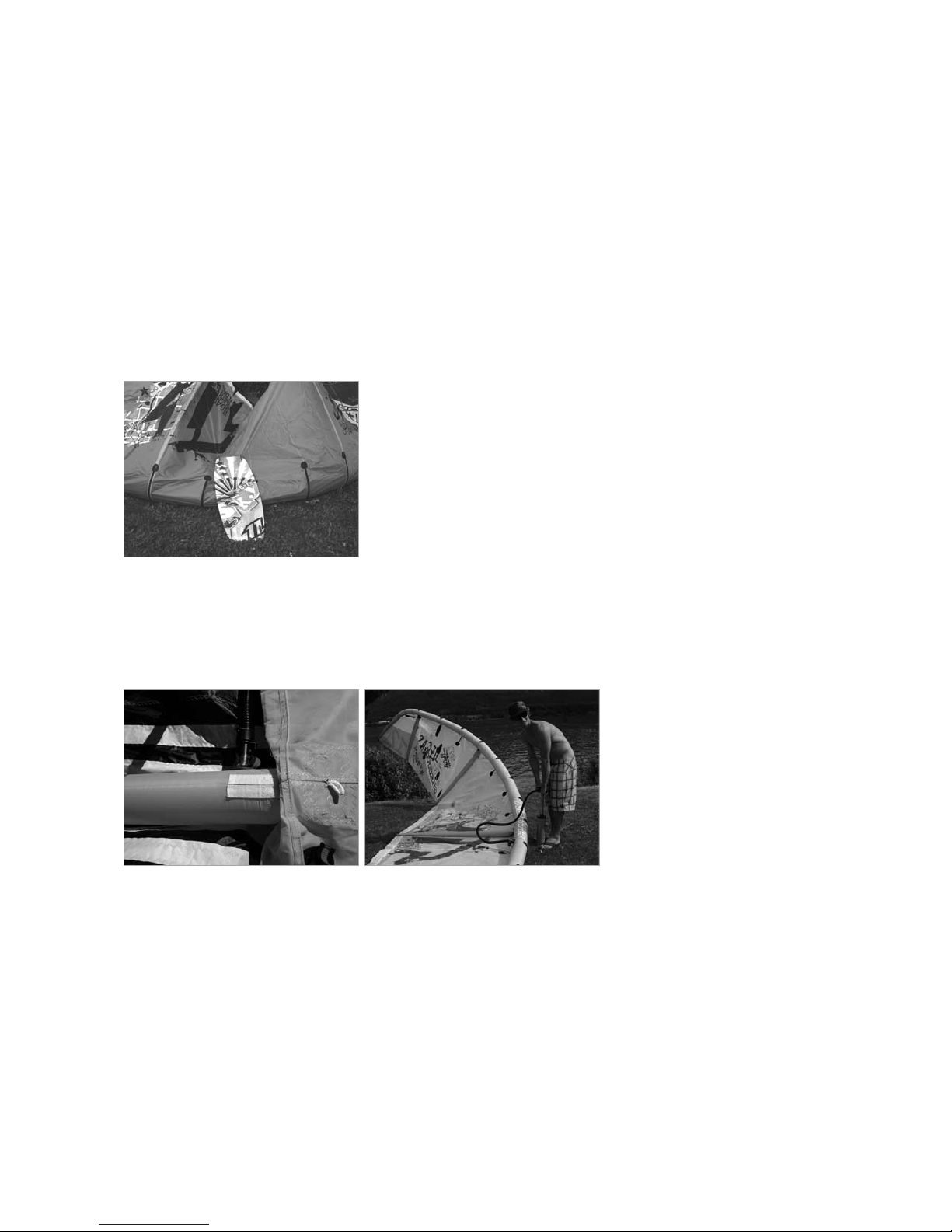
1. Lay the kite out on the sand, grass or a surface free of hard or sharp objects.
Although the kite is engineered to withstand the enormous stresses of flying,
it can easily be damaged by rocks, thorns, wood and other hard objects.
2. Turn the kite with its leading edge (front tube) facing into the wind, and the
underside of the canopy facing upwards.
3. Place a weight, e.g. sand, gear bag etc. on one wingtip of the canopy.
4. Inflate the ribs. To inflate follow these steps:
a. Close the dump valve at the tip strut.
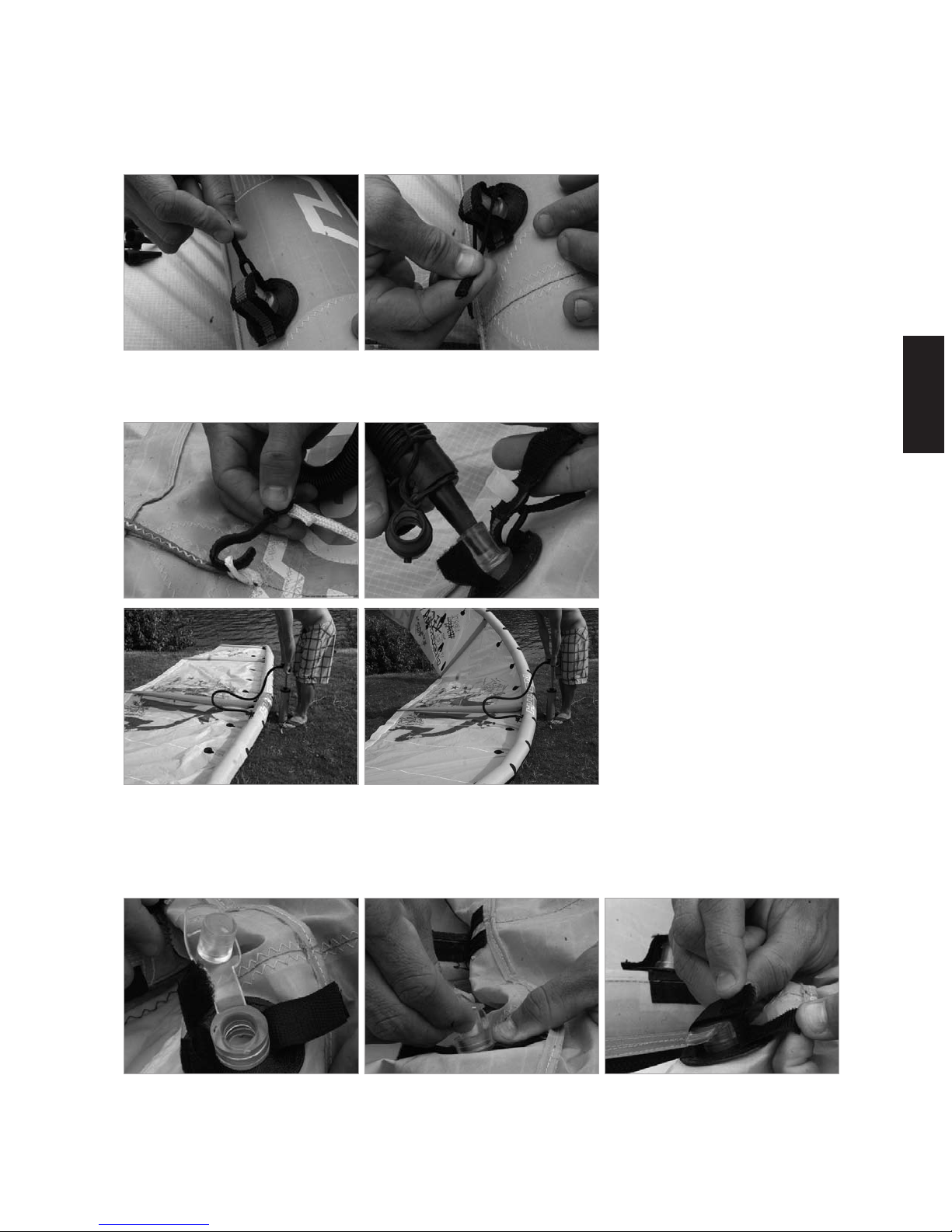
b. Grasp the strut valve with one hand and insert the pump tip into the valve
with the other hand. Repeat with all strut valves.
c. Pump air into the struts until they are firm.
d. If the valve has been pulled in while pumping, you must completely deflate the
rib again. After deflating you can pull the valve to the correct position.
3. rigging the kite
7
north kiteboarding vegas 08 manual
ENGLISH
e. Close the cap on the air valve and pull the elastic strap over the valve.
Do not push the valves into the bladder after inflating!
f. Finally, connect the pump leash and inflate the leading edge bladder (front
tube) until the correct pressure is reached.
All Vegases perform well with 6 PSI of air pressure in the leading edges and 10
PSI in the ribs. Be sure to close the dump valve on the wingtip before inflating.
3. rigging the kite
8
north kiteboarding vegas 08 manual
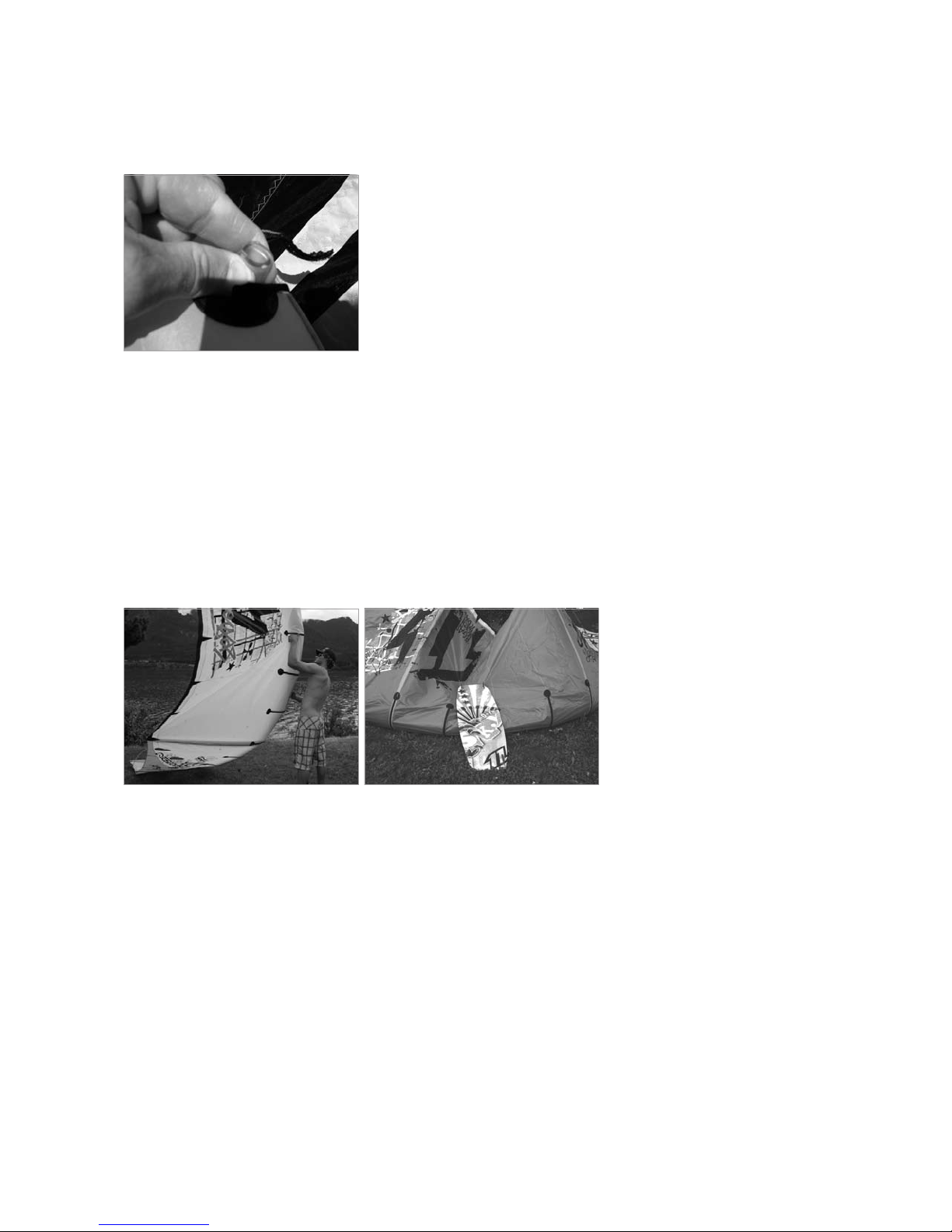
Pinch the valve with your fingers to prevent air from escaping as you remove the
pump’s tip from the valve.
SECURING THE KITE ON THE BEACH
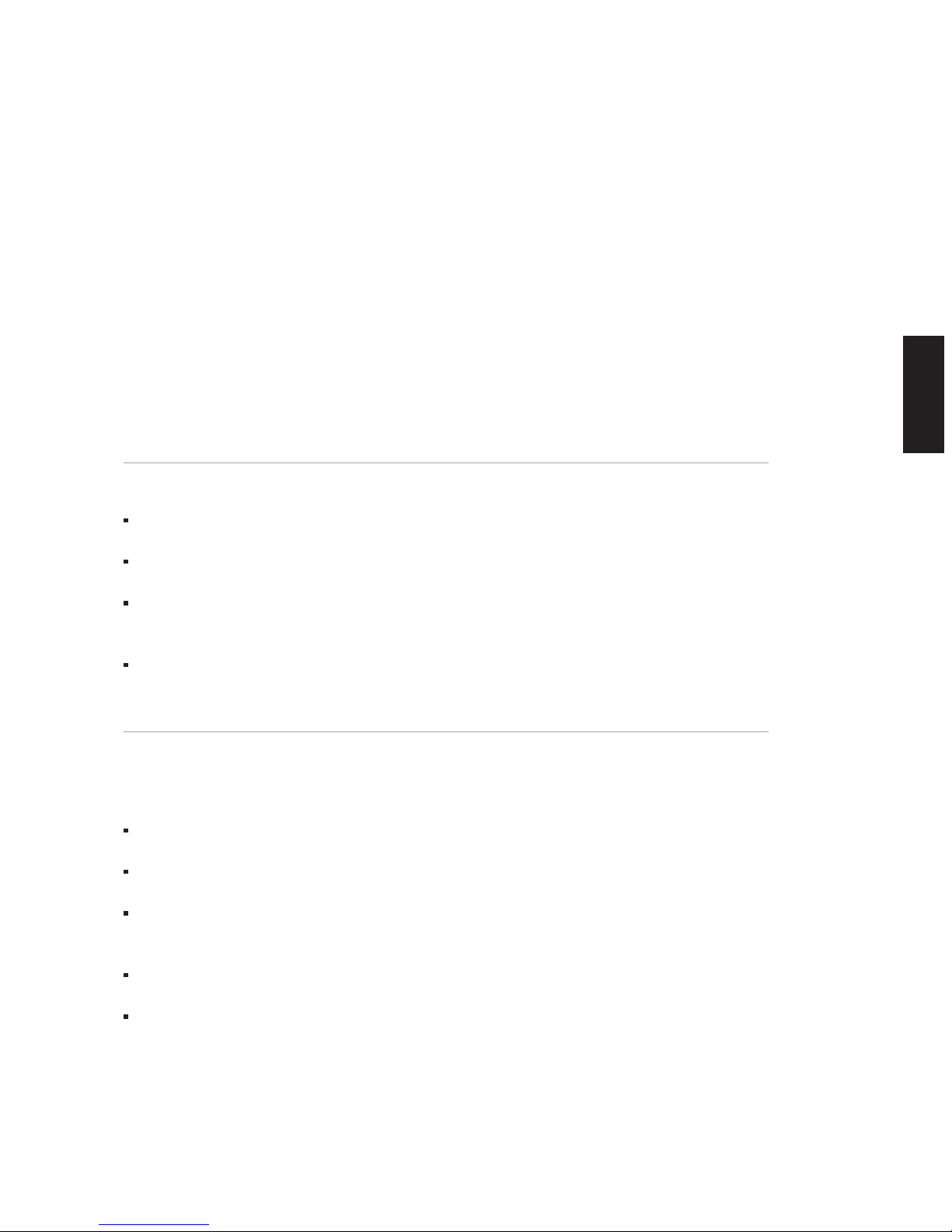
When the kite is not in use, it must be secured on the beach. Turn the kite around
as shown in the illustrations. The leading edge must always point upwind and be
secured with sufficient weight. As a general rule, more sand is better because if
the canopy flies away it can become a dangerous flying object. If the leading edge
is face down, the canopy is pushed to the ground by the wind pressure in
addition to its own weight. When turning the kite around, make sure that there
are no sharp objects lying on the ground. With changing wind directions, the
canopy should be turned into the prevailing wind direction.
4. attaching the lines
The Vegas is designed to be flown with the 5th Element Bar. The forward line
attachment position on the back lines makes for slightly harder bar pressure.
This setting is ideal for unhooking and direct bar feel.
The back pigtail setting will make the kite turn faster and have slightly softer
bar pressure.
4. attaching the lines

9
north kiteboarding vegas 08 manual
ENGLISH
The pigtail lengths come pre-measured so there is no need to make any
adjustments on the bar when changing pigtail positions. Simply attach your lines
to your desired attachment point and enjoy the ride!
These settings allow you to have a great range of use of your kite but remember
that riding overpowered involves risk and that overextend range can be
misleading. Make sure you are familiar with all your safety release systems.
One of the most common user errors in kiteboarding is mixing up steering and
flying lines. North’s Kook Proof System makes this error impossible and will help
prevent you from making a fatal mistake.
Attach the knot on the end of your steering (back) line to the larks head loop on
the kite’s wingtips.
Connect the flying (front) line with larks head loop to the wingtip attachment
with the knot.
Repeat for the opposite wingtip. Your kite lines are also color coordinated to
match the kite pigtail attachments, ensuring that you connect the lines to the
correct wingtip. The blue fifth line connects to the blue nose line attachment in
the center of the kite.
The Kook Proof System is only compatible with North’s 5th Element Bar and a
North Kite.
4. attaching the lines
Table of contents
Other North Aircraft manuals