manuals.online logo
Brands
  1. Home
  2. •
  3. Brands
  4. •
  5. Ohkura
  6. •
  7. Data Logger
  8. •
  9. Ohkura VM7000A User manual

Ohkura VM7000A User manual

Other manuals for VM7000A

3

Popular Data Logger manuals by other brands

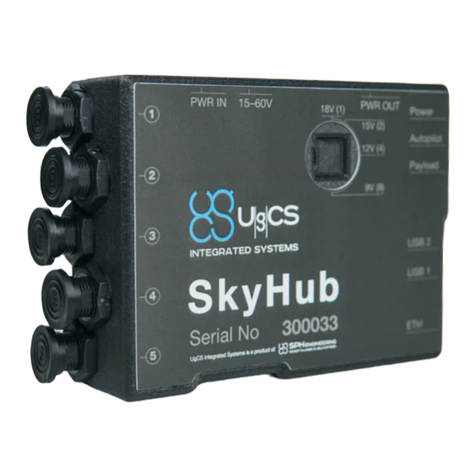
UGCS SkyHub user manual

UGCS

UGCS SkyHub user manual

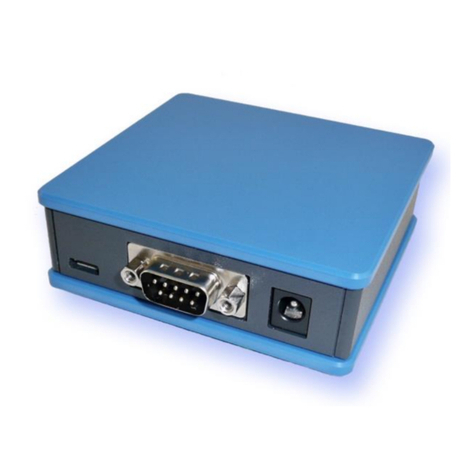
Avisaro 4.0 Series user manual

Avisaro

Avisaro 4.0 Series user manual

DDB C3 manual

DDB

DDB C3 manual

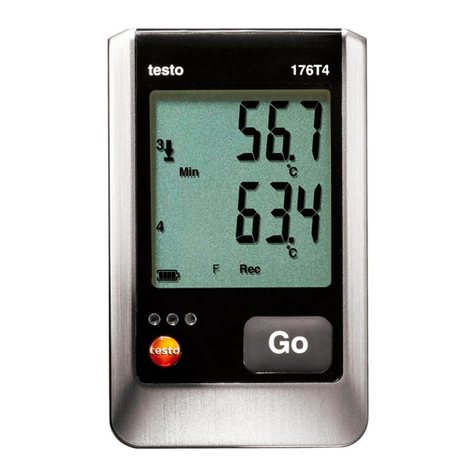
TESTO 176 instruction manual

TESTO

TESTO 176 instruction manual

HBM SOMAT XR CX22B-R operating manual

HBM

HBM SOMAT XR CX22B-R operating manual

Agtrix 380i manual

Agtrix

Agtrix 380i manual

Beijing ART Tech PCI2320 user manual

Beijing ART Tech

Beijing ART Tech PCI2320 user manual

Athena GET SL1 user manual

Athena

Athena GET SL1 user manual

Motec Systems C185 user manual

Motec Systems

Motec Systems C185 user manual

Beijing ART Tech USB2832 user manual

Beijing ART Tech

Beijing ART Tech USB2832 user manual

HT Italia XL421 user manual

HT Italia

HT Italia XL421 user manual

Racelogic VBOX LapTimer quick start guide

Racelogic

Racelogic VBOX LapTimer quick start guide

Edu-Logger 900-240 Guide

Edu-Logger

Edu-Logger 900-240 Guide

Elma DT173 manual

Elma

Elma DT173 manual

MadgeTech PRTemp140 Product user guide

MadgeTech

MadgeTech PRTemp140 Product user guide

Comet U0121M user guide

Comet

Comet U0121M user guide

pico Technology PT-104 user guide

pico Technology

pico Technology PT-104 user guide

Sensus DIAVASO user manual

Sensus

Sensus DIAVASO user manual

manuals.online logo
manuals.online logoBrands
  • About & Mission
  • Contact us
  • Privacy Policy
  • Terms and Conditions

Copyright 2025 Manuals.Online. All Rights Reserved.

VM7000A
PAPERLESS RECORDER
COMMUNICATION FUNCTION
OPERATION MANUAL
WXPVM70mnA0002E
March, 2016(Rev.6)
Copyright © 2009-2016, Ohkura Electric Co.,Ltd. All Rights Reserved.
Graficzne rejestratory temperatury VM7000A
http://acse.pl
- i -
To use this equipment safely
Thank you for purchasing our VM7000A Paperless Recorder.
Manufacturer:Ohkura Electric Co.,Ltd.
Format:It records in the main body plaque.
Manufacture date:It records in the main body plaque.
Manufacture country:Japan
Note:Windows are registered trademarks of Microsoft Corporation.
・Please installs it, operates it and prepares it, after this manual is often read, and it understands enough.
There is danger where the accident and the trouble occur when handling is mistaken.
・This specification of Recorder is subject to change without prior notice for product improvement.
・It is prohibited to remodeling this Paperless Recorder without our permission.
It doesn't assume the responsibility about the accident caused by having remodeled it without our permission.
・Please keep this manual if you actually use the Recorder.
・After reading this manual, keep it carefully by the instrument.
・
Please consider this manual to be sure to extend to the final user.
・It is prohibited to copy this manual without our permission.
・
This instruction manual is subject to change without prior notice.
[Note]
- ii -
The symbols below are used on this instrument for the cautioning information.
Be sure to observe the following warnings/cautions and those provided in the
text in order to secure safety in handling the instrument.
WARNING
●In order to prevent electric shock; be to disconnect this instrument from the main
power source when wiring it.
●In order to prevent an electric shock; be sure to provide protective grounding prior to
turning on this instrument.
●Do not cut a protective grounding conductor or disconnect protective grounding.
●Make sure that the supply voltage for this instrument conforms to the voltage of the
supply source.
●Do not operate this instrument in the environment where it is exposed to a
combustible / explosive / corrosive gas or water / steam.
●Provide input and output wring after turning off the power.
Symbols used on the instrument
This shows “Caution for handling”.
This symbol is used on the parts need to reference the instruction manual for saving
human body and the instrument.
This shows “Protective grounding”.
Be sure to provide protective grounding prior to operate this instrument.
This shows “Risk of electric shock”.
This symbol is used on the parts, which has a risk of electric shock.
General
Protective
Grounding
Power Source
Working
Environment
Input and
Output Wiring
- iii -
CAUTION
●Do not use empty terminals for other purposes such as relaying, etc.
●Please confirm the direction to the insertion of SD card.
When forcibly inserting it in a wrong direction, SD card and the terminal on the main
body side might be destroyed.
Please mote that the damage of the equipment by the reverse-insertion becomes off
the subject of amends.
●Do not replace the main unit or printed circuit boards. When this is neglected, we
cannot guarantee functioning of the instrument. Contact our dealer where you
purchased the instrument, or our sales representative.
[
Note
]
●Deliver this instruction manual to an end user.
●Prior to handling this instrument, be sure to read this manual.
●If you have any questions on this manual or find any errors or omissions in this
manual, contact our sales representative.
●After reading this manual, keep it carefully by the instrument.
●When the manual is lost or stained, contact our sales representative.
●It is prohibited to copy or reproduce this manual without our permission.
●When installing this instrument, put on a protective gear such as safety shoes,
helmet, etc. for your safety.
●Do not put your foot on the installed instrument or get on it, because it is dangerous.
●Only our serviceman or persons authorized are allowed to remove and take the inner
module, the main unit and printed circuit boards apart.
●Use dry cloth to clean the surface of this instrument.
●Do not use any organic solvent.
●Cleaning the instrument after turning off the power.
●This instruction manual is subject to change without prior notice.
Inside of
Instrument
Input and
Output Wiring
Reverse-insertion
attention
Instruction
Manual
Installation
Maintenance
Cleaning
Revisions
- iv -
<
CONTENTS
>
1
.
Introduction..................................................................................................1-1
1.1 About communication protocols............................................................................................................1-1
1.2 Outline of Ethernet communication functions........................................................................................1-1
1.3 RS-485 (option).....................................................................................................................................1-1
1.4 Preparation ...........................................................................................................................................1-1
1.5 Modbus RTU protocol...........................................................................................................................1-2
1.6 Modbus TCP protocol...........................................................................................................................1-2
1.7 Addition of new items and map version ................................................................................................1-2
1.8 Types of communication connection structures....................................................................................1-3
2
.
READ AND WRITE OF DATA.......................................................................2-1
2.1 Communication Protocol (Modbus TCP or Modbus RTU) ....................................................................2-1
2.2 Function code .......................................................................................................................................2-1
2.3 Error Response.....................................................................................................................................2-2
2.4 Reading of input register area...............................................................................................................2-3
2.5 Read and write of holding register area................................................................................................2-16
2.6 Other setting range...............................................................................................................................2-33
3
.
Modbus master function..............................................................................3-1
3.1 Overview...............................................................................................................................................3-1
3.2 Procedure of the recording data from slave devices...........................................................................3-3
3.3 Enabling the Modbus master function...................................................................................................3-5
3.4 Setting Modbus1 (RS485 communication setting, timeout, etc.)...........................................................3-7
3.5 Setting Modbus2 (communication type)................................................................................................3-8
3.6 Setting the Modbus master...................................................................................................................3-10
3.7 Checking the communication status of the Modbus master..................................................................3-12
3.8 Setting of calculating channels..............................................................................................................3-13

1-1
1
.
Introduction
1.1 About communication protocols
This device has Modbus protocols.
The Modbus protocols are communication protocols developed by Modicon Inc. (AEG Schneider
Automation International S.A.S) for PLC, which are described in the document of protocol
specifications (PI-MBUS-300 Rev.J). For the Modbus protocol specifications, see the document.
This document contains the Modbus protocols' function codes and data content, which can be
mainly used for this device.
1.2 Outline of Ethernet communication functions
Via the Ethernet communication, the following functions are available.
(1) FTP server
Use of the attached data viewer software allows the recorded data saved in the SD card attached
to the recorder to be loaded.
(2) Web server
The recorder's measurement values, the status of the warning occurrences, recording start/stop
status and other statuses can be easily checked on the computer browser. (Use the Internet
Explorer as the browser.)
(3) Modbus TCP function
By communicating with devices such as PCs, PLCs, etc., the measurement values and other data
can be sent and received.
(4) SNTP client
Through the network, the time data is received from the SNTP server on a regular basis to correct
the recorder's time.
1.3 RS-485 (option)
The communication through RS-485 (option) is available. The protocol is Modbus RTU.
1.4 Preparation
Press the MENU button on the main recorder unit and touch System key > Comm. key to
display the settings menu for communications. Following the operation manual of the main recorder
unit, complete the settings.
(For details about the PAPERLESS RECORDER OPERATION MANUAL(WXPVM70mnA001E), see section
8.6.)
1-2
1.5 Modbus RTU protocol
Items
Specifications
Transfer mode
RTU
Communication speed
9600,19200,38400 bit/sec
Parity
None/Even/Odd
Data length
8 bits
Stop bit
1 bit/2 bits
Slave address
1 to 247 ("0" must not be set)
Interface
RS-485
1.6 Modbus TCP protocol
The communication through Ethernet is available. The protocol is Modbus TCP.
1.7 Addition of new items and map version
Due to the version upgrade of the main unit, the content of the Modbus map may be changed.
If any change is applied to the Modbus map, the version of the Modbus map (address 30025) is also
updated in addition to the version of the main unit.
The setting items newly added can be used in the supported version or later. (See the table below.)
Refer item 2”READ AND WRITE OF DATA ” for map detail.
Recorder
version
Map
version
Description Remarks
Version 1.00
to 1.13
01
Initial release The hold register is read only.
Non writable.
Version 1.20
to 1.21
02
Addition of writing processing to the hold
register
Hold register 40104 setting value saving
Hold register 40105 integration reset
function
Hold register 40111 SNTP update
function
Hold register 40112 to 40113
Support of parameter saving and loading
Hold register 46860 LCD warning
recovery
Version 1.30
to 1.42
03 Hold register 45561 to 45569 DI function "U2" selection items have been added.
Hold register 45901 to 45906
Auto switch function of the displayed group
and the elapsed time count function have been
added.
Version 1.50
or later 04
Hold register 40284 input channel
Scale No.
41484 calculating channel
Scale No.
The older versions do not support the functions added in the new version. If the function attempts to perform writing or
reading operation against the newly added addresses, the operation may not work properly.
[Caution]
1-3
1.8 Types of communication connection structures
The communication functions of this device allow communications with various devices.
1) Ethernet connection
Connect with this device via Ethernet. Real time monitoring for the measurement values (*1),
acquisition of the measured files (*2), Web access, clock synchronization or other operations
using the attached software
are supported. For details about (*1) and (*2), see the operation manual of the DATA VIEWER
INSTRUCTION MANUAL (WXPVM70mnA0101E).
Real time trend
FTP server
Ethernet
Monitoring of measurement
values (*1)
Browser connection (*2)
Data acquisition (*2)
Time synchronization (Clock server ->
This device)
Time synchronization (This device ->
Clock client)
HTTP server
SNTP client
SNTP server (*)
Modbus TCP PLC
Acquisition of measurement values
1-4
(*) Version 1.60 or later
2) RS-485 connection (Slave)
Connect with this device via RS-485. Through the connection with this device from devices such
as PLC or PC, measurement value acquisition, starting of recording, or other operations can be
carried out. In this case, only one master device can be used. Up to 48 units of this device can be
connected as slave devices.
To use this function, the RS-485 option is required for this device. The RS-485 slave is exclusive
with the RS-485 master (remote AI, general). These settings can be switched through the setting.
-
-
-
Modbus RTU
RS-485
Monitoring of
measurement values
PLC/PC, etc
Acquisition of measurement values
(Slave)
(Master)
1-5
3) RS-485 connection (Master: remote AI) (Version 1.50 or later)
Use RS-485 to connect the separately-sold "ZE7400A remote AI unit" or this device as a slave.
With one unit of this device as a master, up to six units of ZE7400A or this device can be
connected under it. The measurement data can be collected and calculated on the master. The data
obtained can be assigned to the calculating channels of the main unit.
To use this function, the RS-485 option is required for this device. The RS-485 master (remote
AI) is exclusive with the RS485 slave and RS-485 master (general). These settings can be
switched through the setting.
For details about how to connect and set the remote AI, see the operation manual of the
separately-sold product.
-
-
-
Modbus RTU
Ethernet
ZE7400A
Acquisition of measurement values
Modbus RTU
Modbus RTU
Modbus RTU A maximum of 6 units
This device can be connected
as a slave device.
(Slave)
(Master)