OPERATING ENVIRONMENT
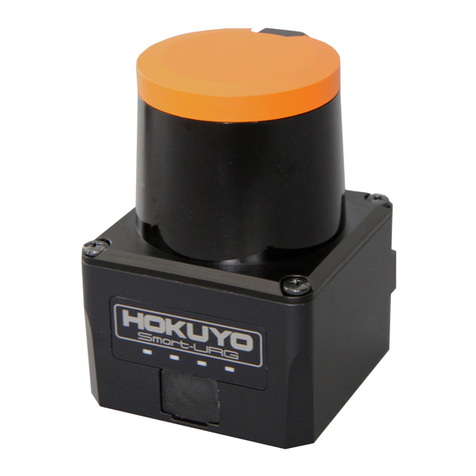
The lasers operating temperature range is from -10°C to 45°C. As a protection, at approximately 45°C the
lasers will automatically shutdown. Full operation will resume once the laser falls within its normal working
temperature range.
Using a heat sink with the laser is recommended. As with all semiconductor materials, avoid exposure to
electrostatic discharges.
Operate the laser in an environment in which there is normal aeration.
LASER SAFETY
It is extremely important to follow laser safety and wear appropriate eyewear when working around lasers.
Do not project laser in the direction of other people or at reflective surfaces that might cause exposure to the
human eye. Do not intentionally mount laser at eye level.
Use of controls or adjustments or performance of procedures other than those specified herein may result in
hazardous radiation exposure. Modifications, which affect any aspect of the product’s performance or intended
functions, will require re-certification of the product in accordance with the provisions of 21CFR 1040.10 and 1040.11.
Class 3B lasers are not intended for use in surveying, leveling, alignment, or medical applications. Laser classifi-
cation is performed according to United States Center for Devices & Radiological Health (CDRH) document
21 CFR 1040.10, and or the International Electro Technical Commission (IEC) document 60825-1:2014.
CLASS 1M Denotes lasers that do not pose a hazard under normal or single fault conditions. No risk to
eyes including use of optical instrument. No risk to skin. Laser emitting devices are lasers that
are safe under reasonably foreseeable conditions of operation, including the use of optical
instruments for intra-beam viewing.
CLASS 2M No risk to skin. Includes lasers emitting visible radiation (400 nm to 700 nm) where eye
protection is normally provided by an aversion response (blink reflex). No risk to eyes for short
time exposure including use of optical instruments. This means that the low power light is not
intended for direct viewing.
CLASS 3R Direct intra-beam viewing is potentially hazardous; a label must be used.
CLASS 3B Denotes lasers that pose a hazard when viewed directly, whether magnifying viewing aids are
used or not.