manuals.online logo
Brands
  1. Home
  2. •
  3. Brands
  4. •
  5. OSLiNK
  6. •
  7. Wireless Access Point
  8. •
  9. OSLiNK OSBRiDGE 5G Instruction sheet

OSLiNK OSBRiDGE 5G Instruction sheet

Popular Wireless Access Point manuals by other brands

TRENDnet TPL-410AP user guide

TRENDnet

TRENDnet TPL-410AP user guide

EnGenius EWS377-FIT quick start guide

EnGenius

EnGenius EWS377-FIT quick start guide

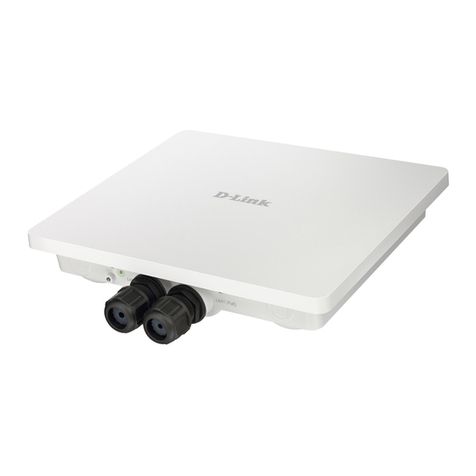
D-Link DWL-6700AP Quick installation guide

D-Link

D-Link DWL-6700AP Quick installation guide

Aerohive Networks Aerohive AP121 Hardware reference guide

Aerohive Networks

Aerohive Networks Aerohive AP121 Hardware reference guide

Vonets VAP11G Step-by-step guide

Vonets

Vonets VAP11G Step-by-step guide

Ubiquiti UniFi AP AC Outdoor quick start guide

Ubiquiti

Ubiquiti UniFi AP AC Outdoor quick start guide

Monoprice MW301A user guide

Monoprice

Monoprice MW301A user guide

D-Link DWL-2700AP - AirPremier Outdoor Wireless Access... user manual

D-Link

D-Link DWL-2700AP - AirPremier Outdoor Wireless Access... user manual

D-Link DWL-2100AP - AirPlus Xtreme G Quick installation guide

D-Link

D-Link DWL-2100AP - AirPlus Xtreme G Quick installation guide

TP-Link Auranet EAP225 Quick installation guide

TP-Link

TP-Link Auranet EAP225 Quick installation guide

D-Link DWL-2100AP - AirPlus Xtreme G Quick installation guide

D-Link

D-Link DWL-2100AP - AirPlus Xtreme G Quick installation guide

Ubiquiti NanoStation NSM2 quick start guide

Ubiquiti

Ubiquiti NanoStation NSM2 quick start guide

Aruba IAP-335 user guide

Aruba

Aruba IAP-335 user guide

Advantek Networks AWN-AP-54MR user manual

Advantek Networks

Advantek Networks AWN-AP-54MR user manual

IP-COM AP355 user guide

IP-COM

IP-COM AP355 user guide

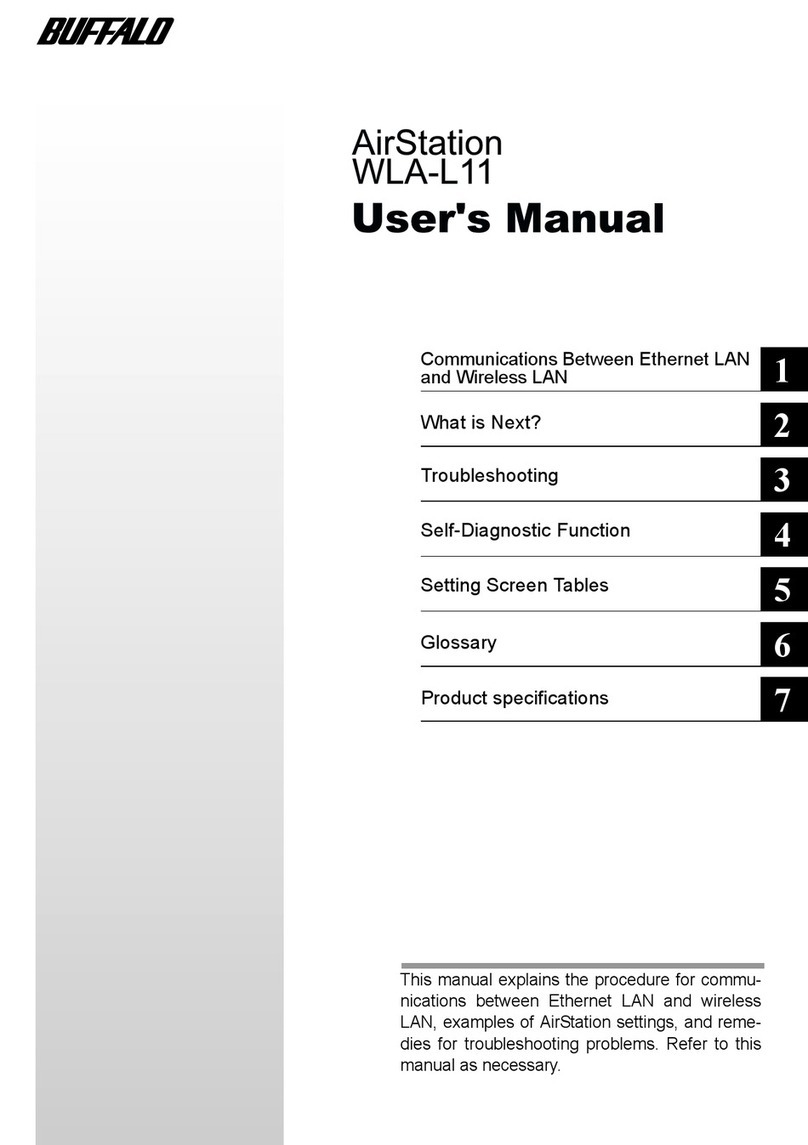
Buffalo AirStation WLA-L11G user manual

Buffalo

Buffalo AirStation WLA-L11G user manual

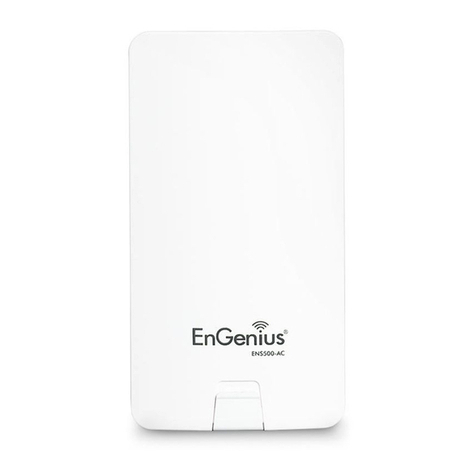
EnGenius EnStationACv2 user manual

EnGenius

EnGenius EnStationACv2 user manual

D-Link DAP-3662 Quick installation guide

D-Link

D-Link DAP-3662 Quick installation guide

manuals.online logo
manuals.online logoBrands
  • About & Mission
  • Contact us
  • Privacy Policy
  • Terms and Conditions

Copyright 2025 Manuals.Online. All Rights Reserved.

OSBRiDGE 5G
Configuration Manual
Firmware 3.15R
1. Initial setup and configuration.
OSBRiDGE 5G device are configurable via WWW interface. Each device u e following default
etting :
IP Addre : 192.168.1.254
Subnet Ma k: 255.255.255.0
Login: admin
Pa word: public
The initial login creen appear a follow :
Plea e enter u ername and pa word, then pre ubmit to log into the device.
Please note that after changing device parameters and pressing “SUBMIT” button
new settings will only be saved when you press "Apply Configuration" button at the
right bottom of the configuration page. You also need to reboot the device for the
device to start with new settings.
2. System Information
Sy tem information tab how information about y tem hardware and operational parameter :
Device Information:
Device Type – Device type you are logged into.
Device Name - Thi i the y tem name for ea y identification of the OSBRiDGE 5G unit.
MAC Address – Device Ethernet MAC addre .
Firmware Version – Current firmware ver ion..
Hardware Revision – Device Hardware ver ion.
Regulatory Domain – Currently configured regulatory domain.
Uptime – How long the device ha been up and running ince la t reboot.
System Load – Percentage of CPU utilization.
IP Mode – Network mode the device ha been configured to work with. Available mode are
Bridge and Router.
IP Address – Device IP addre .
Subnet Mask – Currently defined ubnet ma k.
Default Gateway – Currently defined default gateway.
Wireless Interface 1 / Wireless Interface 2:
On the device the inner N connector i for WLAN1 interface and the outer N connector i for
WLAN2 interface.
Status – Enabled or Di abled, depending on the current configuration.
MAC Address – MAC addre of the wirele interface.
WLAN Mode – Acce Point (802.11a compatible) or Polling Ba e Station (OSBRiDGE
proprietary WLAN MAC protocol, optimized for outdoor network ).
ESSID - ESSID of the WLAN interface. All wirele device on a common wirele network mu t
employ the ame ESSID in order to communicate with each other.
Frequency – Current frequency the interface i configured to operate on.
Channel Width – Channel width the device i configured to operate. Available value are 20
MHz ( tandard width), 10 MHz (half width), 5 MHz (quarter width) and 40 MHz (802.11a Turbo
mode).
Data Rate – Configured Data Rate for pecific WLAN interface.
Supported Data Rates – Wirele Data rate the device upport .
Available Data Rate are:
6, 9, 12, 18, 24, 36, 48 and 54 Mbp for regular 802.11a mode,
12, 18, 24, 36, 48, 72, 96 and 108 Mbp in 802.11a Turbo mode,
3, 4.5, 6, 9, 12, 18, 24 and 27 Mbp for 802.11a mode with 10 MHz channel width,
1.5, 2.25, 3, 4.5, 6, 9, 12 and 13.5 Mbp for 802.11a mode with 5 MHz channel width.
TX Packets – Number of data packet that have been tran mited by the Acce Point.
TX Errors – Number of error in packet that have been tran mited by the Acce Point.
TX Bytes – Number of byte tran mited by the Acce Point.
RX Packets – Number of data packet that have been received by the Acce Point.
RX Errors – Number of error in packet that have been tran mited to the Acce Point.
RX Bytes – Number of byte received by the Acce Point.
Fragmentation Threshold - The ize at which packet are fragmented on the WLAN interface.
Cell Size (km) - Configure di tance between OSBRiDGE 5G device and the mo t di tant client
connecting to it.
3. General Settings
Regulatory Domain – Plea e elect regulatory domain that i mo t appropriate to your
location.
Supported Regulatory Domain and allowed frequency range are a follow :
Europe – 5500 – 5700 MHz with 20MHz channel tep (11 channel ) and DFS;
OFCOM UK – 5735 MHz, 5755 MHz, 5775 MHz, 5835 MHz with DFS;
USA – 5180 – 5320 MHz with 20MHz channel tep, 5745 - 5825MHz with 20 MHz channel
tep (13 channel );
Far East & Africa – 4920 – 6100 MHz with 10 MHz channel tep, 802.11a and 802.11a
Turbo mode (118 channel ).
Device Name - Thi i the y tem name for ea y identification of the OSBRiDGE 5G unit.
WLAN 1 ESSID - An ESSID i the unique name hared among all peer in your wirele
network. The name mu t be identical for all device attempting to connect to the ame network.
It hall be up to 32 character length.
WLAN 2 ESSID - An ESSID i the unique name hared among all peer in your wirele
network. The name mu t be identical for all device attempting to connect to the ame network.
It hall be up to 32 character length.
IP Operational Mode –
Bridge - Bridge work at OSI model Layer 2. Thi mean it doe not know anything about
protocol , but ju t forward data depending on the de tination addre in the data packet.
Thi addre i not the IP addre , but the MAC (Media Acce Control) addre that i
unique to each network adapter card. With a Bridge, all your computer are in the ame
network ubnet, o you don't have to worry about not being able to communicate between
computer or hare an Internet connection. The only data that i allowed to cro the
bridge i data that i being ent to a valid addre on the other ide of the bridge. Bridge
don't require programming. They learn the addre e of the computer connected to
them by li tening to the data flowing through them. Bridge are very u eful for joining
network made of different media type together into larger network , and keeping
network egment free of data that doe n't belong in a particular egment.
Router - Router i an OSI model Layer 3 device, and forward data depending on the
network addre , not the hardware (MAC) addre . For TCP/IP network thi mean the
IP addre of the network interface. Router i olate each LAN into a eparate ubnet.
Router provide bandwidth control by keeping data out of ubnet where it doe n't belong,
however route need to be et up before they can get going.
WLANx Mode - Wirele LAN Operational mode for the device. Available mode are:
Access Point - Thi mode allow connection of any 802.11a ba ed Client Device .
Polling Base Station – Thi mode utilize OSBRiDGE proprietary polling wirele mac
protocol, that ha been pecifically optimized for high performance outdoor network .
Web Login Timeout – Enter the value the management Web e ion hould be kept alive
without any action from the u er.
Watchdog – If enabled then OSBRiDGE 5G device will end 3 ICMP Echo Reque t to the
configured IP addre , each in 3 minute interval. If there i no ingle ICMP Echo Reply to any of
the e reque t , then the device will reboot it elf. The device ha al o independent hardware
watchdog built in, that check for critical operational parameter and reboot the device, hould
the y tem hang or become un table. That watchdog work all the time, regardle of the ping
watchdog configuration.
ETH Speed – Ethernet connection peed, available value are Auto, 100MBp Half/Full Duplex
and 10Mbp Half/Full Duplex.
Stats Update Interval – time interval between ub equential graph update .
Traffic Shaping – Enable or Di able built in traffic haper.
Firewall – Enable or Di able built in packet filtering firewall.
Wireless Traffic Forwarding – If Enabled when device i operating a Acce Point then all
traffic coming from WLAN interface i forwarded to pecified MAC addre on the wired interface
only.
Reset to Default Password - Pa word that i u ed to re et device to factory default etting
u ing OSRe et oftware.
NTP Server – Configure IP addre of the external NTP (Network Time Protocol) erver where
OSBRiDGE device will obtain current time from at tartup time.

4. IP Settings
Router Mode
Wired Interface IP – Enter IP addre of the wired interface here.
Wired Interface Mask – Enter wired network ubnet ma k here.
Wireless Interface IP x – Enter IP addre of the wirele interface here.
Wireless Interface Mask x – Enter wirele network ubnet ma k here.
Default Gateway – IP addre of a router where traffic not de tined for defined route / local
route will be forwarded.
Defined Routes – Thi table di play currently defined tatic route . To delete a route elect
"Delete" checkbox and pre Submit on the bottom of the page. Plea e note that it i not
po ible to delete fir t two entrie – direct route to local interface .
Add Route:
Direct – Wired/Wireless - When router ha two or more IP ubnet directly attached to
it different interface , it can route IP packet between tho e ubnet u ing a direct route.
A direct route con i t of an IP Addre which pecifie the ba ic IP addre to route, a
Subnet Ma k which define the cla of IP addre e that will be routed, and an interface
which pecifie where the IP ubnet i attached. When an IP packet addre ed to a
y tem on the directly routed ubnet arrive at the router, the router will end it directly
to the target machine on the interface pecified. When entering direct route u e 0.0.0.0
a Gateway.
Indirect - When router need to end IP packet between IP ubnet which are not
directly connected to one of it interface , it mu t have an indirect route for ending tho e
packet . An indirect route con i t of an IP Addre which pecifie the ba ic IP addre to
route, a Subnet Ma k which define the cla of IP addre e that will be routed and a
Gateway that will relay the IP packet. When an IP packet addre ed to a y tem on the
indirectly routed ubnet arrive at the router, the router will route it over to the pecified
Gatway to be routed further.
Bridge Mode
Device IP – Enter device IP addre here.
Subnet Mask – Enter network ubnet ma k here.
Default Gateway – IP addre of a router where traffic going out ide of the local network will
be forwarded.
5. Wireless Settings
MAC Address – MAC Addre the wirele interface hould u e for operation. When et to
00:00:00:00:00:00 (default value) device will u e factory a igned MAC addre , when et to
any other valid value the device will u e u er configured MAC addre . MAC addre can not be
et to ff:ff:ff:ff:ff:ff, MAC addre of the other wirele interface nor to the MAC addre of the
ethernet interface (the main MAC addre vi ible in the Sy tem Info tab).
Output Power - By default, the OSBRiDGE 5G tran mit data at the maximum output power for
the regulatory domain elected and frequency u ed. With Tran mit Power Control (TPC), you can
adju t the output power of the unit to a lower level in order to reduce interference from
neighboring device .
Broadcast ESSID – Choo e whether the device hould broadca t it ESSID, o it would be
vi ible to anyone, or if ESSID hould not be broadca ted.
Fragmentation Threshold – Enter the ize at which the packet will be fragmented.
Cell Size (km) - Configure di tance between OSBRiDGE 5G device and the mo t di tant client
connecting to it.
Data Rate – Choo e data rate the device will upport while connecting to the Acce Point.
Available Data Rate are:
6, 9, 12, 18, 24, 36, 48 and 54 Mbp for regular 802.11a mode,
12, 18, 24, 36, 48, 72, 96 and 108 Mbp in 802.11a Turbo mode,
3, 4.5, 6, 9, 12, 18, 24 and 27 Mbp for 802.11a mode with 10 MHz channel width,
1.5, 2.25, 3, 4.5, 6, 9, 12 and 13.5 Mbp for 802.11a mode with 5 MHz channel width.
Association Timeout – Configure how much time ha to pa before idle client device will be
automaticaly di a ociated by Acce Point.
Operating Frequency – If the current configured Regulatory Domain allow manual frequency
election configure the frequency wlan interface operate on. If the Regulatory Domain require
auto channel election then DFS (Dynamic Frequency Selection) i hown here.
Channel Width – Channel width the device i configured to operate. Available value are 20
MHz ( tandard width), 10 MHz (half width), 5 MHz (quarter width) and 40 MHz (802.11a Turbo
mode).
WLAN Inter Client Traffic– Choo e whether direct relaying of traffic from wirele client
connected to thi wirele interface to other wirele client connected to thi wirele interface
hould be enabled or di abled.
Data Encryption – Enable or Di able over the air OSBRiDGE proprietary data Encryption here.
Thi encryption cheme only work between compatible OSBRiDGE device .
Supported Data Rates – Enable or Di able WLAN Data Rate the OSBRiDGE 5G device hould
upport when communicating with client device .