10
Give Your Body Time to Adjust
It can take anywhere from several nights to a few weeks for your
body to adjust to your new sleeping surface, especially if you’re
trying different sleep settings to determine your ideal comfort.
When you’ve found your preferred sleep setting, program this
sleep setting into memory feature of the remote. Try sleeping at this
setting for a minimum of five nights. After five nights, evaluate your
sleep experience and if necessary, repeat the process until you
have found your perfect number setting. We recommend starting at
a higher number and working your way down. The common sleep
settings most people use are between 15-25.
• Try to keep a regular sleep schedule.
• Try getting roughly 8 hours of sleep per night.
Proper Spinal Alignment
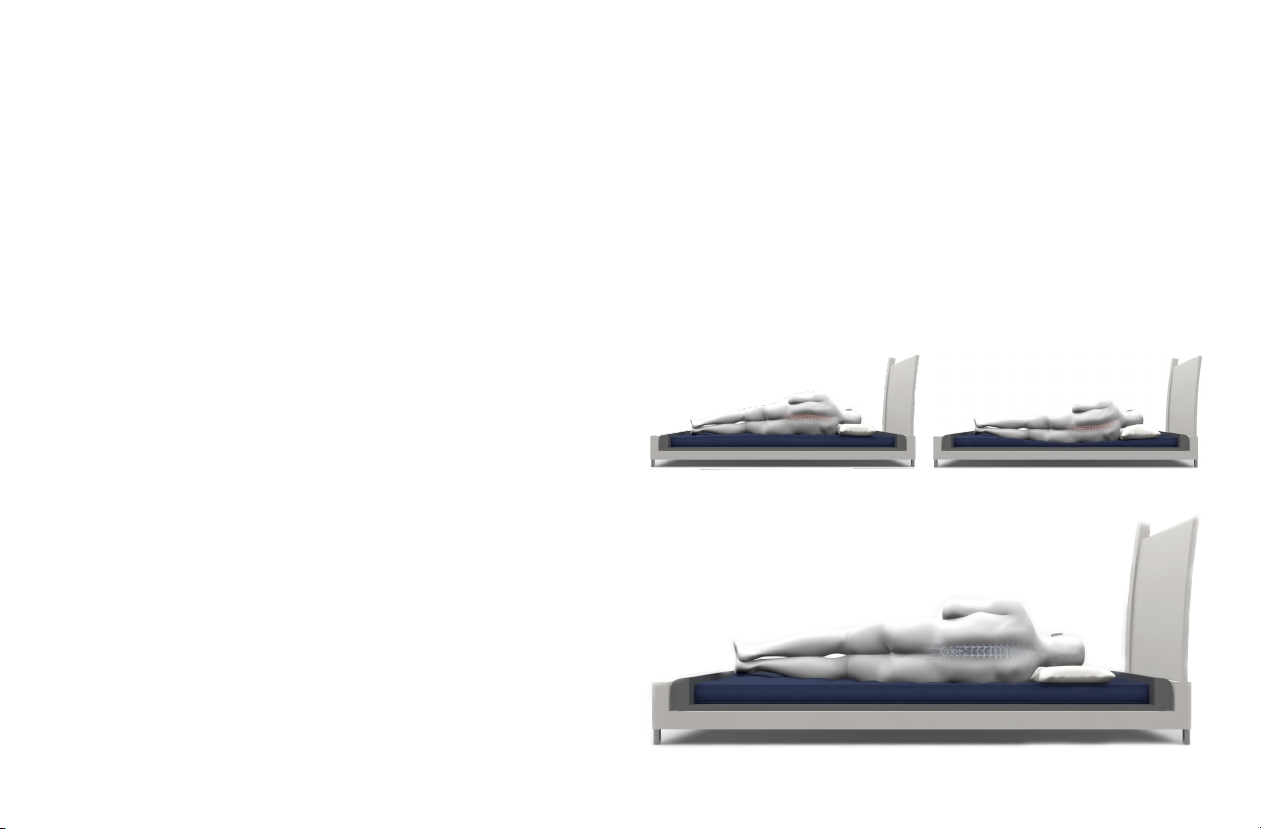
It’s very important to keep your spine in a neutral position while
sleeping. Owning a Personal Comfort® mattress allows you to
adjust your level of support depending on what position you sleep
in. The images to the right show what can happen if you over-inflate
or under-inflate your number bed. We recommend that you take the
time to find what is comfortable for you and your body. Please call
with any questions.
The Anti-Snore Feature
The Anti-Snore feature is only available on Personal Comfort®
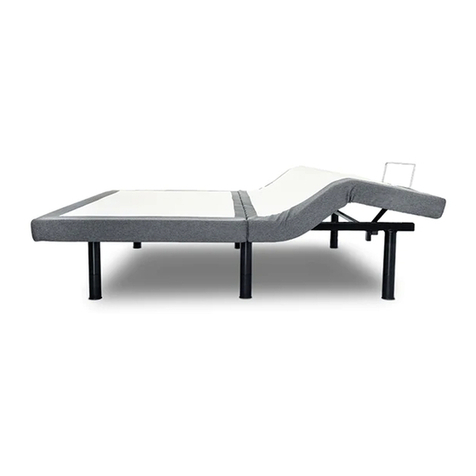
Flex™ adjustable bases. The Anti-Snore pre-set position (on your
remote) raises the head of the bed slightly to open airways and
improve breathing and reduce snoring.
Reasons to Alter Your Ideal Sleep Setting
Once you’ve found your ideal sleep setting, you should be able to
experience a deep, restorative level of sleep. However, you may
need to adjust your sleep setting for any of the following reasons.
• Strained or pulled muscles
• Back pain
• Weight change
• Pregnancy
• Sunburn or injury
• New sleep position
• To get in and out of bed
• To give bed a “full” appearance
Tips to Get You Sleeping Better
Over Inflated Under Inflated
Ideal Setting