manuals.online logo
Brands
  1. Home
  2. •
  3. Brands
  4. •
  5. Portway
  6. •
  7. Stove
  8. •
  9. Portway Rochester MK2 PCSSB2 User manual

Portway Rochester MK2 PCSSB2 User manual

This manual suits for next models

1

Other Portway Stove manuals

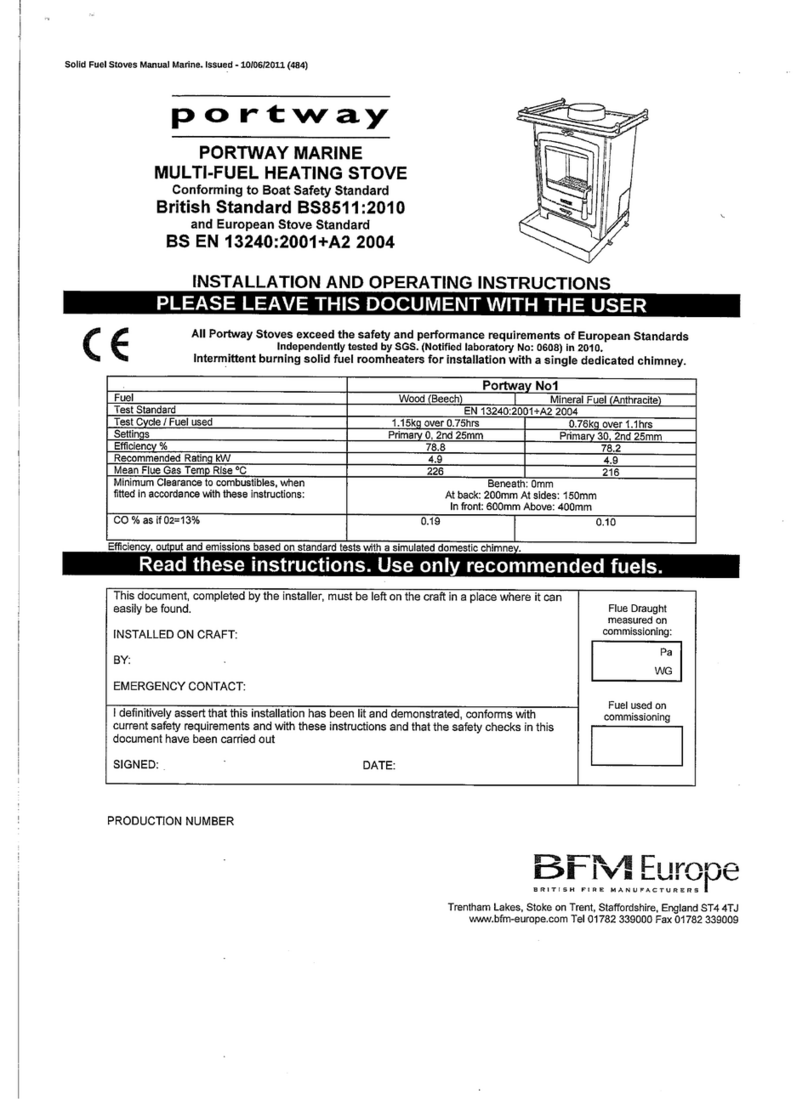
Portway No1 User manual

Portway

Portway No1 User manual

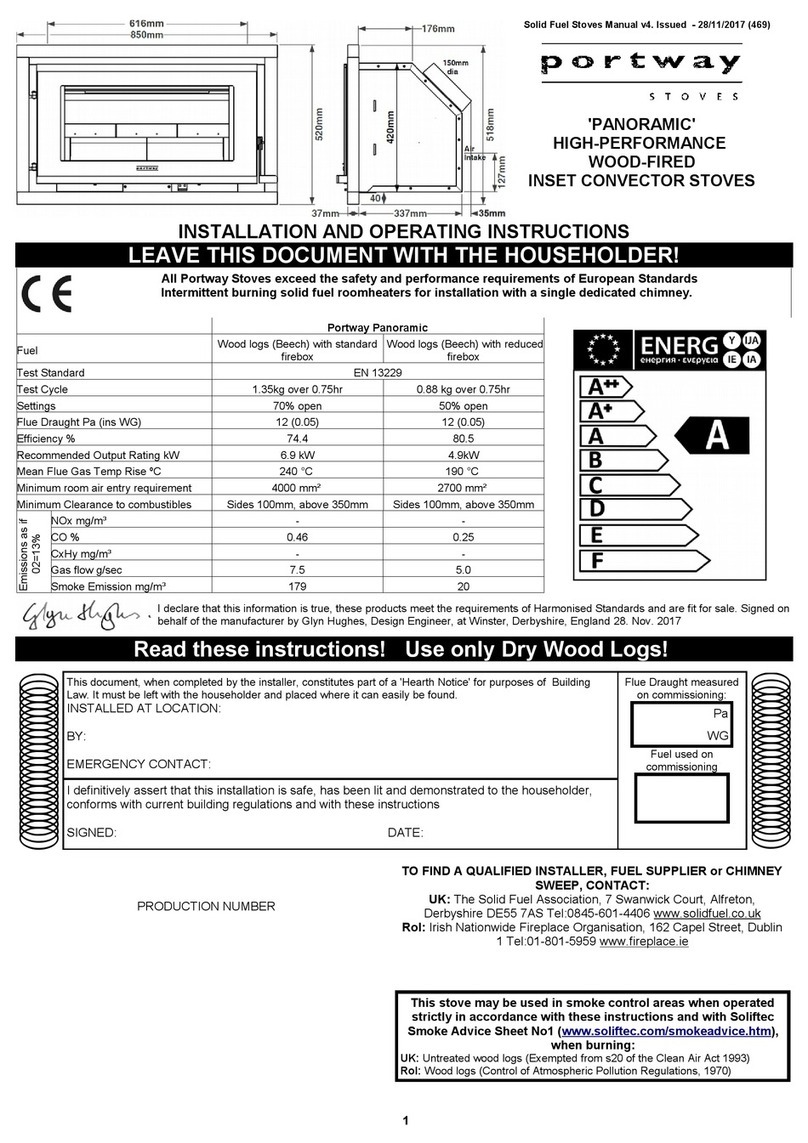
Portway Panoramic User manual

Portway

Portway Panoramic User manual

Portway LUXIMA PLXMF User manual

Portway

Portway LUXIMA PLXMF User manual

Portway No1 User manual

Portway

Portway No1 User manual

Portway Arundel MK3 User manual

Portway

Portway Arundel MK3 User manual

Portway LX LUXIMA User manual

Portway

Portway LX LUXIMA User manual

Portway Luxima Mounting instructions

Portway

Portway Luxima Mounting instructions

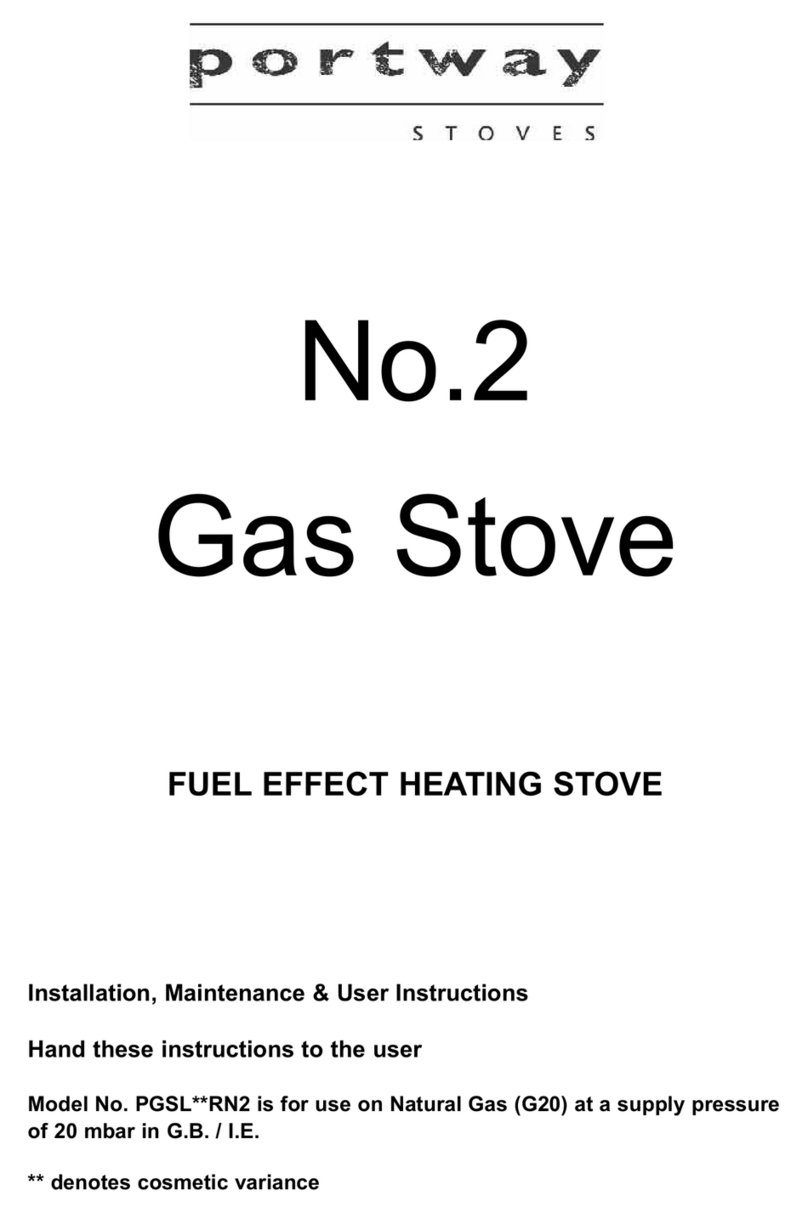
Portway PGSL**RN2 Mounting instructions

Portway

Portway PGSL**RN2 Mounting instructions

Popular Stove manuals by other brands

Quadra-Fire Discovery I Wood Appliance installation manual

Quadra-Fire

Quadra-Fire Discovery I Wood Appliance installation manual

Wildfire F-131 2 Series User instructions

Wildfire

Wildfire F-131 2 Series User instructions

Dansons Group Pit Boss PB820FB1 manual

Dansons Group

Dansons Group Pit Boss PB820FB1 manual

Sylvania SO111R-MBK instruction manual

Sylvania

Sylvania SO111R-MBK instruction manual

Breckwell SP6000 Installation & operator's manual

Breckwell

Breckwell SP6000 Installation & operator's manual

Breckwell P24FSA owner's manual

Breckwell

Breckwell P24FSA owner's manual

Bartscher 1509851 instruction manual

Bartscher

Bartscher 1509851 instruction manual

Continental Fireplaces CDVS280-1NSB Installation and operation manual

Continental Fireplaces

Continental Fireplaces CDVS280-1NSB Installation and operation manual

Arada Cassette Stove installation guide

Arada

Arada Cassette Stove installation guide

Astonica 40100008 instruction manual

Astonica

Astonica 40100008 instruction manual

Cattara FAMILY manual

Cattara

Cattara FAMILY manual

Stanley Argon F500 OVAL Installation and operating instructions

Stanley

Stanley Argon F500 OVAL Installation and operating instructions

Nordpeis Vega user manual

Nordpeis

Nordpeis Vega user manual

Exquisit EKC601-5 Instructions for use and installation

Exquisit

Exquisit EKC601-5 Instructions for use and installation

Stanley Oisin Oil MK II Installation and operation instruction

Stanley

Stanley Oisin Oil MK II Installation and operation instruction

HASE delhi operating instructions

HASE

HASE delhi operating instructions

Vermont Castings Intrepid 2 User instructions

Vermont Castings

Vermont Castings Intrepid 2 User instructions

Italiana Camini CLASSICA Installation, use and maintenance

Italiana Camini

Italiana Camini CLASSICA Installation, use and maintenance

manuals.online logo
manuals.online logoBrands
  • About & Mission
  • Contact us
  • Privacy Policy
  • Terms and Conditions

Copyright 2025 Manuals.Online. All Rights Reserved.

Rochester 7kW M 2
Multi-Fuel Stove, Model No. PCSSB2
(Chrome Door) & PCSSBB2 (Black Door)
Installation and Operating Instructions
Eco-Design 2022 Compliant
ulti-Fuel Stove
Read these Instructions and
use only the recommended fuels
Leave this manual with the householder following
installation
To find a qualified installer, fuel supplier or chimney sweep please contact :-
UK - The Solid Fuel Association R.O.I. - Irish Nationwide Fireplace Organisation
7 Swanwick Court 162 Capel Street
Alfreton Dublin
Derbyshire Tel (01) 801 5959
DE55 7AS www.fireplace.ie
Tel : (0845) 601 4406
www.solidfuel.co.uk
This Portway Rochester Stove may be used in smoke control areas when operated strictly
in accordance with these instructions and with Soliftec Smoke Advice Sheet No. 1
(www.soliftec.com/smokeadvice.htm) when burning :
UK : Untreated wood logs or authorised smokeless fuels (exempted from s20 of the clean
air act 1993)
ROI : ood logs, smokeless fuels or peat briquettes, but not petroleum coke (Control of
Atmospheric Pollution Regulations, 1970)
Page 1 of 17
Information Requirements for Commission Regulation (EU) 2015/1186
Model Identifier PCSSB2 / PCSSBB2
Indirect Heating Functionality No
Direct Heat Output 7.0kW
Indirect Heat Output Not Applicable
Fuel Wood logs with moisture content
<25%
Other Suitable Fuels Compressed wood with moisture
content <12%, Anthracite and dry
steam coal, ow temperature coke,
ignite briquettes, Peat briquettes,
Blended fossil fuel briquettes.
Nominal Heat Output (Measured) 7.1kW
Minimum Heat Output (Indicative) 3.0kW
Seasonal / Useful Efficiency at Nominal Heat Output 78.2%
Useful Efficiency at Minimum Heat Output (Indicative) 50.0%
Energy Efficiency Index 103%
Auxilliary Electricity Consumption at Nominal Heat Output Not applicable
Auxilliary Power Consumption at Minimum Output Not applicable
Auxilliary Power Consumption at Standby Mode Not applicable
Permanent Pilot Flame Requirement Not applicable
Type of Heat Output / Room Temperature Control Single stage heat output, no room
temperature control
Harmonised standard applied BS EN 13240:2001+A1:2004
Notified Body KIWA 0692
Contact Details BFM Europe td.
Gordon Banks Drive
Trentham akes North
Stoke-on-Trent
ST4 4TJ
Tel : 01782 339000
Page 2 of 17
Contents Description Page Number
Section 1 Stove Information 4
Section 2 Stove Installation Requirements & Smoke Control 5-7
Appliance Exemption.
Section 3 Stove Flue Connection to Chimney 8-9
Section 4 Suitable Wood Fuel 10
Section 5 Suitable Mineral Fuel 10
Section 6.1 Operation of the Portway Rochester M 2 7kW Stove 11
Section 6.2 Lighting the Stove - Installer Instruction 12
Section 6.3 Break in Fires - User Instruction 12
Section 6.4 Lighting the Stove - User Instruction 12
Section 6.5 Re-fuelling the Fire - User Instruction 13
Section 6.6 Maintenance 13
Section 7 Troubleshooting 14
Section 8 Removal & Re-Fitting the Stove Throat Plate 15
Section 9 Spare Parts 16
Page 3 of 17
Section 1 - Stove Information
1.1 This Portway Rochester 7kW M 2 multi-fuel stove meets the safety and
performance requirements of European Standard EN 13420 for intermittant
burning solid fuel roomheaters for installation in a dedicated chimney when
operated in accordance with these instructions. Independently tested by IWA,
Cheltenham, U .
1.2 Stove Dimensions - see figure 1 below.
Fig. 1
The stove is supplied with the following loose items :- 1 off ashpan & tool, 1 off outlet spigot
& 1 off stove glove.
Section 2 - Stove Performance Data
Page 4 of 17
Dimension refers to Internal flue collar dimension
Fuel Wood (Beech) ineral Fuel ( axibrite)
Test standard EN 13240 : 2001 + A2 2004 EN 13240 : 2001 + A2 2004
Re-fuelling Interval 0.75hrs 1.01hrs
Settings 0% primary, 50% secondary 50% primary, 0% secondary
Flue draught (Pa) (ins WG) 12 (0.05) 12 (0.05)
Efficiency 78.2% 78.9%
Recommended output (kW) 7.1 7.3
Mean flue gas temperature (oC) 300 315
Minimum air entry requirement 2700mm22700mm2
Minimum clearance to
combustible surfaces
350mm Rear, 375mm Side. 350mm Rear, 375mm Side.
Emissions if O2 = 13%
CO % 0.06 0.07
Flue gas mass flow (g/s) 6.0 5.1
Mean CnHm (Nmg/m3) 60 49
Mean NOx (Nmg/m3) 116 119
DIN Plus Dust (Nmg/m3) 26 32
Section 2 - Stove Installation Requirements
2.1 WARNING - Installing a stove is a controlled service, the law requires that the
installation is completed by a qualified installer or that the building inspector is in
formed. Check with your local authority.
2.2 ASBESTOS - This Portway stove does not contain asbestos, but asbestos material
may be encountered during installation of the stove. If in doubt contact a suitably
qualified professional to deal with Asbestos or material suspected to be asbestos.
2.3 WEIGHT - Your stove is heavy 87.5kg Net (102kg packed) - take care when
moving it and ensure that the fireplace to which you are attempting to install it
can take the weight - consider the use of a load distribution plate.
2.4 FIREGUARD - This stove becomes extremely hot is use, therefore a fireguard
should be used if children, the elderly or infirm are present.
2.5 FIREPLACE - Stoves become extremely hot in use, therefore the fireplace to
which the stove is installed must be made from durable fireproof materials. Thin
stone slabs (less than 50mm) risk cracking unless cut into sections to allow for
expansion and backed by heat resistant concrete. Even beyond the safety
clearances stated items subjected to radiant heat from the stove can still become
extremely hot, therefore please take care when siting items such as fuel, paper
etc.
2.6 AIR SUPPLY - Your stove needs air to breathe and therefore perform correctly.
There must be a permanent fresh air supply into the space to which it is installed
equal to 550mm2 for each kW of output. This can often be provided by air leaking
around door frames etc. It is commonly accepted that this level of adventitious
ventilation alone may suffice for stoves of output less than 5kW but as this stove
has a 7kW output a purpose made air vent must be fitted. If an extractor fan is
fitted in the room, any interconnecting room or room in the vicinity can
detrimentally affect the performance of the stove so please check stove
performance with these extraction fans in operation. Where there are additional
combustion appliances within the property please ensure that the relevant
requirements of Approved Document J of the Building Regulations are complied
with. When air inlet grills are positioned to provide combustion air they must not
be liable to blockage. Regular checks should be made to ensure that any air inlet
grill is not obstructed. It is essential that the stove has adequate air supply for
combustion and ventilation. Apertures provided for this purpose shall not be
restricted.
2.7 REGULATIONS : All local regulations including those referring to National
and European standards need to be complied with when installing this appliance.
Refer to the current version of BS 8303, Code of Practise for installation of
domestic heating and cooking appliances burning mineral fuel. Refer to the
current version of BE EN 15287-1, Design, Installation and Commissioning of
Chimneys.The hearth should extend a minimum at least 300mm in front of the
stove (Portway recommend 400mm) and 150mm to each side. A minimum of
50mm clearance to non-combustible materials is required at each side of the
stove for access for servicing and maintenance. There must be no combustible
material positioned within 1000mm of the front of the stove. Page 5 of 17

2.8 CHI NEY - The chimney must conform to the following requirements :-
2.8.1 Generate a draught when in use of minimum 12 Pa (0.05 ins WG).
2.8.2 Have a minimum internal cross section equivalent to not less than 125mm
diameter. (12,272mm2)
2.8.3 Be capable of withstanding the flue gas temperatures generated by the stove.
2.8.4 Terminating at least 1 metre above the ridge.
2.8.5 Be free from any cracks or sources of leakage and be sealed throughout its entire
length to prevent leakage of products of combustion into the property.
2.8.6 Have no bends greater than 45 degrees.
2.8.7 Have no obstructions and having been swept throughout its entire length.
2.8.8 Being connected only to this Portway stove.
2.8.9 Conforming to local building regulations and rules in force.
2.8.10 Being adequately insulated.
2.8.11 Where the flue passes through timber or thatch or vunerable materials specialist
advice must be sought.
2.8.12 THIS APPLIANCE MUST NOT BE INSTALLED ON A SHARED FLUE SYSTEM.
2.9 APPLIANCE EXE PTION UNDER SECTION 21 OF THE CLEAN AIR ACT
1993 AND S OKE CONTROL AREAS
2.9.1 The Portway Rochester 7kW M 2 multi-fuel free-standing stove, model number
PCSSB2 & PCSSBB2 has been exempted under the Clean Air Act 1993 for use in
smoke control areas when burning wood logs.
The Clean Air Act 1993 and Smoke Control Area’s
2.9.2 Under the Clean Air Act local authorities may declare the whole or part of the
disrict of the authority to be a smoke control area. It is an offence to emit smoke
from a chimney of a building, from a furnace or from any fixed boiler if located in
a designated smoke control area. It is also an offence to aquire an “unauthorised
fuel” for use within a smoke control area unless it is used in an “exempt”
appliance (“exempted” from the controls which generally apply in a smoke control
area).
In England appliances are exempted by publication on a list by the Secretary of
State in accordance with the changes made to section 20 and 21 of the Clean Air
Act 1993 by section 15 of the Deregulation Act 2015. Similarly in Scotland
appliances are exempted by publication on a list by Scottish ministers under
section 50 of the Regulatory Reform (Scotland) Act 2014.
In Wales and Northern Ireland these are authorised by regulations made by Welsh
Ministers and the Department of the Environment respectively.
Further information on the requirements of the Clean Air Act can be found here :
http://www.gov.uk/smoke-control-area-rules
Your local authority is responsible for implementing the Clean Air Act 1993
including designation and supervision of smoke control areas and you can contact
them for details of Clean Air Act requirements
Page 6 of 17
2.9 APPLIANCE EXE PTION UNDER SECTION 21 OF THE CLEAN AIR ACT
1993 AND S OKE CONTROL AREAS (CONTINUED).
2.9.4 Refuelling on to a low fire bed
If there is insufficient burning material in the fire bed to light a new fuel charge,
excessive smoke emission can occur. Refuelling must be carried out onto a
sufficient quantity of glowing embers and ash that the new fuel charge will ignite.
If the fire bed is too low or cool, suitable kindling must be used to re-light fires.
2.9.5 Fuel overloading
The maximum amount of fuel specified in this manual must not be exceeded,
overloading can cause excessive smoke.
2.9.6 Operation with door left open
Operation with the door left open can cause excessive smoke. The appliance
must not be operated with the door left open except as directed in the
instructions.
2.9.7 Dampers left open
Operation with the air controls or dampers open can cause excessive smoke. The
appliance must not be operated with the air controls or dampers left open except
as directed in the instructions.
2.10 REQUIRE ENTS TO FIT A CARBON ONOXIDE (CO) ALAR
2.10.1 When this stove is installed, Building Regulations require that whenever a new or
replacement fixed solid fuel or wood/biomass appliance is installed in a dwelling a
carbon monoxide alarm must be fitted in the same room as the appliance.
Further guidance on the installation of the Carbon Monoxide alarm is available in
the latest version of BS EN 50292 and from the alarm manufacturers instructions.
2.10.2 IMPORTANT NOTE : The installation a Carbon Monoxide (CO) alarm is not a
substitute for installing the appliance correctly, regular servicing and maintenance
of the chimney / flue or the stove itself. Please ensure that regular servicing in
accordance with section 6.6 of this manual is completed.
2.10.3 WARNING NOTE : Properly installed, operated and maintained this stove stove will
not emit fumes into the dwelling. Occasional fumes from de-ashing and
re-fuelling may occur. However, persistent fume emission is potentially dangerous
and must not be tolerated. If fume emission does persist the following action
must be taken:-
Open windows and door to ventilate the room and then leave the premises.
Let the fire go out.
Check for chimney blockage and clean if required.
Do not attempt to re-light the fire until the cause of fume emission has been
identified and corrected. If necessary seek expert advice.
The most common cause of fume emission is flueway or chimney blockage. For
your own safety these must be kept clear at all time. Page 7 of 17
Section 3 - Stove Flue Connection to the Chimney
3.1 The flue can be connected to the stove via either the top or the rear outlet. The
stove can then be sealed to the chimney using a short length of uninsulated flue
pipe as shown below and overpage in figures 2, 3 & 4.
3.1.1 Top flue outlet into existing chimney - figure 2
Fig. 2
3.1.2 Top flue outlet sleeved through wall into external insulated flue - figure 3
Fig. 3
Register plate Cleaning access door
Metal sealing collar and
glass rope Fireproof and air tight seal
required all round
Cleaning hatch on bend
External insulated flue Fireproof and air tight seal
required all round
Page 8 of 17
Fireproof and air tight seal
required all round
3.1.3 Rear flue outlet into chimney with sealing collar - figure 4
Fig. 4
3.1.4 Rear outlet by “tee” piece with cleaning door - figure 5
Fig. 5
3.1.5 IMPORTANT INFORMATION - whichever method is used it is imperative that the
route from the stove to the chimney terminal is completely air-tight, even very
small air gaps can adversly affect the flue draught. Seal all joins with fireproof
cement and / or heatproof rope. The entire construction should be made of
durable fireproof materials.
Cleaning door
Fireproof and air tight seal
required all round
“T” piece with cleaning door
Page 9 of 17
Section 4 - Suitable Wood fuel for the Portway Rochester K2 7kW - User
Instruction
4.1 SMO E CONTROL - In certain areas special rules apply regarding the use of some
fuels, please ensure that you check with your local authority. This Portway
Rochester stove may be used in smoke control area’s when operated strictly in
accordance with these instructions and with Soliftec Smoke Advice sheet No. 1,
see front cover of this manual for further details.
4.2 WOOD TYPES - All types of wood are suitable providing they are well seasoned,
untreated and have a moisture level of between 12% & 20%. For softwoods they
will need to have been left in storage for 9 months in order for the moisture to of
evaporated. For hardwoods this could take in excess of 18 months for the wood
to season. If you are unsure of the moisture content of your logs it is
recommended that you purchase a suitable mositure meter which will allow you to
measure the moisture content of the wood you are planning to use.
4.3 WOOD SIZE - It is recommended that logs should be no greater than 5” / 125mm
in diameter and a maximum of 250mm in length. The logs must be dry with a
moisture content no greater than 20%.
4.4 WET TIMBER WARNING - Wet timber and logs must not be used as this will
create excess tar deposits in the chimney and the stove and could considerably
increase the possibility of a chimney fire. Wet timber and wood also increases
emissions, creates more smoke and will reduce the lifespan of the stove.
4.5 JOINERY WASTE - Burning joinery waste is acceptable, providing the wood is un
treated and dry. Joinery waste generally is softwood and hence will not burn as
cleanly or for as long as hardwood logs.
Section 5 - Suitable & Unsuitable ineral fuel for the Portway Rochester K2
7kW
Suitable Fuels
5.1 ANTHRACITE - (Smokeless) is a natural hard, shiny form of coal. Slow to light it
can burn for very long periods with great heat. Use the “small” size of this fuel.
5.2 BRIQUETTES - Compressed blocks of fuel, generally able to burn for long periods.
Trade names for these fuels include “Homefire” and “Phurnacite”.
Unsuitable Fuels
5.3 PETROLEUM CO E - THIS FUEL IS NOT SUITABLE FOR USE WITH THIS STOVE.
If used, “Petcoke” (also known as “Longbeach”) will rapidly degrade the interior of
the stove.
5.4 HOUSECOAL OR BITUMOUS COAL - THIS FUEL IS NOT SUITABLE FOR USE WITH
THIS STOVE. This fuel is designed for use in open fires, it makes tarry smoke
flammable gas which makes it difficult to control in a closed fire such as a stove.
I PORTANT NOTE : DO NOT BURN ANY FOR OF HOUSEHOLD WASTE WITH
THIS STOVE AND NEVER USE ANY FOR OF LIQUID FUEL ON THE STOVE.
Page 10 of 17