Functional Description
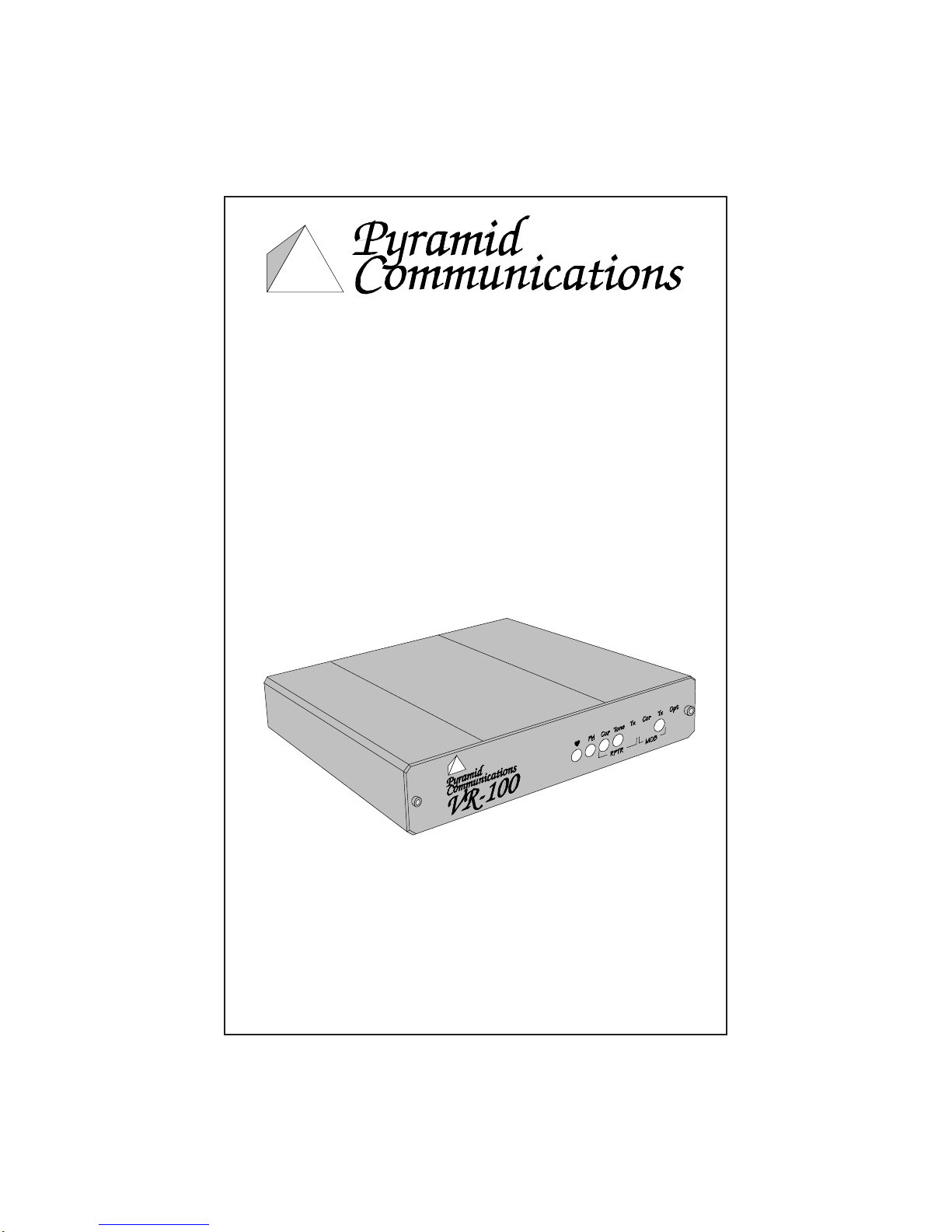
The VR-100 operates on UHF simplex frequencies; the handhelds
transmit CTCSS but are carrier squelch receive. The VR-100 has CTCSS
on receive only. The repeater should be connected to a VHF high band
or low band mobile for best operation. Connection to a UHF mobile is
possible, provided there is enough separation in the mobile transmit and
the VR-100 receive frequencies. Also, antennas for the VR-100 and the
mobile radio should be located as far apart as practical, and with vertical
separation if possible. Additionally, bandpass filters and notch cavities
may be used to reduce interference between the mobile and VR-100.
When the user leaves the vehicle, they activate the VR-100 via their
mobile radio front panel or a separate switch. When the mobile radio is
receiving carrier and proper tone, the VR-100 will begin transmitting on
the handheld's receive frequency. The user is able to hear and respond to
all radio traffic, including other handhelds at the site. The VR-100 will
cease transmission periodically to check for handheld activity. If the VR-
100 detects proper carrier and tone from a handheld, it will key the mobile
radio and repeat the users transmission. In this way, the handheld is given
priority and may respond during repeater hang time. The VR-100 has a
3 minute time-out timer in the base to handheld direction. If the base
transmits to the mobile for more than 3 minutes, the VR-100 will send an
error tone to the handheld, unkey the repeater and remain idle until the
base ceases transmissions.
When the VR-100 is first activated, it will transmit a short "lock tone"
that alerts the user that the system is functioning. It will then assume the
priority status and be ready to repeat any base to handheld or handheld to
base transmissions. If another unit arrives at the same site and is
activated, it too will transmit the "lock tone"; when the first VR-100
detects the lock tone from the second unit, it will increment it's priority
counter and will no longer repeat any transmissions. This process will
continue for each unit that arrives at the scene, creating a priority
hierarchy for up to 256 vehicles.
Even though the other VR-100's are not at priority status, they will
continue to monitor the channel for activity. If the priority unit were to
leave the scene or become disabled, the other units will detect the
condition to repeat and determine that there is no priority unit repeating
the transmission. They will then begin decrementing their priority
counters until one of them reaches the priority status and begins repeating
VR-100
Page 3