5
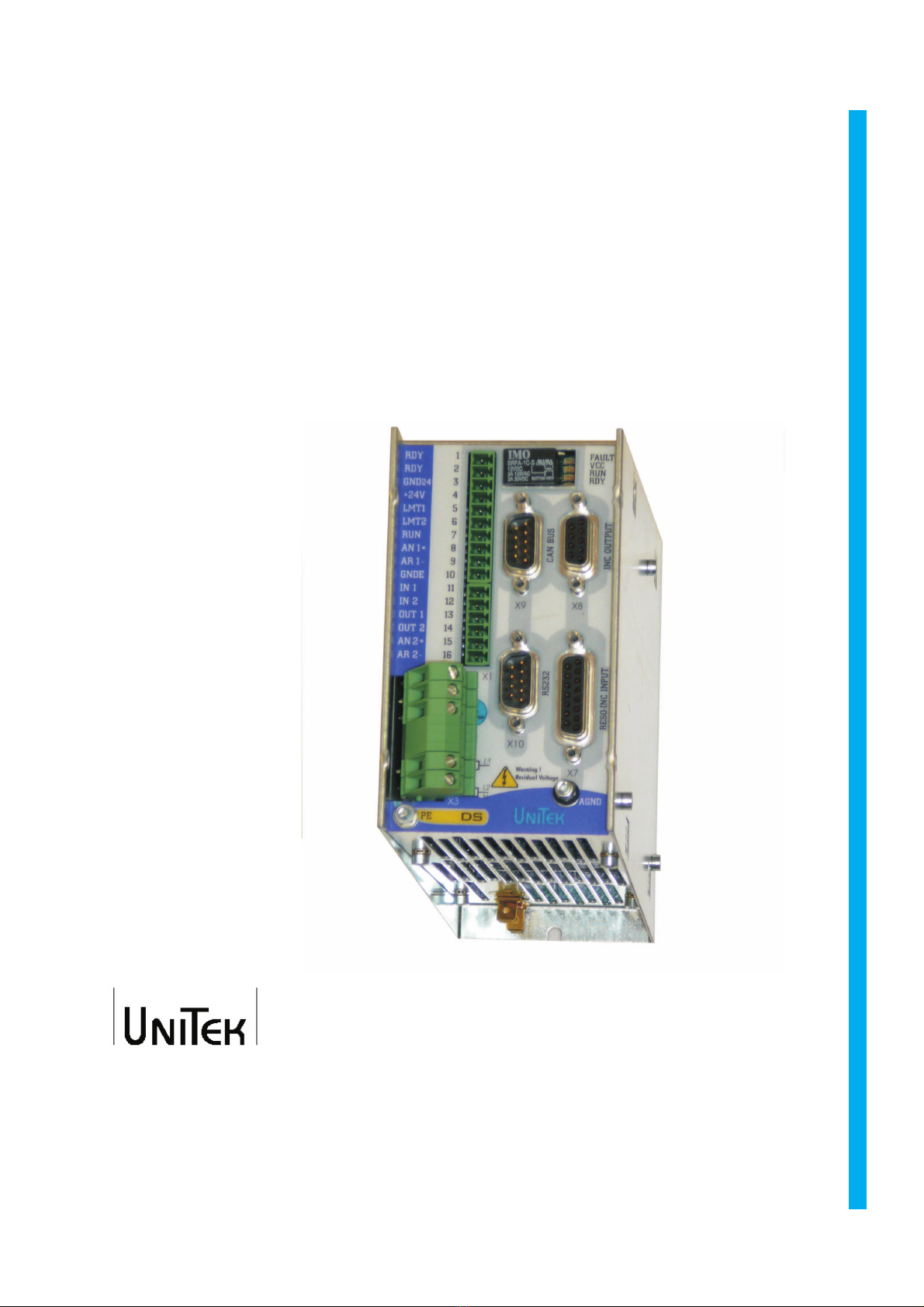
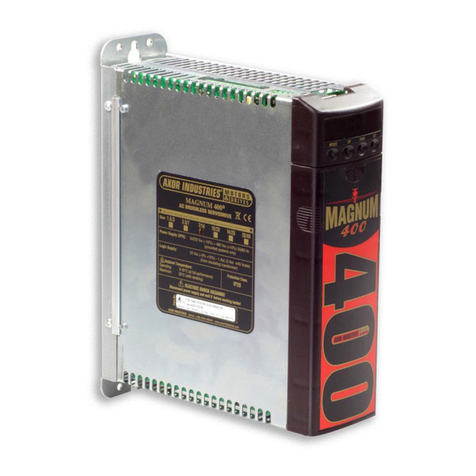
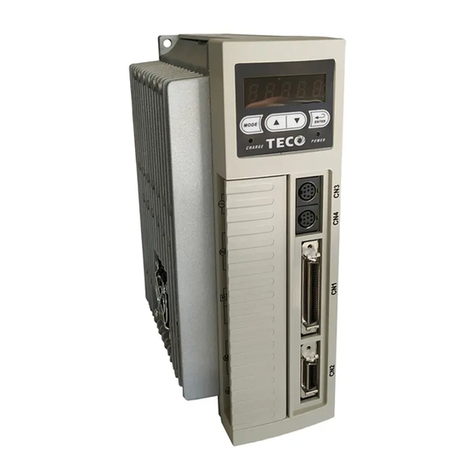
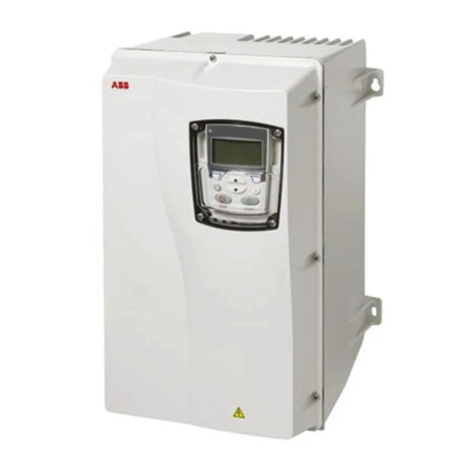
DS 2420, DS 4820
General information
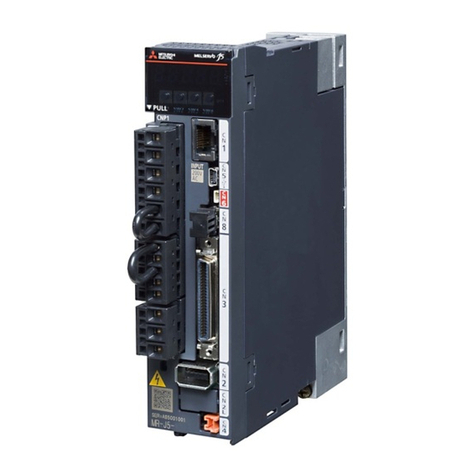
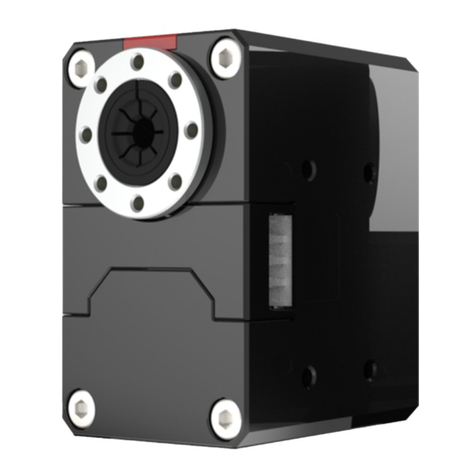
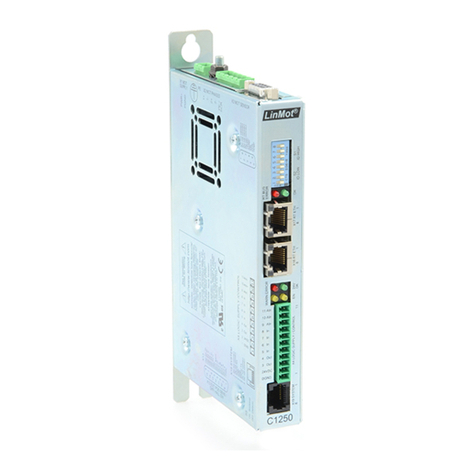
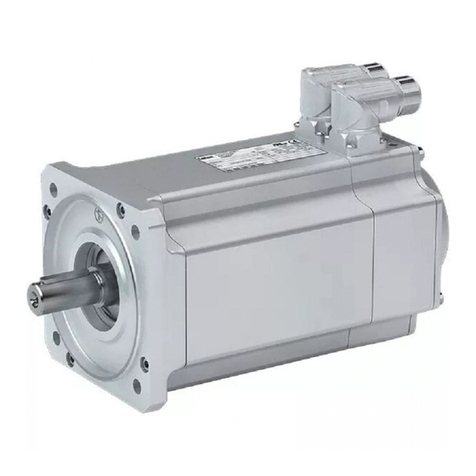
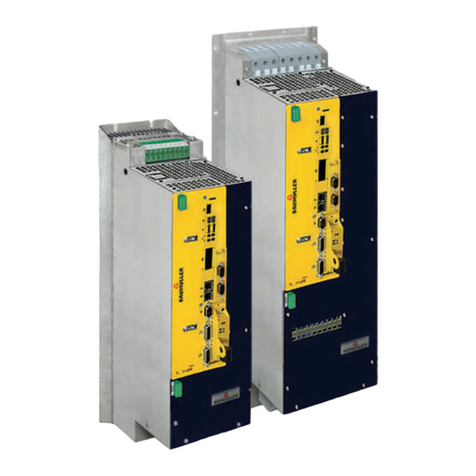
The digital 3-phase current servo amplifier DS xx in combination with the brushless dc
motor (synchro servo motor, CE motor) provide a drive solution free of maintenance and
with a wide dynamic control range. The drive displays the well-known good control
characteristics of dc drives without the disadvantages of the carbon brushes’ wear and the
commutation limits. The rotor moment of inertia is notably lower and the threshold power is
greater than with equally constructed dc motors. This results in up to 5 times higher
acceleration values. Compared to asynchronous motors with frequency converters the
stability, the control range and the efficiency of the drive are considerably improved. The
generated heat in the motor only occurs in the stator, therefore, the EC motors always have
the protection rating IP 65.
From the electrical view, the brushless dc motor is a synchro motor with a permanent
magnet rotor and a three-phase current stator.
The physical characteristics correspond to those of dc motors, i.e., the current is
proportional to the torque and the voltage is proportional to the speed. The speed is
steadily controlled up to the current limit (max. torque. In case of an overload the speed
drops and the current remains constant.
The speed/torque characteristic is rectangular.
Current, speed, and position are precisely measured. The field frequency is not
controllable, it is automatically adjusted.
The motor voltages and the motor currents are sinusoidal. A maximum motor efficiency is
achieved by means of a compensating current control.
The DS 2420 drives can be used as single-axis position amplifier or torque or speed
amplifier.
The position and speed actual value is generated in the encoder unit (resolver or
incremental encoder). The encoder pulses are emitted from the amplifier for a
superordinate PLC/CNC control. The control circuits of current, speed, and position are PID
controllers which are easy to program. They can be programmed by means of a PC or a
programming box. The communication with superordinate controls is effected by means of
BUS systems (standard CAN-BUS, RS232) or by analogue interfaces.
Note:
The energy is fed back into the battery during brake operation.
No ballast (regen) circuit.
For any operation via a mains supply circuit (without battery) a separate ballast circuit or a
voltage watchdog must be installed.
Information:
Digital servo-amplifiers > UNITEK series DS200, DS400
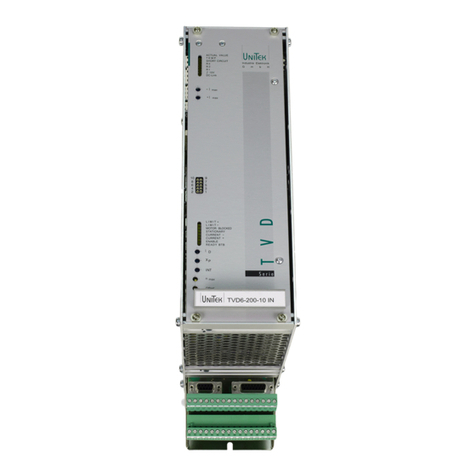
Analog three-phase servo-amplifiers > UNITEK series TVD3, TVD6, AS
Analog dc servo-amplifiers > UNITEK series TV3, TV6, TVQ6
Thyristor current converters 1Q, 4Q, servo > UNITEK series
Classic
, 200W to 800kW
DC and ac servo-amplifiers for battery operation > UNITEK series BAMO A2, A3, D3
analog and digital series BAMOBIL
General information