manuals.online logo
Brands
  1. Home
  2. •
  3. Brands
  4. •
  5. Unitronics
  6. •
  7. Extender
  8. •
  9. Unitronics IO-ATC8 User manual

Unitronics IO-ATC8 User manual

Other manuals for IO-ATC8

1

This manual suits for next models

3

Popular Extender manuals by other brands

Paugge ENT-EXT20B user manual

Paugge

Paugge ENT-EXT20B user manual

REIGN XRE-100 manual

REIGN

REIGN XRE-100 manual

Lindy 42805 user manual

Lindy

Lindy 42805 user manual

Digi ConnectPort Network Device user manual

Digi

Digi ConnectPort Network Device user manual

British General N300 instructions

British General

British General N300 instructions

VPI ST-WLHDMI-L-30M Installation and operation manual

VPI

VPI ST-WLHDMI-L-30M Installation and operation manual

Gefen EXT-DIGAUD-141 user manual

Gefen

Gefen EXT-DIGAUD-141 user manual

AMX netlinx NXC-MPE Dimensional drawing

AMX

AMX netlinx NXC-MPE Dimensional drawing

SY HDBT-60T installation guide

SY

SY HDBT-60T installation guide

Appsys ProAudio ADX-16 user manual

Appsys ProAudio

Appsys ProAudio ADX-16 user manual

Atlona RS232 user manual

Atlona

Atlona RS232 user manual

IDK OPF-TH1000-A user guide

IDK

IDK OPF-TH1000-A user guide

Enable-IT 824WP quick start guide

Enable-IT

Enable-IT 824WP quick start guide

Worx Landroid RadioLink WA0864 Get started

Worx

Worx Landroid RadioLink WA0864 Get started

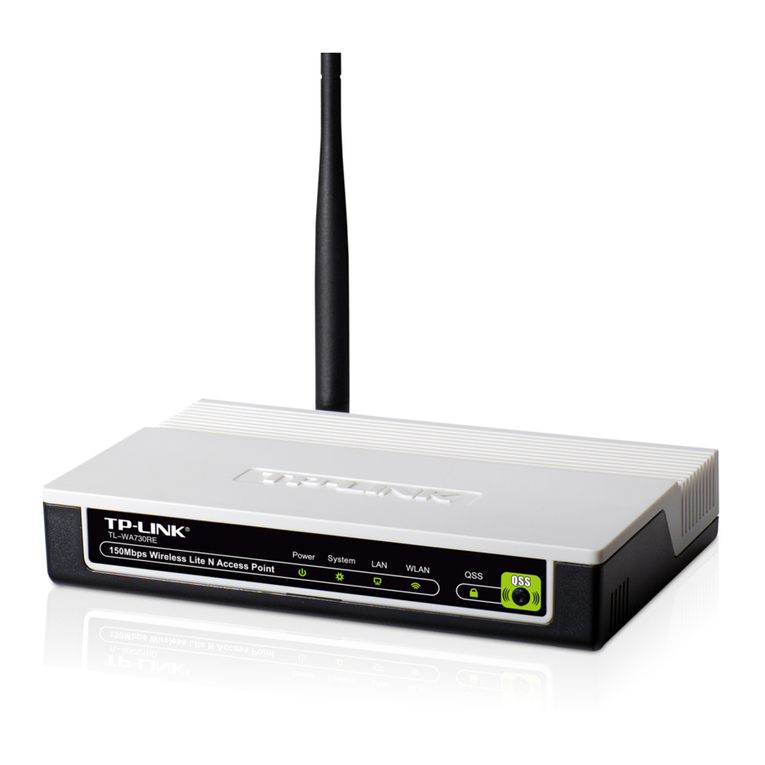
TP-Link TL-WA730RE user guide

TP-Link

TP-Link TL-WA730RE user guide

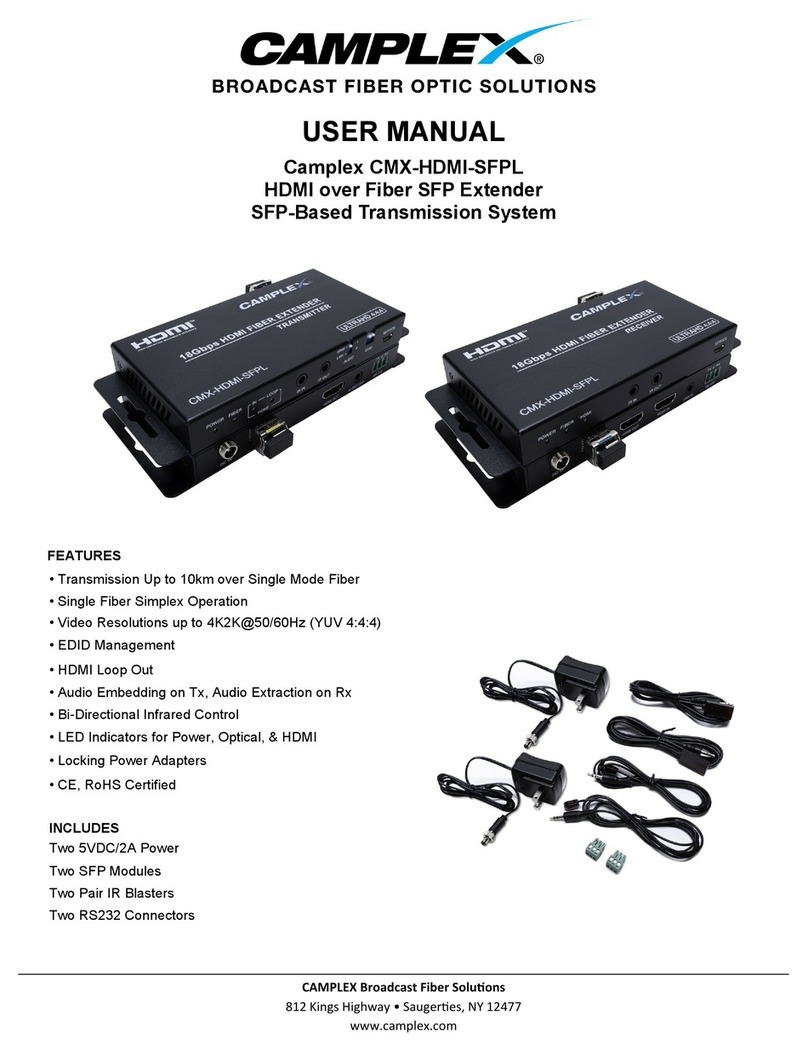
Camplex CMX-HDMI-SFPL user manual

Camplex

Camplex CMX-HDMI-SFPL user manual

SC&T HE03-4K user manual

SC&T

SC&T HE03-4K user manual

Samsung SCS-26UC4 user guide

Samsung

Samsung SCS-26UC4 user guide

manuals.online logo
manuals.online logoBrands
  • About & Mission
  • Contact us
  • Privacy Policy
  • Terms and Conditions

Copyright 2025 Manuals.Online. All Rights Reserved.

Unitronics Industrial Automation
1
IO-ATC8 User Guide
I/O Expansion Module 8 Analog/Thermocouple Inputs
The IO-ATC8 is an I/O Expansion Module
that can be used in conjunction with
specific Unitronics OPLC controllers.
The module offers 8 inputs that may be
set as either analog or thermocouple
inputs via wiring, jumper and software
settings.
The interface between the module and the
OPLC is provided by an adapter.
The module may either be snap-mounted
on a DIN rail, or screw-mounted onto a
mounting plate.
1 5
2
3
6
4
Component identification
1
Module-to-module connector
2
Communication status indicator
3
Input connection points, I4 to I7
4
Input status indicators
5
Module-to-module connector port
6
Input connection points, I0 to I3
◼Before using this product, it is the responsibility of the user to read and understand this document and
any accompanying documentation.
◼All examples and diagrams shown herein are intended to aid understanding, and do not guarantee
operation. Unitronics accepts no responsibility for actual use of this product based on these examples.
◼Please dispose of this product in accordance with local and national standards and regulations.
◼Only qualified service personnel should open this device or carry out repairs.
User safety and equipment protection guidelines
This document is intended to aid trained and competent personnel in the installation of this equipment as
defined by the European directives for machinery, low voltage, and EMC. Only a technician or engineer trained
in the local and national electrical standards should perform tasks associated with the device’s electrical wiring.
Symbols are used to highlight
information relating to the user’s
personal safety and equipment
protection throughout this document.
When these symbols appear, the
associated information must be read
carefully and understood fully.
Symbol
Meaning
Description
Danger
The identified danger causes physical
and property damage.
Warning
The identified danger can cause
physical and property damage.
Caution
Caution
Use caution.
◼Failure to comply with appropriate safety guidelines can result in severe personal injury or
property damage. Always exercise proper caution when working with electrical equipment.

UG_IO-ATC8 I/O Expansion Module
2
Unitronics Industrial Automation
◼Check the user program before running it.
◼Do not attempt to use this device with parameters that exceed permissible levels.
◼To avoid damaging the system, do not connect / disconnect the device when the power is on.
Environmental Considerations
◼Do not install in areas with: excessive or conductive dust, corrosive or flammable gas,
moisture or rain, excessive heat, regular impact shocks or excessive vibration.
◼Leave a minimum of 10mm space for ventilation between the top and bottom edges of the
device and the enclosure walls.
◼Do not place in water or let water leak onto the unit.
◼Do not allow debris to fall inside the unit during installation.
Mounting the Module
DIN-rail mounting
Snap the device onto the DIN rail as shown below; the module will be squarely situated on the DIN rail.
60mm
(2.362")
3.5mm
(0.137")
14mm
(0.55")
80mm
(3.15")
93mm
(3.66")
44.5mm
(1.75")
UG_IO-ATC8 I/O Expansion Module
Unitronics Industrial Automation
3
Screw-Mounting
The figure below is not drawn to scale. It may be used as a guide for screw-mounting the module.
Mounting screw type: either M3 or NC6-32.
4mm
5.8mm
(0.228")
85mm
(3.346")
80mm
(3.15")
68.4mm
(2.693")
93mm
(3.66")
4mm (x2)
(0.16")
(0.16")
UG_IO-ATC8 I/O Expansion Module
4
Unitronics Industrial Automation
Connecting Expansion Modules
An adapter provides the interface between the OPLC and an expansion module. To connect the I/O module to
the adapter or to another module:
1. Push the module-to-module connector into the port located on the right side of the device.
Note that there is a protective cap provided with the adapter. This cap covers the port of the final
I/O module in the system.
◼To avoid damaging the system, do not connect or disconnect the device when the
power is on.
1 2
Component identification
1
Module-to-module
connector
2
Protective cap
Wiring
◼Do not touch live wires.
◼Unused pins should not be connected. Ignoring this directive may damage the device.
◼Do not connect the ‘Neutral or ‘Line’ signal of the 110/220VAC to the device’s COM pins.
◼Double-check all wiring before turning on the power supply.
Wiring Procedures
Use crimp terminals for wiring; use 26-12 AWG wire (0.13 mm 2–3.31 mm2) for all wiring purposes.
1. Strip the wire to a length of 7±0.5mm (0.250–0.300 inches).
2. Unscrew the terminal to its widest position before inserting a wire.
3. Insert the wire completely into the terminal to ensure that a proper connection can be made.
4. Tighten enough to keep the wire from pulling free.
◼To avoid damaging the wire, do not exceed a maximum torque of 0.5 N·m (5 kgf·m).
◼Do not use tin, solder, or any other substance on stripped wire that might cause the wire strand to break.
◼Install at maximum distance from high-voltage cables and power equipment.
I/O Wiring—General
◼Input or output cables should not be run through the same multi-core cable or share the same wire.
◼Allow for voltage drop and noise interference with input lines used over an extended distance. Use wire
that is properly sized for the load.
UG_IO-ATC8 I/O Expansion Module
Unitronics Industrial Automation
5
Analog Inputs
◼Shields should be connected at the signal source.
◼Inputs may be set as either thermocouple, current, or voltage. To set an input:
-Use the appropriate wiring as shown below.
-Open the device and set the jumpers according to the instructions beginning on page 6.
◼The adapter and the COM signals of the analog inputs must be connected to the same 0V signal.
◼The COM signals of each channel are internally shorted.
◼When set to current/voltage, each 2 inputs share a common COM signal.
UG_IO-ATC8 I/O Expansion Module
6
Unitronics Industrial Automation
Opening the Device
◼Before opening the device, touch a grounded object to discharge any electrostatic
charge.
◼Avoid touching the PCB board directly.
◼Turn power off and disconnect all leads before opening the device.
In order to change the jumper settings of a specific input, first open the device by prying off its back, using the
blade of a flat-bladed screwdriver. The insertion points for the screwdriver are located on both sides of the
module.
1. Open the first side of the device by inserting the blade between the 2 plastic moldings as shown below, then
gently pushing up.
2. Taking care not to damage the cable, open the other side of the device by inserting the blade where shown
below, then gently pushing up.
UG_IO-ATC8 I/O Expansion Module
Unitronics Industrial Automation
7
3. Gently remove the top of the
device as shown.
4. The jumpers are shown at right.
Change the jumper settings as
required, in accordance with the
tables shown on the next page.
UG_IO-ATC8 I/O Expansion Module
8
Unitronics Industrial Automation
Jumper Settings
The tables below show how to set a specific jumper to change the functionality of a specific input.
To open the device and access the jumpers, refer to the instructions beginning on page 6.
Caution
◼Incompatible jumper settings and wiring may severely damage the device.
Jumper #
Thermocouple*
Voltage
Current
Input 0
1
B
A
A
2
B
A
B
Input 1
3
B
A
A
4
B
A
B
Input 2
5
B
A
A
6
B
A
B
Input 3
7
B
A
A
8
B
A
B
Input 4
9
B
A
A
10
B
A
B
Input 5
11
B
A
A
12
B
A
B
Input 6
13
B
A
A
14
B
A
B
Input 7
15
B
A
A
16
B
A
B
* Default factory setting.
UG_IO-ATC8 I/O Expansion Module
Unitronics Industrial Automation
9
IO-ATC8 Technical Specifications
Max. current consumption
40mA maximum from the adapter’s 5VDC
Typical power consumption
0.2W@5VDC
Status indicator
(RUN)
Green LED:
—Lit when a communication link is established between module and OPLC.
—Blinks when the communication link fails.
Thermocouple Inputs
Number of inputs
8. See Note 1.
Input type
Thermocouple, differential inputs. See Note 2.
Input range
As shown in table below.
Isolation
None
Conversion method
Voltage to frequency
Resolution
0.1ºC (0.1ºF) See Note 3.
Conversion time
100mSec minimum, according to the filter type selected in software settings
Input impedance
>10MΩ
Cold junction compensation
Local, automatic
Cold junction compensation
error
±1.5ºC (±2.7ºF) maximum
Absolute maximum rating
±0.6VDC
Linearity error
0.04% maximum of full scale
Error limit
0.4% of input value
Warm-up time
Typically ½ hour, ±1ºC (±1.8ºF) repeatability
Status indicators
(OUT OF RANGE)
Red LEDs—Lit when the corresponding input measures an analog value in
excess of the input range. See Note 4.
Thermocouple input ranges
Type
Temperature range
Wire color
ANSI (USA)
BS 1843 (UK)
mV
-5 to 56mV
-
-
B
200 to 1820°C
+ Grey
+ None
(300 to 3276°F)
- Red
- Blue
E
-200 to 750°C
+ Violet
+ Brown
(-328 to 1382°F)
- Red
- Blue
J
-200 to 760°C
+ White
+ Yellow
(-328 to 1400°F)
- Red
- Blue
K
-200 to 1250°C
+ Yellow
+ Brown
(-328 to 2282°F)
- Red
- Blue
N
-200 to 1300°C
+ Orange
+ Orange
(-328 to 2372°F)
- Red
- Blue
R
0 to 1768°C
+ Black
+ White
(32 to 3214°F)
- Red
- Blue
S
0 to 1768°C
+ Black
+ White
(32 to 3214°F)
- Red
- Blue
T
-200 to 400°C
+ Blue
+ White
(-328 to 752°F)
- Red
- Blue
Analog Inputs
Number of inputs
8 (single-ended) See Note 1.
Input range
0-10V, 0-20mA, 4-20mA. See Note 1.
Input type
Either Normal or Fast mode, according to the filter type selected in software
UG_IO-ATC8 I/O Expansion Module
10
Unitronics Industrial Automation
settings
Conversion method
Voltage to frequency
Normal mode
Resolution at 0-10V,
0-20mA
14-bit (16384 units)
Resolution at 4-20mA
3277 to16383 (13107 units)
Conversion time
100mSec minimum per input
Fast mode
Resolution at 0-10V,
0-20mA
12-bit (4096 units)
Resolution at 4-20mA
819 to 4095 (3277 units)
Conversion time
25mSec minimum per input
Input impedance
>400KΩ—voltage
500Ω—current
Isolation
None
Absolute maximum rating
±15V—voltage
±30mA—current
Linearity error
0.04% max of full scale
Error limits
0.4% of input value
Status indicators
(OUT OF RANGE)
Red LEDs—Lit when the corresponding input is receiving current or voltage in
excess of the input range. See Note 5.
Environmental
IP20/NEMA1
Operating temperature
0to 50C (32 to 122° F)
Storage temperature
-20to 60C (-4 to 140° F)
Relative Humidity (RH)
5% to 95% (non-condensing)
Dimensions (WxHxD)
80mm x 93mm x 60mm (3.15 x 3.66 x 2.362”)
Weight
150g (5.3 oz)
Mounting
Either onto a 35mm DIN-rail or screw- mounted.
Notes:
1. Each input may be set as either thermocouple, voltage (0-10V), or current (0-20mA, 4-20mA)
via wiring, jumper and software settings.
2. The device can also measure voltage within the range of -5 to 56mV, at a resolution of 0.01mV.
The device can also measure raw value frequency at a resolution of 14-bits(16384).
3. The input analog value represents the measured value as shown in the following examples:
- Thermocouple: a value of 262 is represented as 26.2ºC.
- mV: value of 262 is represented as 2.62mV.
4. The value of a thermocouple may also indicate when the sensor is not connected to the input, or
when the analog value exceeds the permissible range. If such is the case, the value will be 32767.
5. The voltage or current value of analog inputs can also indicate faults, as shown in the table below.
Value: 12-bit
(Fast mode)
Value: 14-bit
(Normal mode)
Input Value
Deviates:
-1
-1
Slightly below the input range.
4096
16384
Slightly above the input range.
32767
32767
Greatly above or below the input range.